
 Doc Summary

The history of the Warrior Infantry Fighting Vehicle, from its inception to the cancellation of the Capability Sustainment Programme in 2021, and slightly beyond.
The Warrior infantry fighting vehicle is the mainstay of the British Army’s armoured infantry force, a solid and capable vehicle with a long and successful service history. After the Warrior Capability Sustainment programme was cancelled in 2021, the British armoured infantry will rely on non-upgraded Warriors until the out-of-service date, beyond that, options remain unclear.
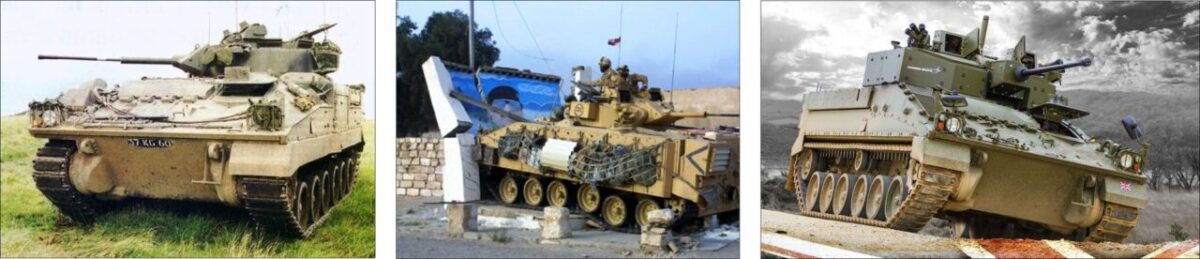
The British Army describe Warrior as;
The Warrior infantry fighting vehicle has the speed and performance to keep up with Challenger 2 main battle tanks over the most difficult terrain, and the firepower and armour to support infantry in the assault. The Warrior family of seven variants of armoured vehicles, which entered service in 1988, has been highly successful for armoured infantry battlegroups in the Gulf War, Bosnia and Kosovo and Iraq. They provide excellent mobility, lethality and survivability for the infantry and have enabled key elements from the Royal Artillery and Royal Electrical and Mechanical Engineers to operate effectively within the battlegroup
This article will describe the predecessor to Warrior, and its development, deployment, and current status.
Before Warrior — The Armoured Personnel Carrier (APC) Concept #
The tracked armoured personnel carrier was a logical development of the British and Canadian Ram-based Kangaroo, ‘Defrocked Priest’ and Landing Vehicle Tracked (LVT) ‘Alligator’ vehicles used in Normandy, Holland, and Italy during World War II.
The Post War focus for the British Army was ‘withdrawal from Empire’ and the defence of Western Europe against Warsaw Pact forces. Although the Saracen family of vehicles were highly mobile, they could not keep up with Main Battle Tanks.
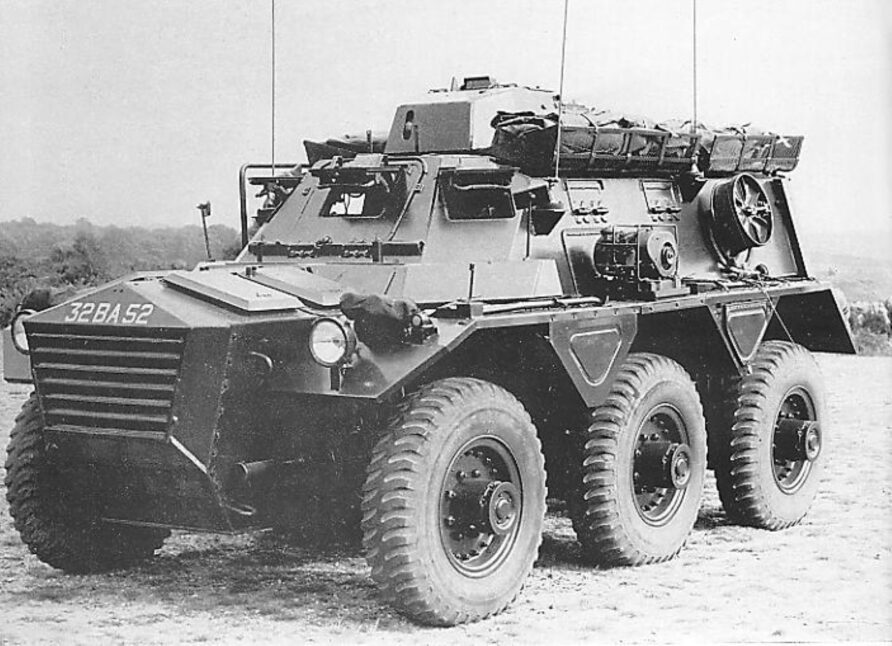
The Armoured Personnel Carrier (APC) was developed to allow infantry soldiers to survive in an NBC environment and against artillery fragments. The vehicle would provide sufficient mobility to get the infantry to a point of disembarkation, and no more.
We can reasonably trace the FV432’s roots to a number of post-war vehicle developments such as the Oxford Carrier and FV401 Cambridge Carrier, however, the direct forerunner of the FV432 is the FV420 series of vehicles, developed in the late fifties.
The FV420 vehicle family was to comprise; the FV421 Load Carrier, FV422 Armoured Personnel Carrier, FV423 Command Vehicle, FV424 Royal Engineers Section Vehicle, FV425 Royal Electrical and Mechanical Engineers Section Vehicle and the FV426 Orange William Anti-Tank Guided Weapon Vehicle, although only a small number were built.
Using experience from the FV420, the FV421 Load Carrier was the first of the family. It had an armoured front section with the ability to carry a 3-tonne payload. FV421 was also full amphibious without preparation and could be fitted with ammunition stowage racks, quite innovative for its day.
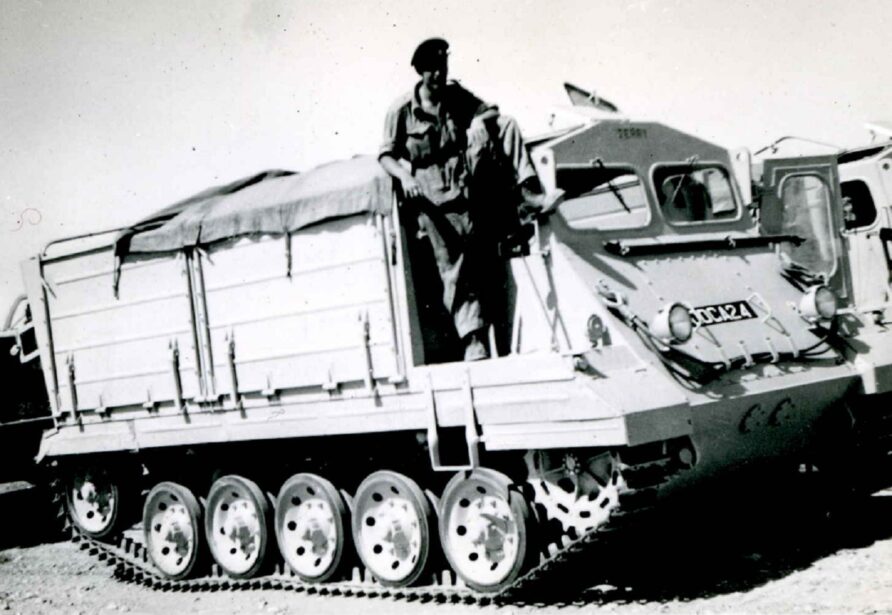
The FV430 series was built on lessons from the FV421 and used most of the major components. The first of the series was the FV431 load carrier, an image of the prototype is below.
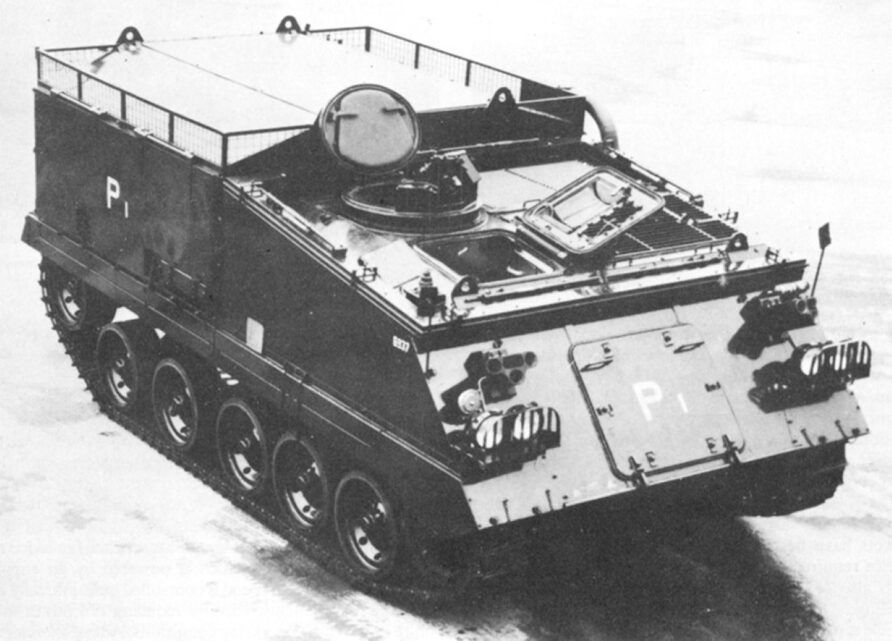
Further work continued and in 1962, GKN Sankey was issued a production contract the same year.
Following troop trials, the first production FV432 vehicles entered service in 1963 and by the end of the production run in 1971 over 3,000 vehicles had entered service with the British Army.
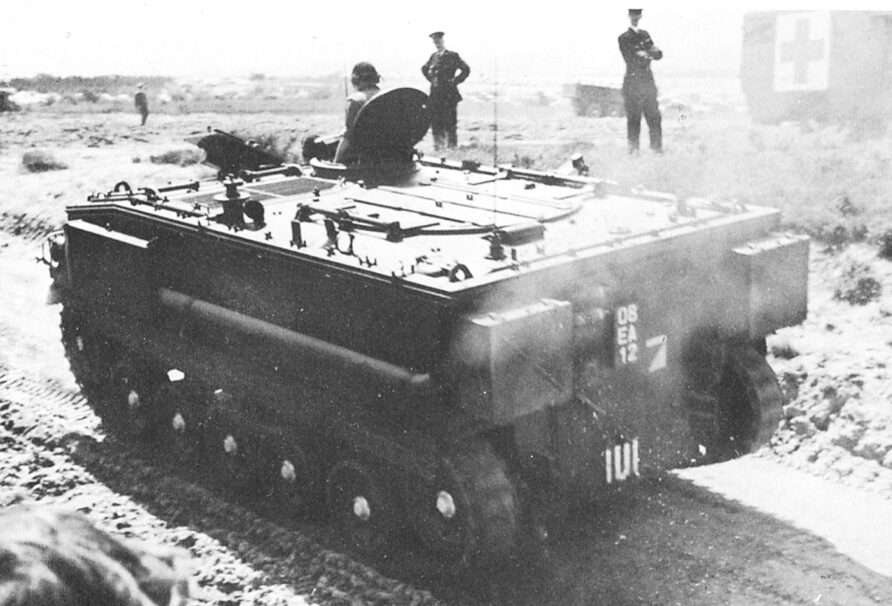
The FV432 is a simple and adaptable vehicle, a basic armoured box of welded steel construction to provide protection against automatic weapons and shell splinters. The FV430 series of vehicles has progressed through several marks and many variants, although it was never given a formal name. The original suggestion of the Trojan was dropped after objections from the Trojan car company.
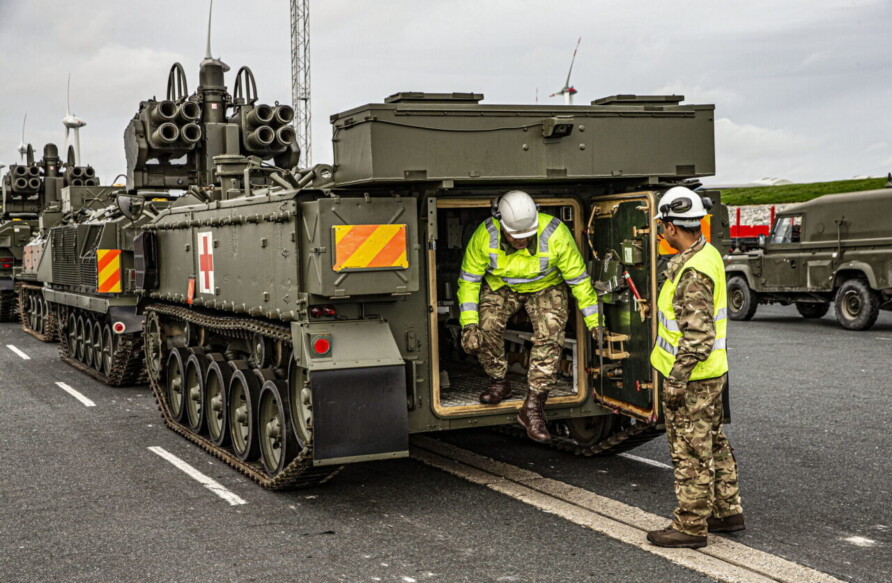
The FV432 would also be used for many tasks and have role-specific equipment, WOMBAT carrier, ground surveillance, command, mortar, ambulance, recovery, Carl Gustav, Barmine layer, Milan, sonic detection, a 30 mm RARDEN Fox turret and even provide OPFOR vehicles.
Other variants (over the years) included the FV433 Abbot Self-Propelled Gun, FV434 Carrier Maintenance, FV436 Mortar Locating Radar, FV437 Pathfinder (with snorkel), FV438 Swingfire Launcher and FV439 Communications.
It is still in service in 2022 – some 60-odd years after it was first introduced – and is likely to continue to be so for some time still to come, the joke being it will still be there when everyone else is in laser-powered hover tanks!
Beyond the APC — Development of the Warrior Mechanised Infantry Combat Vehicle (MICV) #
With the Armoured Personnel Carrier (APC) firmly established and in service across NATO, further doctrinal development came to the conclusion that APC’s would likely meet enemy APC’s on the battlefield, and thoughts moved to how they would survive and defeat them.
Emerging thinking and conceptual development were given fresh impetus after the appearance of the Soviet BMP-1 during Victory Parades in 1967, entering service with the 120th Guards Rogachev Motor Rifle Division a year or so later.
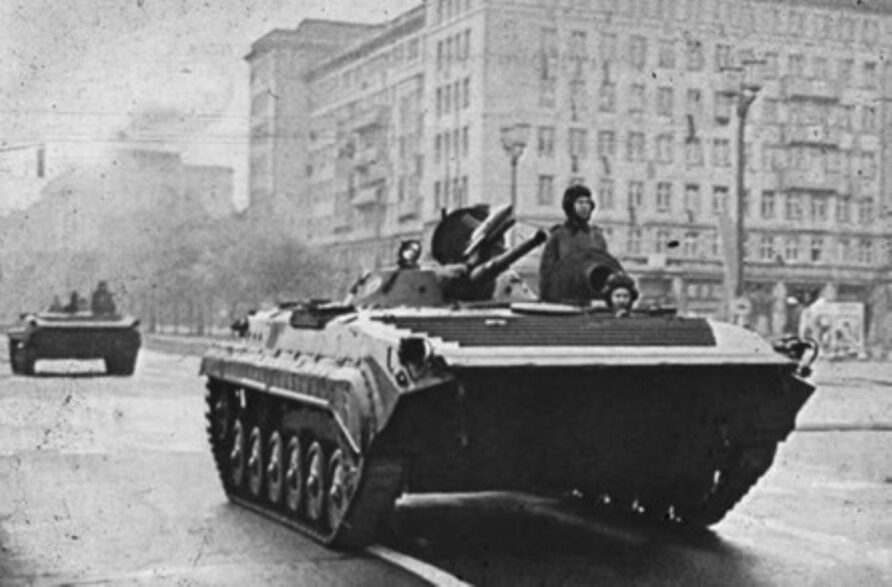
Formal work on the FV432 replacement started the same year.
By the early seventies, work by the Fighting Vehicle Research and Development Establishment (FVRDE) had progressed rapidly. Although differences remained between NATO nations on whether personnel should fight mounted (with firing ports) or dismounted, the size of the basic fighting unit, and others, the Mechanised Infantry Combat Vehicle (MICV) became dominant during this period.
No longer would personnel dismount at stand-off distances and advance to contact on foot, the MICV would allow them to dismount practically on top of their objective, having the firepower and protection to get them there and help infantry personnel win the close battle whilst there.
As is often the case, several designs emerged and were either progressed or eliminated.
Early designs envisaged three weight classes; Light at 14.6 tonnes, Medium at 24.2 tonnes and an up-armoured version of the Medium that weighed 28.9 tonnes. The Light variant would use the same engine as the in-development Combat Engineer Tractor (CET) and several other variants would be part of the wider family.
Another design envisaged a single, 30-tonne vehicle, powered by a Rolls-Royce CV8-derived engine providing 750bhp of power, a TN-17 transmission system, and protected by the (new at the time) Chobham composite armour.
Chobham armour was a collective name for a range of different composite armour constructions created under Project Burlington, developed over several years that would eventually be used on Challenger 1 and 2, and many other vehicles since.
The initial testing during the early seventies confirmed that a Burlington-protected MICV could withstand all known handheld hollow charge weapons, 105 mm APDS and HESH.
A number of small development contracts were let and a turretless automotive test rig was produced.
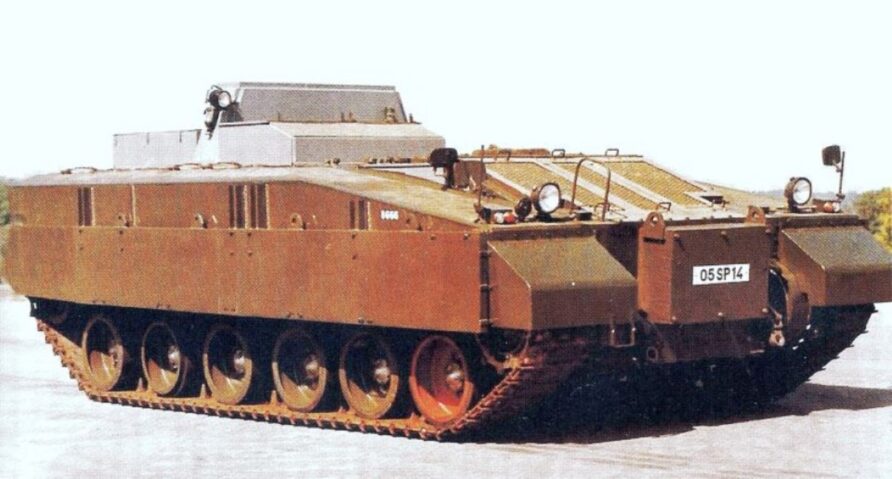
Different proposals for armament and concept of employment considered a 30 mm RARDEN equipped turret for a platoon commander and 7.62 mm GPMG for accompanying section vehicles, for example.
Other proposals included a version with General Support Rocket System RS80 (FOIL) that would eventually give way to MLRS in the late seventies and a vehicle with wholly modular armour that could be tailored to the threat environment.
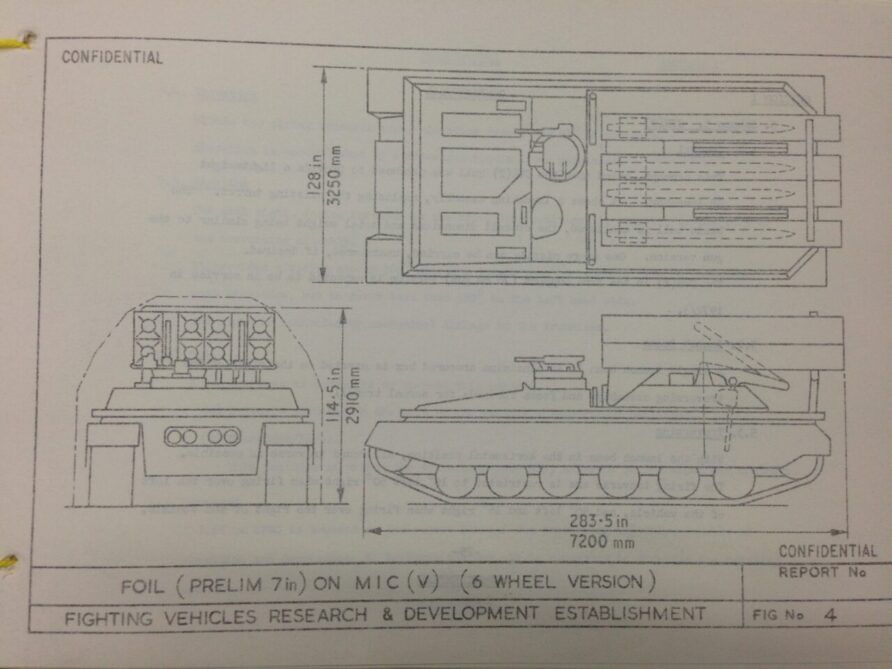
None of these ‘heavy MICV’ concepts progressed as they were considered too expensive to procure in quantity.
Approval was given by the MoD to enter a Project Definition phase for stage 1 (PD1) and was completed by the new Military Vehicles and Engineering Establishment (MVEE) between 1972 and 1976. MVEE also contracted with several industry partners as part of PD1 to support their work, with GKN and Vickers Defence Systems selected for competitive studies.
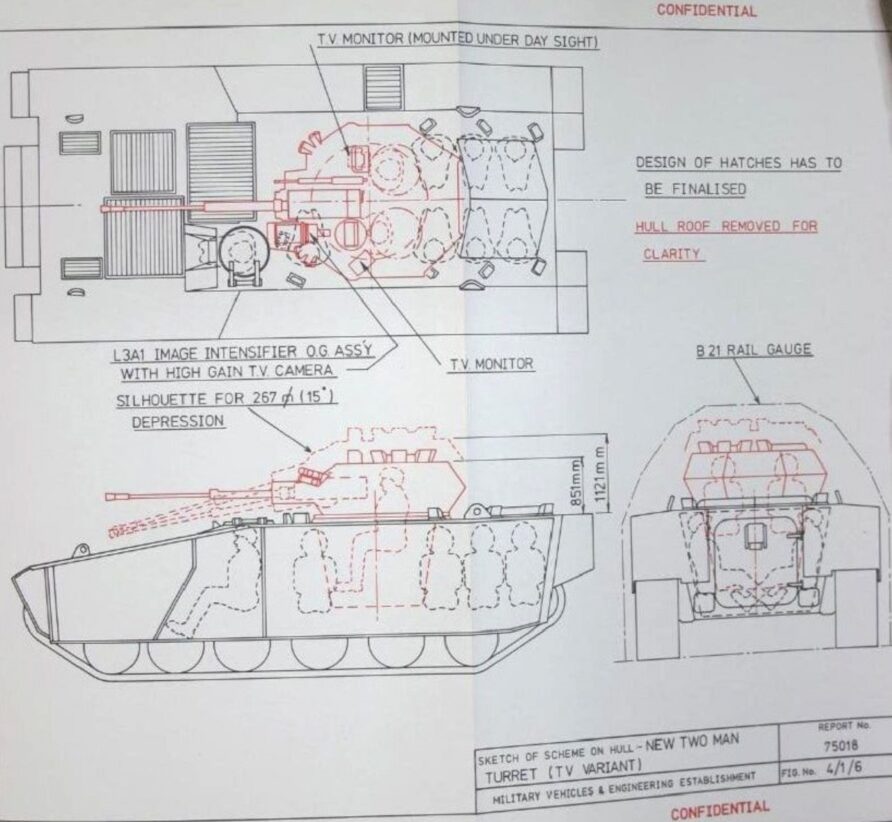
The familiar Warrior shape and configuration started to emerge.
The older doctrine foresaw NATO forces retreating gradually in face of Warsaw Pact forces and defeating them by attrition. The overwhelming superiority of opposing forces meant this was increasingly unrealistic and resorting to tactical nuclear responses meant, in reality, strategic nuclear exchanges.
The alternative was to take a more aggressive stance and instead of retreating in good order, NATO forces would aggressively manoeuvre to engage those advancing forces at the most advantageous point to inflict maximum damage.
This needed combined arms manoeuvre, infantry vehicles working closely with tanks, artillery, and close air support. MICV was designed to keep up with main battle tanks, destroy enemy infantry vehicles and fight forward to dismount their infantry practically on top of enemy positions. MICV would then withdraw and provide fire support.
The result of the concept, test, and study work completed between 1971 and 1976 was the General Staff Requirement (GSR) 3533, to be fulfilled by the MICV4A design, and subsequently, the Mechanised Infantry Combat Vehicle for the Eighties, or MICV-80.
(GSR) 3533 specified the carriage of 10 personnel (including driver and gunner), the ability to keep up with the Challenger 1 Main Battle Tank, protection against shell fragments, automatic weapons fire and sufficient firepower to counter enemy MICVs and dismounted infantry.
The MCV-80 (Mechanised Combat Vehicle for the eighties) was finally selected because of a study that compared the GKN design with the US XM2 vehicle that would go on to become the M2 Bradley Fighting Vehicle.
A competition for the development phase was announced that would take forward the chosen MICV4A concept. Manufacturing contracts would be let separately from development, this was the first time such an arrangement had been proposed.
GKN Sankey won the development contract in 1977, largely due to the technical prowess of the Sankey chief designer, Ken Lofts. It was an important win for GKN as the prevailing thinking was that the winner of the development contract would be in pole position for the separate manufacturing contract as well, at that time thought to be for exceeding 1,000 vehicles.
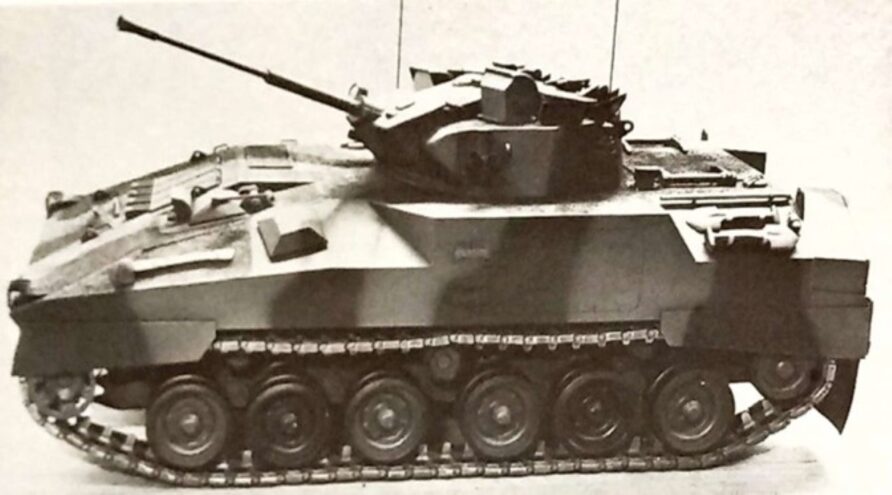
In response to a Parliamentary written question, the government provided an update to the House of Commons on the progress in replacing the FV-432.
The Army’s present armoured personnel carrier, the FV432 series of vehicles, has been in service since the 1960s and will need to be replaced from the mid-1980s. Two vehicles have been considered for this requirement, the mechanised combat vehicle (MCV-80) designed by the British firm GKN-Sankey, and the American infantry fighting vehicle, which would be manufactured under licence in this country. After a careful assessment of the relevant operational, financial and industrial factors I have decided to select MCV 80 to meet this requirement. The total estimated cost of the replacement programme is about £1,000 million and full development will be launched shortly.
This initial contract covered ‘Project Definition Phase 2’ which also included the production of the first batch of vehicles. GKN Sankey was awarded the main development contract in 1980. By this point, GKN had already completed one static and two mobile test rigs as part of earlier work, and the first prototype was built by the end of 1980.
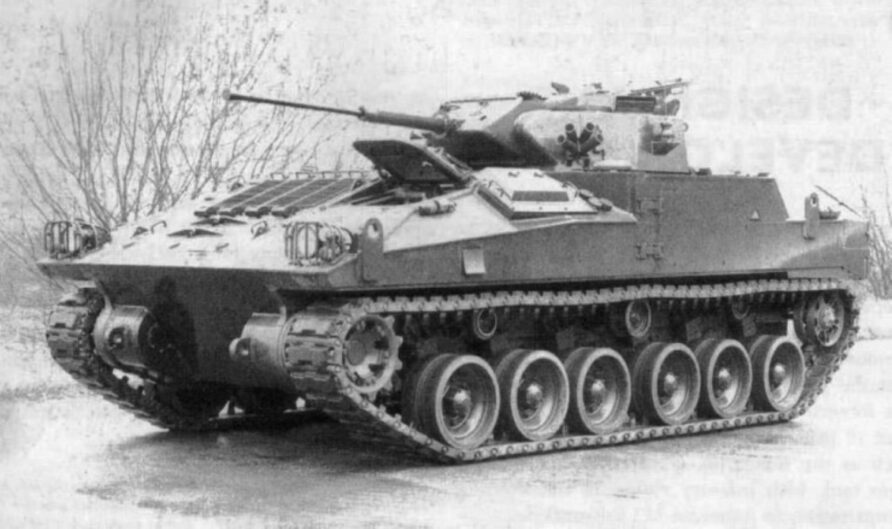
Alec Daly joined GKN in 1978 to head up the Sankey division after 16 years at Ford. The new broom certainly swept clean and after the highs of the development contract award had subsided, he emphasized that should it not meet time and cost objectives, there would be little chance of the production contract going to GKN, and it was the production contract that he wanted.
Despite success with AT-104, MCV-80 was in a different league, and the lack of business and project management at GKN seriously worried him.
To this end, he formed a partnership with the chief designer, Ken Lofts, introducing practices that were becoming more common in the automotive industry but were still rare elsewhere. One of these – at the time revolutionary – concepts was to ask the user what they wanted and what they thought was important.
We went to the soldiers and asked what they wanted most from the vehicle. They picked out two things; one, they didn’t want a mine to blow it up when the vehicle went over it; and two, they wanted it to start every time you pressed the button
Alec Daly
The end of the development phase was completed on time and on budget.
This vindicated GKN but more importantly, Michael Heseltine, who had insisted on splitting the development and manufacturing contract, allowing a single prime contractor to be wholly responsible for the design and development phase, making this subject to competition and culling the Cost Plus Contract model.
It certainly had a whiff of an industrial revolution about it.
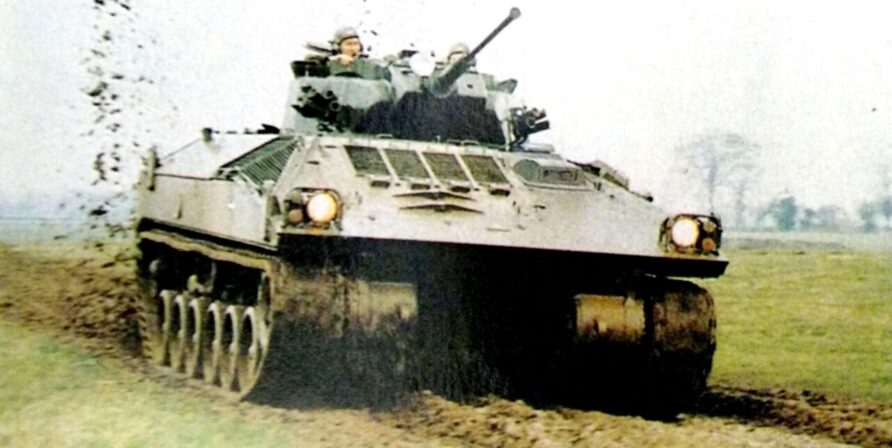
As the MCV-80 project progressed into manufacture, a separate study was started to examine the wider requirement for armoured vehicles, called Armoured Fighting Vehicles (AFVs) for the Eighties.
The first stage looked at medium-weight vehicles.
Stage 2, main battle tanks, and stage 3, a self-propelled anti-tank gun (SPAT) with an air-portable variant called ASPAT.
All the concepts except ASPAT used an evolved MCV-80 design with greater protection, weighing 43 tonnes, ironically, about the same weight as the latest Warrior and Scout variants.
ASPAT was to reuse CVR(T) components and weigh 12 tonnes, the same approximate weight as the latest CVR(T) Mark 2 vehicles.
GKN also proposed a shorter and lower variant of MCV-80 to be used in the reconnaissance role called LOVATT (more on this below), shades of FRES, SV Scout and Ajax, perhaps.
The first MICV-80 prototypes had twin doors, but this was subsequently changed.
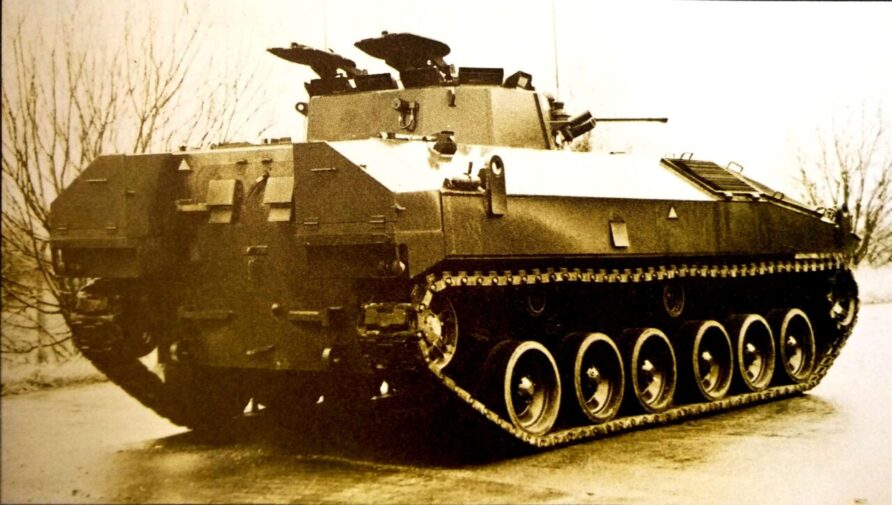
GKN produced 14 prototypes, many of which were ultimately destroyed (in mine tests, for example) but some would be retained for training, trials, and development purposes. One of the Mobile Test Rigs was deployed to Germany for Exercise Lionheart in 1984.
Work continued throughout 1984 as preparation for the manufacturing contract progressed.
A name was needed.

None of the suggested entries won.
With development complete, GKN, Vickers Defence Systems, Royal Ordnance and Alvis participated in the production contract. Instead of caving in to pressure to reduce the cost per vehicle, GKN stuck to their original bid price, emphasising quality.
It would turn out to be a winning strategy, it exceeded reliability targets and GKN won the £1 billion contract in 1984 and MCV-80 became Warrior.
Production started at a newly built GKN factory in Telford in 1986, and early production vehicles are shown below.
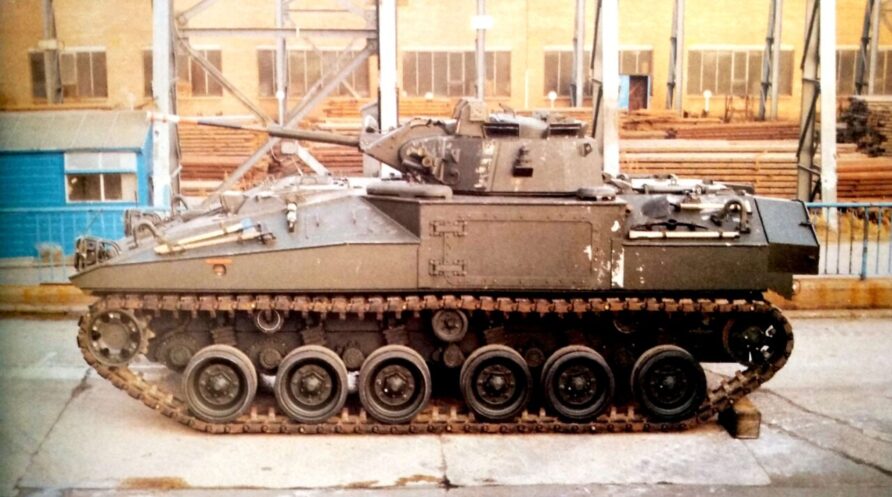
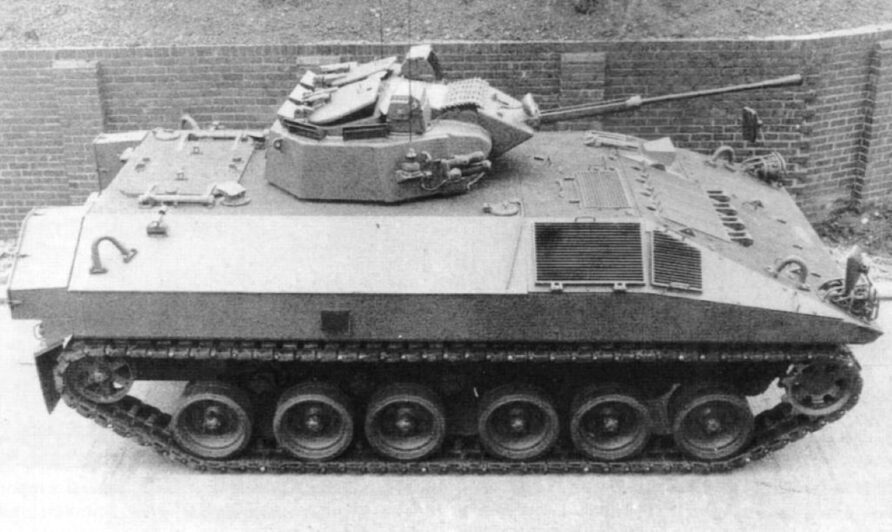
The original order was for 280 vehicles, with a balance of 1,053 following completion. It was hoped that a 1,800-strong fleet would eventually completely replace FV432 in the nine newly formed Armoured Infantry Battalions, but the costs meant the FV432 would have to continue on in secondary roles.
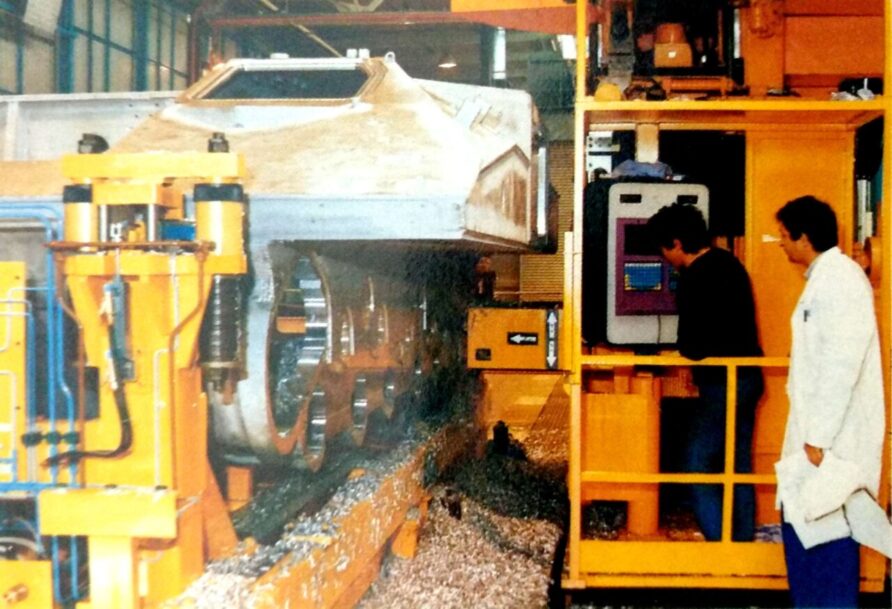
GKN indicated that the cost proportion of the major components of the Warrior section vehicle was;
- Turret: 33%
- Power pack: 23%
- Sights: 7%
- Dampers: 5%
- Track: 3%
- Final Drive and Road wheels: 3%
- NBC Pack: 2%
- Hull and miscellaneous items: 24%
An Armoured Infantry Battalion would, therefore, comprise 3 distinct families of armoured vehicles: CVR(T), Warrior and FV432 plus the various odds and sods of B Vehicles like trucks and Land Rovers.
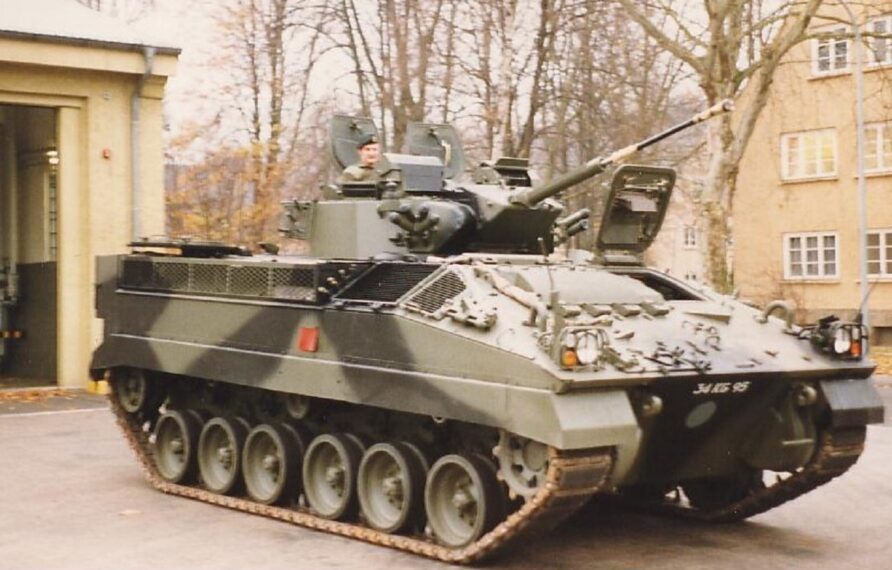
The first unit to receive Warrior was the 1st Battalion Grenadier Guards in Germany, followed by the 1st Battalion of the Staffordshire Regiment between 1987 and 1988.
Warrior — Operations And Upgrades #
As Warrior came into service during the late eighties and early nineties, it would site astride not only the collapse of the Soviet Union but also a significant deployment in the Middle East.
At the end of the eighties, the British Army had in service three distinct families of non-Main Battle Tank armoured vehicles which were, in age order:
- FV432 – in service 1963
- CVR(T) – in service 1972
- Warrior – in service 1986
In addition, there were several specialist vehicles like the FV180 Combat Engineer Tractor (in service since 1976). And let’s not forget the Saxon. CVR(T) was getting on in years, and thoughts had now turned to its replacement. FV432 was even older but had never been completely replaced by Warrior, as originally intended.
For all intents and purposes, the British Army was still very much configured to counter an invasion of Western Europe from the Warsaw Pact nations.
The end of the Cold War arguably started with the 1985 death of Konstantin Chernenko and the appointment of Mikhail Gorbachev as the General Secretary of the Soviet Union Communist Party.
What followed was a cascade of agreements, revolutions, recognition of nation-states and the smashing of concrete walls. Advances in vehicle electronics, communications technology, sensors, and computing equipment would all be harnessed for military vehicles, despite the technology drivers being largely civilian in origin.
The microelectronics revolution was moving into gear.
The first SMS text message would not be sent until 1992, but the background work was well underway. First-generation analogue mobile networks were in limited service based on the iconic Motorola DynaTAC cell phone, while the much more advanced 2G digital mobile telephone networks were already in development.
Desktop computers had gone from the ZX81 in the early eighties to IBM PC Clones, which were widely adopted. The World Wide Web had been invented, the first web search for porn had taken place, and Photoshop was at Version 1.
The next ten years would see even more rapid change and military equipment would benefit just as much as plumbers, stockbrokers and spotty-faced teenagers.
The fall of the Berlin Wall and the dawning of the end of the Cold War resulted in Options for Change, the title of the 1990 Defence Review, the first carried out since the 1981 Nott Review.
In the House of Commons on 25th July 1990 Tom King MP, the then Secretary of State for Defence, said…
In the options for change studies, we have sought to devise a structure for our regular forces appropriate to the new security situation and meeting our essential peacetime operational needs. Our proposals will bring savings and a reduction in the share of GDP taken by defence.
Options for Change precipitated a reduction in armed forces personnel by just under 20%, the formation of ‘British Forces Germany’ (following the disbandment of ‘British Forces of the Rhine’ and a reduction of the personnel deployed to Germany) and a whole host of other amalgamations and changes.
The Army suffered the greatest reduction in manpower, going from 160,000 to 120,000 personnel.
Whilst this was happening, Cold War ‘heavy metal’ was arguably to have one last hurrah in the desert.
Operation GRANBY — Gulf War #
In response to the Iraqi invasion of Kuwait in August 1990, a coalition was formed that would see 35,000 British personnel deployed as part of Operation GRANBY.
All six Warrior variants were deployed
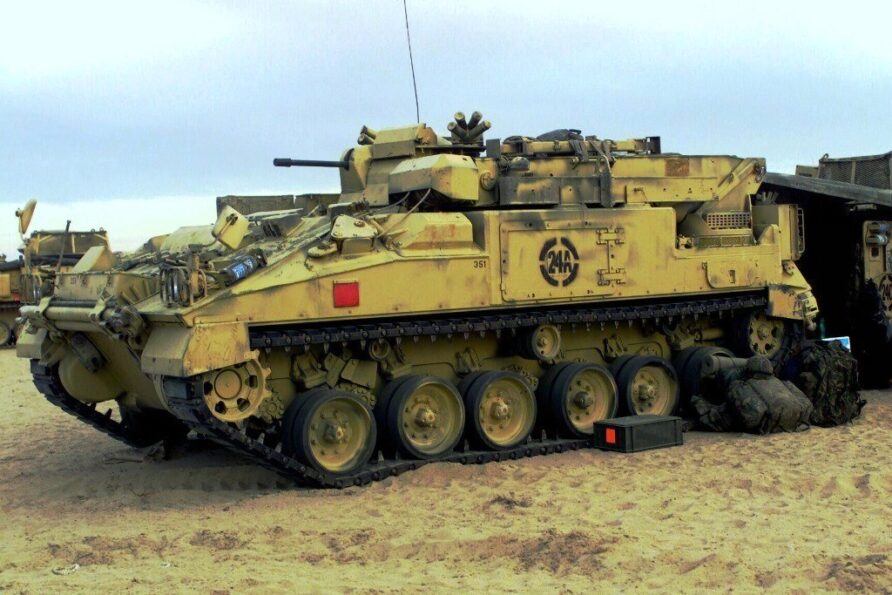
4th Armoured Brigade, 7th Armoured Brigade and HQ 1st (UK) Armoured Division, and 5,000 vehicles were all shipped to Saudi Arabia in time for the 1991 kick-off.
The 7th Armoured Brigade consisted of the Royal Scots Dragoon Guards and Queen’s Royal Irish Hussars in Challenger I, with 1 Stafford in Warrior. 4th Armoured Brigade was infantry heavy with 1st Battalion Royal Scots and 3rd Battalion Royal Regiment of Fusiliers in Warrior, with 14th/20th King’s Hussars in their Challengers.
These two brigades would be reinforced by personnel from the Grenadier Guards. Over 250 Warriors of all variants were deployed to the Middle East.
The FV432, Warrior and CVR(T) all saw action, as did the Ferret and many others. Operation GRANBY also resulted in changes to the peacetime establishments. Instead of using FV432s for mortar fire controllers and Milan teams, additional Warriors were provided instead. This was a clear recognition that FV432 was now well behind the curve.
An appliqué armour package designed and built by Vickers Defence was fitted to the Warrior vehicles, in theatre, to provide greater protection.
The utility of this additional protection was proven when a Warrior Infantry Command Vehicle was hit by a 120 mm HESH round fired by a Challenger I of the Scots Dragoon Guards. It resulted in much less damage than one might reasonably expect, and no deaths, although there were some serious injuries.
Several Warriors were modified with a turret-mounted Milan firing post. Although it could not be used on the move, it did provide much greater mobility and protection for Milan than the FV432s would have.
Many other minor upgrades and modifications were completed in the build-up, maintenance-free batteries and satellite navigation systems, for example. Even extra air conditioning systems were designed and tested, but none were ordered due to the quick end of the conflict.
This operational replacement of some FV432/CVR(T) with Warriors enabled other organisational changes that differed from the peacetime norm. Instead of mixing armour and armoured infantry they were now organised independently and were only combined on a mission-specific basis.
By January 1991, 1 (UK) Armoured Division was declared operational after much preparation, training, and reorganisation.
After 100 hours of fighting, it was all over.
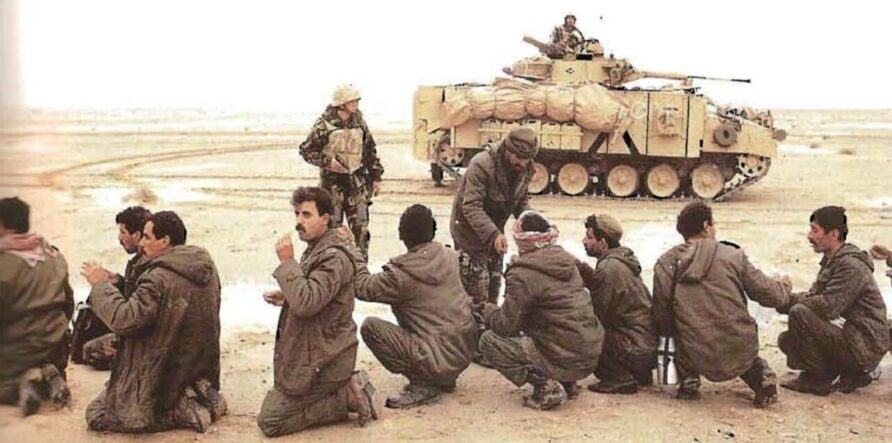
GKN and the MoD specified reliability as a crucial criterion during the development of Warrior and this approach would be absolutely vindicated.
The Warrior fleet achieved a 95% availability during Operation GRANBY, incredible.
The Balkans #
The British Army’s legacy fleet of CVR(T), FV432 and Warrior had seen service in the Gulf War and whilst that conflict proved their enduring value, it also highlighted their shortcomings.
Despite various plans to replace them, they were to have another outing, in the Balkans.
The first deployment was in 1992 as a result of UN Resolution 743, the so-called Vance Owen Plan. 743 called for the creation of buffer zones between Serb and Croat forces in Bosnia and Croatia, the zones to be monitored by UNPROFOR. UK forces were deployed under Operation GRAPPLE. Escorting UNHCR aid convoys started in 1993.
Because BRITFOR was armoured and had a certain reputation, success with aid convoys was better than many other nations, The combination of the imposing presence and protection of Warrior and the agility and mobility of CVR(T) combined to form an effective capability.
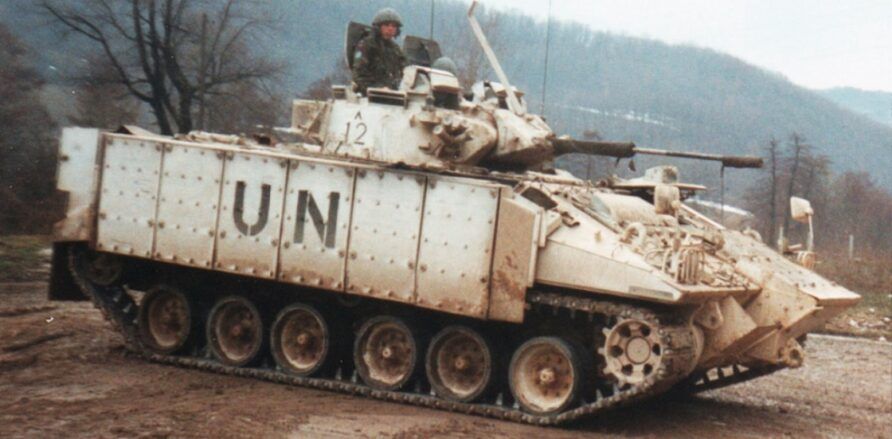
Towards the closing period of UNPROFOR operations, the difference between public opinion and on-the-ground reality was marked. Despite evidence to the contrary, there was a nearly universal perception of Serbs as bad guys and Bosnian Muslims as victims. The peacekeepers were often placed in impossible situations because of the restrictions placed upon them.
In 1995, AST Group were awarded a £1m contract from the MoD to strip and repaint 200 Warrior vehicles as part of a wider corrosion control programme.
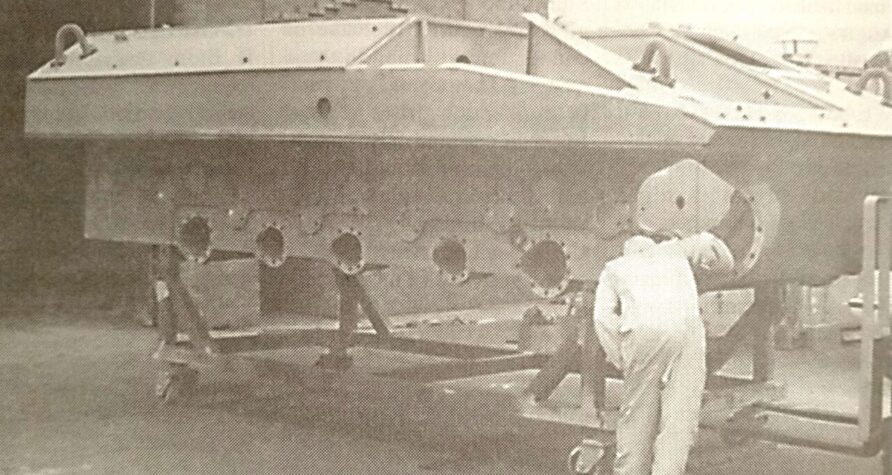
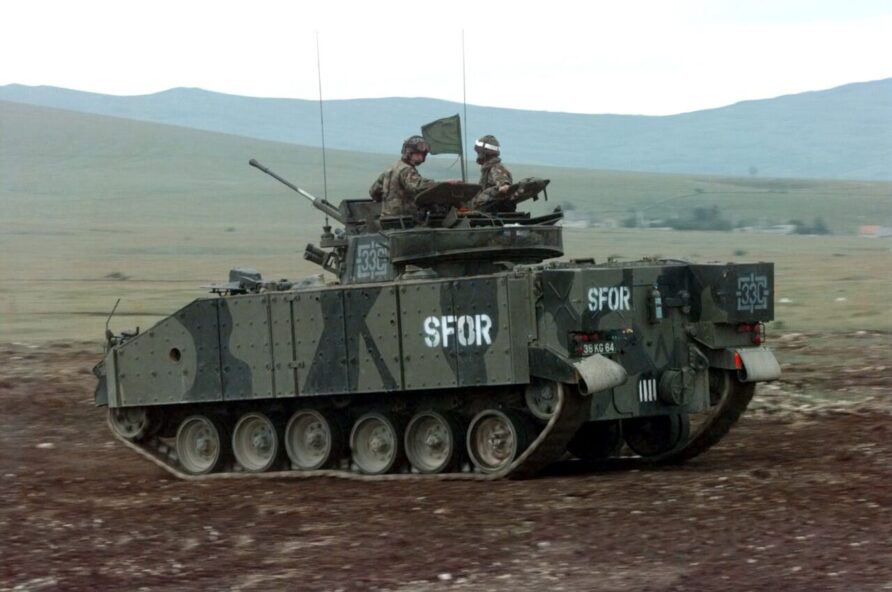
The mortar attacks on the Markale market in Sarajevo, the massacre at Srebrenica, the taking of UNPROFOR hostages and the general political environment would turned out to be decisive factors in the move to the next stage of, IFOR. Following the Dayton Accords, it was NATO, not the UN that would be responsible for the implementation of the agreement and so IFOR was constituted, the Implementation Force.
Off came the white paint.
In 1998, conflict returned to the Balkans, specifically the Serbian region of Kosovo, a region not included in the Dayton Accords.
Repression and violence soon followed.
British Forces deployed again, and Warrior went with them

Iraq and Afghanistan #
In 2001, after a competition between Avimo, Hunting Engineering and Thales, a £230m contract was awarded to Thales for the Battle Group Thermal Imaging (BGTI) programme for thermal imaging sighting systems on 455 Warrior and 146 Scimitar.
The contract was split into two groups, Group 1 and Group 2.
- Group 1 was for Scimitar and Warrior Section and Command IFVs, both thermal imaging and navigation. 350 were fitted to Warrior and 146 to Scimitar.
- Group 2, was for 100 Warrior Repair and Recovery variants and excluded the navigation elements
One of the key requirements for BGTI was integration with BOWMAN and the ability to hand off target information to Challenger 2. The legacy fleet was having to be maintained beyond its intended point because of the failure of two attempts to replace it.
In March, after a build-up period, CVR(T), FV432 and Warrior went to war, again, with 1(UK) Armoured Division.
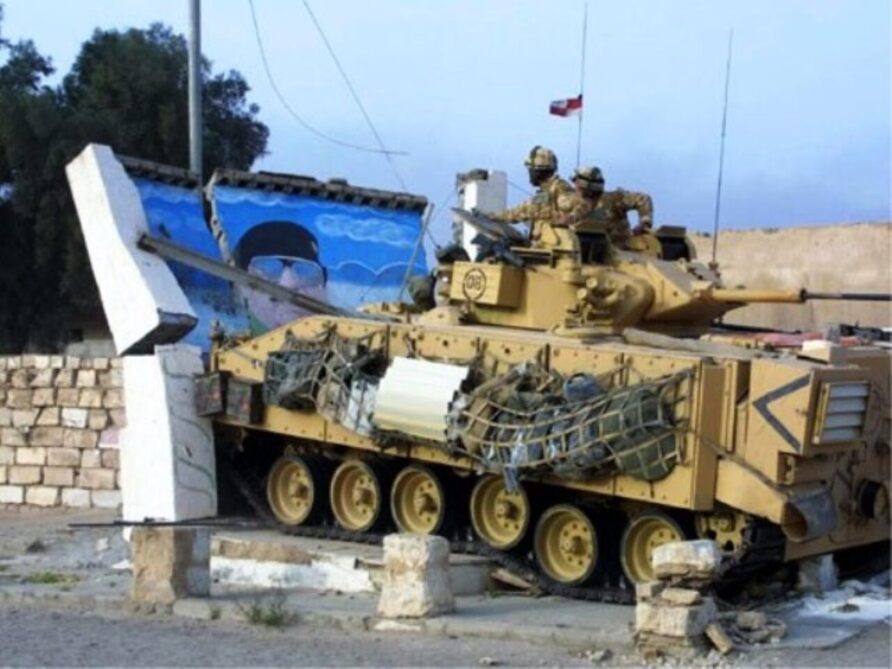
In 2005, Thales completed deliveries of the last 250 Battlegroup Thermal Imaging (BGTI) systems for Warrior in January. The total contract value was £212 million which also included 15 years of support.
As the security situation worsened and the threat from IEDs, especially the explosively formed type, additional protection was added in the form of the WRAP2 kits.
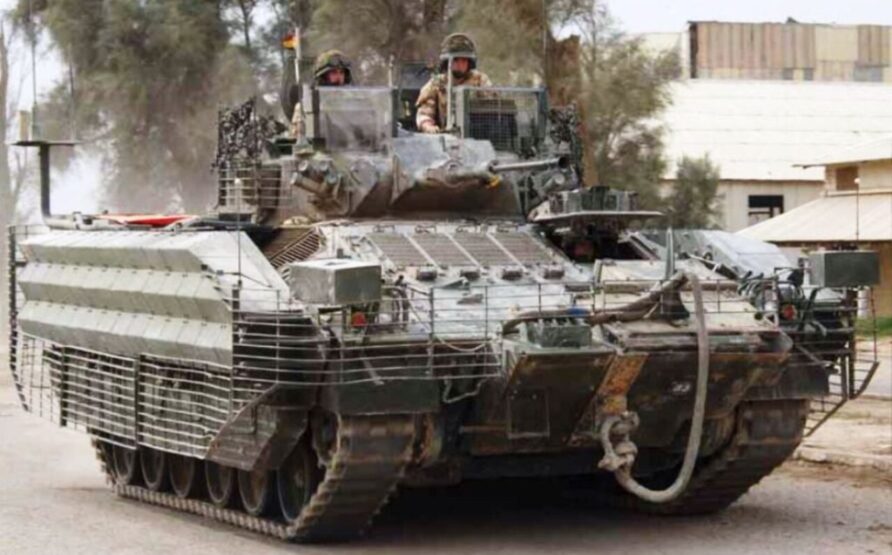
Task Force Helmand was reinforced with Warriors and armoured infantry in September 2007, by 2009 the toll of Afghanistan was showing and a range of improvement packages were implemented, culminating in the TES(H) upgrade programme that was delivered in 2011.
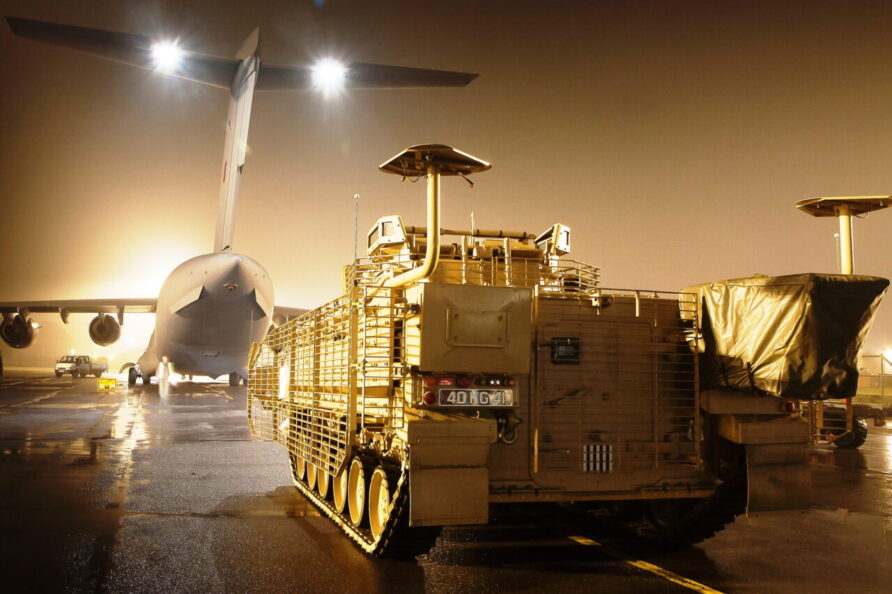
The Warrior deployment was reported to have delivered a significant tactical advantage. The various upgrades fitted to Warrior to enable service in Afghanistan increased its weight to just under 40 tonnes and the impact on mobility and reliability was significant.
A refresh upgrade programme for 70 vehicles was initiated, designed to restore mobility, improve reliability and implement several improvements in various other areas.
The £30m contract was awarded to BAE to bring vehicles up to ‘Theatre Entry Standard (Herrick)’, or TES(H)
The resultant vehicle still weighed just under 40 tonnes but the new suspension, brakes, air conditioning and other improvements restored mobility and reliability. Additional protection included improved seating for crew and passengers, transparent armour for the turret and a newly designed armour package.
Vehicles upgraded to TES(H) totalled 70 across the major variants; FV511 Infantry Section Vehicle, FV512 Infantry Command Vehicle, FV513 Mechanised Recovery (Repair) Vehicle, FV514 Mechanised Artillery Observation Vehicle and FV515 Battery Command Vehicle, the latter converted to armoured ambulances.
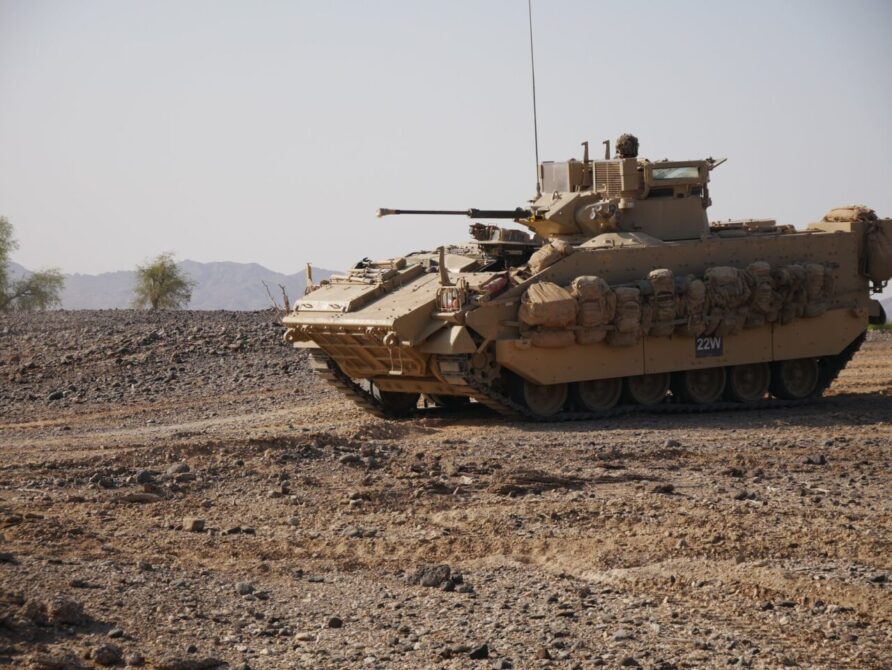
TES(H) updates included;
- A flexible modular armour system that can be adapted to meet changing threats and reduce vehicle weight
- Enhanced seating design and cushioning to further improve mine protection and comfort
- An improved driver vision system with an increase from one to three periscopes, providing a wider field of vision and a night-vision capability
- Increased low-speed mobility and climbing performance, enabling the vehicle to tackle tough terrain and get closer to a target or destination
- Motorsport-derived carbon fibre brakes provide significantly reduced stopping distance
- Improved air conditioning for troop comfort in hot and harsh environments
- Wire cutters protect the driver, commander, and equipment on the vehicle from obstacles.
The roll-call of British subcontractors on the programme included Allen Vanguard (Tewkesbury), Astrum, Renown (both Co Durham), Caterpillar Defence Products (Shrewsbury), Dana Spicer (Birmingham), GKN Driveline (Telford), Icon Plymer (Nottingham), MTL (Rotherham) Thales Optronics (Glasgow), Thyssen Krupp (Birmingham), Tinsley Bridge (Sheffield) and W A Lewis (Shrewsbury).
In many ways, Warriors in Afghanistan were deployed as ‘medium armour’ to dominate the ground, provide route security and in the infantry support role, acting as main battle tanks without the weight, arguably, the equivalent to FRES Direct Fire.
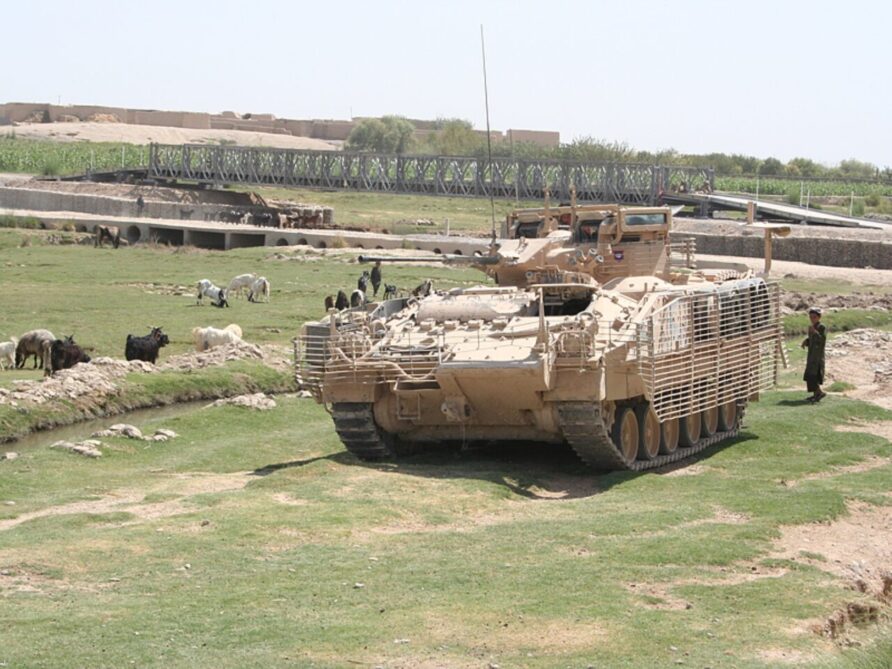
It is also interesting to note the weight increase.
The Warrior came into service as a 24-tonne vehicle and was now serving successfully in Afghanistan, having been continually upgraded over its lifetime, at 40 tonnes, over 60% heavier. Warrior was not selected based on future weight increase potential, but here we were, operating in a very hostile environment at a significant weight increase over the original specification.
NATO Forward Deployment #
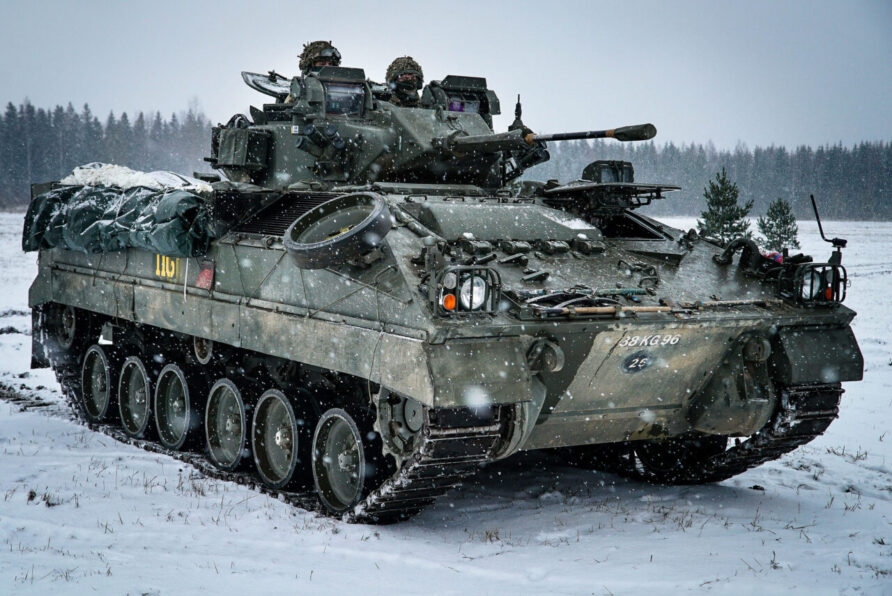
Warrior was deployed with British forces as part of the NATO Enhanced Forward Presence posture in central and Eastern Europe.
Warrior Capability Sustainment Project #
The Warrior Capability Sustainment Programme started in the early 2000s and was closely tied to the 40 mm CTAS development programme.
One cannot view efforts to improve Warrior without understanding the 40 mm CTA system. Recognising the approaching obsolescence of the 30 mm RARDEN cannon, the MoD started a series of trade studies in order to develop the concept for a medium calibre weapon to replace it, one suitable to deal with emerging Russian combat vehicles.
These trade studies prompted GIAT and Royal Ordnance to explore options for a collaborative development programme. Consequently, a Royal Ordnance and GIAT 45 mm Cased Telescoped Weapon System (CTWS) demonstrator was completed in 1991 with the prototype the following year.
This demonstrator had some input from the ARES 45 mm weapon that had been in development in the USA. Differences from the older US system included a change from metallic to plastic for the ammunition case and the use of an electrical drive rather than being gas-operated.
The CTWS was intended for TRACER, a midlife Warrior upgrade, and the French VAD. In 1994, the joint development concept was formalised by the creation of a 50/50 Joint Venture between GIAT and Royal Ordnance called Cased Telescoped Ammunition International or CTAI for short.
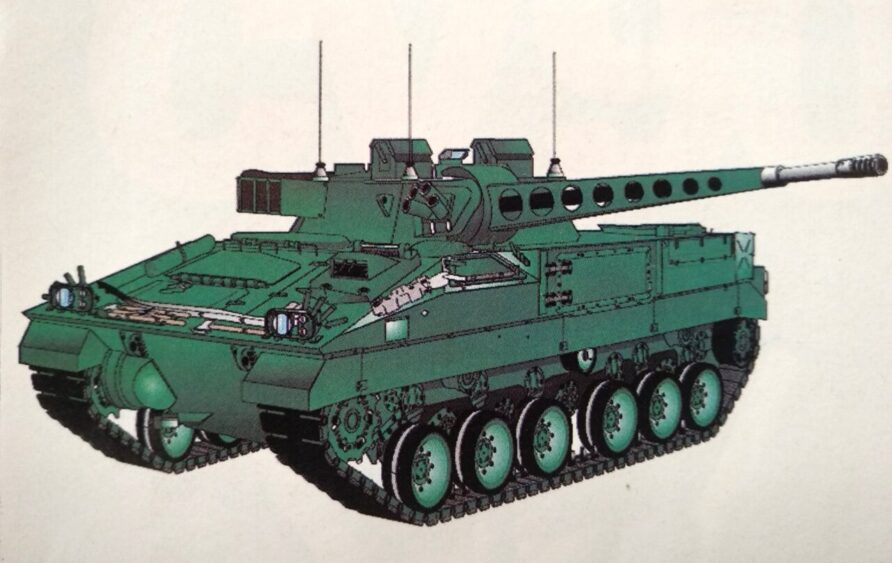
In 1997, the decision was made to move the calibre to 40 mm and rename it the CT2000 (rather optimistically, as it would turn out to be).
The Warrior upgrade programme started in 2001.
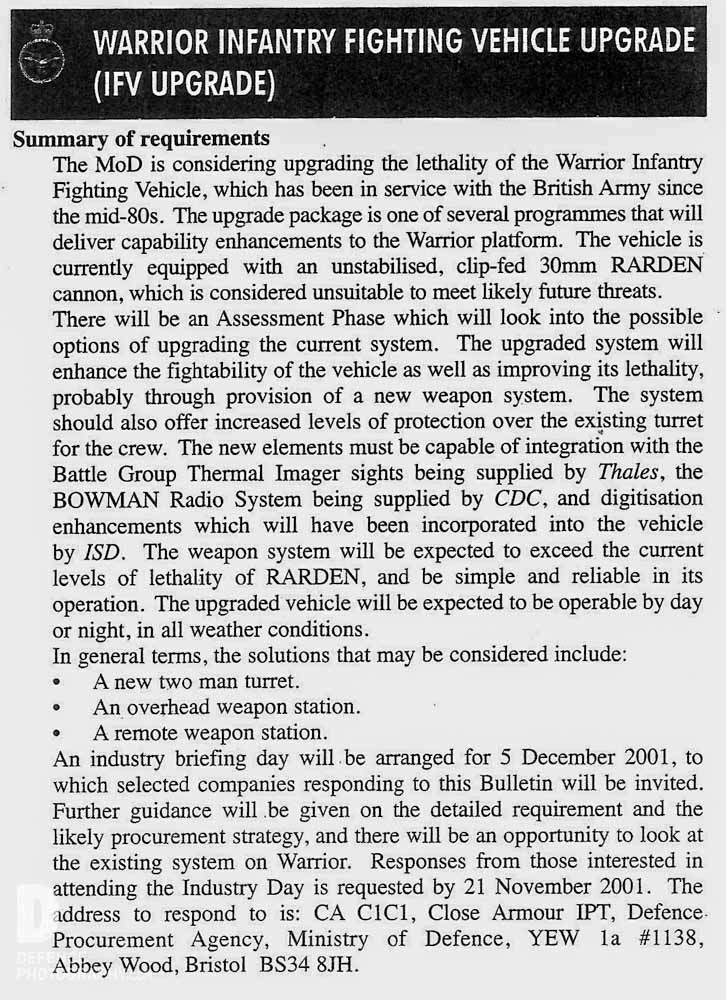
The Objective Future Cannon Programme (OFCP) was initiated in 2002, a joint programme between the UK MoD and French DGA. This defined the future programme activities and a number of key user requirements and specifications;
- Rate of Fire 200 Shots per minute
- Fire two ammunition types selectable <3s
- Remote operation Low integration volume <80 litres total swept volume
- Dispersion > <0,35 mil APFSDS > <1 mil GPR
- Minimum Fatigue Safety Life 10,000 rounds
- Operates in safety –46°C to +63°C
- Satisfies prevailing UK MoD and French DGA safety standards STANAG 4439 insensitive
- Reliability >98%
- Supports ‘coincidence’ fire control solution
The first firing demonstration of the CTAS on a Warrior was in January 2002, in the ‘Xena’ turret, shown below.
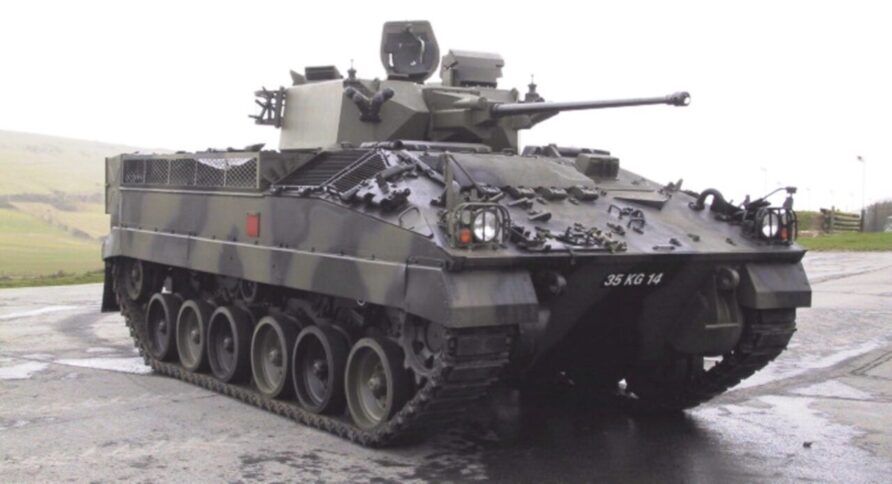
Although not specifically aimed at any one vehicle, the Manned Turret Integration Programme (MTIP) was a technology demonstrator working on the integration of the 40 mm CTWS and several different sensors. A demonstration contract was placed with Cased Telescoped Ammunition International (CTAI) to complete risk reduction demonstrations on a manned turret, feed systems and other sub-systems.
CTA was required to demonstrate the CTWS in a manned turret fitted to a Warrior by the end of 2006. The French Délégation Général pour l’Armement (DGA) also placed a contract with CTA for an unmanned turret called TOUTATIS, again, to be trialled on Warrior.
In 2003, CTAI demonstrated early models of both turrets on Warrior, the manned turret providing Level IV protection at a weight of 3.8 tonnes and the unmanned turret providing Level III protection but at a much lower weight of 1.5 tonnes.
The unmanned turret also had all the ammunition within the turret and a simpler feed mechanism, carrying capacity was 68 rounds, compared to 42 for the manned turret.
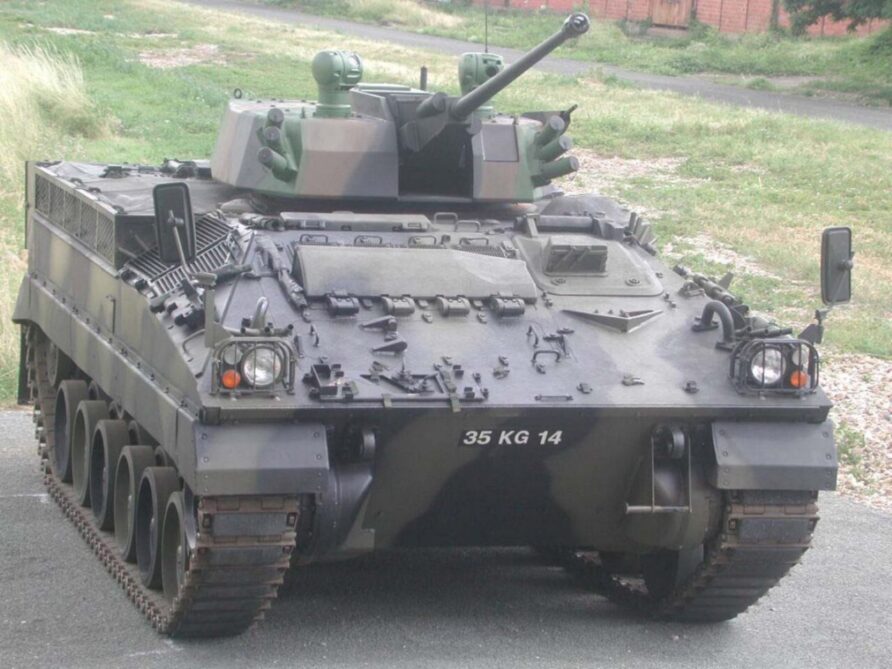
Additional firing trials were carried out in 2004 at Ridsdale Ranges with the MTIP turret.
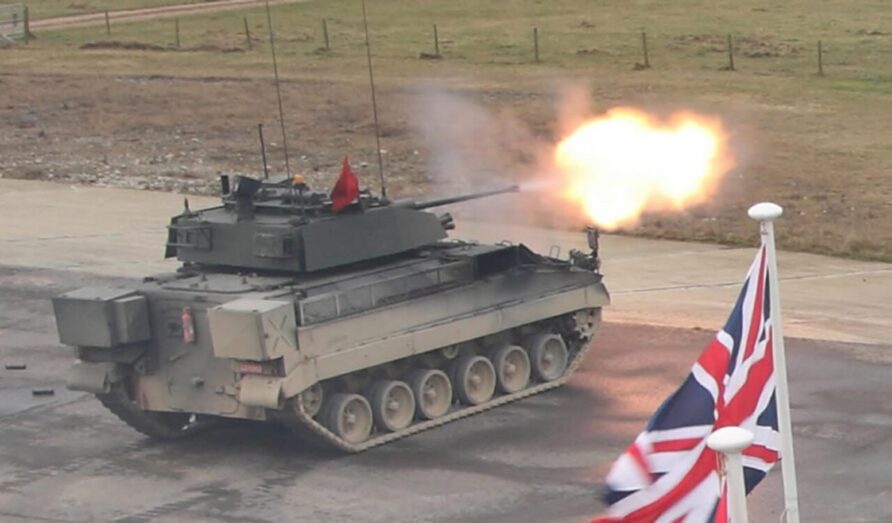
In recognition of the need to maintain Warrior capability, the MoD embarked upon the Warrior Lethality Improvement Programme (WLIP) in May 2005.
The initial plan envisaged an upgrade to 449 IFVs and the conversion of 125 vehicles into the Armoured Battlegroup Support Vehicle (ABSV), essentially, a de-turreted IFV used for certain FV432 roles like mortar carrier and ambulance.
The original intent was that the 40 mm CTAS would be central to the Warrior Fightability and Lethality Improvement Programme (WFLIP) but in 2005, the MoD announced a competition, despite the significant investment in the CTAS since the early nineties.
The competition originally specified a minimum calibre of 35 mm, but this was subsequently changed to 30 mm to allow other guns to compete.
Competing bidders included General Dynamics with a version of their Mk46 turret, as fitted to the proposed USMC Expeditionary Fighting Vehicle and now used in naval applications, Selex offered a Mk 44 Bushmaster in the Oto Melara HITFIST turret, Lockheed Martin/Rheinmetall, a modification of the existing Warrior turret and CTAI/BAE, the 40 mm CTAS in MTIP-2.
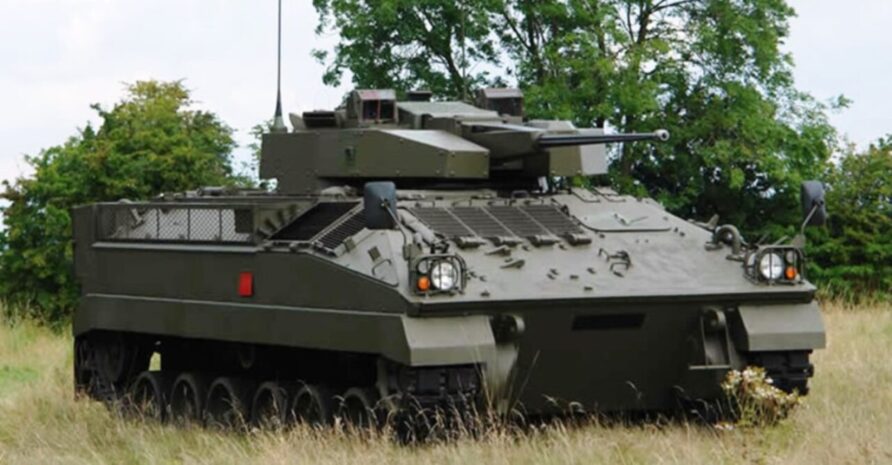
France and the UK agreed on a common certification process for the 40 mm CTWS in March 2006.
In April 2008, the MoD announced that the CTA International 40 mm CTWS had been selected for both the Warrior and FRES Scout and at the June Eurosatory, show BAE showed their self-funded MTIP 2 turret on a Warrior chassis.
The MTIP 2 turret was a brand-new design with a fully stabilised 40 mm CTWS and applique armour package that provided the same protection level as the hull.
In November 2009, Lockheed Martin and the MoD’s Defence Support Group signed a partnering agreement supporting their Warrior Capability Sustainment Programme (WCSP) and Future Rapid Effect System (FRES) bids. Lockheed Martin and BAE submitted their bids for the Warrior Capability Sustainment Project in November.
After Lockheed Martin had been awarded a study contract to investigate a common Warrior/FRES turret, it became clear that there would, in fact, need two turret variants, one for Warrior, and the other optimised for the reconnaissance role for Scout.
Lockheed Martin proposed an upgrade of the existing Warrior turret and BAE, their advanced MTIP 2 design on which they had been working for some time. BAE was certain that an upgraded Warrior turret was not a sensible option and would be difficult to meet the MoD’s requirements with it in any case.
BAE released another video extolling the virtues of MTIP-2 and being the OEM for both vehicle and 40 mm CTAS
BAE announced their investment of £4.5 million in a Turret Test Rig for both Warrior and FRES programmes in February 2010.
The £4.5m Turret Test Rig (TTR) will mimic the field testing of turrets for Future Rapid Effect System (FRES) Scout and Warrior vehicles by subjecting them to tests under extremes of temperatures. The tests are expected to take a turret through a 20-year lifespan in 12-18 months.
The facility is closely modelled on BAE Systems’ Mission Equipment Vibration Table (MEVT) in Minneapolis, built for the US FCS programme. Until now this was unique. The vibration created by tracked vehicles makes attaining good reliability very challenging, particularly for electronic components. Testing in the field, while necessary, is time-consuming, expensive and inefficient. Systems modelling and analysis manager Vince Whelan has relocated from Minneapolis where he worked on the MEVT to commission and use the new facility. He explains:
“The TTR will replace a large proportion of field trials with testing under tightly-controlled conditions. We will be able to begin these trials much earlier in the development process so that field trials become a matter of verification rather than investigation. We will also be able to test and iron out any snags in suppliers’ equipment earlier. “Having the TTR where the design team is based will help us pinpoint – and therefore solve – the source of any problems much more quickly and easily, so that we and the MoD can have confidence in meeting their demanding reliability targets.”
The rig was ordered four months ago and the facility is expected to be commissioned in September this year and will sit alongside the Systems Integration Facility which is already being heavily used for work on FRES and Warrior upgrade.
Further development and qualification of the 40 mm CTA weapon were agreed upon by France and the UK in February.
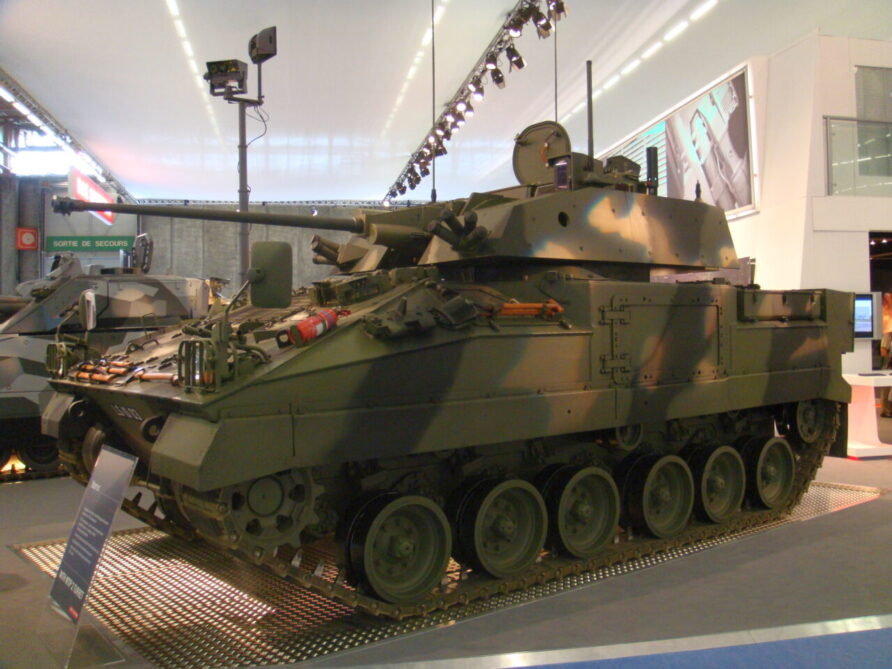
In March 2010, it was announced that General Dynamics had been selected for FRES SV Recce Block 1, or more specifically, selected as the preferred bidder. In late March 2010, the MoD Investment Approvals Board recommended a year-long delay to WCSP.
WCSP was designed to extend the service life of Warrior beyond 2040 by which time it would have been in service for over 50 years.
The upgrade includes a new turret and 40 mm CTA weapon, Warrior Enhanced Electronic Architecture and Warrior Modular Protection System. The demonstration phase, at a cost of £200m, would upgrade eight section vehicles and three other variants ready for trials between 2013 and 2014.
A production phase would follow that would upgrade 380 infantry fighting vehicles and other variants.
Each Multi Role Brigade was to have 1 Battalion equipped with Warriors.
The demonstration phase was expected to cost £200 million and manufacture £642 million. WCSP was designed to extend the service life of Warrior beyond 2040.
At this point, Lockheed Martin was still insisting an upgraded Warrior turret would be used for the WCSP vehicles.
In 2011, BAE was deselected from the Warrior Capability Sustainment Programme (WCSP) February which left Lockheed Martin as the only horse in a one-horse race, despite this they had not yet been awarded preferred bidder status.
BAE also displayed a Warrior Multi-Role Platform that it claimed could make use of the approximately 300 Warrior hulls not earmarked for upgrading as part of WCSP.
By 2012, the Warrior Capability Sustainment Programme now had an estimated full operational capability date of 2020 with production starting in 2018. The original aspiration of upgrading 643 vehicles had by now slipped to less than 400.
The £1 Billion programme cost included £358 worth of government-issued equipment such as the 40mm CTA with the balance going to Lockheed Martin. The cost per vehicle for Warrior CSP was therefore projected to be in the order of £2.6m.
In the summer of 2013 several Warrior announcements were made;
Procurement of Cased Telescoped Cannons (CTC) Ammunition
The Specialist Vehicle Cannon Project Team, part of the UK Ministry of Defence, intends to place a further buy of ammunition, with CTA International through an Amendment to Contract No FRES/0075, to support the demonstration phases of the Cased Telescopic Cannon which will be provided to Prime Contractors for integration into the Scout Specialist Vehicle (SV) and the Warrior Capability Sustainment Programme (WCSP). The total final value of contract(s); Value: 25 629 034 EUR Including VAT. VAT rate (%) 20
After a series of successful design reviews and 40 mm CTA qualification in early 2014, the WCSP achieved Initial Design Approval in January 2014. Qualification firings included the APFSDS-T and practice rounds.
In parallel with Specialist Vehicles, the Warrior Capability Sustainment Programme also progressed.
The Capability Sustainment Programme has 4 main components that are planned to see Warrior out to 2040;
- WFLIP (Warrior Fightability Lethality Improvement Programme)
- WMPS (Warrior Modular Protection System)
- WEEA (Warrior Enhanced Electronic Architecture)
- ABSV (Armoured Battlefield Support Vehicle)
The Warrior Capability Sustainment Programme was also shown off in the middle of 2013, after completing the initial design review. The first Battlegroup was set to be available by 2018 with Full Operational Capability by 2020.
BAE developed an advanced hull concept with higher blast and ballistic protection, a new MTU/Renk pack, and GVA compliant electronic system.
The Warrior Capability Sustainment Programme (WCSP) completed its Preliminary Design Review in January 2014 following the System Design Review several months earlier.
News emerged in 2014 that confirmed a decision by Lockheed Martin to abandon the Warrior turret conversion and proceed with a new turret design, this was no doubt cold comfort to BAE, who had insisted from the start that a new turret would be needed.
The whole programme was ‘re-baselined’. Lockheed Martin completed live firing trials for the Warrior CSP with its new turret design.
AMPTHILL, BEDFORDSHIRE, 20 April 2015 – The British Army’s Warrior armoured vehicle has demonstrated its firepower and fighting capability during successful firing trials in Scotland. Pictures and video released today by Lockheed Martin UK show the Warrior vehicle’s new turret and cannon successfully firing against targets while on the move. These are the latest trials that Lockheed Martin UK are undertaking as part of the Warrior Capability Sustainment Programme to upgrade the Army’s fleet of 380 Warrior vehicles. Senior members of the Army and potential international customers were invited to the Ministry of Defence’s ranges in Kirkudbright to see the Warrior in action and get an update on the progression of the programme. Modified, designed and installed by engineers at Lockheed Martin UK’s Ampthill site in Bedfordshire, the infrastructure of the Warrior vehicle will be significantly improved, including fitting the new turret with the ultra-modern CT40 weapon system, an updated environmental control system to improve crew comfort, better all-round awareness cameras and driver’s night vision, along with a modular protection fitting system to the chassis to enable quick change of armour for specific threats
A video was released to coincide with this announcement
In 2015, the MoD finally placed a production order for the CTWS, although there was an announcement in 2015 for a £75m order. The deal with the joint BAE/NEXTER company CTA International was for £150m and will provide 515 weapons for the SV Scout and Warrior vehicles. The contract also included initial spares, test equipment, specialist tools and some training.
There will be 245 for the Scout and 245 for Warrior, the balance being used for training, trials, and ammunition qualification. The MoD issued a contract amendment to CTAI for further qualification of the Target Practice Reduced Range round;
Amendment to contract MATT/CCAP/003 with CTA International (CTAI) to provide services required to conduct the qualification of a Target Practice Reduced Range (TPRR) type of ammunition on behalf of the United Kingdom and French Authorities.
The cost of this was 16.5 million Euros.
At DSEI in September 2015, several key announcements were made and the first Warrior CSP prototype was revealed.
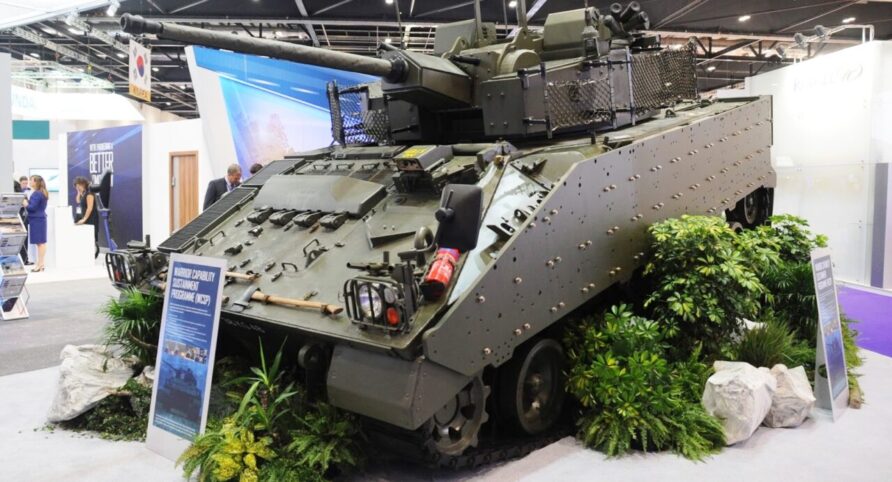
The plan for Warrior remained to complete the order for 245 turreted Warriors out of a total order of 380. The 245 turreted versions would be split between FV510 Infantry Section Vehicle and FV511 Infantry Command Vehicle.
Whilst the FV512 Mechanised Combat Repair Vehicle and FV513 Mechanised Recovery Vehicle (Repair) would likely be the majority of the non-turreted versions, the number of FV514 Mechanised Artillery Observation Vehicle and FV515 Battery Command Vehicle variants covered by WCSP was not published.
Given many FV515s were converted to ambulance variants for operations in Afghanistan and the possibility of some Ajax taking the role of the artillery observation roles, the final numbers were uncertain.
In March 2016, the first production CTA systems were handed over:
The first production-standard Cased Telescoped Cannon System has been handed over to the UK Ministry of Defence (MOD) in Bourges, France by CTA International (CTAI) – a 50/50 joint venture company between BAE Systems and Nexter Systems
At the Paris Air Show in 2017, several news outlets reported on a series of tense conversations between the MoD and Lockheed Martin, for example;
One of the less well-reported discussions at the Paris Air Show last week apparently took place between Tony Douglas, the Chief Executive of Defence Equipment & Support, and Marilyn Hewson, President and CEO of Lockheed Martin. Central to the discussion was the issue of continuing delays to the WARRIOR Capability Sustainment Programme (WCSP).
Lockheed Martin was contracted in 2011 to upgrade and enhance the UK’s fleet of over 600 WARRIOR Infantry Fighting Vehicles, extending their service lives into the 2040s. The company won the contract, valued at £1 billion (of which fully two-thirds is likely to be booked by Lockheed Martin itself) after the MoD eliminated BAE Systems from the running.
Six years later none of the required 12 demonstrators with replacement turrets and weapon systems has been delivered and the company is said by observers close to the programme to be struggling with cost and complexity.
The timing could not be worse for either party, as the government initiates a 60-day spending review in the wake of a Brexit-inspired devaluation of almost 15% in the pound. The National Audit Office has issued a stark warning regarding unprecedented levels of risk in the MoD’s equipment plan, adding that the current £10+ billion contingency fund could be entirely swallowed up.
The original plan called for the upgraded WARRIORs to enter service next year, which is now clearly impossible. Although any programme as complex as this must involve the risk of schedule slippage, the extent of the delays is apparently causing concerns over the 500+ AJAX order, for which Lockheed Martin also builds the turrets.
Clearly, all was not well in the Warrior CSP camp but the following month, a rather interesting counter from Lockheed Martin:
Meanwhile, the first upgraded Warrior vehicles have now entered Factory Acceptance Tests with full qualification trials expected to begin in Bovington by the end of the year. As well as manufacturing the new turret for WCSP, LMUK is also responsible for putting together the upgrade ‘kits’ that will refresh the vehicle’s protection as well as the platform’s electronic architecture. For the development trials, there will be seven FV520s (section vehicle); two FV521s (command vehicles); one FV522 (repair); one FV523 (recovery); and one FV524 (artillery observation vehicle) to come in the future.
Lockheed Martin showcased Warrior CSP at DSEI in 2017.
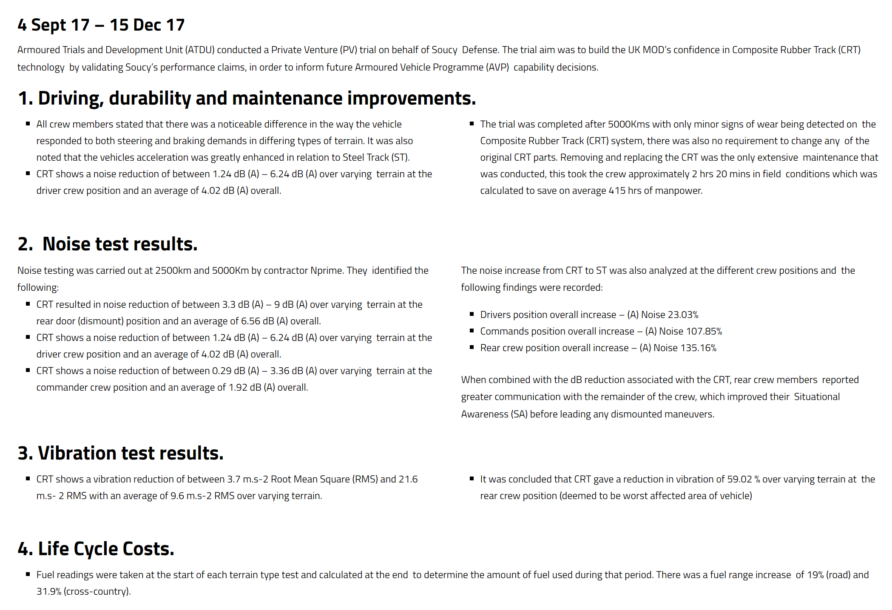
Not connected to CSP, Soucy completed a trials programme with Warrior and continuous rubber tracks in 2017.
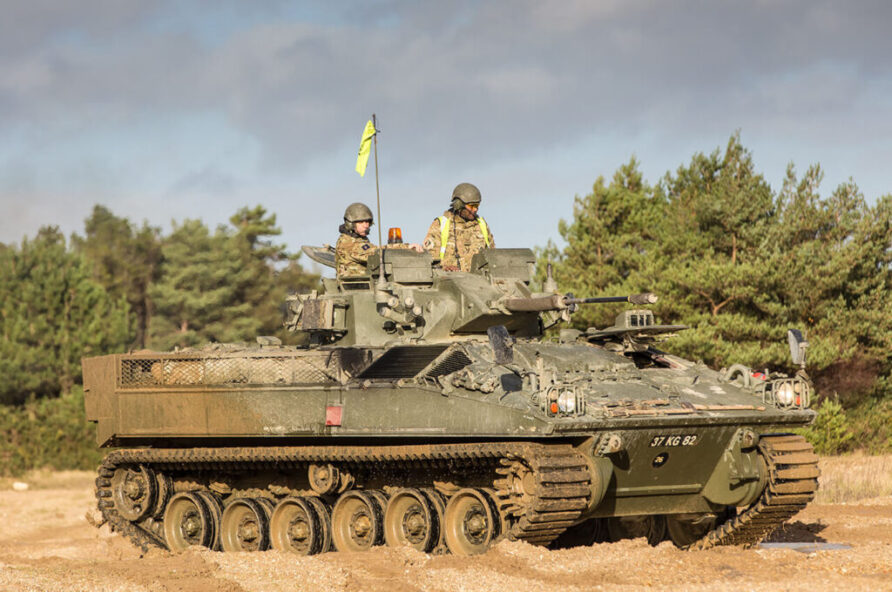
The results were reportedly, excellent.
The MoD rebaselined the Warrior CSP programme in 2017
In 2018, after a great deal of speculation, the MoD confirmed Warrior CSP was delayed by 13 months, with a new ISD of 2023 and cost growth of £200m. Lockheed Martin and 30 of its industry partners showcased Warrior CSP at the Tank Museum in March 2019 after live firing trials had been completed the month before.
Reliability Growth Trials were to commence the month after. In the same month, it was reported that Warrior CSP was now three and a half years late and £227m over budget.
Lockheed Martin released a video in 2019 describing the programme’s progress and status.
Lockheed Martin and the Armoured Trials and Development Unit (ATDU) progressed with the development of WCSP but speculation was growing in 2019 that the programme was experiencing more difficulties., the major projects report stated the problems.

A written Answer provided a cost breakdown by year for Warrior CSP from 2012 to 2019
| FY2012-13 | FY2013-14 | FY2014-15 | FY2015-16 | FY2016-17 | FY2017-18 | FY2018-19 |
| £40,211,600 | £62,804,000 | £95,671,000 | £57,464,700 | £69,444,300 | £61,155,900 | £45,192,700 |
The Times speculated that in 2019, the MoD was considering creating new hull structures rather than upgrading the existing ones.
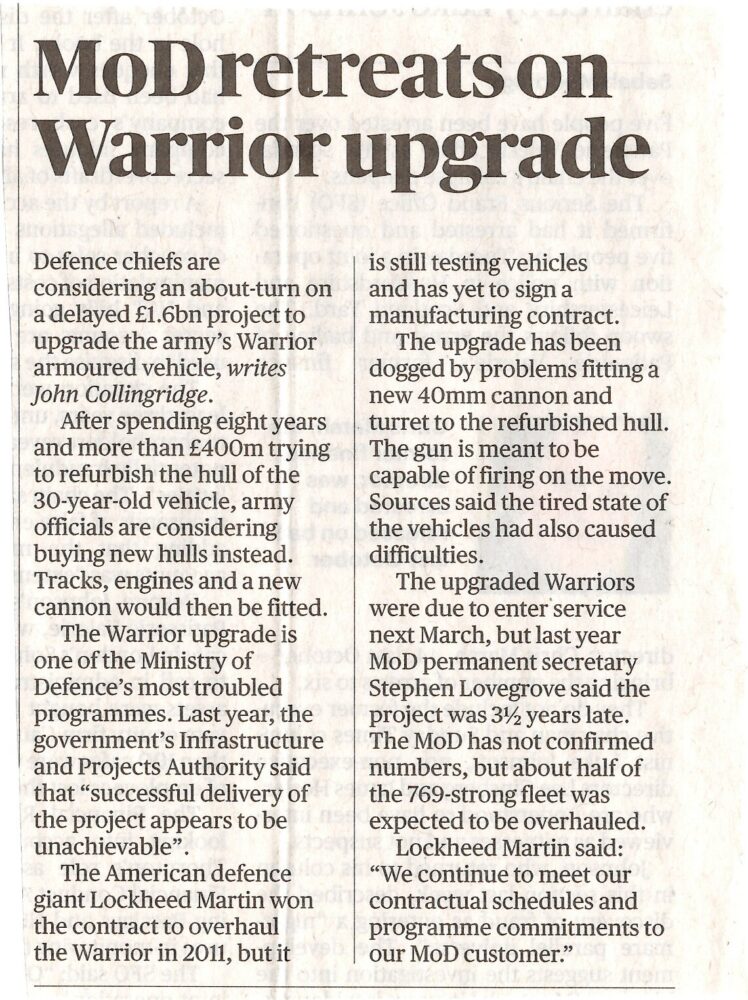
The MoD and BAE had completed some concept work on a new hull for Warrior that incorporated Level IV blast protecton and a new MTU/Renk powerpack, but this was not progressed.
There was some speculation that hull cracking and delamination were raising the programme risk.
In November 2020, further news on contract progress;
The Warrior Capability Sustainment Project is currently in the Demonstration Phase. The Invitation to Negotiate (ITN) for the WCSP Manufacture Phase was released to Lockheed Martin UK (LMUK) in June 2020 with continued dialogue between the parties. LMUK’s formal response to the ITN is anticipated in December 2020. It would not be appropriate to comment further on this ongoing commercial activity.
Despite the issues in the public, ATDU and Lockheed Martin accelerated progress in the trials programme, by the end of 2020 completing 21,000 km of driving and firing over 5,000 rounds of 40 mm ammunition.
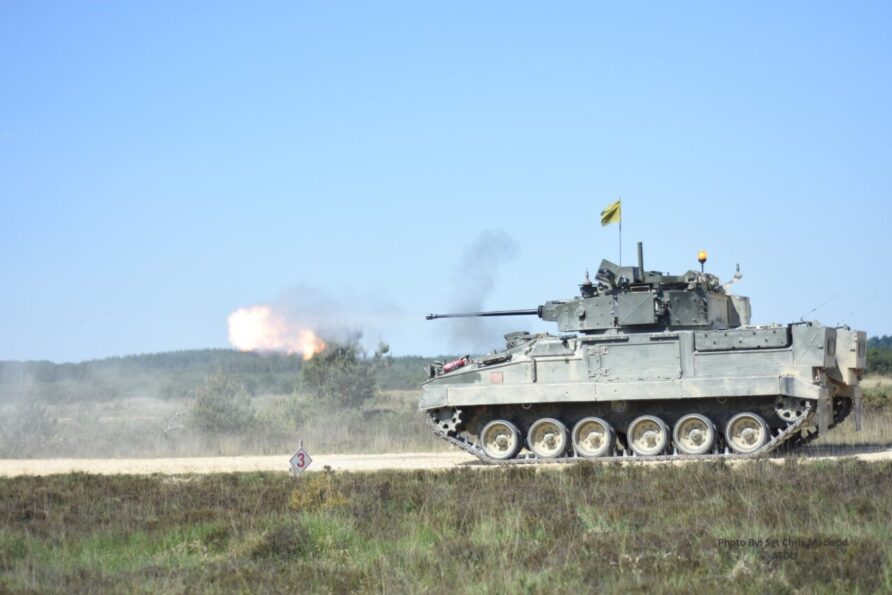
75% of the reliability growth trials were complete by the end of 2020. In early 2021, decisions on Challenger and Warrior upgrade programmes were delayed so they could be considered as part of the Integrated Review.
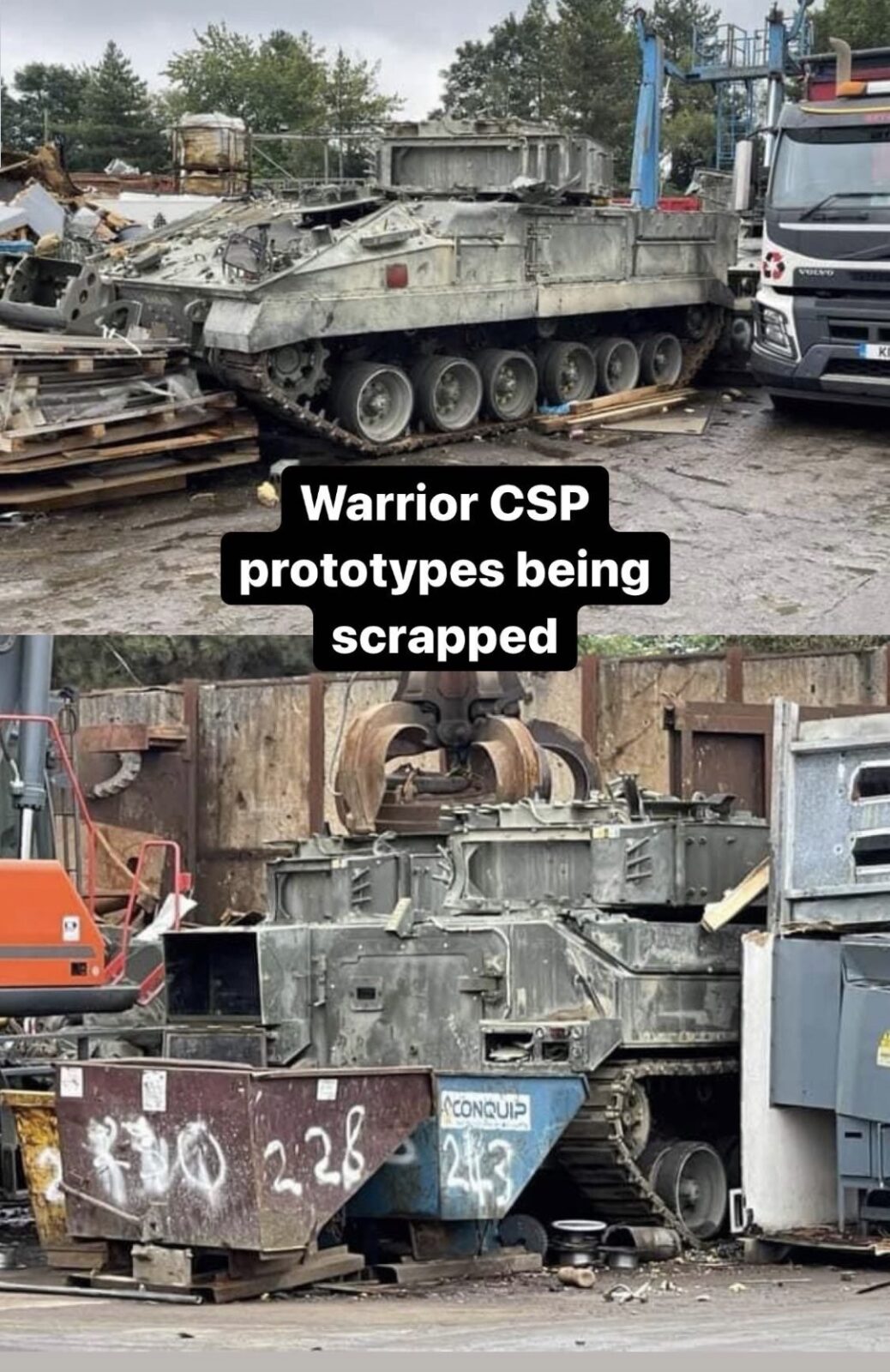
Despite this late progress, Warrior CSP was cancelled in the 2021 Integrated Review and subsequent command paper.
We will no longer upgrade Warrior but it will remain in service until replaced by Boxer, which we expect to happen by the middle of this decade
Following the cancellation of Warrior CSP, Lockheed Martin announced 158 job losses at its Ampthill site in April 2021.
The final cost to the MoD…
The cost of the Warrior Capability Sustainment Programme to 31 March 2021 is £594.6 million (inc VAT). This figure is potentially subject to change due to ongoing commercial negotiations following the Integrated Review announcement.
Some of the development vehicles have been handed over to the Armour Museum
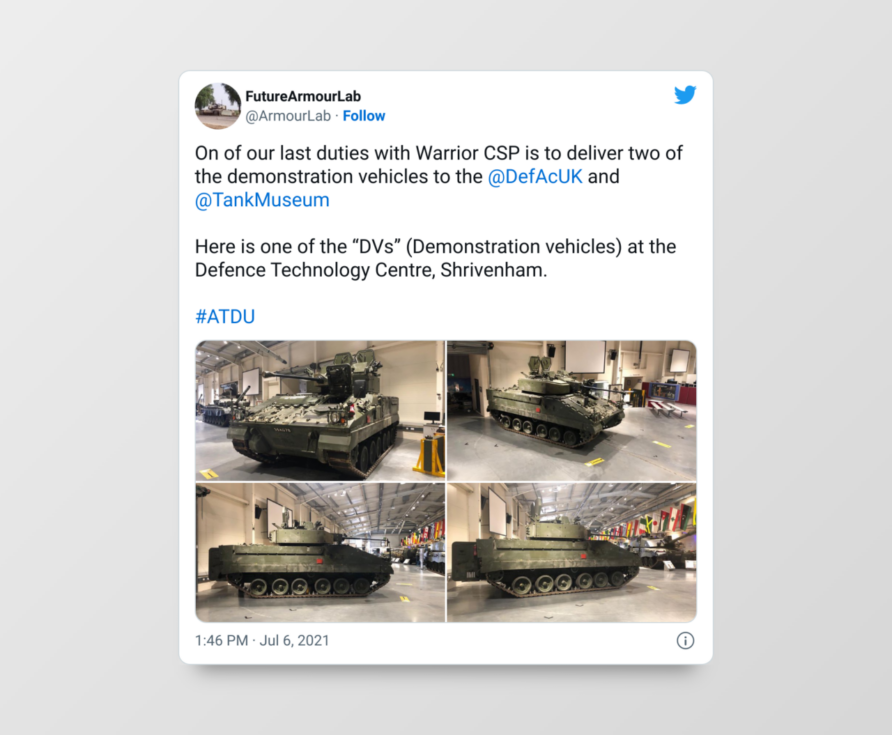
And one to the REME Museum.
Post WCSP Cancellation #
In response to a fatal accident, the MoD confirmed in 2023 that Warrior was being fitted with driver awareness cameras and several sources reported that 30 mm RARDEN ammunition manufacturing was being restarted.
Warrior continued to be used in various training exercises.
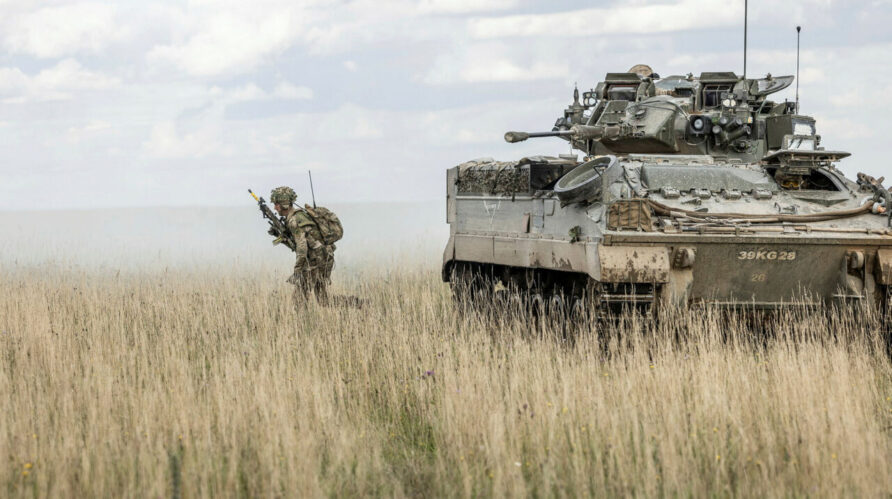
The Armoured Battlegroup Support Vehicle trials vehicle (with Soucy tracks) was given to the Alvis Fighting Vehicle Society in 2023.
A written question from Clive Lewis MP in May 2024 provided insight into the numbers of Warrior in service.
To ask the Secretary of State for Defence, how many Warrior infantry fighting vehicles are (a) held by the armed forces and (b) awaiting disposal.
The answer from James Cartlidge MP.
There are currently 632 Warrior platforms held by the Armed Forces. 80 platforms are awaiting disposal, with nine more platforms due a decision for disposal during financial year 2024-25. This is in-line with planned fleet reductions laid out within the Integrated Review 2021.
Summary #
Warrior has been a solid, reliable and capable vehicle for the British Army for near on four decades.
Yet, it is difficult to see it as anything but emblematic of the British Army’s historically abysmal approach to industrial and capability husbandry through continuous incremental improvements (or spirals in the modern vernacular).
The MoD and British Army squandered the potential of Warrior, no one else
More recently, it is important to note that the Capability Sustainment Programme (CSP) was not just a new turret; new electronics and electrical systems, environment, and protection are all dramatically improved. The 40 mm CTAS would have provided a huge lethality uplift over the 30 mm RARDEN and the latest sensors, fire control systems and stabilisation systems would allow accurate firing on the move.
It wasn’t your grandfather’s Warrior, to coin a phrase.
The CSP programme had been far from smooth, despite solid progress towards completing the Assessment Phase.
However, close to delivering a solid and workable vehicle it was, and it was within a hair’s breadth, perhaps the time was just too short for Warrior.
A cynic might observe that all defence reviews must have a cancellation, for the Army, at that time, it was this or Ajax.
There was only ever going to be one winner in that fight.
Although the story of Warrior is not yet quite over, one would certainly hope those in charge of defence procurement have learned the lessons it so illustrated.
If you found value in this article, you can help me keep Think Defence going
Think Defence is a hobby, a serious hobby, but a hobby nonetheless. I have removed those annoying adverts, but hosting fees, software subscriptions and other services add up.
To help me keep the show on the road, I ask that you support the site in any way you can. It is hugely appreciated.
You can click on an affiliate link, Buy Me a Coffee at https://ko-fi.com/thinkdefence, download an e-book at https://payhip.com/thinkdefence or even get some TD merch at https://www.redbubble.com/people/source360/
Youtubers, if you are going to lift content from here, the decent thing to do would credit me
Affiliate link


