
 Doc Summary

The FV603 Alvis Saracen was a six-wheeled armoured personnel carrier developed by Alvis Vehicles Ltd in the early 1950s for personnel transport and internal security roles in post-war British Army service.
Production ran from 1952 to 1972, with 1,838 units built, forming part of the FV600 series and sharing components with the Saladin armoured car; it was prioritised for deployment in the Malayan Emergency to enhance infantry mobility and protection against small-arms fire.
The vehicle featured an all-welded steel hull with armour up to 16 mm, powered by a Rolls-Royce B80 Mk 6A eight-cylinder petrol engine producing 160 bhp, achieving a maximum road speed of 72 km/h and a range of 400 km.
Weighing 11 tonnes in combat configuration, it accommodated a crew of two plus up to ten troops, with standard armament comprising a roof-mounted 7.62 mm machine gun in a manual turret.
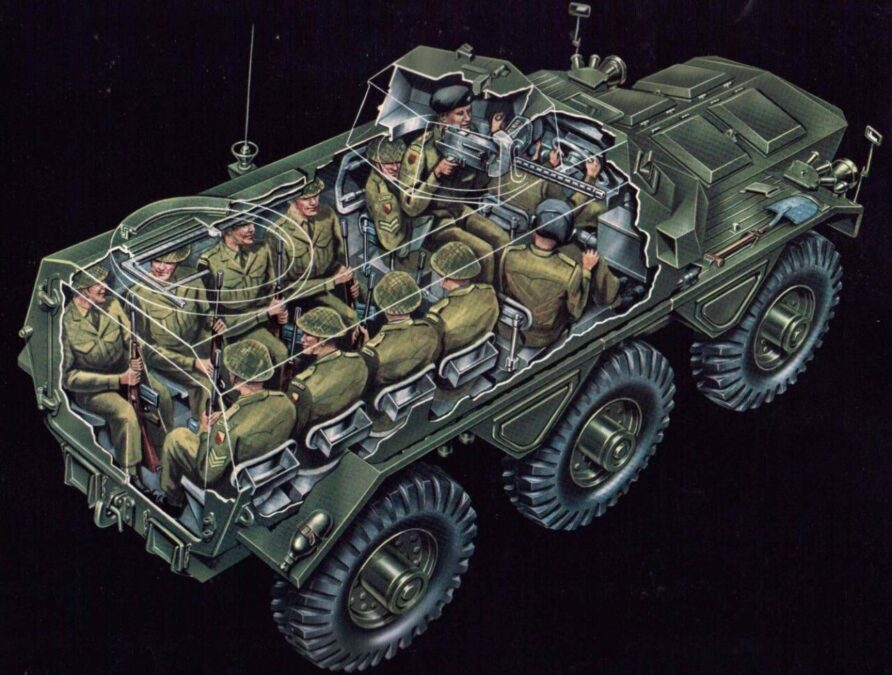
Variants included the FV604 command vehicle, FV611 ambulance, and internal security models, enabling diverse applications from battlefield transport to riot control, including notable use in Northern Ireland.
Phased out of British frontline service by 1993, it continued in global employment into the late 20th century, with upgrades such as diesel engines in some export fleets.
Development of the Alvis Saracen #
The initial development of the Alvis Saracen commenced in 1947, when the Fighting Vehicles Research and Development Establishment (FVRDE) at Chertsey initiated the design of the FV600 series of 6×6 armoured vehicles to address post-Second World War requirements for standardised, modular wheeled platforms with compatible components.
Alvis Ltd of Coventry served as the design parent and manufacturer, with Chief Engineer Willie Dunn collaborating closely with FVRDE on the FV601 Saladin armoured car.
In addition to Saladin, two other vehicles were originally envisaged as part of the FV600 series, the FV602 Command Post and FV603 Armoured Personnel Carrier.
In 1948, a state of emergency was declared in Malaya and by 1950 plans were being formulated by Lt Gen Harold Briggs to direct the anti-communist campaign. This evolved into a concerted anti-terrorist campaign that would have no need for tanks or artillery.
Dismounted infantry, supported by small armoured cars, was the preferred option. Something more substantial than a truck would also be needed to provide some measure of protected mobility to the infantry.
Step forward FV603 Saracen.
Despite still being in development, it was thought to be an ideal vehicle. The development of Saracen was prioritised over Saladin.
The first delivery of the prototype was made in June 1951. Two had been delivered directly to Malaya for field trials in the actual field it would be used in!
Testing revealed several problems, but for the most part, these were resolved in subsequent iterations before large-scale production commenced.
Alvis Saracen Production and Additional Variants #
The first production order was for 250 of the FV603a variant, later designated Personnel Carrier Mk1, shown below in Coventry
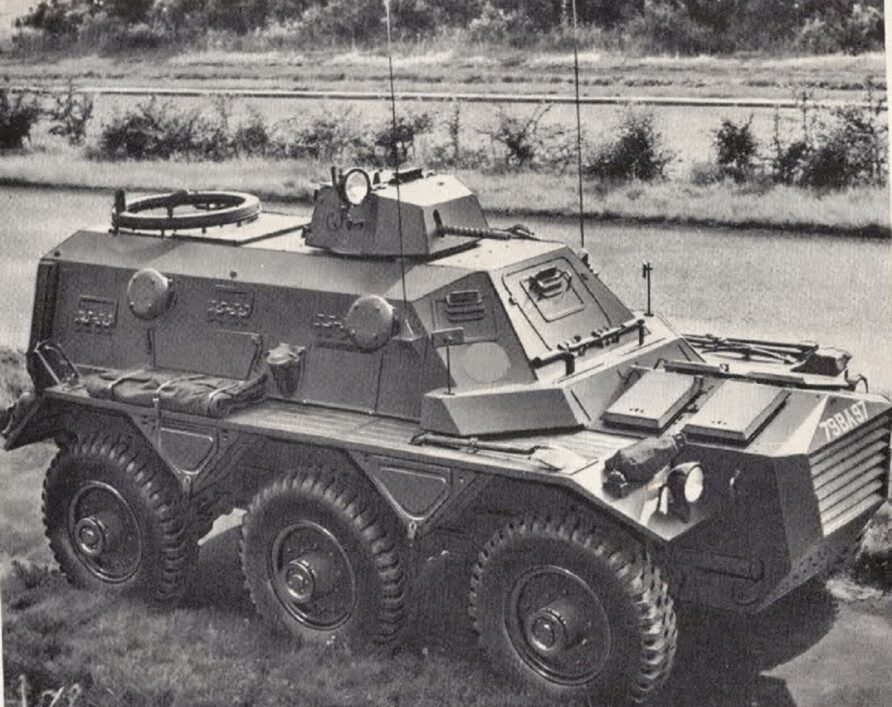
In 1952, the FVRDE issued a production specification that comprised a number of sub-variants
- FV603a Personnel and Load Carrier
- FV603b Regimental Command Vehicle
- FV603c ASSU ‘Tentacle’ or signals
- FV603d Armoured Ambulance
- FV603e Royal Artillery Radar Vehicle
- FV603f Royal Artillery Sonic Detection Vehicle
- FV603g Infantry Command Post.
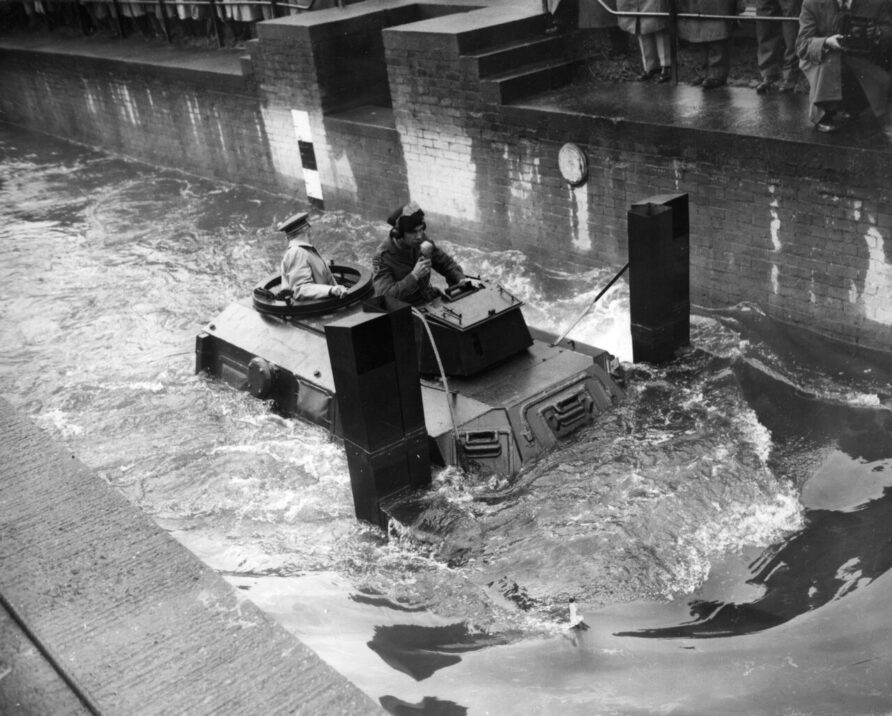
Wading trials continued throughout the period for both Saladin and Saracen
Another couple of variants emerged by the end of the decade
Experience showed that when compared to tracked vehicles, Saracen and Saladin could be used over extended durations without impairing crew and passengers.
Neither would be completely immobilised by a mine strike.
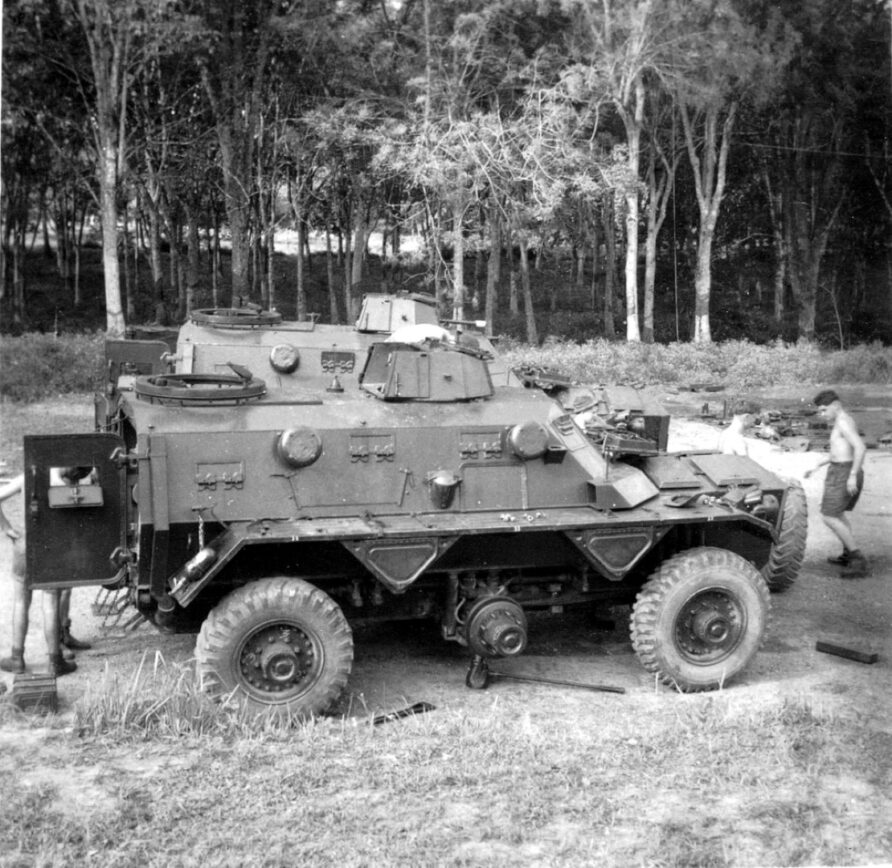
Although FV432 was in service in Germany from the early sixties, Saracen and Saladin continued to be used in Aden, Libya, Borneo, and other overseas locations.

The last Saracen left British Army service in 1983.
1,838 vehicles were produced, with production ending in 1972.
Alvis Saracen Characteristics #
The Alvis Saracen, designated FV603, was a six-wheeled armoured personnel carrier characterised by its robust all-welded steel hull, providing protection against small-arms fire and shrapnel through rolled homogeneous armour up to 16 mm thick.
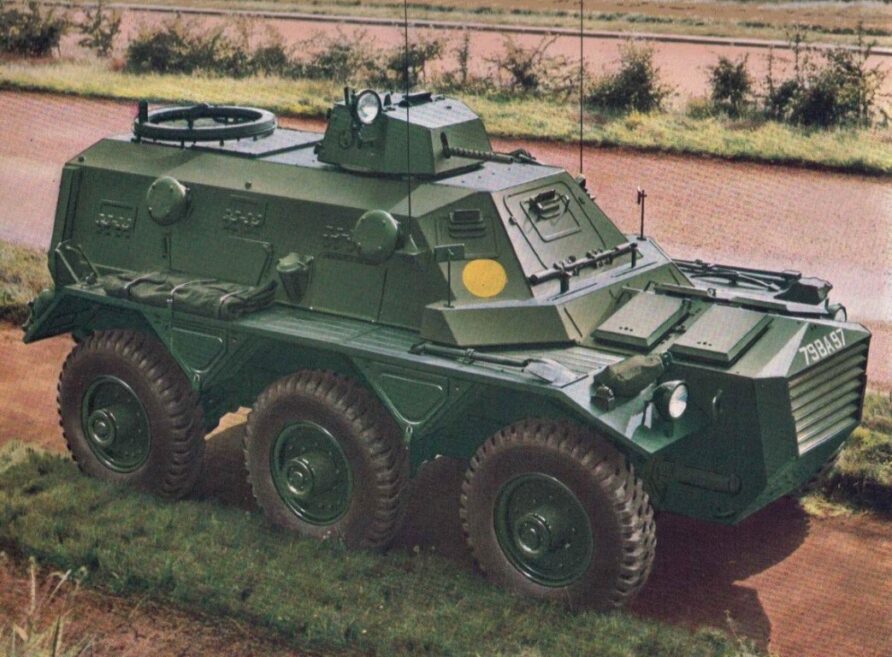
It weighed approximately 11 tonnes in combat configuration, with dimensions of 4.93 m in length, 2.54 m in width, and 2.46 m in height, affording a ground clearance of 0.432 m.
The vehicle accommodated a crew of two (driver and commander/gunner) plus up to ten troops, entering and exiting via rear doors and roof hatches.
Power was supplied by a Rolls-Royce B80 Mk 6A inline eight-cylinder petrol engine, developing 160 brake horsepower at 3,750 rpm, coupled to a pre-selector gearbox with five forward and reverse gears. This configuration enabled a maximum road speed of 72 km/h and an off-road speed of approximately 32 km/h, with an operational range of 400 km supported by a 200-litre fuel capacity.
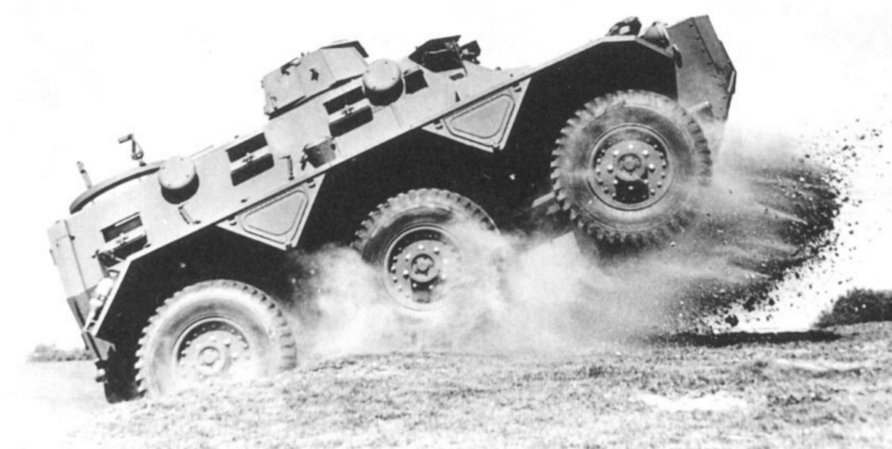
The Saracen’s 6×6 wheel arrangement, with independent torsion bar suspension and locking differentials, conferred notable cross-country mobility, including the ability to negotiate gradients of 60%, side slopes of 30%, vertical obstacles up to 0.46 m, and trenches of 1.52 m, while it possessed limited amphibious capability for fording depths up to 1.07 m without preparation.
Standard armament comprised a turret-mounted 7.62 mm Browning machine gun or equivalent, with provision for a secondary Bren light machine gun and six to twelve smoke grenade dischargers for obscuration.
The one-man turret allowed 360-degree traverse and elevation from -15° to +45°, enhancing defensive fire support during troop deployment.
| Characteristic | Detail |
|---|---|
| Weight (combat loaded) | 11 tonnes |
| Length | 4.93 m |
| Width | 2.54 m |
| Height (to turret roof) | 2.46 m |
| Ground clearance | 0.432 m |
| Crew + troops | 2 + 9 |
| Armour thickness | Up to 16 mm RHA |
| Engine | Rolls-Royce B80 Mk 6A, 8-cylinder petrol, 160 bhp |
| Maximum speed (road) | 72 km/h |
| Operational range | 400 km |
| Gradient capability | 60% |
| Armament (primary) | 7.62 mm machine gun in turret |
| Suspension | 6×6 independent torsion bar |
Saracen evolved through several marks, primarily distinguished by turret configurations, cooling systems, and armour upgrades.
- Mk 1: This early iteration featured a three-door turret with weapon ports, armed typically with an L3A4 (0.30-inch Browning) machine gun in the turret and a Bren light machine gun on a rear gun-ring mount. It served as the initial production model for troop transport, deployed in the Malayan Emergency for rapid infantry mobility in counter-insurgency operations.
- Mk 2: A refinement of the Mk 1, incorporating a two-door turret where the rear door folded down to serve as a commander’s seat. Armament remained consistent with the Mk 1. As the most prolific mark, it was utilised extensively in colonial conflicts, including the Aden Emergency and Nigerian Civil War, for personnel carriage and patrol duties.
- Mk 3: Based on the Mk 2 but equipped with reverse-flow cooling to mitigate overheating in arid environments. Air intake occurred via raised rear louvres, with expulsion through front radiators via reversed fan blades. This adaptation facilitated deployments in the Middle East, such as with Kuwaiti forces in the 1960s, where some units combined it with open-roof designs.
- Mk 4: A prototype-only development with no production models or operational service recorded.
- Mk 5: Up-armoured conversions of Mk 1 or Mk 2 vehicles, incorporating appliqué armour, internal padding, seatbelts, and harnesses for enhanced protection against improvised explosive devices. These modifications, adding significant weight, were tailored for urban operations in Northern Ireland during Operation Banner, where they withstood culvert bomb attacks effectively.
- Mk 6: Similar to the Mk 5 but derived from the Mk 3, combining reverse-flow cooling with additional armour and internal safety features. It saw use in Northern Ireland for riot control and patrol, as well as in export fleets for internal security.
Northern Ireland Service #
With the emergence of the ‘Troubles’ in Northern Ireland, Saracens were sent, where they formed the armoured mobility backbone of the units on duty there.
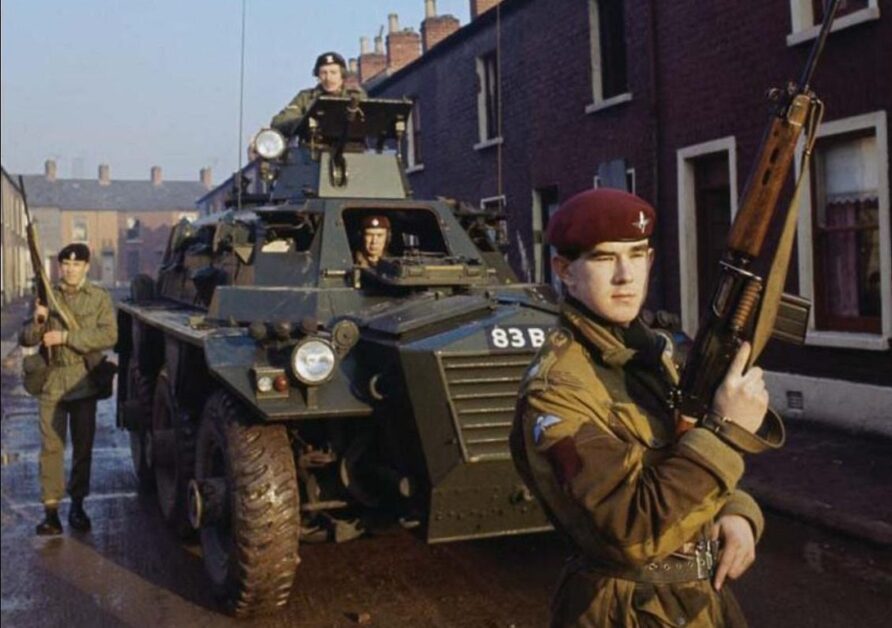
Number were increased by a batch of export Saracen Mark 3s, originally intended for sale to Libya but not delivered., arriving in Northern Ireland with their desert camouflage still applied.
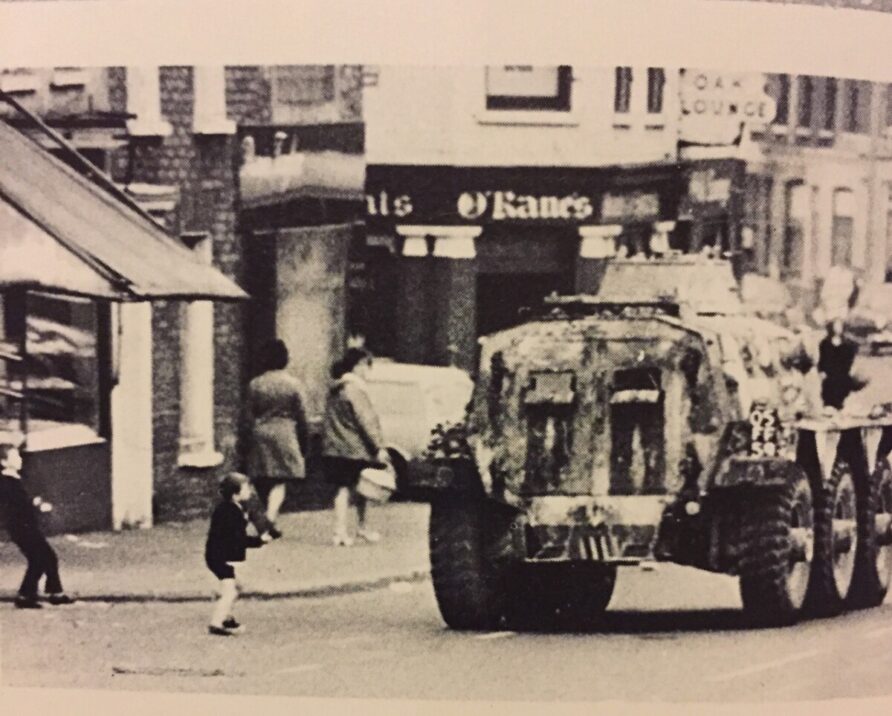
Saracens were gradually up armoured and fitted with various anti-riot equipment such as CS canister or smoke dischargers, anti-wire posts to protect the commander, loudspeakers, and the Operation Kremlin I and 2 anti-RPG protection screens.
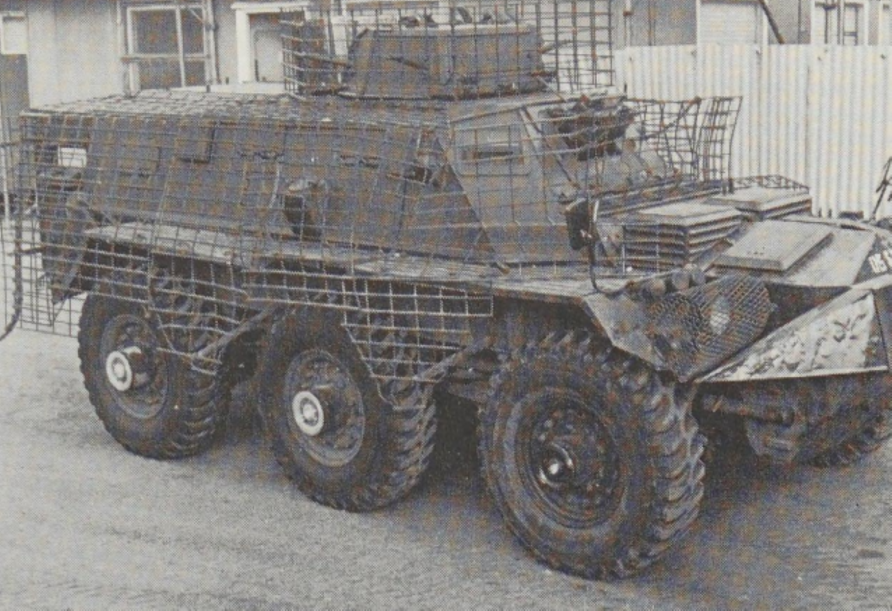
Some vehicles had had their turrets removed, while variants such as the FV610 and FV604 were also pressed into use after their specialist equipment was removed.
The Saracen was also used as an armoured ambulance.

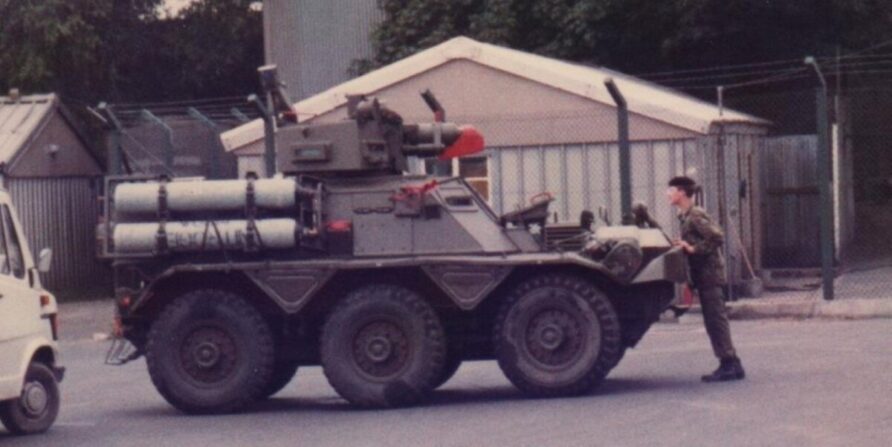
Based on the Mk 6, a Northern Ireland-specific variant included a high-pressure water cannon for crowd control, called the Special Water Dispenser (SWD)
Other Saracen Variants #
Beyond the marks, the Saracen hull was adapted for non-transport roles, often with modified superstructures.
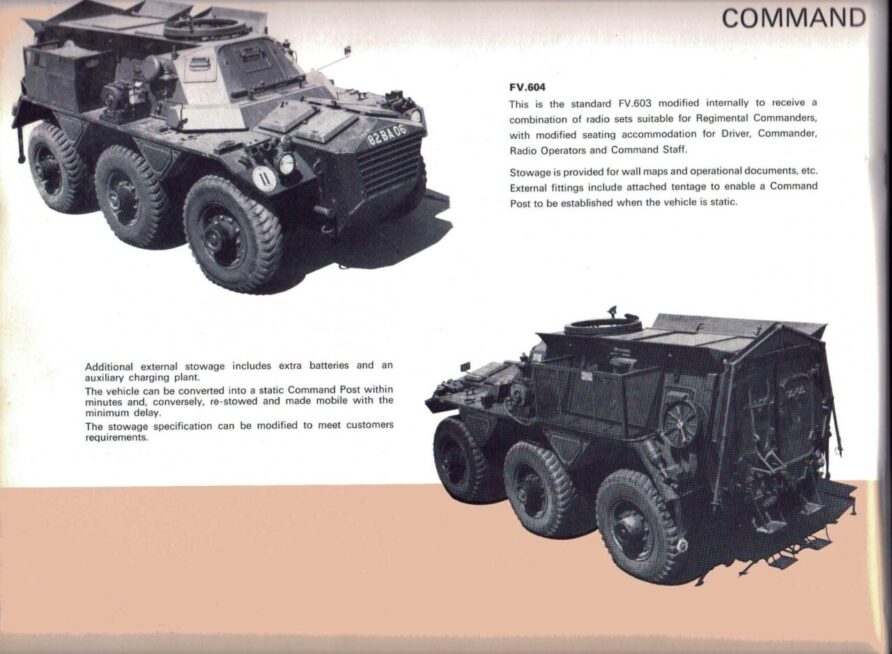
FV604 Armoured Command Vehicle (ACV): This command post variant replaced troop seating with map boards, additional radios, a generator, and stowage baskets, accommodating six personnel (including three staff officers and two radio operators). It featured distinctive “penthouse” roof extensions for antenna support. Employed for tactical command in artillery and signals units, it was integral to British Army operations in various theatres.
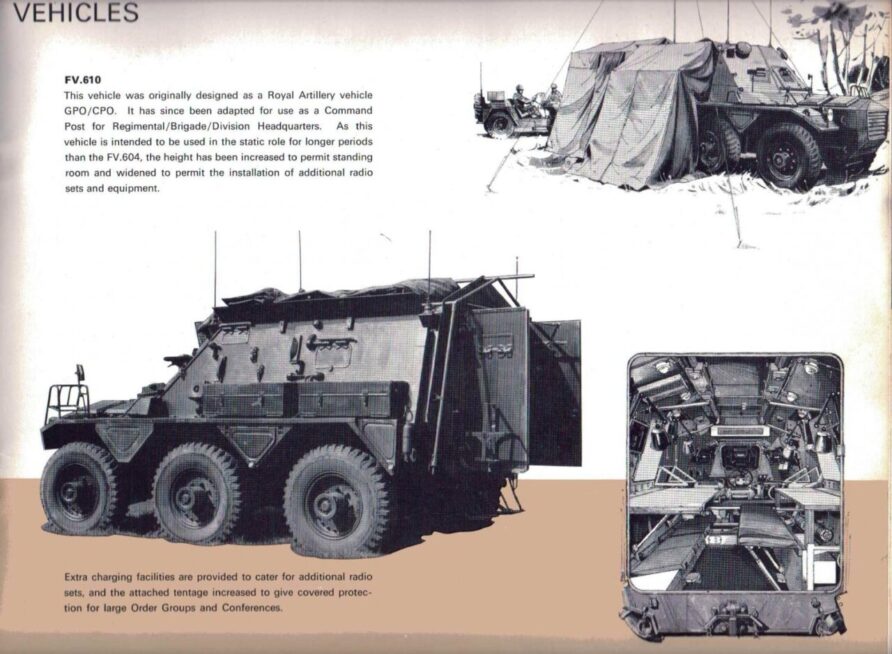
FV610 Armoured Command Post (ACP): A turretless command vehicle with a higher and wider hull for static headquarters functions, providing headroom for a battery command post officer and assistants at a plotting table equipped with ALS 21 instruments. It included fittings for a rear canvas penthouse and a wing-mounted generator. Used primarily for Royal Artillery coordination in field environments.
FV606 / FV611 Armoured Ambulance: Built on the FV610 chassis, this medical variant accommodated two crew and up to ten patients (in configurations of seated, stretchered, or mixed). It prioritised casualty evacuation with internal medical storage. Deployed in conflicts like the Lebanese Civil War and South African Border War for battlefield medical support.
If you found value in this article, help me keep Think Defence going.
Think Defence is a hobby, a serious hobby, but a hobby nonetheless. I have removed those annoying adverts, but hosting fees, software subscriptions and other services add up.
To help me keep the show on the road, I ask that you support the site in any way you can. It is hugely appreciated.
You can click on an affiliate link, Buy Me a Coffee at https://ko-fi.com/thinkdefence, download an e-book at https://payhip.com/thinkdefence or even get some TD merch at https://www.redbubble.com/people/source360/
Youtubers, if you are going to lift content from here, the decent thing to do would credit me


In 1975 I was casevaced to a Belfast hospital in one of these from Long Kesh after being injured quite badly in a riot. during my second for in 1975, the crew of 2 needed to return to their unit as it was a bit active in the area. They lay the stretcher on the floor, as I was the only casualty, and didn't strap it down. There were dozens of Sleeping policemen speed reducers in and about the Kesh and at every one I bounced off the stretcher the pain was intense and in response to my screams the medic said 'the pains only in your mind' to which I replied its in my f?????g knee you moron or words to that effect.
It is an excellent photo