
 Doc Summary

The British Army Mechanised Infantry Vehicle (MIV) programme is a major armoured vehicle procurement initiative for the British Army that will deliver a modern, wheeled mechanised infantry capability.
Re-joining the multinational Boxer initiative in 2018, the Ministry of Defence awarded a £2.8 billion contract in 2019 for over 500 vehicles, emphasising rapid deployment, NATO interoperability, and resilience against contemporary threats such as IEDs and anti-tank weapons.
Before the Mechanised Infantry Vehicle (MIV) Programme #
The British Army Multi-Role Armoured Vehicle (MRAV) programme was a late-1990s multinational effort to develop a modern, modular 8×8 wheeled armoured utility vehicle family to replace ageing platforms like FV432, Saxon, and some CVR(T) variants, providing protected mobility for high-intensity conflict and rapid-reaction operations
Read more about MRAV, here
MIV originated from earlier efforts like the Future Rapid Effect System (FRES) Utility Vehicle concept and was formally revived in the 2015 Strategic Defence and Security Review to support rapidly deployable Strike Brigades (now evolved into Armoured Brigade Combat Teams).
Read more about FRES, here
FRES to The Mechanised Infantry Vehicle (MIV) (2009 to 2014) #
The FRES Utility Variant (UV) was effectively cancelled when preferred bidder status was withdrawn from General Dynamics in December 2009.
Focus moved to the Specialist Vehicle, and the Utility Vehicle requirement went into abeyance.
As the Army began to think about what would follow Afghanistan, the issue of mobility was at the forefront.
At the RUSI Land Warfare Conference in 2011, General Sir Peter Wall, the Chief of the General Staff, commented:
We have got far too used to a post-expeditionary psyche, where we have hard-wired bandwidth and quite sophisticated facilities in places like Camp Bastion. We need to transition our thinking to a more expeditionary psyche, where in the early days of a new campaign, we will be forced to operate without the sophistication we have managed to grow in the Afghan landscape.
Like a number of other armies, we have over this period been forced to put some aspect of our war-fighting capability temporarily on hold as we got completely absorbed by the challenges of success in Afghanistan.
Combined arms maneuver remain a part of our repertoire, but it has to modernized and coupled with the ability to handle asymmetric threats and irregular threats and also take account of additional dimensions in battlespace, for example cyber. The Army has an excellent suite of equipment at the moment, but it is specific to the Afghanistan challenge, if we look at our forward equipment program, it’s rather a different story.
We face a budget which is reducing considerably over the early years of the current decade, after which we will certainly require real-term growth over the latter part of the decade if we are to resource [our plans] for Future Force 2020
At the same conference, Major General Bill Moore, the MoD’s director of battlespace manoeuvre and Master General of Ordnance said:
While support for operations [in Afghanistan] is the main effort, we need to deliver a coherent Future Force 2020. If we don’t get this right and don’t get the Warrior [capability sustainment program] funded and maintain the other things in our program, the Army will be walking to war from 2015.
In 2011, in preparation for deployment to Afghanistan the German armed forces did two things, first they upgraded existing vehicles to the ‘Afghanistan A1’ configuration and second, announced that all new vehicles would now come off the production line in this same configuration, starting from vehicle number 41.
Most changes were minor, like more storage space, an improved crew harness with an integral airbag, fitting smoke dischargers, and raising the height of the remote weapon station to improve depression angles.
An upgrade more significant was the integration of an ECM system and improved belly armour.
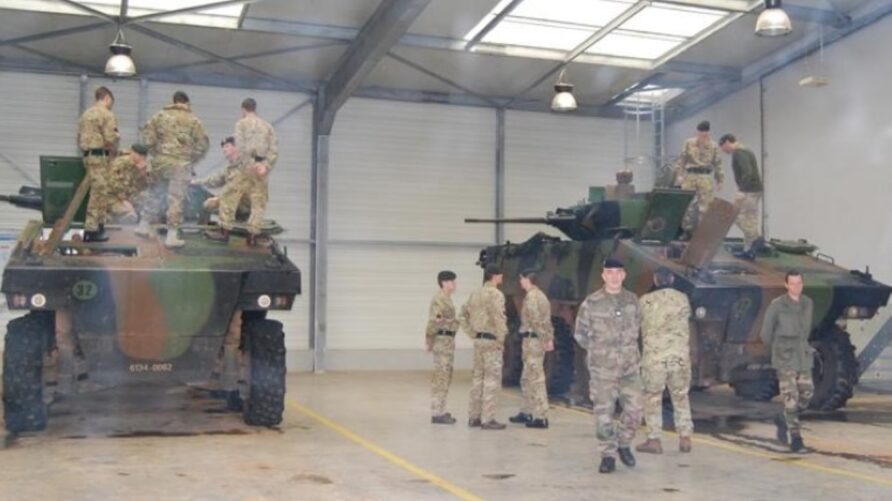
VBCI was already in Afghanistan by this point, both vehicles rejected by the MoD in the FRES UV Trials of Truth
After the Lancaster House agreement on working together in defence, the UK said they would try out VBCI for 8 months.
In 2014, Phillip Dunne MP said this in Jane’s.
VBCI had fallen down on three elements in the original competition: accessibility to the vehicle’s powerpack, the vehicle’s armour protection levels, and its growth potential. VBCI has undergone a significant upgrade, the new export variant of the VBCI includes the ability to remove the vehicle’s powerpack in the field and an improved suspension and transmission to increase the VBCI’s maximum weight from 29 tonnes to 32 tonnes.
Other improvements include fourth-axle steering, a repositioned fuel tank, upgraded cooling and engine performance, and small hull reconfigurations to increase the vehicle’s internal volume
After rejecting VBCI in 2007, the British Army was trialling it again.
In August 2014, the term Mechanised Infantry Vehicle (MIV) appeared in the Ministry of Defence acronyms and abbreviations PDF.
Mechanised Infantry Vehicle Emerges (2015 to 2017) #
In May 2015, the MoD briefed industry on the emergent Mechanised Infantry Vehicle (MIV) requirement.
The MIV project is still in pre-concept and initial work is taking place scoping the approach to the project. Initial Gate [the concept phase] is anticipated in 2016
Both Nexter and General Dynamics expressed public interest in MIV, highlighting how their respective vehicles had matured since the FRES Trials of Truth.
After the 2015 SDSR was published in late 2015, an SDSR 2015 Fact Sheet was published in January 2016. The fact sheet specifically mentioned MIV
The new Strike Brigades will be centred around the new Ajax vehicle fleet and enabled by the acquisition of a new Mechanised infantry Vehicle to provide a better protected more agile force capable of self-deploying over large distances
In 2016, the Bundeswehr announced all its Boxers would be upgraded to the A2 standard, a package of improvements in all areas of the vehicle’s design, from repositioning the towing cable to common displays.
The Defence Vehicle Dynamics show was used by contenders to showcase their offerings.
- General Dynamics Piranha V and LAV
- Nexter VBCI
- Singapore Technologies Kinetics Terex 3
- Patria AMV
- Artec Boxer (with KMV and Rheinmetall)
Information from the MoD indicated that expected quantities were 250 to 300 vehicles, with an in-service date of 2023. The baseline vehicle would be fitted with a Remote Weapon Station (RWS) armed with a 12.7mm HMG.
Variants included
- Protected Mobility (MIV – PM)
- Command and control (MIV – CC)
- Ambulance (MIV – A)
- Repair (MIV – REP)
- Recovery (MIV – REC)
In October 2016, several news outlets reported that The MoD intended to purchase the Rheinmetall Boxer to meet the Mechanised Infantry Vehicle (MIV) requirement without competition.
Quantities were reportedly up to 800 at a cost of £4 million each.
Lithuania joined the Boxer programme in August 2016.
There was some initial discussion on Stormer replacement and a 150mm Self Propelled Howitzer development.
Industry proposals to the market engagement survey were submitted to the MoD in late November 2016.
In December 2016, Jane’s reported that as part of Army 2020 Refine, main battle tank numbers would be reduced from three regiments to two. One unit would re-role to Ajax as part of the Strike Experimentation Group, and the Mechanised Infantry Vehicle (MIV) would equip two battalions in a Strike Brigade.
The basic organisation of a Strike Brigade would, therefore, consist of;
- 1 Regiment of Ajax in the reconnaissance role
- 1 Regiment of Ajax in the ‘medium armour’ role
- 2 Battalions of mechanised infantry in the yet to be purchased Mechanised Infantry Vehicle (MIV)
- Supporting CS/CSS
At the end of 2016, Patria showed an AMV fitted with a modified Lockheed Martin Warrior two-man turret.
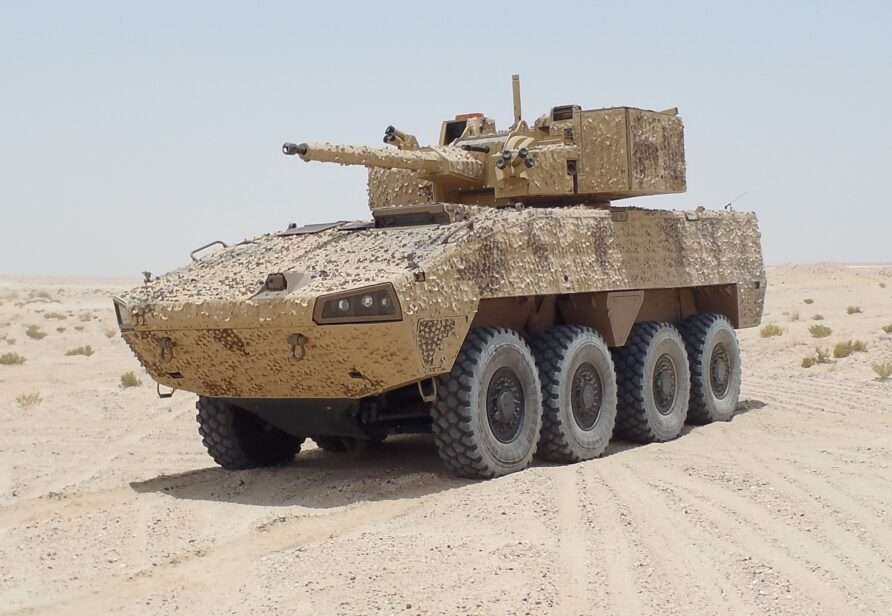
Experimentation with the Strike Brigade continued throughout the year and in 2017, despite earlier indications that Rheinmetall would not offer Boxer for the MIV requirement, Rheinmetall started to build a UK industrial team for the bid, the aim was to produce 60% of the vehicle by value in the UK.
The 400th Boxer was delivered in February 2017.
The total Boxer programme now stood at 696 with the vehicles in service or planned to be in service, with Germany, the Netherlands, and Lithuania.
Although the General Dynamics Piranha V, Patria AMV and Nexter VBCI were on show throughout this period., from the media output, one could be forgiven for thinking that only the Rheinmetall Boxer mattered.
General Dynamics emphasised the speed of delivery for Piranha V with a comment that initial vehicles could be delivered from existing productions before transferring manufacturing to their South Wales factory.
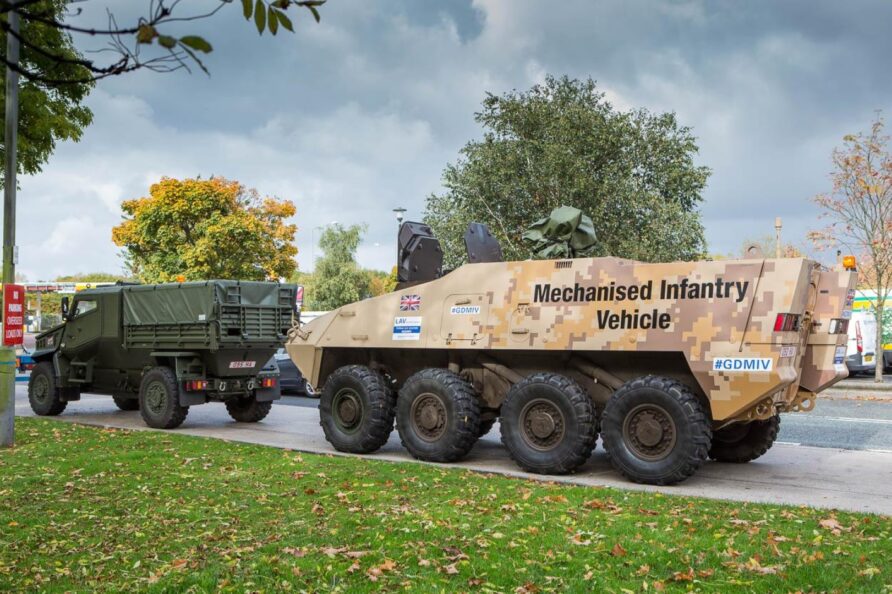
Many manufacturers returned information to the MoD in response to enquiries; ARTEC, BAES, FNSS, General Dynamics, Nexter, Patria, ST Engineering, and Thales.
Speculation continued throughout 2017 regarding the MoD’s desired acquisition strategy, whether an open competition or direct selection and purchase.
Boxer Confirmed for MIV (2018 to 2020) #
In January 2018, Harriet Baldwin (Parliamentary Under-Secretary of State and Minister for Defence Procurement responded to a letter from Julian Lewis MP (Chair of the Defence Select Committee) regarding the Mechanised Infantry vehicle.
In February 2018, a Rheinmetall press release described the industrial partnership arrangements, should they be selected.
Leading British companies in the defence sector BAE Systems, Pearson Engineering and Thales UK have signed agreements with the ARTEC consortium as partners for the production of BOXER. Should the armoured wheeled vehicle be selected as the British Army’s next generation Mechanised Infantry Vehicle (MIV), at least 60% of BOXER’s value creation and 100% of final assembly will take place in Britain. To ensure the best value to the British tax payer, ARTEC has defined a competitive process for the main partners and their supply chains to follow.
ARTEC’s investment in the UK value chain is estimated to secure or create at least 1,000 jobs all across the country. The UK partnership approach will ensure that British companies are fully embedded in the MIV supply chain. Rolls Royce, Parker-Hannifin, WFEL and British subsidiaries of the ARTEC parent companies will also supply British content.
Further, Rheinmetall intends to establish a modern production and integration centre for armoured vehicles in the UK as part of the programme. This represents a significant commitment from Rheinmetall which will lead to long-lasting armoured vehicle capability in the UK.Further, Rheinmetall intends to establish a modern production and integration centre for armoured vehicles in the UK as part of the programme. This represents a significant commitment from Rheinmetall which will lead to long-lasting armoured vehicle capability in the UK
Also in February 2018, Slovenia selected Boxer and plans to purchase 48 of them.
After a competitive evaluation, Australia Rheinmetall Defence Australia (RDA) was selected as the preferred tenderer for Land 400 Phase 2 with Boxer.
The Phase 2 programme was defined as; Mounted Combat Reconnaissance Capability, primarily enabled by the Combat Reconnaissance Vehicle (CRV) mission system (the ASLAV replacement).
The $5 billion projects was to provide the Australian Army with 211 new vehicles, plus 12 additional modules.
A video from 2018 that has some useful information.
A March 27th 2018 article in the Telegraph claimed the MoD was getting closer to ordering Boxer.
Britain’s military is closing in on a multi-billion pound deal to equip the army with eight-wheeled armoured vehicles that will form a key part of the country’s future combat strategy. Defence sources say the Ministry of Defence is requesting information about pricing ahead of a potential purchase of hundreds of Mechanised Infantry Vehicles (MIV). Although not an order, the request for information — due to be made any day — will help military planners cost up the deal ahead of a so-called “main gate” decision on whether to go ahead. It is thought the MoD could ultimately order as many as 500 MIVs at a cost of up to £2bn.
This was another media article that contributed to speculation regarding MIV and its acquisition strategy, especially in balancing speed into service and the degree by which the UK supply chain can be established.
The Government announced its decision on March 31, 2018.
The British Army has taken a step towards exploring a deal for a fleet of new armoured vehicles, potentially supporting at least 1,000 British jobs, by announcing it is re-joining the Boxer programme today. The UK will re-join the Boxer programme and explore options to equip the Army with the 8×8 troop carriers to modernise its vehicle fleet and meet the Army’s Mechanised Infantry Vehicle requirement.
The UK played a major role in the original design, development and testing of the Boxer, and would reassume the rights it had as a project partner if a deal was to go through — allowing the option for the vehicle to be built and exported from the UK. The deal could see the Boxer fully assembled in the UK with at least 60% of the manufacturing with British industry, sustaining and developing UK industrial capabilities, facilities and skills.
Artec, the consortium who manufacture the Boxer vehicle, have already made commitments to British industry by signing partnership agreements with BAE Systems, Pearson Engineering and Thales UK, in anticipation of a deal being struck. It is expected that British companies would compete for the manufacture and supply of many of the vehicle sub-systems, as well as for a full production and assembly line in the UK. Estimates suggest Artec’s planned investment in the UK could secure or create at least 1,000 jobs, based across the country including locations such as Glasgow, Newcastle, Sheffield, Stockport, Telford and Wales.
With the likes of Rolls Royce already powering Boxers with engines and Parker-Hannifin, William Cook Engineering and other British companies also supplying sub-systems for the vehicle, this deal could secure a broader industrial UK partnership. The MOD is now taking forward negotiations with the Organisation for Joint Armament Cooperation (OCCAR) and Artec. Looking forward to the Assessment Phase, concluding in 2019, this will consider the comparable benefits of manufacturing locations and different supply chains for Boxer, as well as value-for-money. Any deal will be subject to commercial negotiation and assessment in 2019 and the aim is to have the first vehicles in service with the Army in 2023.
OCCAR is a European intergovernmental organisation which facilitates and manages collaborative armament programmes through their lifecycle between the UK and European allies. The organisation manages the Boxer programme and, as an OCCAR member state, the UK has the necessary Intellectual Property Rights to the Boxer and greater control over ensuring Britain benefits from supply chain work.
The MOD conducted a comprehensive market analysis of Mechanised Infantry Vehicles in-service, entering service and in development. The analysis was guided by the British Army’s requirements and how best to deliver them. The Boxer delivered on protected mobility, capacity, flexibility, utility, and agility. As part of the proposed deal, the UK is also expected to see substantial inward investment from Rheinmetall, one of Artec’s parent companies, who signalled their intention to launch a production and integration centre for armoured vehicles in the UK as part of the programme. This would represent a significant commitment which would lead to long-lasting armoured vehicle capability in the UK.
The other of Artec’s parent companies, Krauss-Maffei Wegmann (KMW), already has a substantial UK manufacturing facility in Stockport, from where it designs, manufactures and supports complex military equipment as far afield as the US and Australia, as well as parts of Europe.
Further details emerged on the 18th July 2018 with a Transparency Notice
The UK MOD intends to purchase, via the Organisation for Joint Armament Cooperation (OCCAR), an initial procurement of batched quantity 400-600 protected 8×8 BOXER vehicles in 4 variants plus driver training vehicles, reference vehicles and support. The batched quantity may be revised if the demands of any UK strategic direction impacts on MIV. Support covers spares, consumables, technical publications, tools, test equipment, training systems and support; project, safety, quality, security, configuration, obsolescence management services (throughout design, development, manufacture and in-service); repair and maintenance activity; and Post Design Services (e.g. future development of different vehicle variants), upgrades and new capabilities or requirements determined by any new defence priorities (e.g. security threat based); requirement based (e.g. medium calibre cannon); changes to legislation; introduction of new systems; emergent safety / environmental issues; and standardisation.
Value excluding VAT: 11 500 000 000.00 GBP
In February 2019, the 500th production Boxer was delivered.
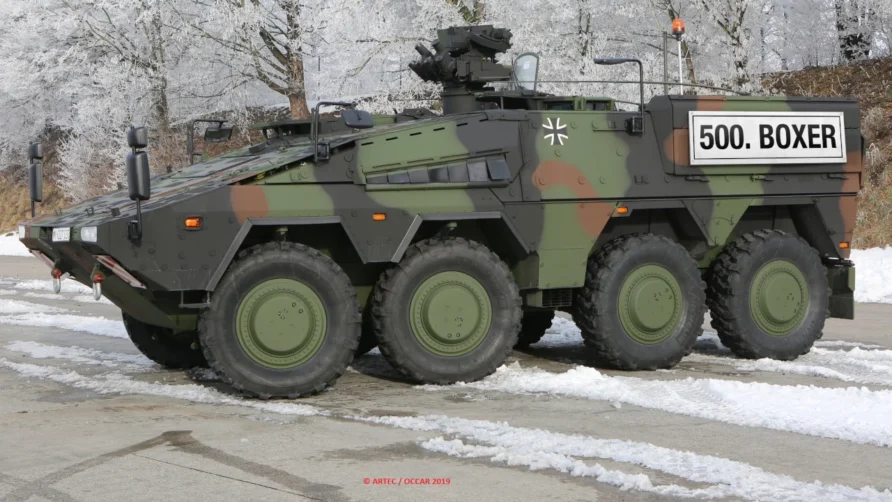
Later in the year.
On the 4th of November 2019, the OCCAR-EA Director and the ARTEC Chief Executive Officers signed a contract for the procurement of more than 500 Boxer vehicles on behalf of the United Kingdom of Great Britain and Northern Ireland (UK).
The contract includes the delivery of 5 prototypes in four specific Build Configurations (Infantry Carrier, Specialist Carrier, Command Post and Ambulance) and 523 series vehicles, initial In-Service Support Packages and Special to Role Kits. The vehicles will be equipped with a remote controlled weapon system with a 12.7mm L1A2 Heavy Machine Gun or a 7.62mm L7A2 General Purpose Machine Gun, depending on the mission. They will also have missile, blast as well as Rocket Propelled Grenades (RPG) protection.
The UK vehicles have the ability to change within the variants (Build Configurations) by changing the interior, introducing different kits and assemblies depending on the mission.
The production of the UK fleet will be shared between Germany and the UK. As a first step, the prototypes will be manufactured in Germany by the main-subcontractors of ARTEC, the companies Krauss-Maffei Wegmann and Rheinmetall. The first phase of series production will be conducted on the German production lines of both companies. Workers from the UK will be trained on how to assemble the vehicles and after the necessary knowledge transfer, the production will be transferred to new facilities in the UK. The plan says to have the first trials in June 2022 and the delivery of the first series vehicle to the British customer by November 2022.
The order value was reported to be €2.6 billion (£2.3 billion).
The short timescales for the UK assessment were greatly enabled by Australia kindly sharing their test data.
As can be seen from the above press release, each of the Artec consortium members would receive 50% of the order, and each of these conducting the majority of their share in the UK through two subsidiaries; Rheinmetall BAE Systems Land (RBSL) and KMW’s subsidiary WFEL.
RBSL is a joint venture between BAE Systems (45%) and Rheinmetall (65%).
Defence Equipment and Support released the following video in November 2019
Both RBSL and WFEL continued to develop their respective supply chains throughout 2019 and 2020, with additional development and trials, work being conducted in conjunction with the Armoured Trials and Development Unit (ATDU).
From MIV Production to In Service (2021 to Today) #
The first subcontract was awarded to WFEL in July 2020. Pearson Engineering, Rolls Royce, Thales, William Cook and Parker have also joined the supply chain.
Supply chain contracts continued to be reported as the supply chain was established
and
On June 1st, 2021, the British Army announced the first UK Boxer pre-production vehicle had entered construction.
Rheinmetall will develop and fabricate first prototypes at its plant in Kassel, Germany, where the first series vehicles will also be produced. Workers at the German plant will share technical knowledge, particularly their specialist welding expertise, with British colleagues at RBSL.
A few days later, WFEL followed this with an announcement echoing the UK production start.
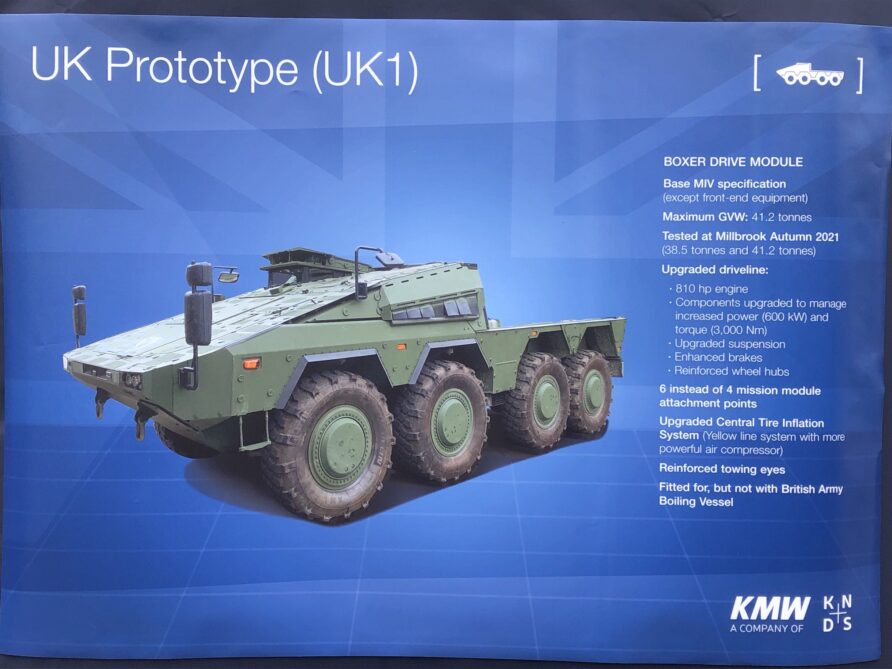
A June 9th 2021 Written Answer confirmed the variant details for the initial order.
| Variants and Roles | Numbers | |||
| MIV Variant | Build Configurations (BC) | Role | By Role | By BC |
| Armoured Personnel Carriers | Infantry Carrying Vehicle (ICV) | ICV | 85 | 85 |
| Specialist Carrier Vehicle (SCV) | Engineer Section Vehicle (ESV) | 60 | 200 | |
| Recce/Fire Support Vehicle (Recce/FSV) | 62 | |||
| Mortar Carrying Variant (MCV) | 28 | |||
| Equipment Support | ES Repair (Rep) | 50 | ||
| Command, Control, Communication, Computers & Information (C4I) | Command Post | Command & Control Vehicle (C2V) | 123 | 177 |
| C2-Utility (C2U) Vehicle | ||||
| Observation Post Vehicle (OPV) | 19 | |||
| Beyond Line of Sight (BLOS) | 24 | |||
| Electronic Warfare & SIGINT (ESWI) | 11 | |||
| Ambulance (Amb) | (Amb) | (Amb) | 61 | 61 |
| Totals: | 523 | 523 | ||
June 24th, 2021, saw ARTEC officially hand over the last of 131 BOXER APC’s of the 2nd batch in the version GTFz A2 to representatives of the German MoD, Bundeswehr and the Federal procurement agency.
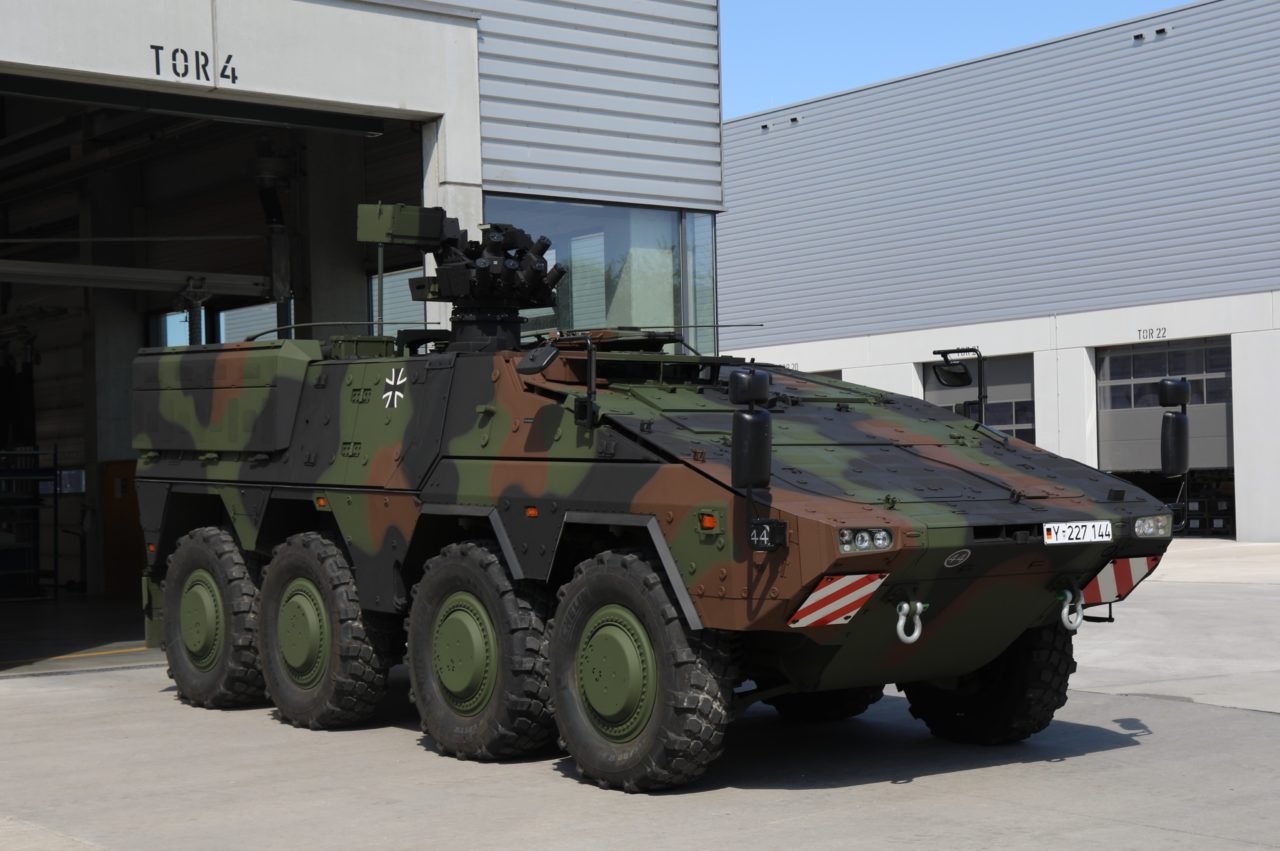
In April 2022, the British Army announced it would order an addition 100 vehicles, an extension to Batch 1.
Boxer armoured vehicle programme boosted to 623 vehicles as joint UK-Germany production begins in Telford, Stockport and Munich.
The British Army will receive 100 extra armoured Boxer vehicles, ensuring more vehicles reach the frontline faster and bolstering the programme to a total of 623, as the UK maintains defence ties with Germany, the Prime Minister has announced today.
The modern digitalised armoured vehicles can be used to transport troops to the frontline and can be rapidly reconfigured to fulfil different roles on the battlefield.
The UK and Germany have worked closely together on the Boxer programme for the British Army, with the Boxer build in the UK benefitting from German expertise, data and collaboration
Later in the year, a delay was announced, with Jane’s reporting.
Production is successfully under way for Boxer and 623 of the new armoured vehicles will be delivered to the British Army. Global supply chain pressures are not unique to defence, and no delays are expected for the first deliveries in 2023 or Boxer’s initial operational capability (IOC) in 2025
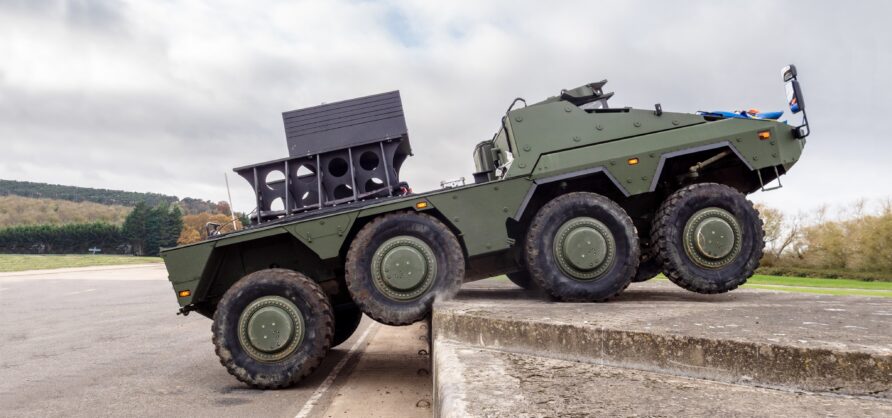
The British A3 variant was tested at Millbrook with additional weight.
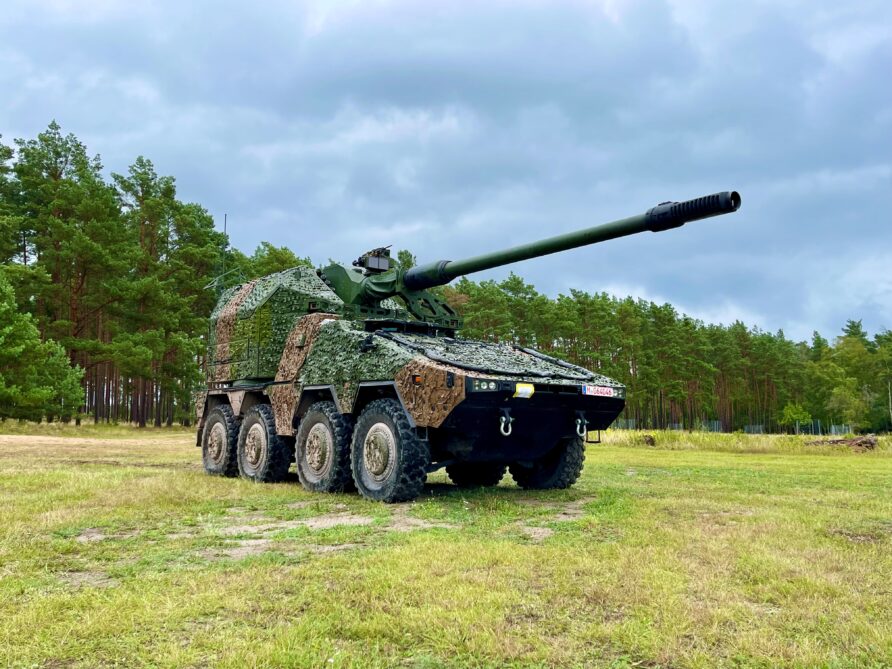
In April 2024, the British Army announced it will purchase the RCH155 system as part of the Mobile Fires Platform (MFP) requirement.
A significant milestone in the modernisation of our artillery was reached today, following a landmark defence agreement with Germany.
Prime Minister Rishi Sunak and Chancellor Scholz announced our collaboration with Germany on the Remote-Controlled Howitzer 155 mm (RCH 155) 52 calibre Wheeled Artillery Systems.
We aim to deliver RCH 155 into service this decade. It will equip Royal Artillery soldiers with a world-class close support artillery system to deliver lethal and decisive effect for ground warfare across the span of operations.
In response to a written question, James Cartlidge MP, Minister of State, replied
RCH155 will be developed through a jointly led collaborative procurement between the UK and Germany. Working collaboratively on a joint assessment and qualification plan will exploit the combined capabilities of each nation’s test and trials centres enabling faster delivery at less cost. The certainty of platform choice also enables us to advance early acquisition of ammunition and other critical enablers in the assessment phase. Concurrently, we will continue to explore opportunities to accelerate delivery of RCH155 to the Army, where possible and in line with the new Integrated Procurement Model.
The assessment phase of the programme will determine the most appropriate manufacturing approach and confirm the number of platforms required by the British Army. The Army aims to achieve a Mobile Fires Platform Minimum Deployable Capability within this decade.
The joint programme is potentially worth upwards of £3 billion and marks a step change towards a deeper industrial and wider defence relationship between the UK and Germany.
Many noted that this was decision was made without any formal competition, again.
Early 2024 onward, formal customer Verification and Validation (V&V) trials continued at Millbrook Proving Ground (Bedfordshire), starting with Command variants (prototypes delivered late 2023).
This included live firing trials at Lulworth Ranges (completed by June 2024), seawater fording trials at Instow Beach (October 2024), and other performance testing.
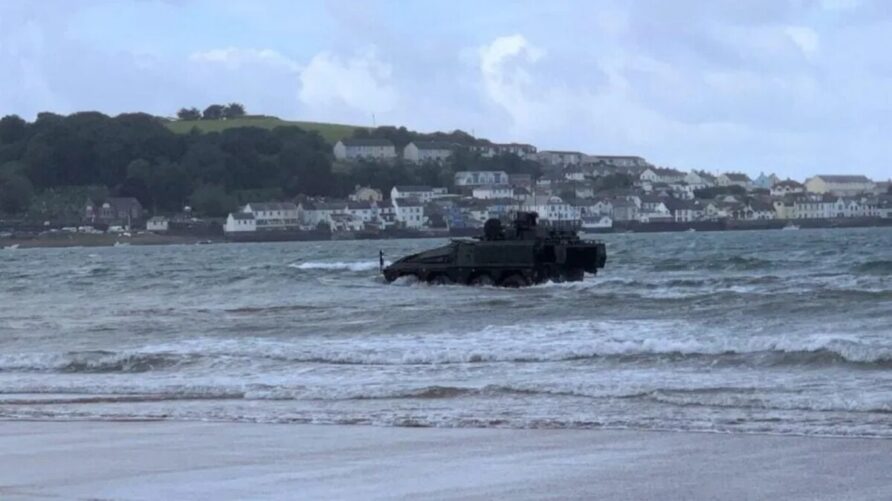
Rheinmetall reported the update on 23/01/2024
From January 2024, the Mechanised Infantry Vehicle (MIV) programme has moved into the start of formal customer Verification and Validation trials taking place at Millbrook Proving Ground, Bedford UK. These trials will qualify the design against the MIV technical requirements, demonstrating the Boxer vehicle’s capability and performance for the British Army.
Initial series production of Command variants (built in Germany) were delivered in June 2024, following prototypes in late 2023.
At DVD 2024 (September, UTAC Millbrook), announcements included the final prototype (Ambulance variant) expected by year-end, first UK serial build starting Q4 2024, and troop conversion training from January 2025.
In January 2025, the first fully UK-built Boxer was unveiled at the International Armoured Vehicles (IAV) conference in Farnborough, manufactured by Rheinmetall BAE Systems Land (RBSL) at Telford.
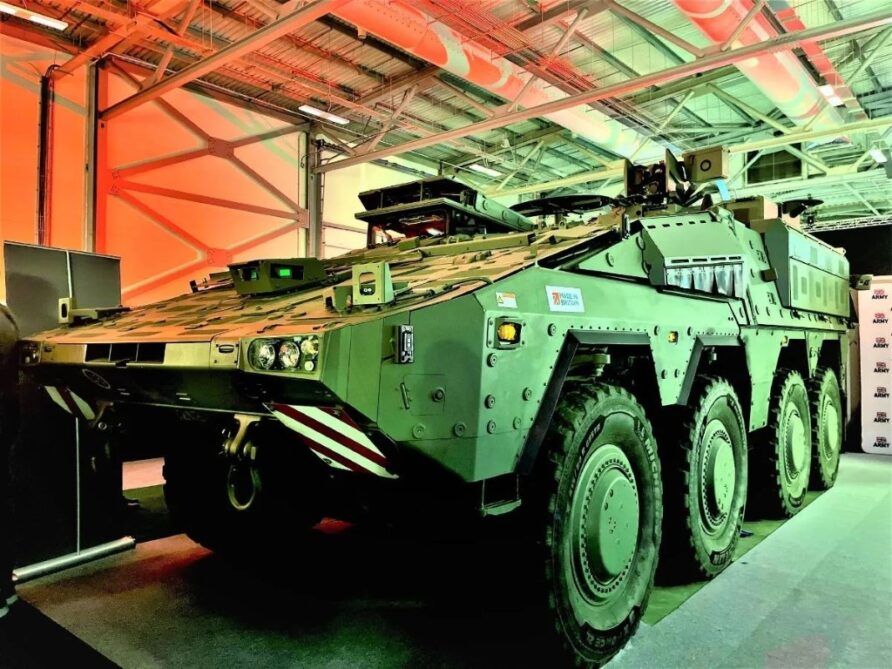
OCCAR released the statement to mark the milestone.
International Armoured Vehicles (IAV) Conference 2025, Farnborough, UK, 21–23 January 2025 – An exciting milestone for the BOXER Programme has now been achieved, with OCCAR (Organisation for Joint Armament Co-operation) having delivered the first British-produced BOXER vehicle to the UK customer, working in close coordination with Defence Equipment & Support (DE&S) Equipment & Support.
The first UK-manufactured Boxer delivered to the British Army’s Armoured Trials Unit at Bovington for training, with Javelin anti-tank missile integration trials successfully completed earlier in 2025 (enabling firing from under armour via remote weapon station).
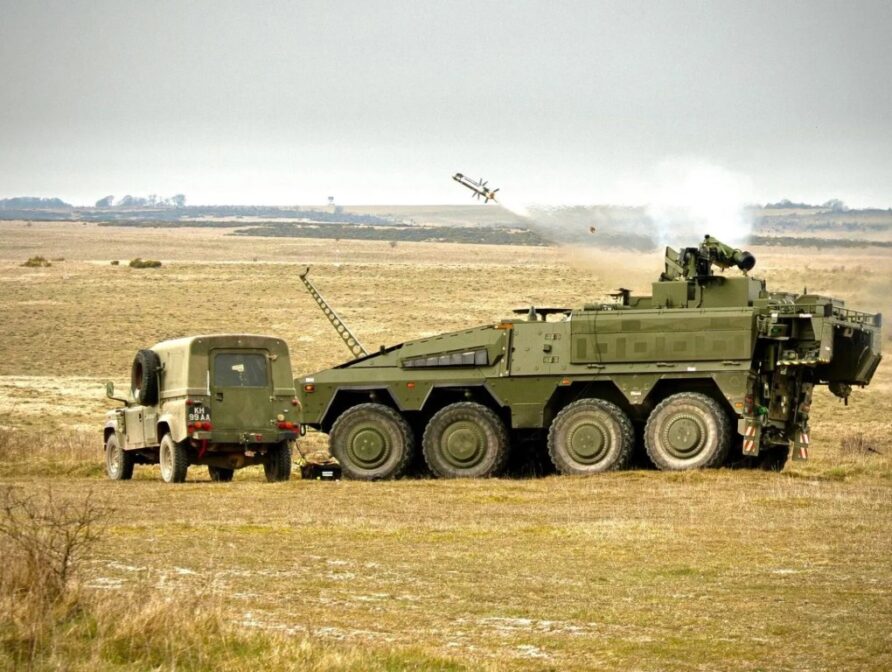
Speculation continued in 2026 regarding the expected order for Batch 2 and Batch 3 vehicles.
If you found value in this article, help me keep Think Defence going.
Think Defence is a hobby, a serious hobby, but a hobby nonetheless. I have removed those annoying adverts, but hosting fees, software subscriptions and other services add up.
To help me keep the show on the road, I ask that you support the site in any way you can. It is hugely appreciated.
You can click on an affiliate link, Buy Me a Coffee at https://ko-fi.com/thinkdefence, download an e-book at https://payhip.com/thinkdefence or even get some TD merch at https://www.redbubble.com/people/source360/
Youtubers, if you are going to lift content from here, the decent thing to do would credit me


