
The Combat Vehicle Reconnaissance (Wheeled) Fox, or CVR(W) Fox (FV721), was a British 4×4 aluminium-armoured reconnaissance vehicle developed in the 1960s and produced by Royal Ordnance Factory Leeds from 1972.

It was designed as a fast, air-portable scout car to succeed the Daimler Ferret and complement the Alvis Saladin, sharing its Jaguar 4.2 litre petrol engine and 30 mm L21 RARDEN cannon with the tracked CVR(T) family.
About 325 vehicles were built. Fox entered British Army service in 1975 and was withdrawn by early 1995. Surplus turrets were later fitted to Scorpion hulls to create the Sabre, and a small number of Fox turrets were mounted on Berlin Brigade FV432s.
Table of Contents
Fox History
Post-war British wheeled reconnaissance rested on the Daimler Dingo lineage through Ferret, and on Saladin for heavier fire support.
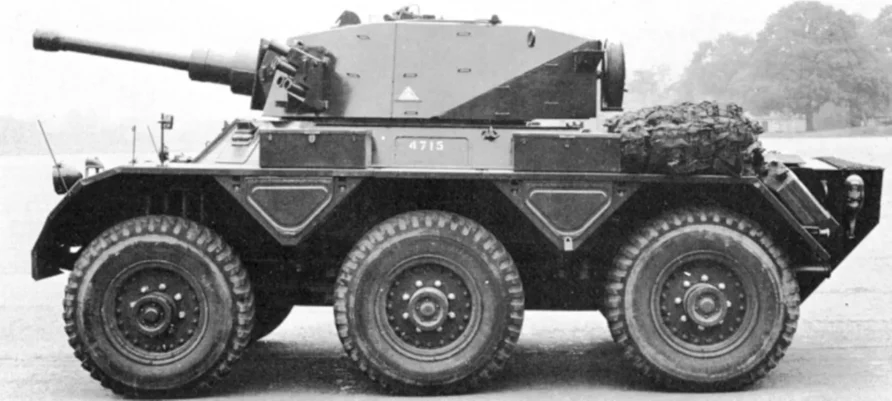
By the early 1960s those types were judged inadequate against Warsaw Pact forces. Connected studies coalesced around 1964 into two General Staff requirements: Combat Vehicle Reconnaissance (Tracked), GSR 3301 (CVR(T)), and Combat Vehicle Reconnaissance (Wheeled), GSR 3358 (CVR(W)).
An earlier idea of replacing Saladin and Saracen with skid-steering 6×6 wheeled vehicles was dropped in favour of the tracked CVR(T) programme. The wheeled line, designated the FV720 series, was aimed at medium and close reconnaissance, surveillance, limited anti-armour support, internal security and liaison, especially for airborne and rapid-reaction forces.
The Fighting Vehicles Research and Development Establishment (FVRDE; MVEE from April 1970) built on Ferret Mark IV and Saladin experience. In September 1965 it proposed upgraded Ferret variants, including the aluminium-hulled Ferret Mark VI with a two-man turret. That design was selected for CVR(W) and developed as Fox.
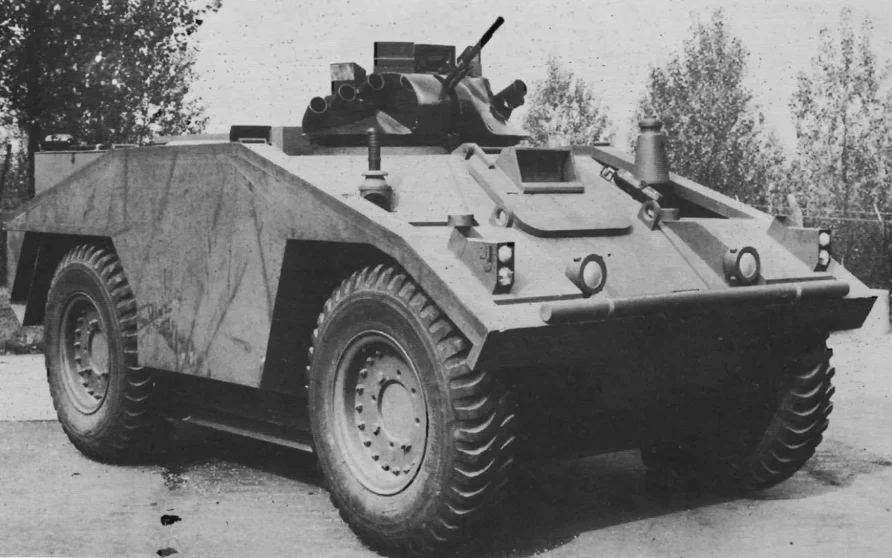
Development began in 1965. In 1966 Daimler of Coventry received a contract for 15 prototypes. The first was completed in November 1967 and the last in April 1969. User trials began in 1968. The first official announcement came in October 1969, and the type was accepted the following year.
Fox was developed by Daimler under contract. The first prototype was delivered in 1967.
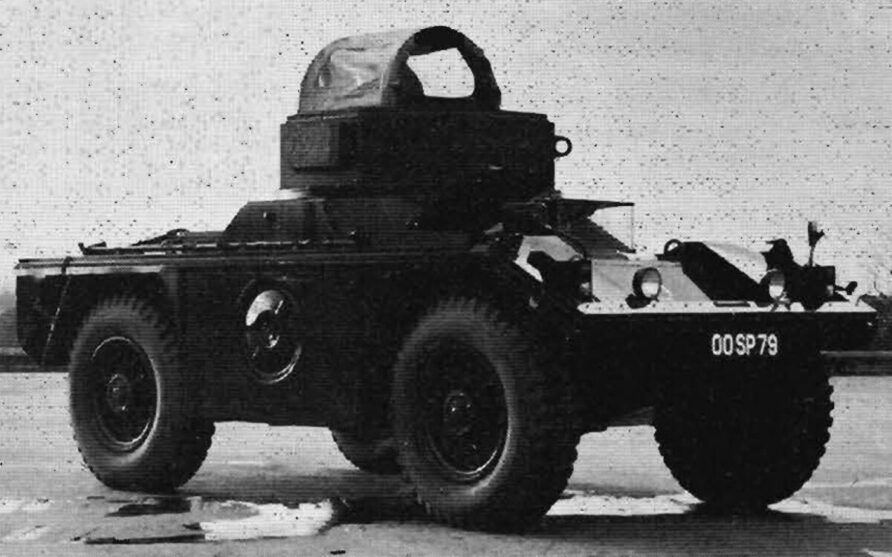
Fifteen prototypes were built between November 1967 and April 1969.
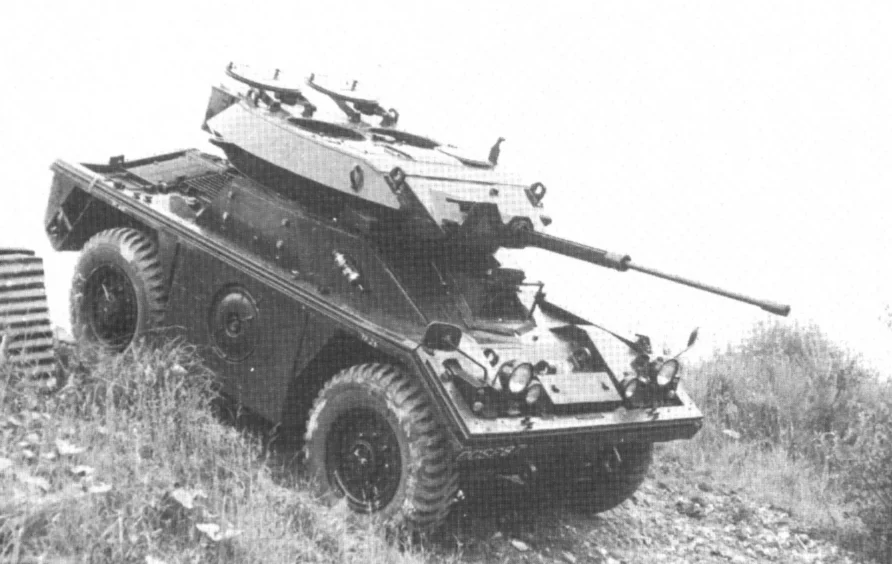
Prototype Number 9 has been restored at Eden Camp.
Trials covered mobility, armament and air portability, including a flotation screen later often removed in British service because of poor performance.
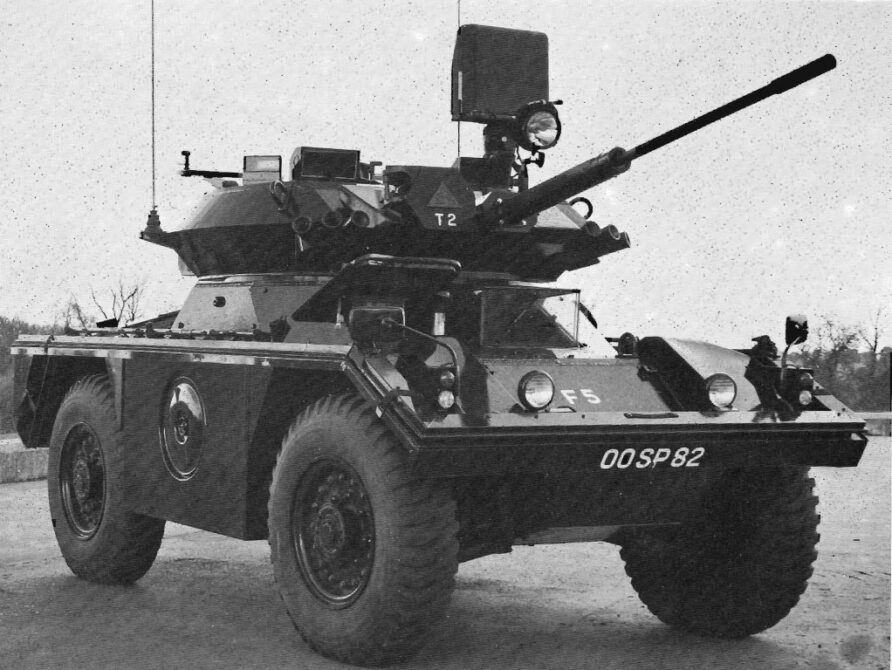
Air mobility was a core requirement. Up to three Foxes could be carried in a C-130 Hercules, or two delivered by parachute.
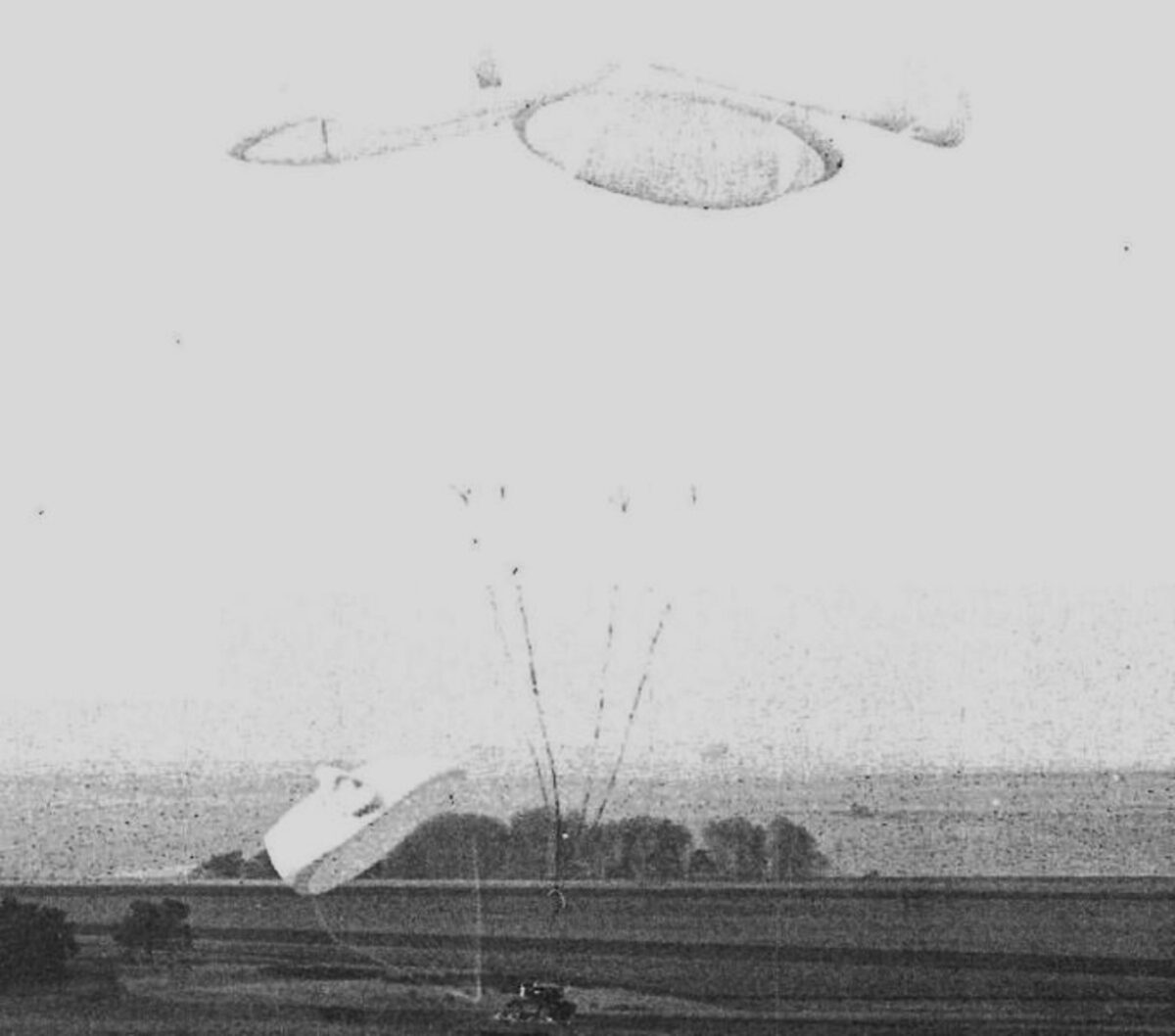
Air despatch with Fox is shown in the video below.
A related requirement, GSR 3340, defined a more lightly armed liaison vehicle based on the Fox hull without the large turret, giving an extra seat and more radio space. That became the Combat Vehicle Liaison (Wheeled) FV722 Vixen. Prototypes were ordered from ROF Leeds in 1971, but the programme was cancelled in the mid-1970s defence savings.
The production contract went to tender in 1970. By then Alvis, Daimler and Jaguar were inside British Leyland, so much of the vehicle would come from the same group, with Alvis building the turret.
Daimler bid on the strength of its wheeled AFV experience. Royal Ordnance Factory Leeds also tendered at a lower price. Although ROF Leeds lacked experience with aluminium armour and wheeled vehicles, overheads subsidised by Chieftain production helped it win. Daimler finished Ferret production in 1971 and closed its AFV plant.
Production began at ROF Leeds in 1972. The first production vehicle was completed in May 1973. Turrets were built by Alvis at Coventry, with armament from RSAF Enfield, and sent to Leeds for final assembly. Jane’s records final deliveries as understood to be in 1979. ROF Leeds was later bought by Vickers Defence Systems in 1986, which became the UK design authority; the Leeds plant has since closed.

Total production is usually given as about 325 vehicles. Contemporary reporting and secondary tallies commonly split that as roughly 180 for the United Kingdom and the balance for export.
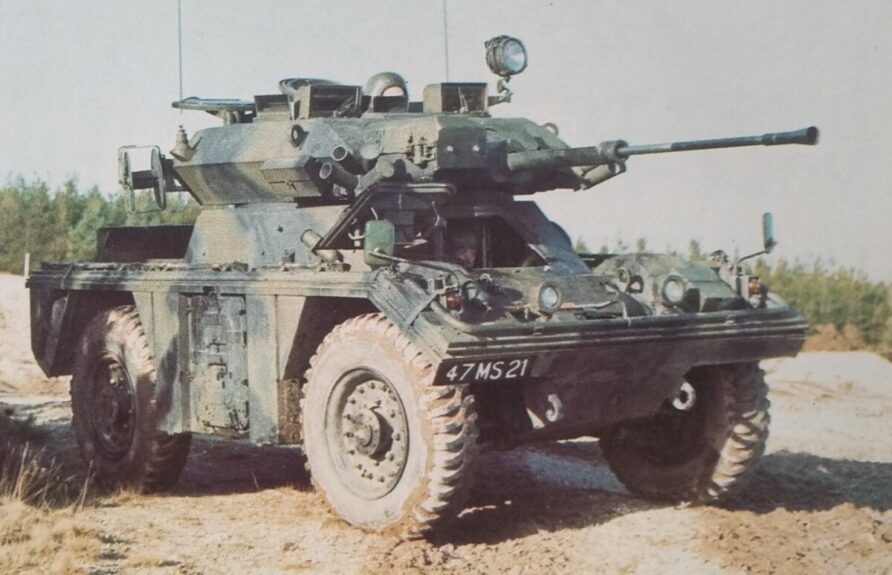
Fox entered service in 1975 with B Squadron, 1st Royal Tank Regiment at Tidworth. It was used by reconnaissance units in the British Army of the Rhine and by Territorial Army yeomanry, notably the Royal Yeomanry and Queen’s Own Yeomanry, which in the early 1980s organisation typically held reconnaissance squadrons of Foxes (with a small number of Ferrets) for home defence or BAOR reinforcement. In the same period some UK-based regular armoured reconnaissance regiments held a wheeled squadron of Foxes alongside tracked Scorpion and Scimitar squadrons, and small numbers were attached to air-mobile, armoured and mechanised infantry battalions as reconnaissance platoons. A typical Fox squadron had four troops of four vehicles plus support.
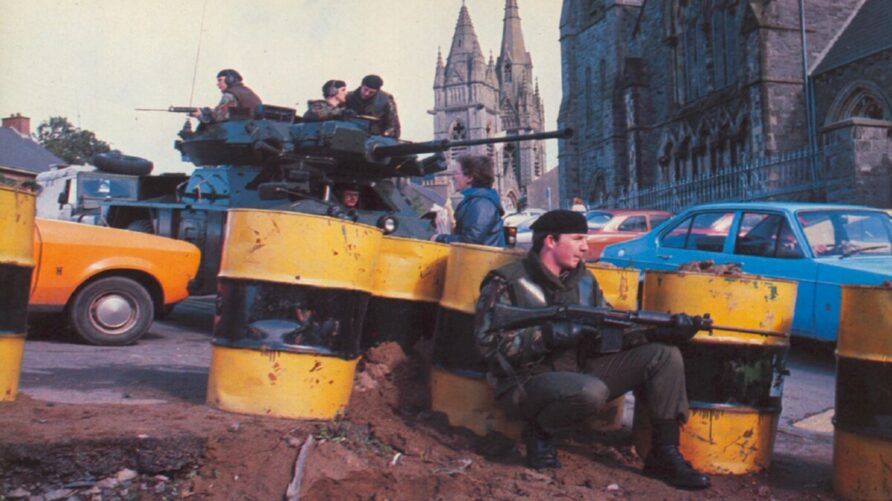
Fox was also used in the medium reconnaissance role by Fox squadrons based at Omagh in Northern Ireland.
The Household Cavalry Regiment was formed at Windsor in October 1992 from The Life Guards and The Blues and Royals. Its operational reconnaissance role used CVR(T) vehicles such as Scimitar. Fox remained in British service into the early 1990s and was noted as a familiar type in garrison towns including Windsor, but published unit lists for Fox centre on 1 RTR, yeomanry formations and infantry reconnaissance platoons rather than on the Household Cavalry.
Early in service, several serious accidents raised concern about stability and a high centre of gravity. Trials showed that under some conditions the Fox oversteered, and instinctive driver reactions made the problem worse. Specialised driver training reduced the accident rate.
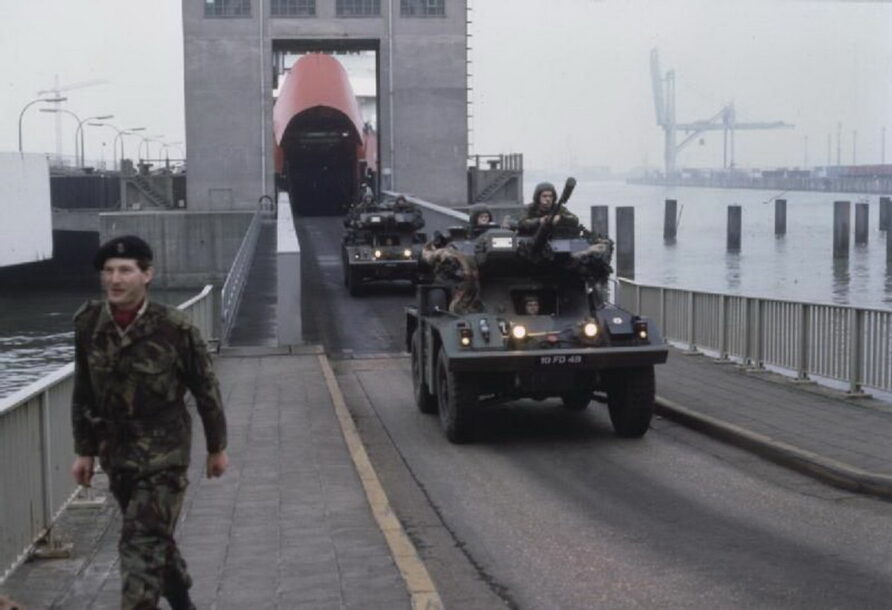
Alvis later studied suspension geometry changes to improve steering safety, but Fox was withdrawn before those changes were implemented.
On 10 March 1994 Mr Hanley, Minister of State for the Armed Forces, answered a Written Question from Mr Trotter. British holdings of CVR (Wheeled) Fox stood at 356, with the planned change:
It is planned that all vehicles will be taken out of service by early 1995
Hansard, HC Deb 10 March 1994, vol 239, cc394–5W
The same answer recorded 262 CVR(T) Scorpion, of which 104 would be converted to CVR(T) Sabre using turrets from Fox vehicles, with a further 31 remaining at BATUS in Canada.
A later Written Answer on 1 November 2005, from Mr Ingram, gave the larger figure of 132 Scorpions converted into the Sabre variant (with a further 32 converted to Salamander), and recorded that the Sabre fleet itself was withdrawn in 2004.
Thirteen Fox turrets had earlier been fitted to Berlin Brigade FV432s in the mid-1970s for training and local use.
Export operators recorded in Jane’s Armour and Artillery 2002–2003 were Malawi (20, with a possible further batch) and Nigeria (55, status then uncertain). Contemporary 1970s reporting also associated Iran and Saudi Arabia with Fox or related offers; those earlier associations are not reflected as current operators in the 2002–2003 Jane’s entry.
Fox Capabilities
Wheel and tyre size, track and wheelbase matched the Ferret Mark 4 ‘big-wheeled’ Ferret. The crew was three: driver forward centre, with commander/loader and gunner in the two-man turret.
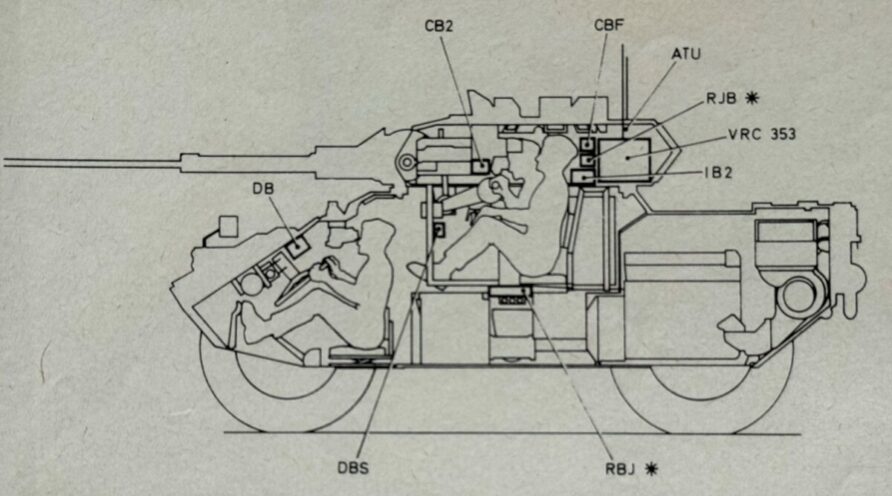
The Royal Ordnance Factories technical data sheet gives a typical battle weight of 6,120 kg, overall length gun forward 5.08 m, width 2.13 m and height to the top of the cupola 1.98 m. Jane’s lists unloaded weight 5,733 kg and overall height 2.2 m.
Automotive
The powerplant was a militarised Jaguar XK 4.2 litre six-cylinder petrol engine. The ROF data sheet rates it at 140 kW (190 bhp) at 4,500 rpm. Compression ratio was 7.75:1 for lower-octane military petrol, with lead-proofed valves, a single two-choke carburettor and Ki-gas cold starting. Twin radiators with ducted centrifugal fans and an oil/water heat exchanger handled cooling. The power pack could be removed through the rear of the hull.

Drive was through a Daimler fluid flywheel and Daimler pre-selective epicyclic gearbox giving five speeds, with a transfer box providing spiral bevel directional gears so that all five ratios were available in reverse. Independent suspension used upper and lower wishbones, coil springs and hydraulic telescopic dampers, with 0.279 m of wheel travel. Steering was power-assisted. Brakes were Lockheed twin-caliper discs, power assisted, with a parking brake on the front bevel box input.
Tyres were 279 × 508 (11.00 × 20) run-flats on light alloy wheels; cross-country and sand treads were available. Maximum road speed was 104–105 km/h. The ROF sheet quotes 0–48 km/h in 9 seconds and a road range of 430 km on 145.47 litres of fuel under armour, plus 38.63 litres in two external jerricans. Jane’s quotes range 434 km. Fording depth was 1 m unprepared. With the flotation screen erected in about two minutes the vehicle was propelled by its wheels at about 5.2 km/h, with a bilge pump of about 205 litres per minute.
Other automotive figures from Jane’s include gradient 46%, vertical obstacle 0.5 m, trench 1.22 m with channels, and turning radius 6.1 m. The design operating temperature range was −40 to +50 °C.
Weapons and Equipment
Main armament was the 30 mm L21 RARDEN cannon, fed in three-round clips, firing single shots or short bursts, and accepting British and Oerlikon-Buhrle ammunition. Elevation was +40° to −14° (+711 to −250 mils). Cases were ejected forward outside the turret. A coaxial 7.62 mm L37A2 machine gun was mounted to the left of the main gun. Two banks of four electrically fired smoke dischargers sat on the turret front.
ROF stowage figures were a nominal 96 rounds of 30 mm, 2,600 rounds of 7.62 mm, and one salvo of smoke in situ with a second externally. Jane’s lists 99 rounds of 30 mm, 2,600 of 7.62 mm and 16 smoke. Personal weapons included three 9 mm sub-machine guns with magazines, a Very pistol and grenades.
The turret ring was 1.27 m. Traverse was manual, two-speed, through 360°. The commander had a ×1/×10 periscopic binocular and seven periscopes; the gunner had a ×1/×10 sight linked to the armament, two observation periscopes and an optional passive night sight. In British service the SPAV L2A1 passive night sight provided ×5.8 and ×1.6 channels with flash shutter and ballistic graticule. The driver had an approach screen and a wide-angle periscope replaceable by a passive night periscope.
Radios were Clansman, mounted at the rear of the turret, with batteries under a false floor. The electrical system was 24 V screened, with a 140 A generator and two 6TN 100 Ah batteries. Optional equipment listed by Jane’s included navigation aids, powered traverse, NBC detection and the ZB 298 battlefield surveillance radar on the left of the turret.
Protection
The hull and turret were all-welded aluminium armour of US 7039 aluminium-zinc-magnesium alloy, as used on Scorpion. Fox was among the first wheeled AFVs built entirely in that alloy, using welded rolled plate with extruded turret parts. Protection was against medium and heavy machine-gun fire and artillery splinters.
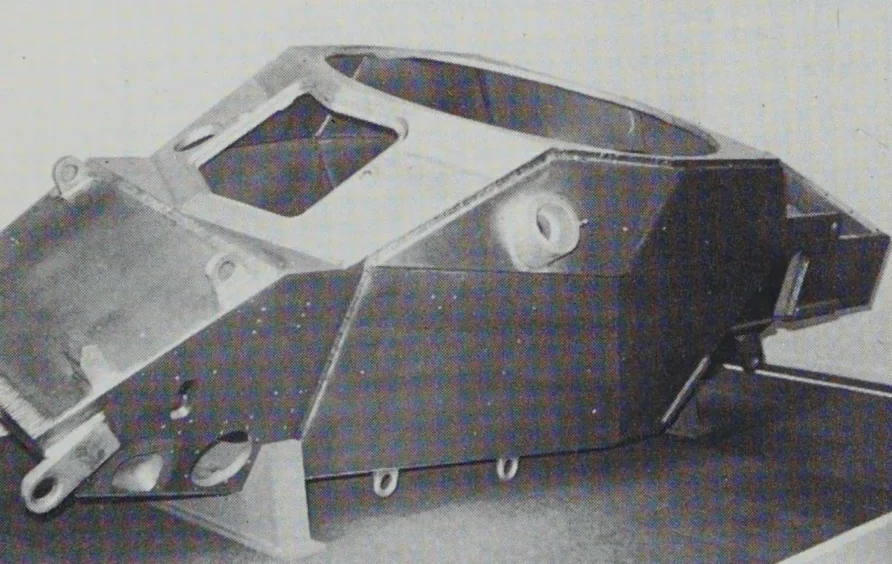
Fuel was carried under armour, with additional external jerricans. An NBC system was fitted. Eight smoke dischargers provided screening.
Variants
Vixen (FV722) was the planned liaison derivative with a redesigned hull for a crew of four and a one-man Peak Engineering turret with a 7.62 mm machine gun. Prototypes were ordered in 1971 and the project was abandoned in the mid-1970s.
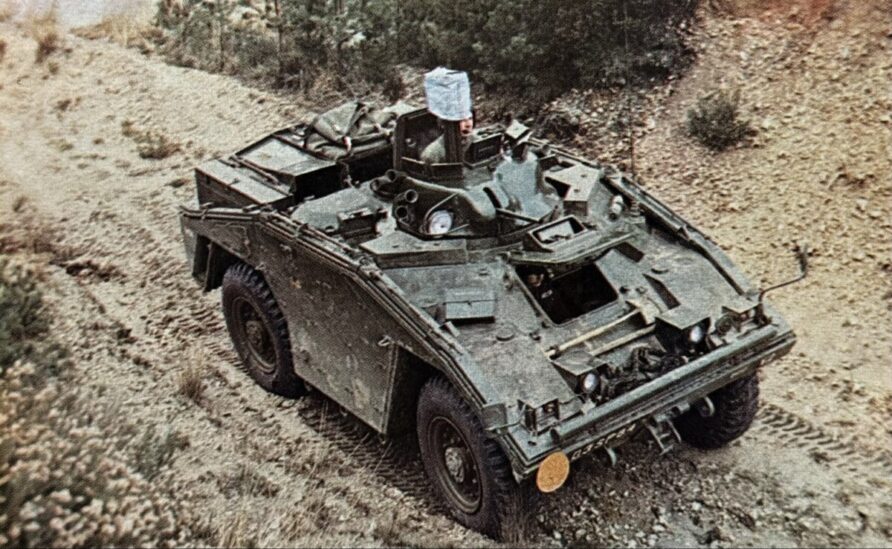
Panga was an export-oriented configuration. An early Peak Engineering turret with a 12.7 mm M2 HB heavy machine gun was shown; after trials a Helio Mirror Company FVT-800 one-man turret with a .50 in machine gun and coaxial 7.62 mm GPMG was fitted. Panga was offered for Malaysian trials around 1980.
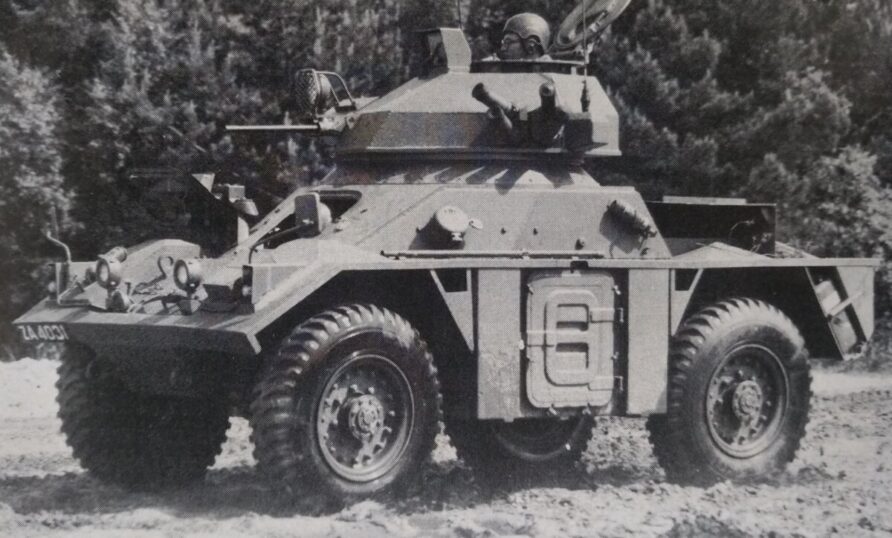
A 25 mm cannon proposal used a one-man United Defense electric-drive turret with a McDonnell Douglas 25 mm M242 Chain Gun and coaxial 7.62 mm machine gun, carrying about 250 rounds of 25 mm and 1,000 of 7.62 mm. Armed Forces magazine gave that configuration a combat weight of 6,297 kg.
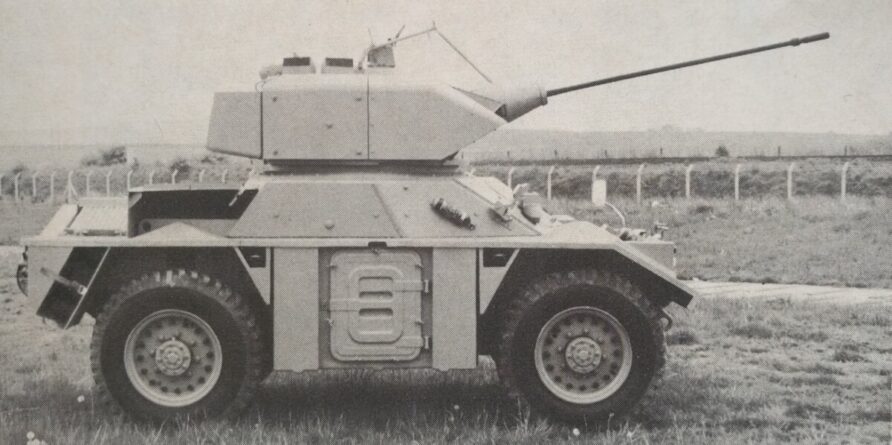
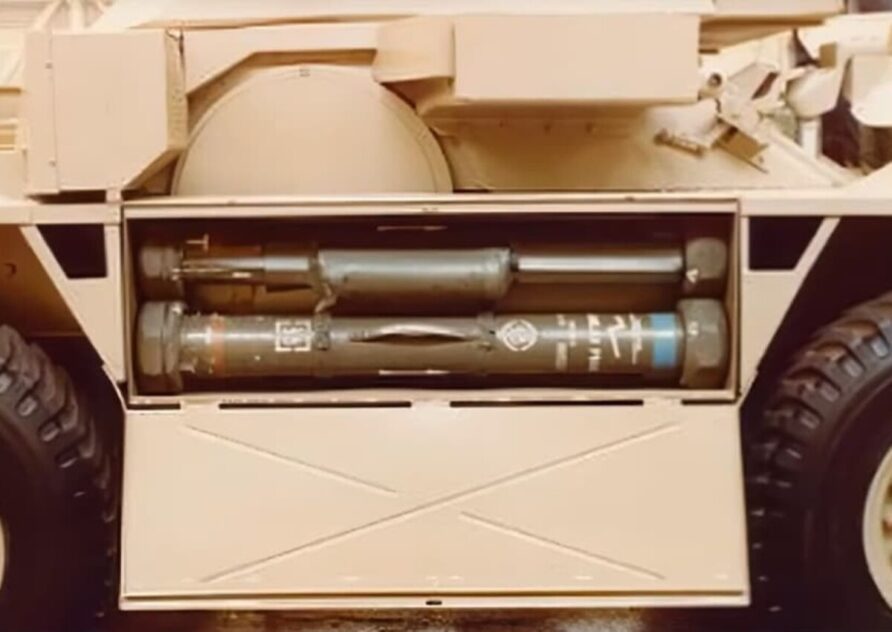
Fox-Milan was a two-man anti-tank configuration with MILAN SACLOS missiles out to 2,000 m, developed from Fox as a compact reconnaissance vehicle able to engage main battle tanks. Two ready tubes were mounted on the Milan Compact Turret, with further missiles in internal and external stowage. Secondary armament was a 7.62 mm GPMG or Chain Gun.
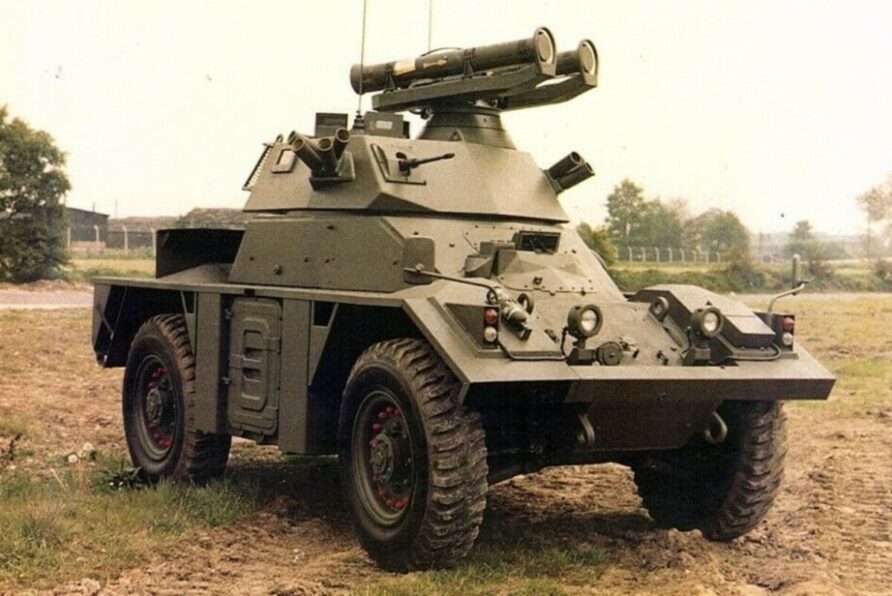
Fox-Scout used the same style of compact turret without missiles, mounting a McDonnell Douglas 7.62 mm Chain Gun in long- or short-barrel form for escort and sector defence roles.
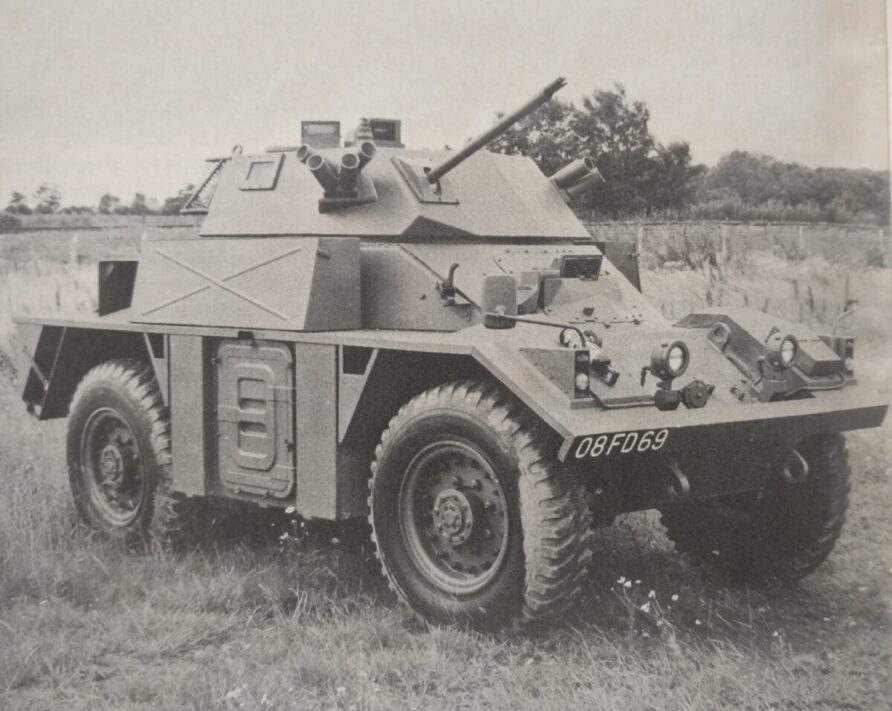
Polecat (sometimes associated with Stoat) was a Northern Ireland proposal replacing the RARDEN turret with a Peak 7.62 mm turret of the type used on FV432.
A one-off anti-aircraft prototype shown in 1982 mounted an Oerlikon 20 mm KAA cannon on a Fox hull for high-angle engagement.

After withdrawal, Fox turrets on Scorpion hulls produced the Sabre reconnaissance vehicle used by armoured and mechanised infantry reconnaissance platoons until 2004. Sabre modifications included redesigned smoke dischargers, an L94A1 chain gun in place of the coaxial GPMG, and domed hatches. See also the CVR(T) variants article.
Specifications
| Item | Figure |
|---|---|
| Crew | 3 (commander, gunner, driver) |
| Combat weight | 6,120 kg |
| Unloaded weight | 5,733 kg |
| Power-to-weight | 22.87 kW/t (ROF); 30.04 bhp/t (Jane’s) |
| Length (gun forward) | 5.08 m |
| Length (hull) | 4.166 m |
| Width | 2.13–2.134 m |
| Height (cupola / overall) | 1.98 m / 2.2 m |
| Ground clearance | 0.3 m |
| Wheelbase / track | 2.464 m / 1.753 m |
| Engine | Jaguar XK 4.2 l, 140 kW (190 bhp) at 4,500 rpm |
| Transmission | Daimler fluid flywheel and 5-speed pre-selective epicyclic; 5 forward and 5 reverse |
| Max road speed | 104–105 km/h |
| Road range | 430–434 km |
| Fuel | 145.47 l under armour (+ 38.63 l external jerricans) |
| Fording | 1.0 m unprepared |
| Main armament | 30 mm L21 RARDEN |
| Coaxial | 7.62 mm L37A2 GPMG |
| Smoke | 2 × 4 dischargers |
| Ammo (typical) | 96–99 × 30 mm; 2,600 × 7.62 mm |
Figures are taken from the Royal Ordnance Factories technical data sheet where available, with Jane’s Armour and Artillery 2002–2003 used for unloaded weight, hull length, mobility limits and British service equipment detail. Where the two differ slightly on speed and range, both are shown.
Document Information
| Date | Change |
|---|---|
| 30 December 2025 | Initial Issue |
| 9 November 2026 | Reviewed and expanded from ROF technical data and Fox-Milan brochures, Jane’s Armour and Artillery 2002–2003, contemporary magazine accounts and Hansard (10 March 1994 and 1 November 2005). Corrected combat weight, engine/gearbox attribution, Ferret link, GSR wording, Sabre conversion figures (104 planned; 132 in later answer) and withdrawal date; restructured to four H2s (History, Capabilities with Variants/Specifications as H3s, Document Information, Sources and Further Reading); service units and Household Cavalry note; specifications table; image alt/captions; Additional Reading covers and eBay link; excerpt set. |
Sources and Further Reading
Principal sources for this update are the Royal Ordnance Factories Fox technical data sheet and Fox-Milan brochure; Jane’s Armour and Artillery 2002–2003; Hansard Written Answers, 10 March 1994 and 1 November 2005; and contemporary accounts in Armies & Weapons and Armed Forces magazines.
Additional Reading


