
 Doc Summary

In the fifty years Combat Vehicle Reconnaissance Tracked CVR(T) was in service, there were the core variants, joined by various proposals, alternative turrets and development concepts.
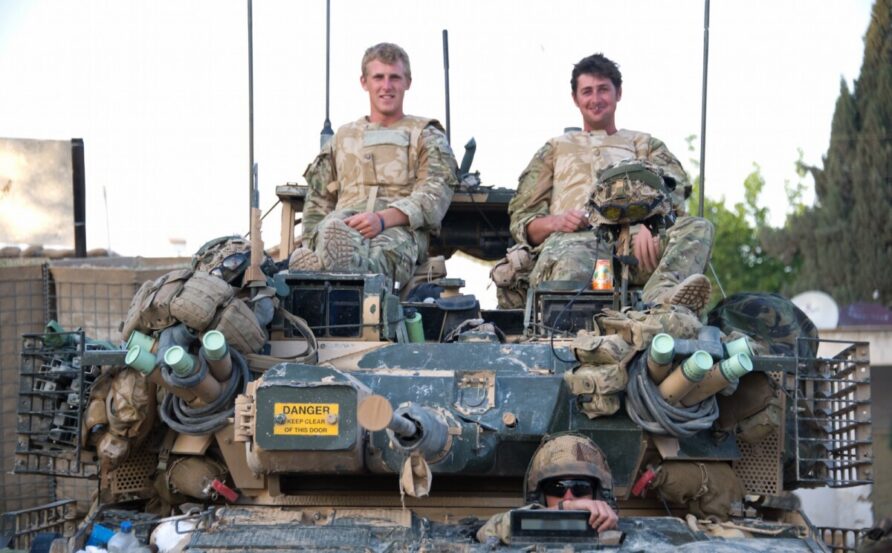
Read more about the history of Combat Vehicle Reconnaissance Tracked CVR(T) HERE
CVR(T) Characteristics #
The main priorities given to the designers were air-portability and ease of maintenance, followed by firepower and reconnaissance capabilities.
CVR(T) Dimensions and The Subject of Rubber Plantations #
In many references to CVR(T) design, specifically, its width, mention is often made of the distance between rubber trees on plantations in Malaya as a singular constraint. But as with Saladin and Saracen, there is little evidence of this actually being the case.
Tree spacings were a result of tree density per acre guidelines, and these would change depending on whether the plantation was intercropped or planted as a monoculture.
Early monoculture plantations started with row planting widths of 5 to 6 metres (16 to 20 ft) but by the 1930s, these had reduced to 3 to 5 metres (10 to 16 ft). It is also of note that Rubber Research Institute of Malaysia (RRIM) latterly expressed these dimensions in metric units, reflecting a post-colonial shift.
The less common intercropped plantations sometimes even went as narrow as 2m within rows.
It is difficult, therefore, to ascribe vehicle width specifications to a single agricultural standard or practice.
The RAF and USAF had completed various rounds of interoperability trials for air transport and air despatch in the early sixties.
The 463L HCU-6/E pallet was introduced in the same period.
Work was continuing on both US and UK air despatch platforms, including the UK Medium Stressed Platform and Heavy Stressed Platform, and the US Type II Modular Platform and A/E29H-l (LAPES) platform.
Both the 463L and US air despatch platforms were based on a standard rail width of 108″, or 2.74m, using the DASH 4/A cargo handling system. Their usable dimensions are slightly less, allowing for rigging and tie down equipment.
The Medium and Heavy Stressed Platforms were 2.5m wide, or 98″
In addition, requirements on the new C-130 required a safety aisle sufficient for a member of the crew to move from the front of the aircraft to the paratrooper doors, whilst wearing a parachute. The UK requires a minimum of 14″ between the aircraft load and sides.
The C-130 entered service with the RAF in 1967.
ISO 668 was first published in 1968 and the British Army adopted it in the early seventies. It is unlikely that this would have been a key user requirement at the time, but other standards and conventions for vehicle load bed widths were similar. The standard internal door width of an ISO shipping container is 2.34m. The
The CVR(T) Scorpion is 7’4″ wide, or 88″, or 2.24m
Taken together, and although I don’t have any specific evidence, given the focus on air transport for the CVR(T) and its preceding projects, it seems likely that operating constraints imposed by air transport, air despatch and general transportability would have been more influential on the design that rubber tree row planting widths.
Protection #
To meet the very low weight requirements and provide even minimal protection, it became obvious that only aluminium armour would suffice, even if sloping was used. Aluminium armour can provide superior areal density to steel but it was difficult to fabricate.
Rolled plate, castings and extrusions in CVR(T) would be made from a new AA7017 aluminium alloy to an Alcan specification called E74S that was lighter than previous compositions for a given level of protection.
Fabrication was exacting, with new techniques developed to for mechanised welding.
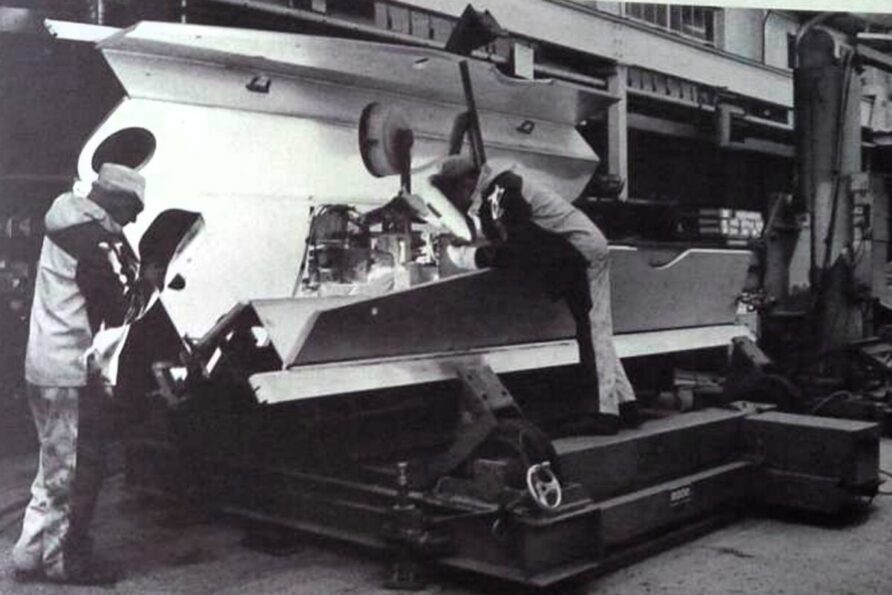
The result of this was that fewer cross members could be used, thus reducing weight, and the overall protection provided in the Scorpion design over the frontal arc was against the 14.5mm (0.59in), and elsewhere, against the 7.62mm (0.30in) armour-piercing rounds and splinters from 105mm HE ground and air bursts at over 30 metres. Additional armour was also provided on the driver’s floor.
Nuclear Biological Chemical (NBC) protection was provided by crew compartment overpressure and air filtration.
As part of later improvements, this was changed to a Military Vehicles and Engineering Establishment (MVEE) specification called 1318B to resolve stress fracture cracking issues.
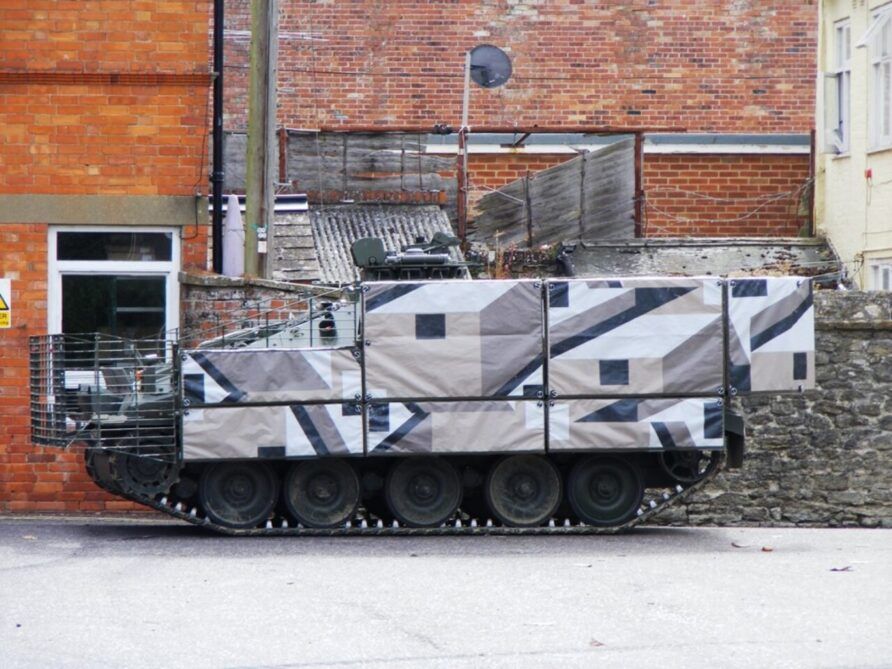
Protection has been improved in the years since its introduction, ECM, additional armour, bar armour, and Tarian protection as per the image below.
Automotive #
Although TV15000 had proven (or derisked) many design concepts for what would go on to become CVR(T), many of its components were replaced in the final design.
Lightweight aluminium tracks were replaced by a more conventional design, the hydro-pneumatic suspension replaced with trailing arm torsion bars, and its Allison gearbox replaced with a smaller version of that fitted to Chieftain.
Engine choice presented a challenge, the width was set, the length a product of width due to steering geometry, and diesel was preferred due to survivability issues. The engine compartment had to share hull space with the driver, who might be wearing arctic clothing.
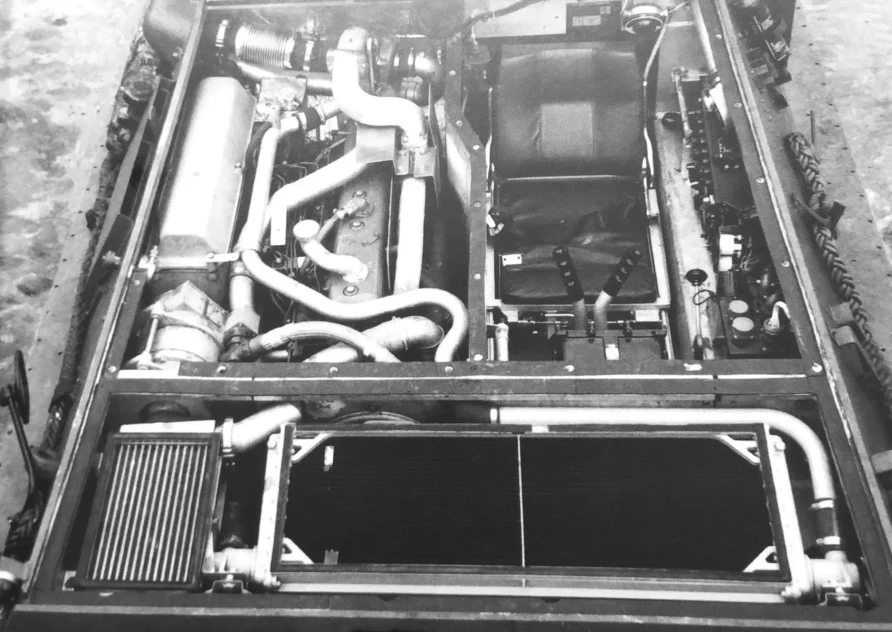
There was no military engine available and no time to develop one, and so the designers evaluated three engines, two diesels, from GM and Perkins, and a petrol engine from Jaguar.
The Jaguar engine was selected, the well-proven petrol 4.2 litres J60 engine from their XJ6 car. Power output was reduced to 195 bhp, but CVR(T) still had an excellent power to weight ratio.
The high-efficiency David Brown Engineering TN15X transmission and drive front mounted sprocket arrangement allowed the rear compartment to be unimpeded.
CVR(T) Mobility #
Small, light, easily deployable, and able to go places other vehicles could not was a core aspect of the CVR(T) design.
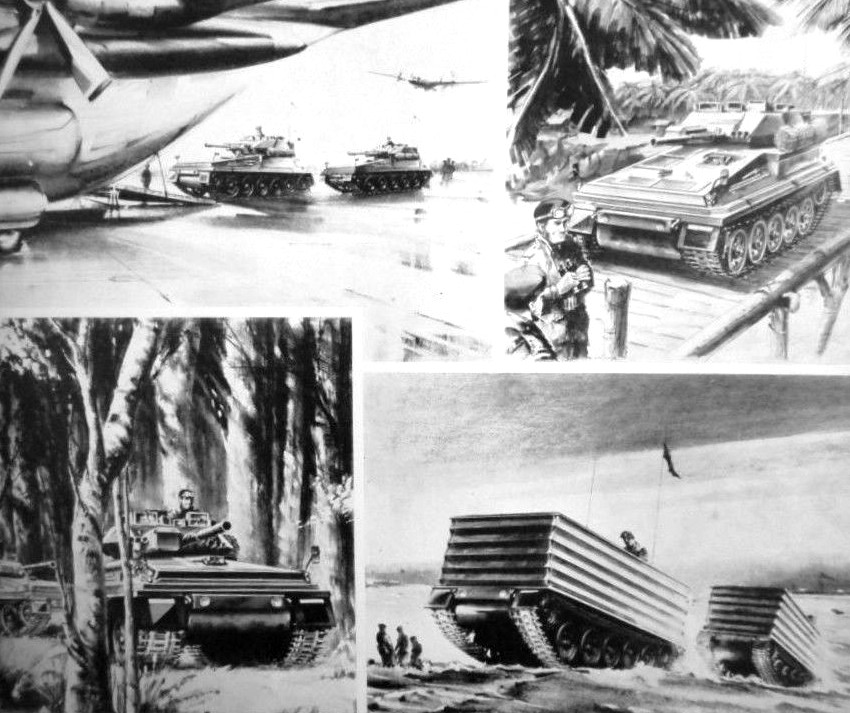
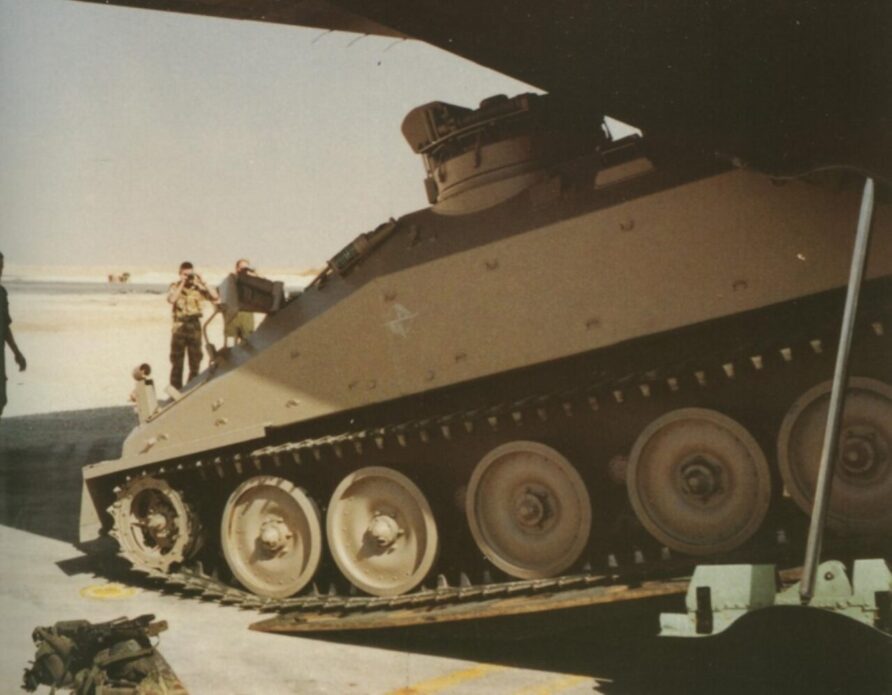
As described above, in the section on rubber trees, dimensions were influenced by air transport, and weight would be influenced by the same.
Weight was originally defined by the Armstrong Whitworth AW.681 project, but this was cancelled in 1965 in favour of the Lockheed Hercules, thus changing the weight limit.
Two vehicles were intended to be carried at a time,
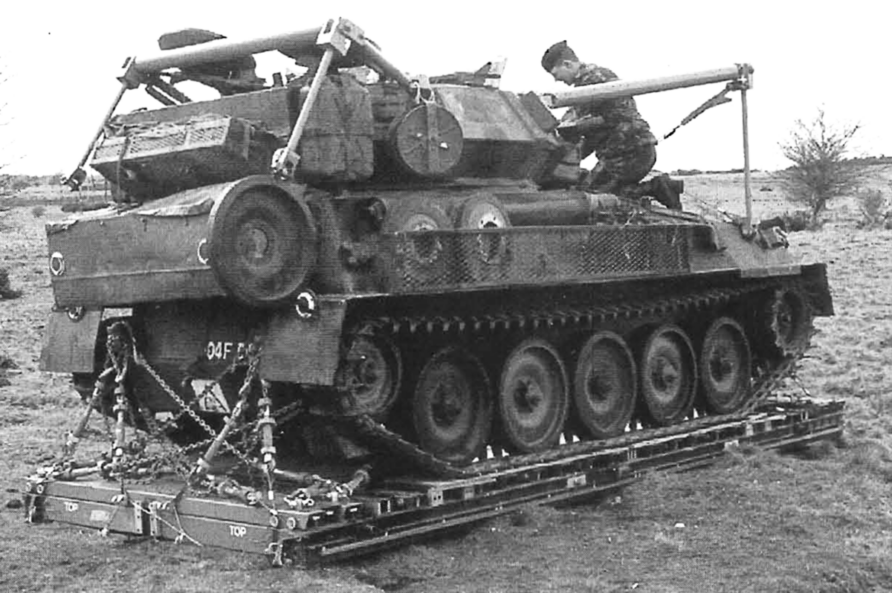
And air despatch using a Medium Stressed Platform (MSP)
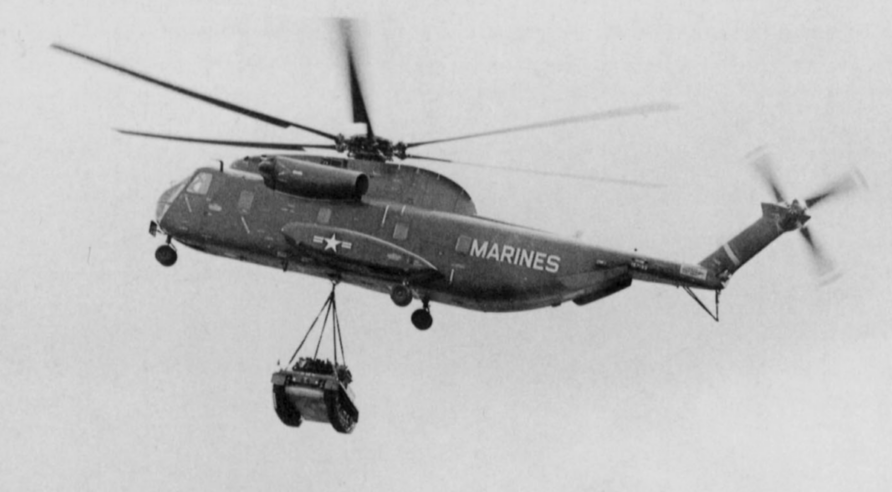
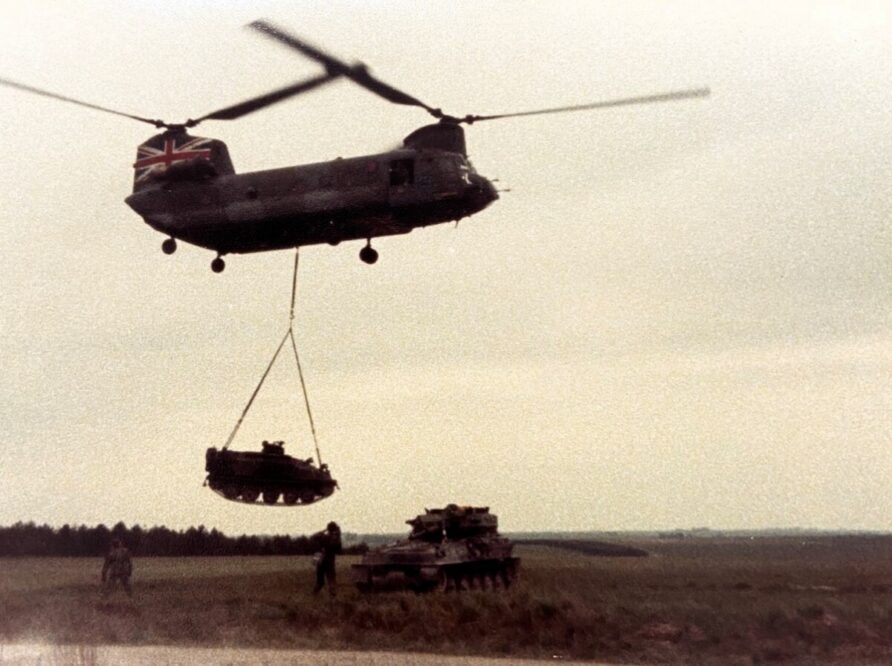
Before Chinook came into service with the RAF, a USMC helicopter demonstrated that CVR(T) could be carried as an underslung load in 1970.
And it has been used many times since.
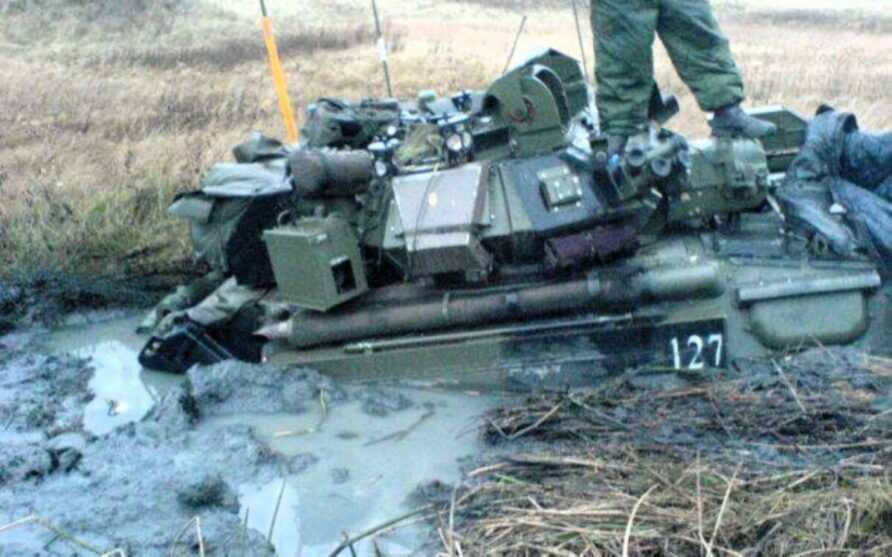
Low weight and high power to weight ratio (26.3bhp per ton) also provided CVR(T) with excellent mobility in poor terrain,
Although not all the time!
CVR(T) can wade up to 1m without preparation, and in early production, a wading screen was added.
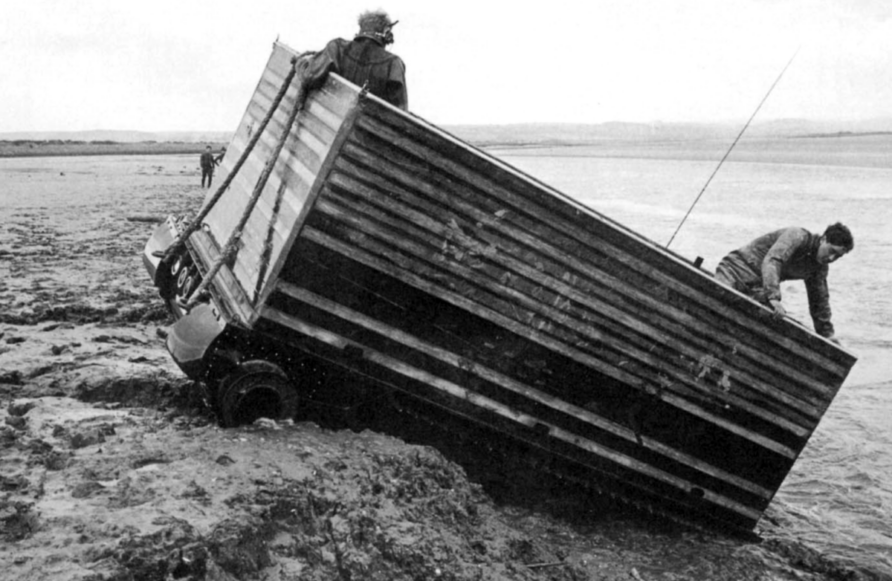
But this was removed alongside similar removals in Stalwart and other vehicles as the Medium Girder Bridge and other rapid bridging techniques were introduced.
Low weight and small size also made CVR(T) very deployable by road.
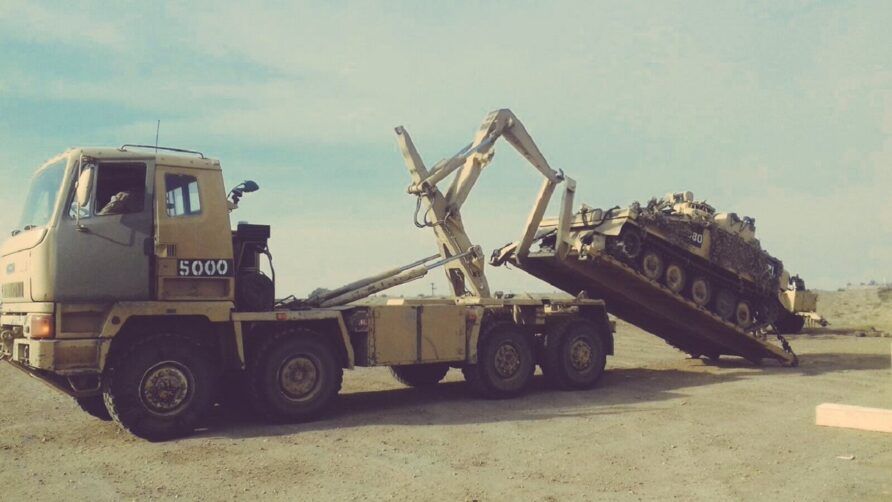
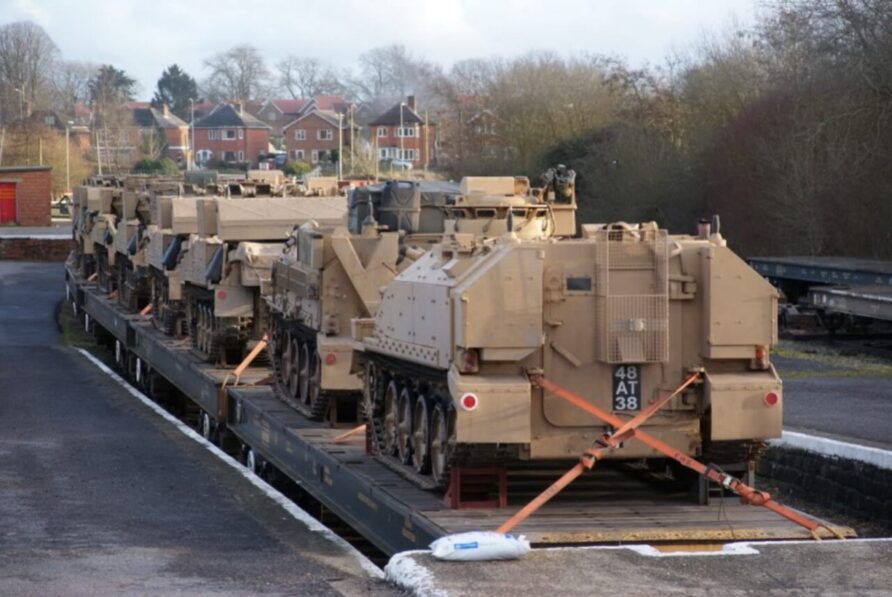
And rail
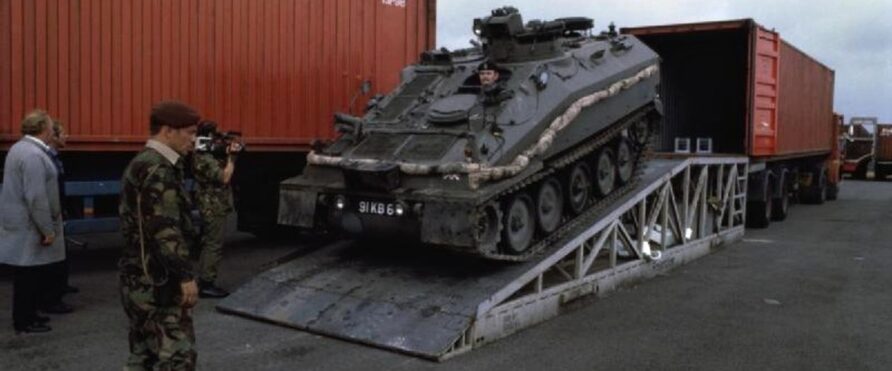
CVR(T) is also small enough to fit inside an intermodal container, and this has been used several times.
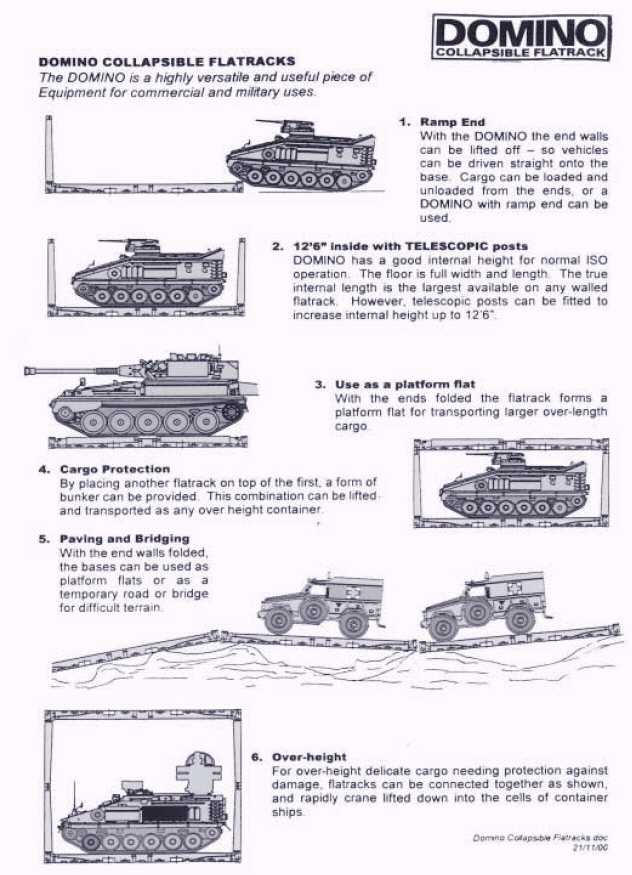
Domino also produced a flat rack with CVR(T) in mind
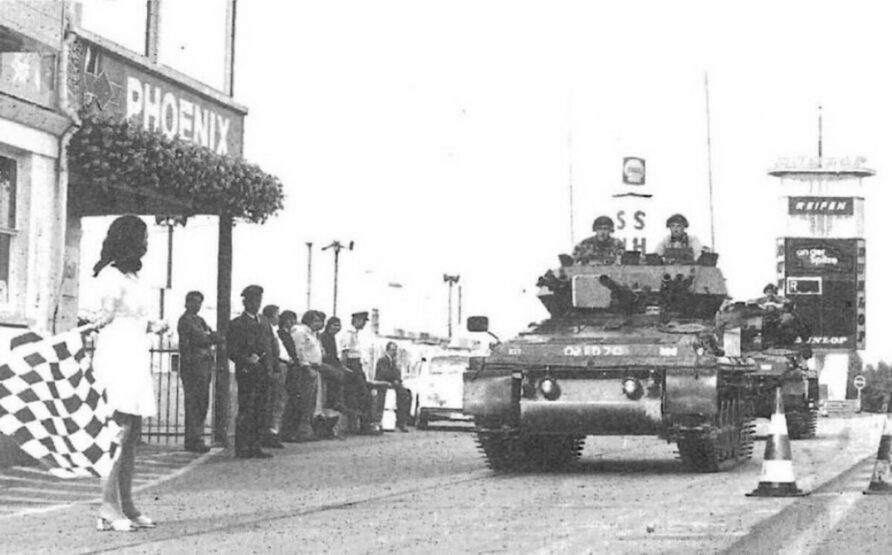
CVR(T) is also fast, even over poor terrain, record-breaking fast.
Fuel consumption was low, a 333 litre fuel tank enabled a range of approximately 370 miles (600 km)
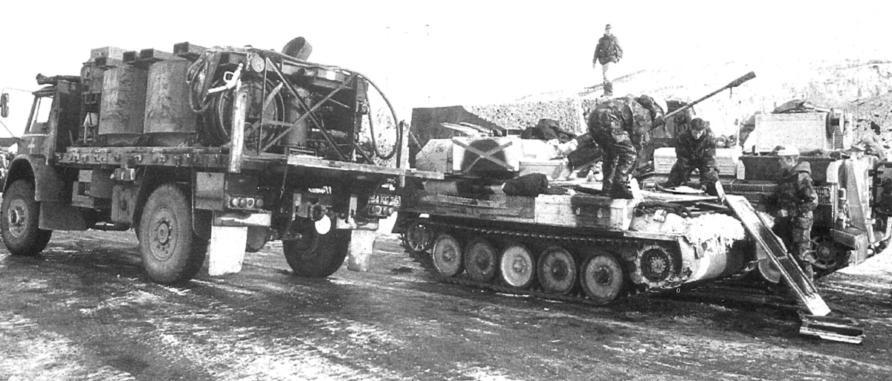
Everything about CVR(T) is mobility.
CVR(T) Main Variants #
The main production variants are described below.
| Variant | Combat Weight (tonnes) | Length (m) | Width (m) | Height (m) |
|---|---|---|---|---|
| FV101 Scorpion | 7.98 | 4.79 (hull) | 2.24 | 2.10 (to top of commander’s periscope) |
| FV102 Striker | 7.75 | 4.83 | 2.24 | 2.43 (to top of cupola) |
| FV103 Spartan | 8.17 | 5.12 | 2.24 | 2.26 (to top of cupola) |
| FV104 Samaritan | 8.66 | 5.07 | 2.24 | 2.42 (to top of roof bin) |
| FV105 Sultan | 8.66 | 4.82 | 2.24 | 2.56 |
| FV106 Samson | 8.78 | 4.79 | 2.24 | 2.25 |
| FV107 Scimitar | 7.80 | 4.79 (4.99 gun forward) | 2.24 | 2.10 |
The data above reflects entry into service characteristics.
All variants added weight through successive upgrades and in some cases, dimensions would also slightly change with additional protection. Minor modifications would also be made throughout the same period, stowage bins, lights, radio equipment (Larkspur to Clansman to Bowman) and other systems.
Operation Bargepole was initiated in 1976 to correct initial minor defects in the design.
FV101 COMBAT VEH RECONNAISSANCE FULL TRACKED 76MM GUN #
Entering service in 1972, the first of the CVR(T) variants provided reconnaissance fire support.
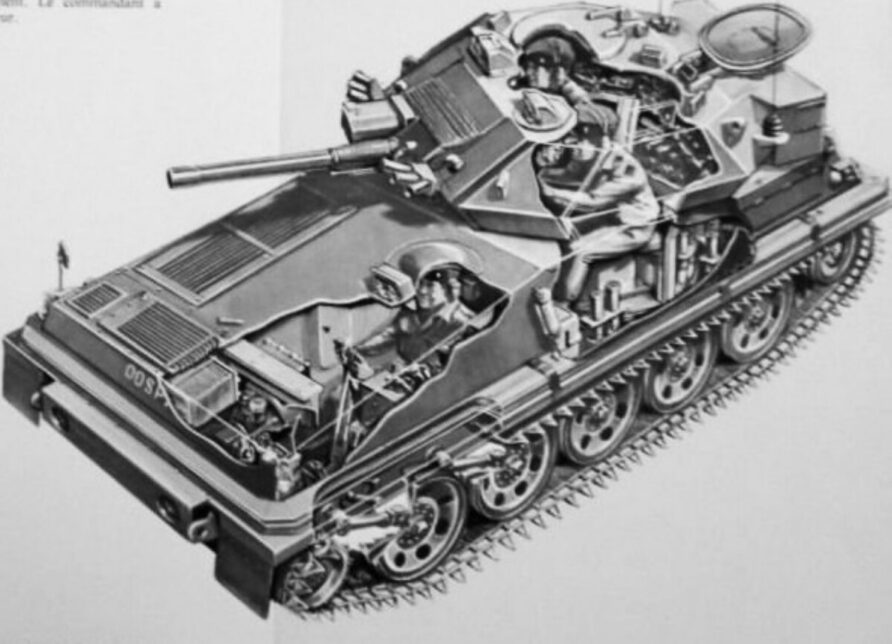
Its roles were listed as
- Reconnaissance including advance to contact, battle reporting, observation and surveillance, rapid forward reconnaissance.
- Delaying action in withdrawal
- Flank guards
- Anti-airborne and anti-helicopter-borne operations
- Independent raids and deep penetration tasks
- Escorting columns
- Exploiting a gap in the advance
- Internal security including mobile patrols, anti arms smuggling patrols, roadblocks, escorts for convoys, V.I.P.s etc., peace keeping duties. National, international, N.A.T.O., etc., communication tasks.
- Counter-Insurgency tasks including armoured close support of infantry, fire Support when artillery is not available or unable to get into action.
The hull layout featured three distinct compartments: the driver’s area at the front left, the power pack at the front right, and the fighting compartment towards the rear.
The driver utilised a single-piece hatch that hinged to the left, with a single wide-angle day periscope positioned ahead of it. The commander and gunner occupied the main fighting compartment, equipped with an all-aluminium welded turret. Each was provided with a single-piece hatch opening rearwards.
The commander benefited from seven day periscopes and a roof-mounted day sight ahead of the hatch, offering ×1 and ×10 magnifications, with limited rotation for an approximately 85° horizontal field of view. The gunner had access to two day periscopes and a similar roof-mounted day sight with ×1 and ×10 magnifications.
To the right of the primary armament, a passive night sight was mounted, featuring ×5.8 magnification (8° field of view) and a low-magnification option of ×1.6 (28° field of view).
Radios were housed in the turret bustle, while a lightweight metal stowage box was affixed externally at the hull’s rear. British Army Scorpions included an NBC system at the hull’s rear; when removed, this space allowed for an extra five 76 mm rounds.
The Scorpion mounted a RO Defence 76 mm L23 gun, a lighter version of the L5 from the Saladin armoured car. This gun employed a vertical sliding breech and fixed ammunition. It recoiled approximately 280 mm, returning to position via a hydropneumatic recuperator.
During run out, a semi-automatic cam opened the breech, ejected the case, and held it open for reloading.
The 76 mm gun could achieve a +35° elevation and -10° depression, with 360° turret traverse. Both elevation and traverse were manual, though powered traverse was retrofitted later in its service life. Ammunition types included canister, HESH, HE, HE/PRAC, SH/P, smoke/BE, and illuminating.
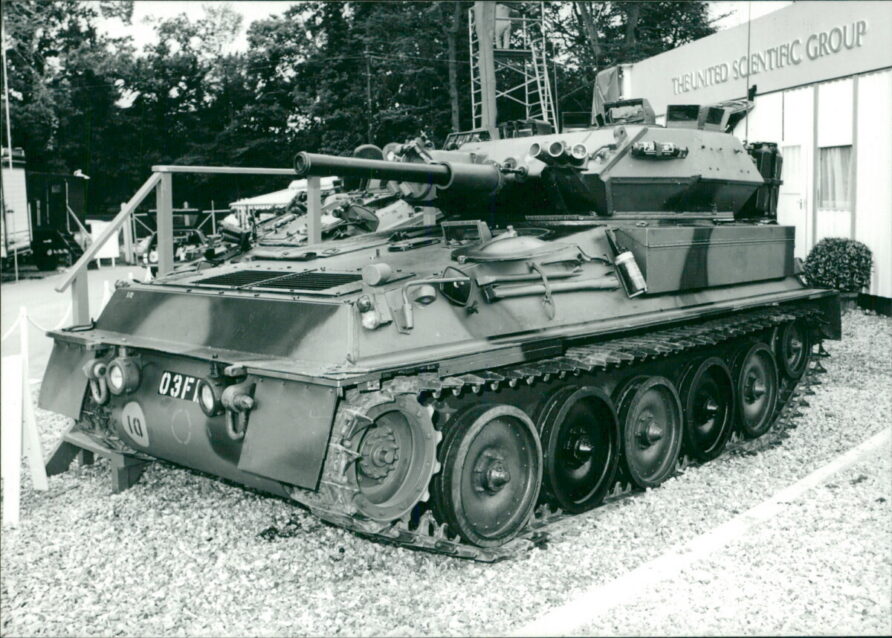
A 7.62 mm machine gun, was coaxially mounted left of the main armament. Each turret side featured a four-barrelled electrically operated 66mm smoke grenade dischargers.
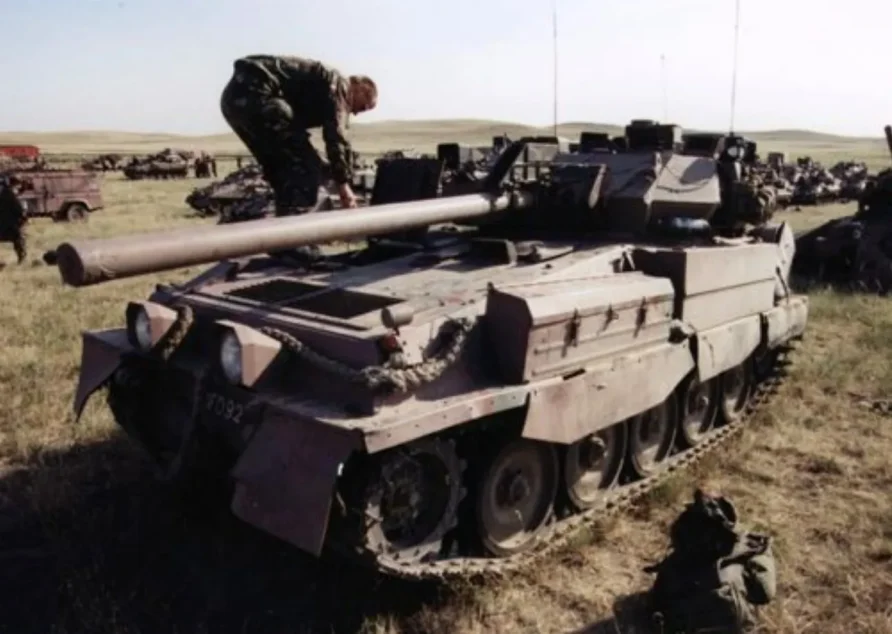
Upon withdrawal from service, some Scorpions were re-roles as opposing forces (OPFOR) training at British Army Training Unit Suffield (BATUS), designated Salamander.
FV102 COMBAT VEH RECONNAISSANCE FULL TRACKED GUIDED WEAPON STRIKER #
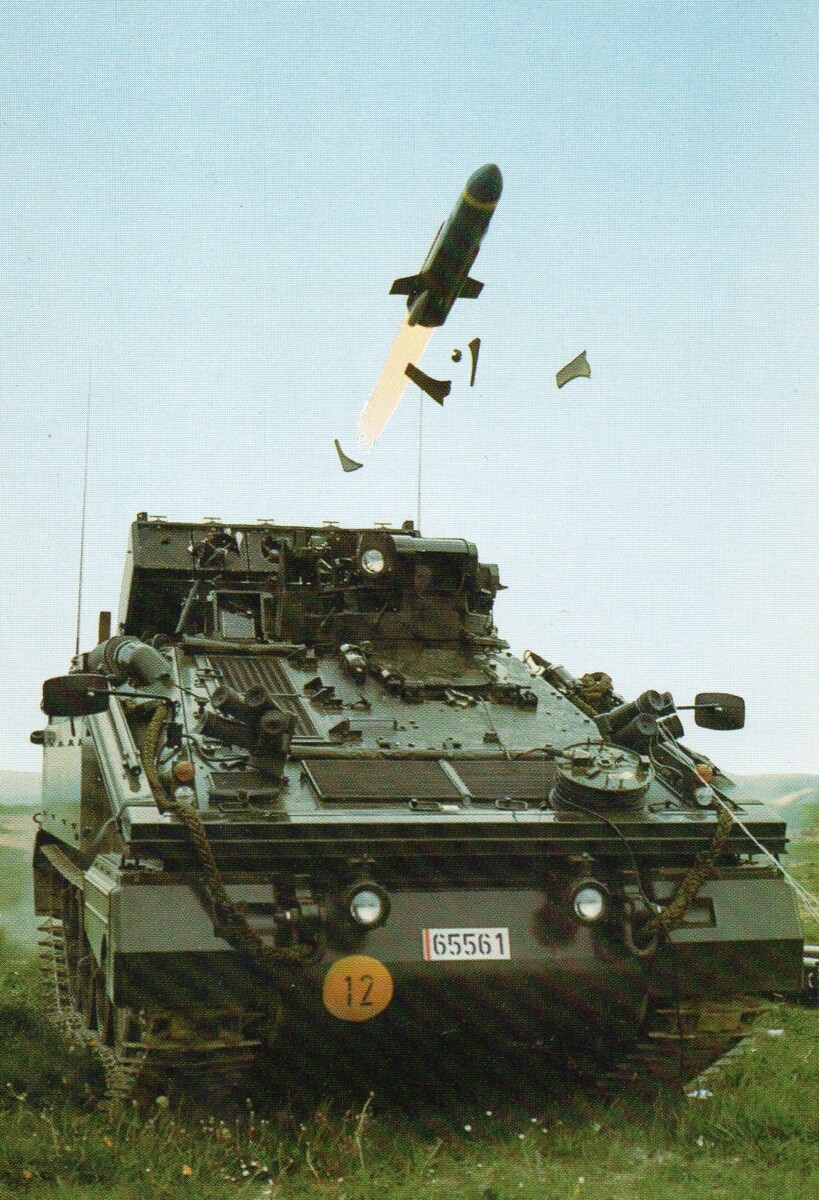
Striker provided an anti-tank overwatch capability for the other vehicles, especially given the relatively light armament of the other variants against MBTs. Striker would provide a ‘big brother’ to enable the lighter vehicles to break contact in any meeting engagements with heavy enemy forces.
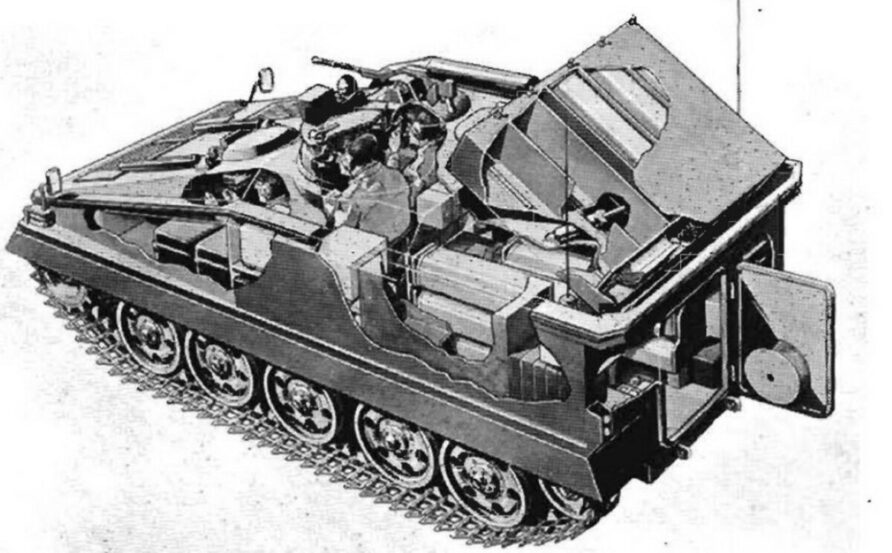
There are a number of theories as to why five missiles.
- One, in true research establishment fashion, the boffins reportedly determined that the kill probability of each Swingfire was 40%. Thus, it would take precisely two and a half missiles to kill each enemy tank. They also calculated that a vehicle engaging enemy tanks with ATGW (Anti-Tank Guided Weaponry) would only kill two before itself being destroyed. Therefore, five missiles were all that was needed.
- Two, that the number was based on the number of Soviet tanks our forces may be expected to face. A Soviet Motor Rifle Regiment Tank Battalion had forty tanks, four companies of ten. A Medium Reconnaissance Regiment had sixteen Strikers (four per Squadron). A Medium Recce Regiment would deploy with a total of 80 Swingfire in the launchers and a further 80 internally stowed (with 80 more (20 per Squadron) available in forward resupply). Therefore, if a withdrawing Medium Recce Squadrons overwatch were to face an advancing Soviet MRR Tank Company the ratio of (loaded) Swingfire Missiles to T64/72 would be 2:1
- Three, five missiles conveniently fit across the width of the vehicle.
I will leave you to decide which one is true!
A dismounted sighting mechanism allowed the Swingfire missiles to be guided remotely.
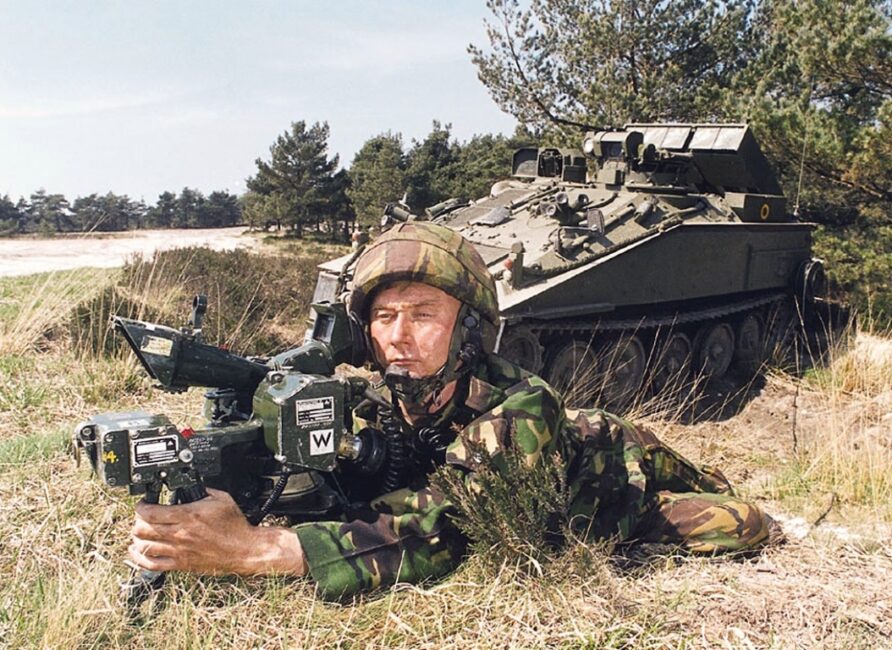
The remote sight could be located up to 100 metres away horizontally and 23 metres higher or lower.
FV103 COMBAT VEH RECONNAISSANCE FULL TRACKED PERSONNEL SPARTAN #
Entering British Army service in 1978, Spartan Intended to provide protected mobility for four dismounted personnel, such as Pioneers or Blowpipe teams, and in some instances, a resupply vehicle for Striker.
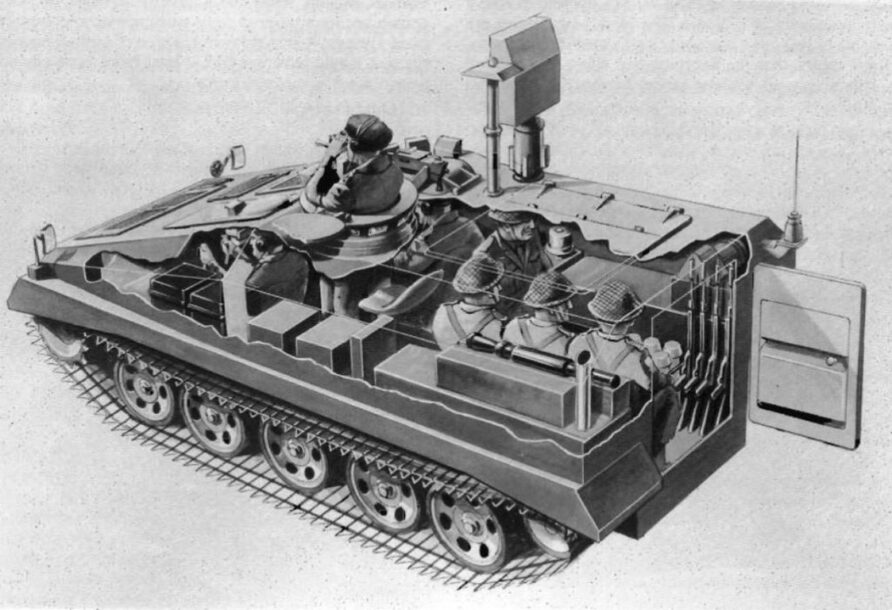
Spartan was a simple adaptation of the base Scorpion design. Although it had a higher roofline it was still compact and, despite weighing slightly more than Scorpion, performance was largely the same.
Positioned immediately behind the driver, the vehicle commander/gunner utilised a No. 16 cupola fitted with eight day periscopes and a monocular sighting device offering ×1 or ×10 magnification, with the sight line adjusting in tandem with the armament.
A 7.62 mm machine gun was affixed to the cupola’s right flank, permitting aiming and discharge from within the vehicle. The cupola featured a one-piece hatch that hinged open to the left.
Access to the rear personnel area occurred through a single piece door in the hull rear. Above the troop section, two overhead hatches allowed opening to either side of the vehicle. The compartment included two-day periscopes on the left wall and one on the right.
Spartan could also mount the advanced (for its time) ZB298 ground observation pulse Doppler radar that could detect moving vehicles at 6,000m and personnel at 3,000m.
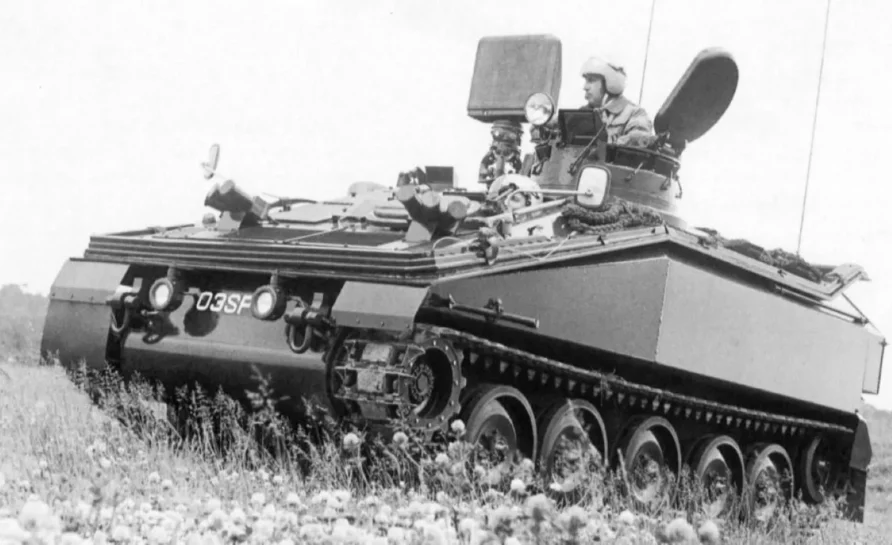
The radar was dismounted for travel, and could only be used when stationary. It could also be used in the man portable role, up to 20m away from the vehicle.
A stretched Spartan was considered as a future replacement for the FV430.
The stretched version would have had an extra road wheel, and accommodated three more dismounted personnel (for a total of 7 dismounts + 3 crew). The Jaguar petrol engine would have been replaced with a Perkins diesel to provide greater range.
The image below shows the CVR(T) Scorpion prototype number 11 after it had been cut and extended with the addition of an extra road wheel, not to be confused with Streaker or Stormer, or Spartan for that matter, but it shows the progression.
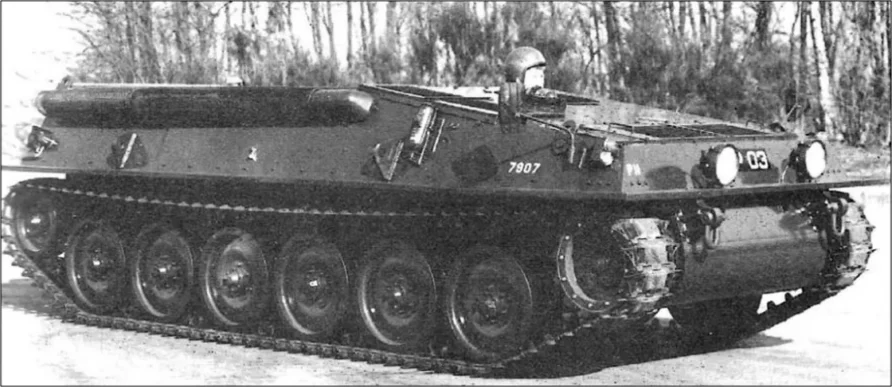
After meeting with some success with the stretched Scorpion, Military Vehicles and Engineering Establishment (MVEE) built another prototype, this time from scratch and called it the FV4333.
Many years later, after Alvis purchased the design rights from the MoD, it was to be called Stormer.
FV104 COMBAT VEH AMB FULL TRACKED SAMARITAN #
With a high roofline, Samaritan was the armoured ambulance variant with the same hull design as the standard Sultan command vehicle, accommodating a crew of two: the commander/medical orderly and the driver.
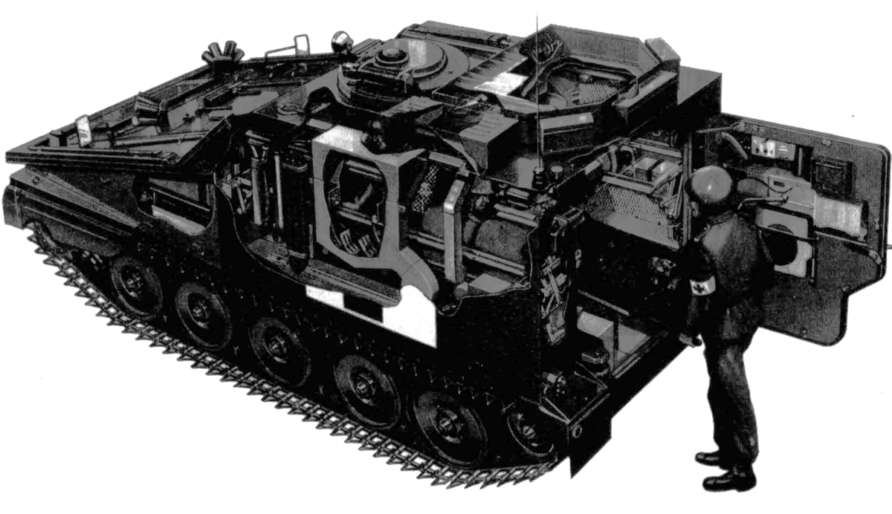
Samaritan was capable of transporting four stretcher cases, five sitting casualties, or a combination of two stretcher and three sitting cases.
Medical supplies were carried on the roof and at the rear of the vehicle and access to the interior was provided by a large rear door, hinged on the right, which included an integral vision block.
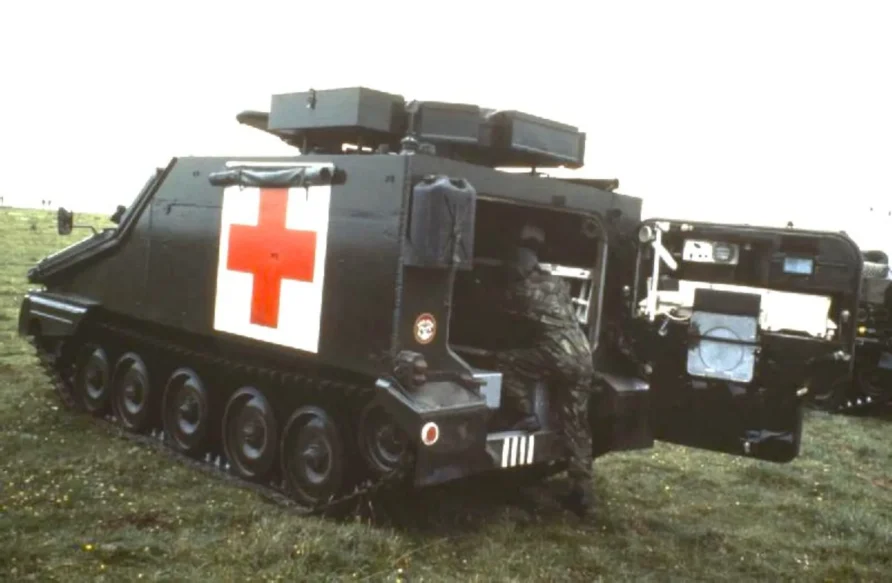
A rotatable cupola in the vehicle roof provides the vehicle commander with an all-round observation facility. Smoke grenade dischargers are included and are positioned on the front hull.
Samaritan entered service in 1978.
FV105 COMBAT VEH RECONNAISSANCE FULL TRACKED SULTAN COMMAND #
Sultan entered service in 1977.
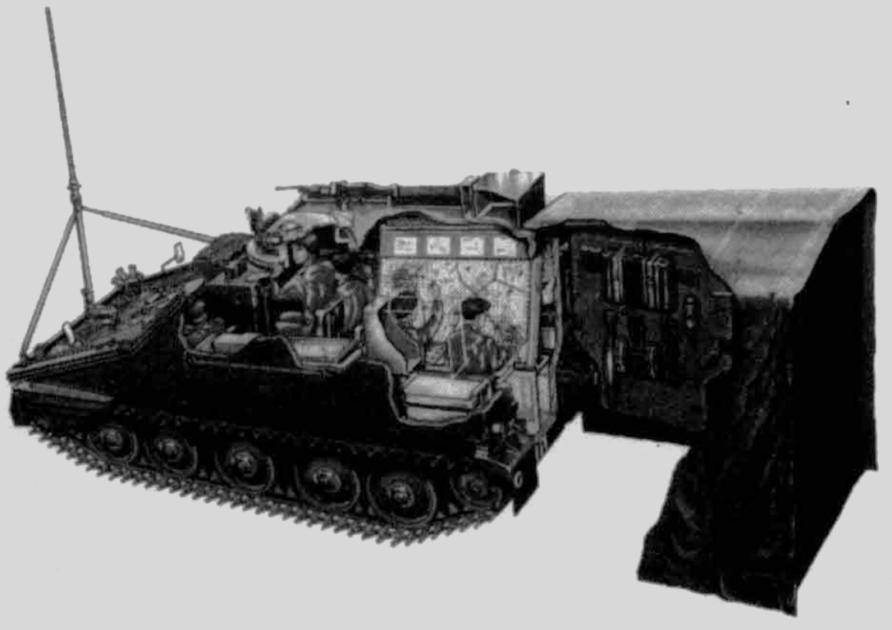
Sharing the same high roof (300mm taller than Spartan) as Samaritan, Sultan was a command variant equipped with map boards, bench seats, enhanced radio equipment to operate over multiple nets, lighting and a penthouse (tent) to provide additional space.
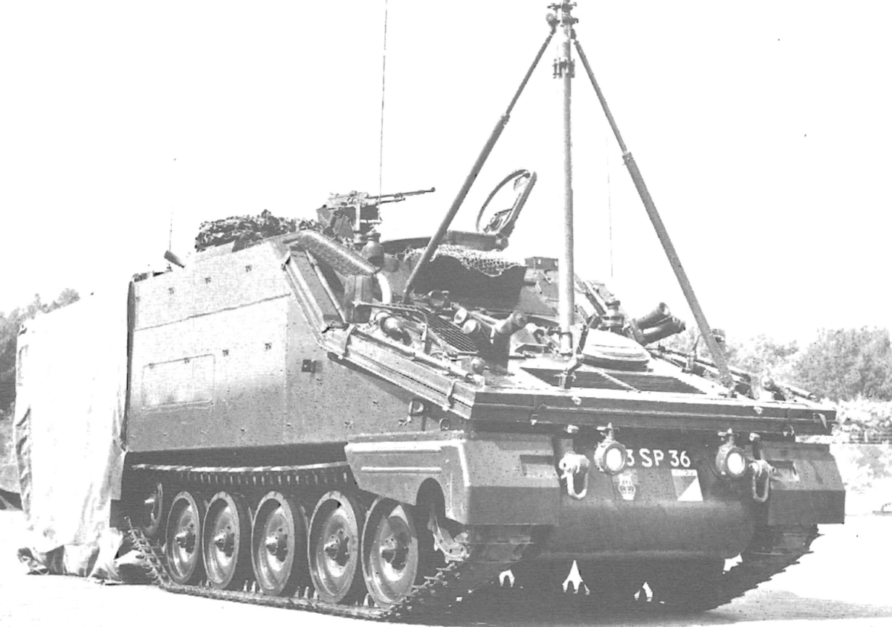
A radio antenna could be fitted at the front of the vehicle when used in the static role.
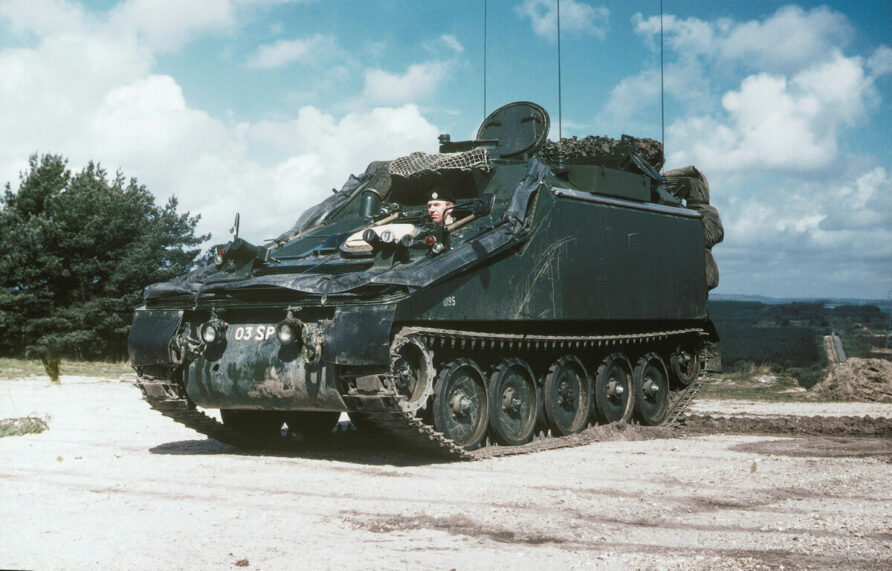
The commander had a No 27 cupola with five day periscopes for all-round observation, plus a single wide-angle day periscope with a forward-sloping window.
Armament consisted of a pintle-mounted 7.62 mm GPMG and four 66mm smoke grenade dischargers mounted on either side of the vehicle towards the front of the hull.
FV106 COMBAT VEH RECONNAISSANCE FULL TRACKED SAMSON RECOVERY #
Equipped with earth anchors and a straight pull winch, Samson was the recovery variant that could recover all members of the CVR(T) and CVR(W) family, in addition to much larger vehicles.
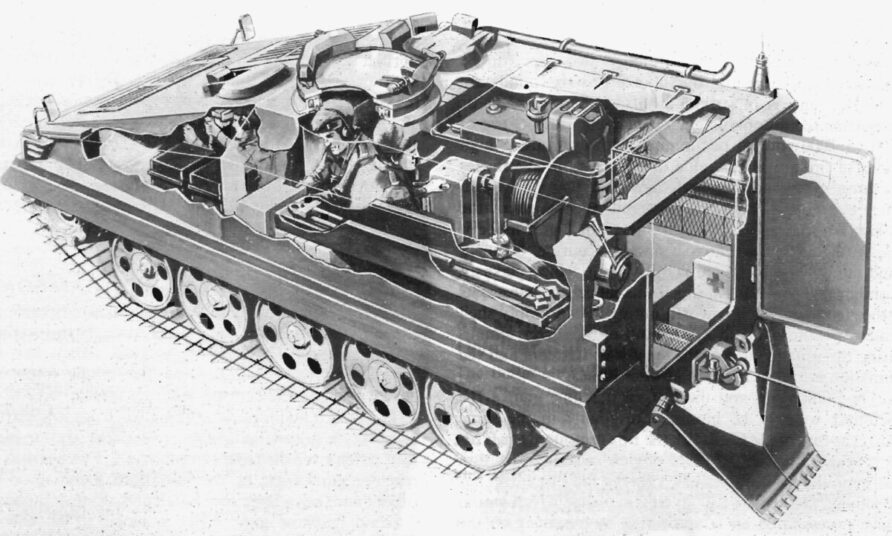
Samson entered service in 1978.
The main winch had a variable speed of up to 122 m/min on a 229 m of wire rope. Maximum pull, with a 4:1 snatch block, was 12,000 kg. The winch leads to the rear of the vehicle and when being used for recovery operations a manually operated spade type earth anchor was lowered.
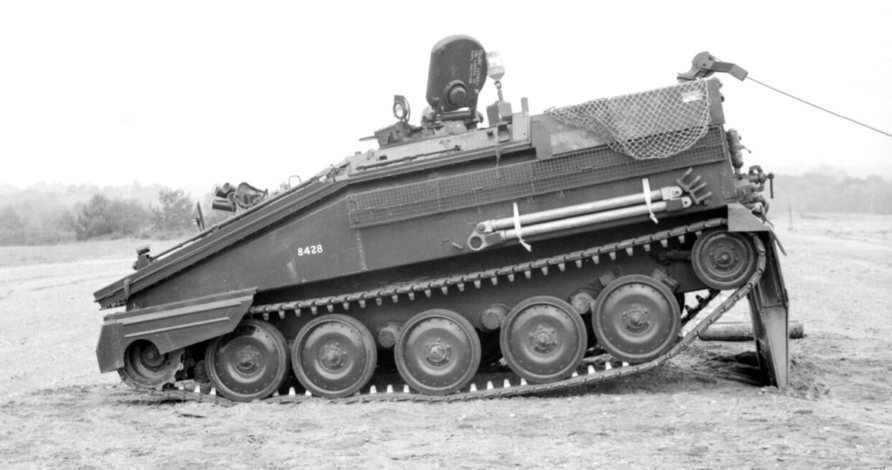
Later improvements increased the recovery capacity to 18.8 tonnes.
A lifting jib/drawbar was also carried, and when fitted to the rear of the vehicle, the former was used for power pack changes.
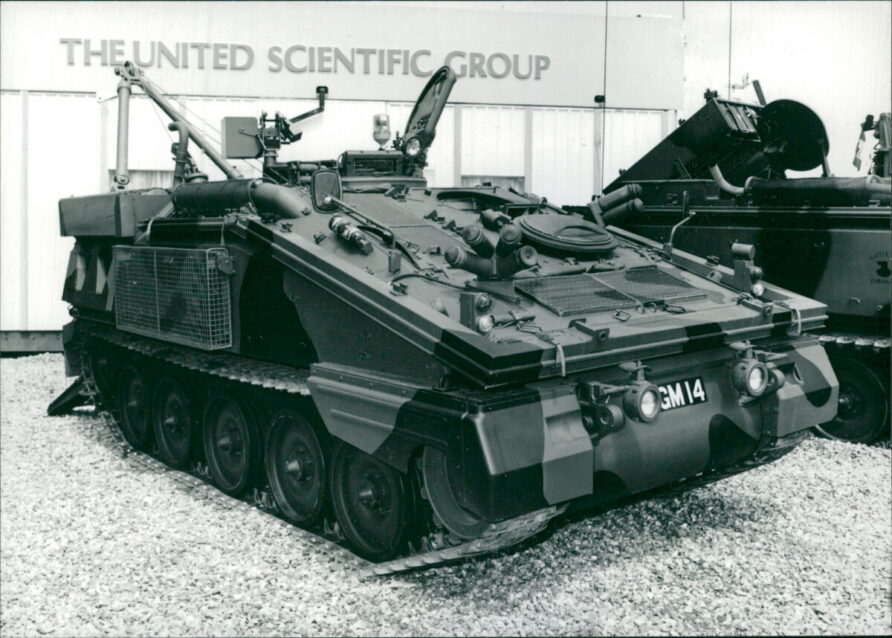
Tools, a small workbench, tow-bars and tow cables were carried as standard equipment.
Armament comprised a pintle-mounted 7.62 mm GPMG and four 76 mm smoke grenade dischargers mounted on either side of the vehicle towards the front.
FV107 COMBAT VEH RECONNAISSANCE FULL TRACKED SCIMITAR #
To counter enemy personnel carriers at longer ranges than the 76mm gun, the high velocity L21A1 30mm RARDEN cannon was developed by Royal Armament Research and Development Establishment and the Royal Small Arms Factory.
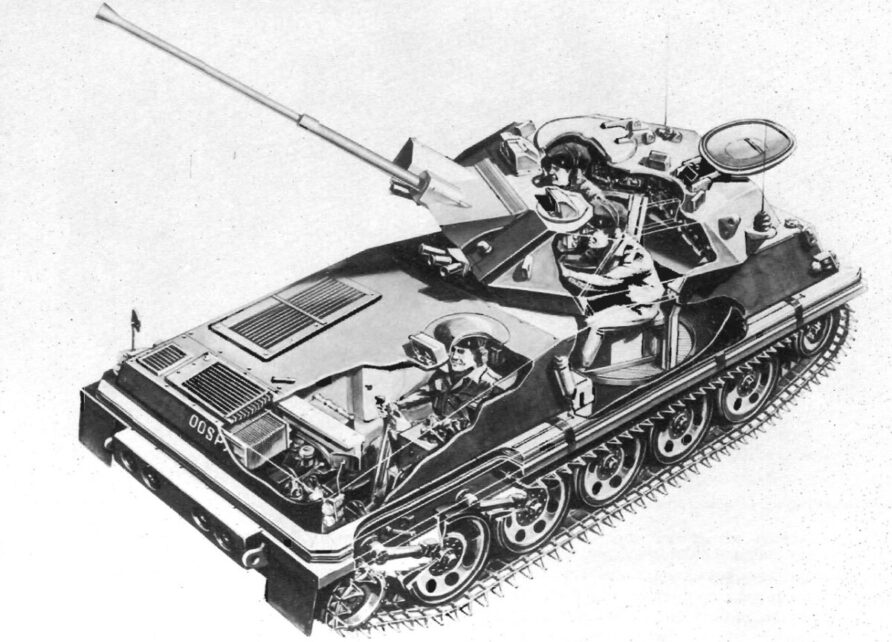
RARDEN could fire ammunition from the Hispano Suiza 30mm HS 831L, but the Armour Piercing Discarding Sabot, or APDS, ammunition (that would contribute so much to RARDEN’s accuracy and effectiveness) was developed specifically for the new gun. The PATEC company in the USA also contributed to the APDS development.
At only 90kg, the gun was also much lighter than comparable weapons of the era, and the external spent case ejection system meant that fumes inside the turret were reduced.
Although RARDEN was very accurate, the 3 round clip-loading mechanism meant sustained firing was punctuated with reloading pauses, but bursts of up to six rounds can be fired if required.
The turret design was largely common with Scorpion, although with some key differences, such as gunner sighting arrangements.
Striker entered service in 1974.
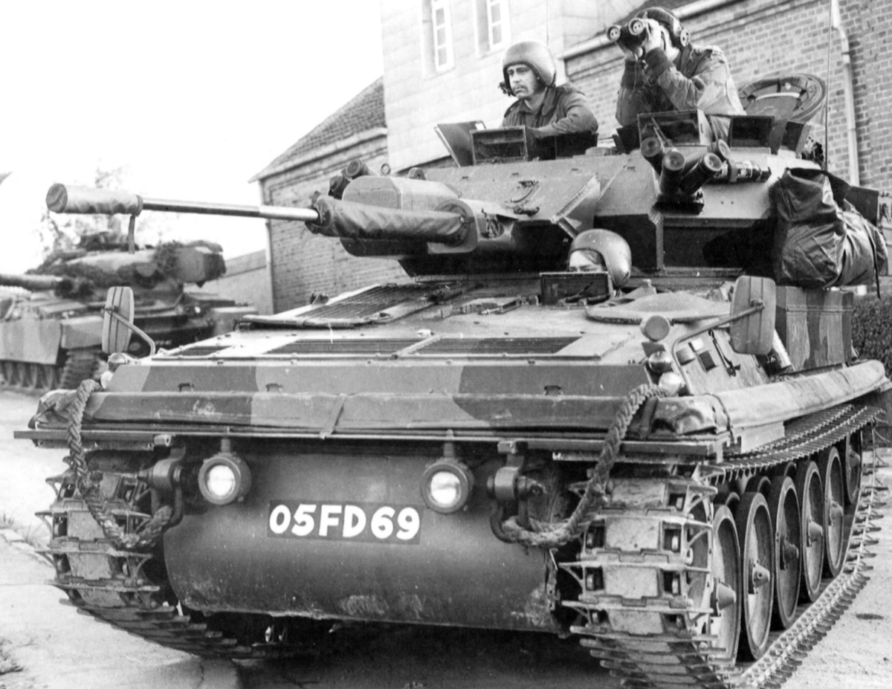
The Royal Air Force also used the Scimitar and its RARDEN gun in the EOD role on airfields.
Given its longevity and role, Scimitar benefited from continuous upgrades more than the other variants.
Before operations in the Balkans, the MoD contracted with Thales to equip vehicles with the SPIRE System. The SPIRE incorporated a laser rangefinder, fire control computer, and HIRE thermal-imaging system manufactured by Raytheon Systems.
104 FV107 Scimitar CVR(T) vehicles were progressively fitted with the SPIRE system.
In The Life Extension Programme (LEP), apart from diesel and other fleet improvements, Scimitar was equipped with new night vision equipment and prepared for the installation of Bowman communications equipment.
Operations in the Middle East also resulted in upgrade packages.
In 2003, a mine protection kit was fitted beneath the hull and along its sides, while turret protection panels—incorporating Kevlar composite armour developed by Plasan Sasa were also installed. Vehicles were subsequently fitted Enhanced Protection Bar Armour (EPBA)
Scimitar CVR(T) was also fitted with the BGTI sighting system.
For operations in Iraq, Scimitar were also fitted with extensive Electronic Countermeasures (ECM) systems and an Environment Mitigation kit. The latter included toque increases, improved air filtration, final drives and clutch improvements, and an new battery management system.
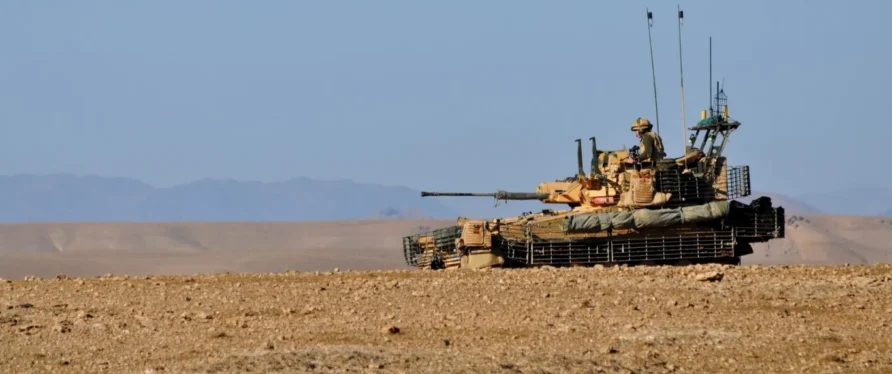
This Theatre Entry Standard – Herrick, or TES (H), package increased weight to 11 tonnes.
CVR(T) Other Variants and Modifications #
Streaker #
Developed by Alvis as a private venture in late 1982, and building on experience from CVR(T) performance during the Falklands Conflict, Streaker was a high mobility load carrier.
It was a relatively simple design, replacing the rear compartment of a Spartan with a modular load bed, either fully flat or recessed.
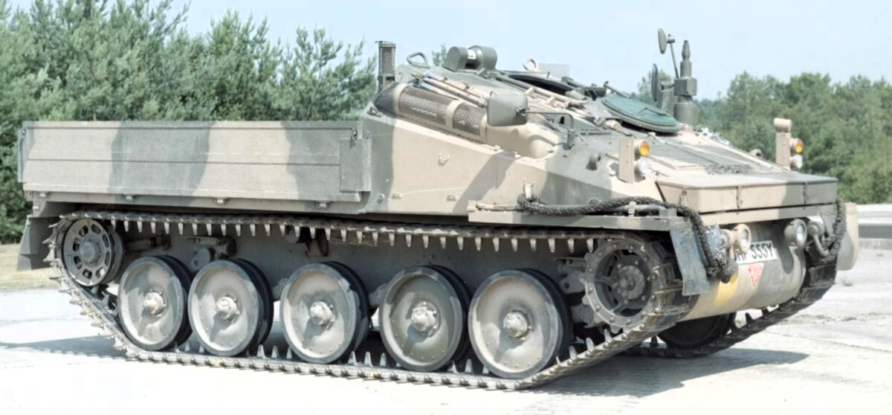
Maximum payload was 3 tonnes, although some sources indicate higher at 3.65 tonnes.
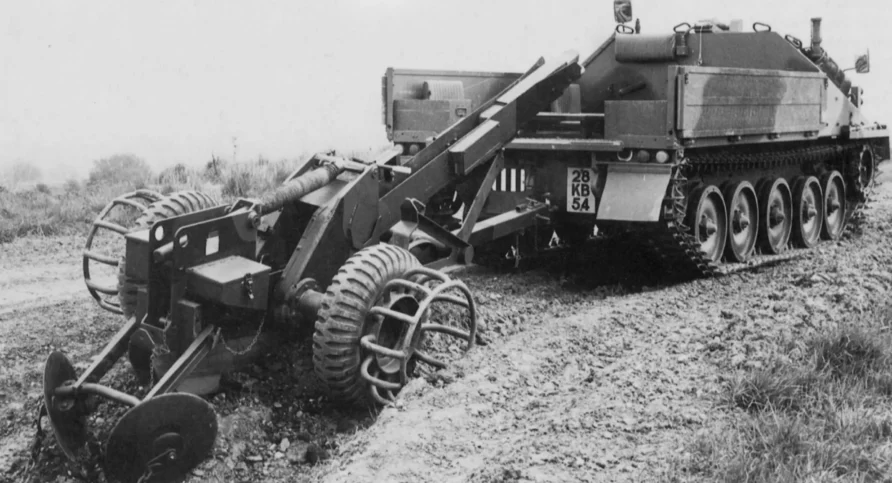
Variants proposed included ATGW, L10 Ranger and L9 Barmine layer, fire fighting, refuelling, command, a trench digger, cargo, excavator and a 105mm Light Gun limber with integral loader jib.
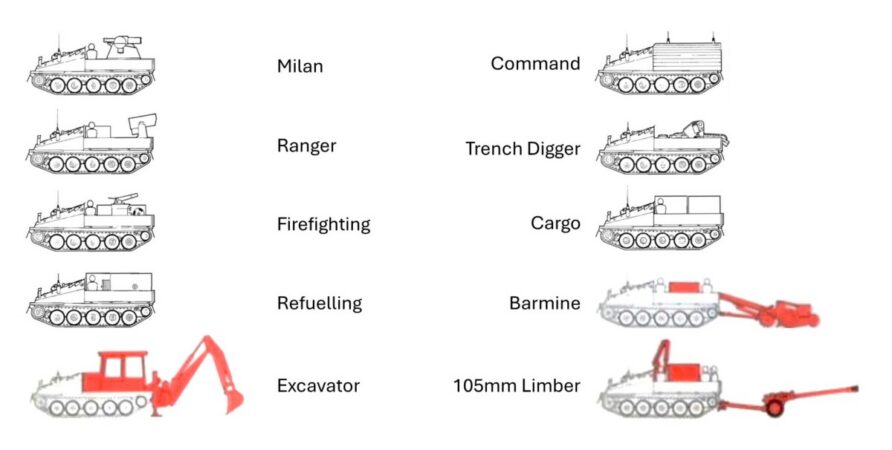
Two prototypes were built, and they took forward four configurations, the basic load carrier, the 3,000 Litre refueller.
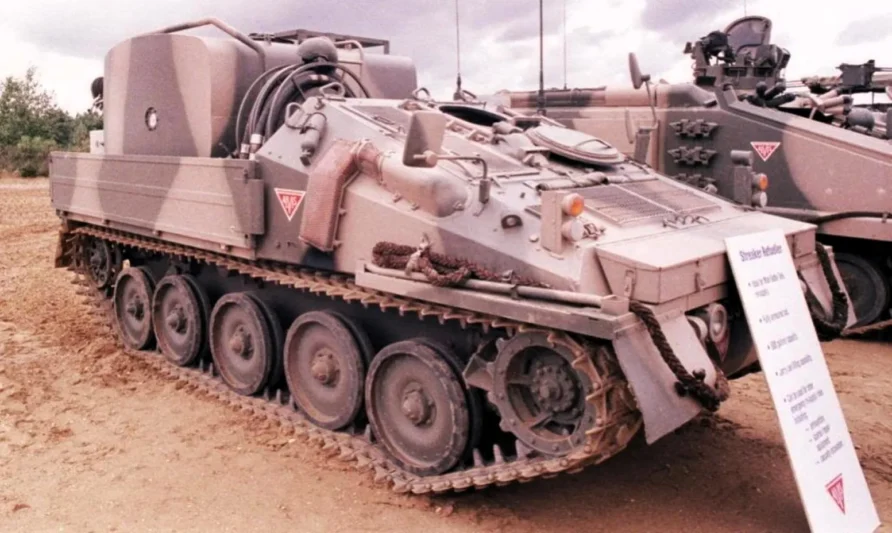
The Barmine layer
And a multiple-launch rocket system (MLRS) configuration mounted a Belgian Forges de Zeebrugge LAU97 launcher, comprising 40 tubes for 70-millimetre unguided rockets arranged in five horizontal rows of eight
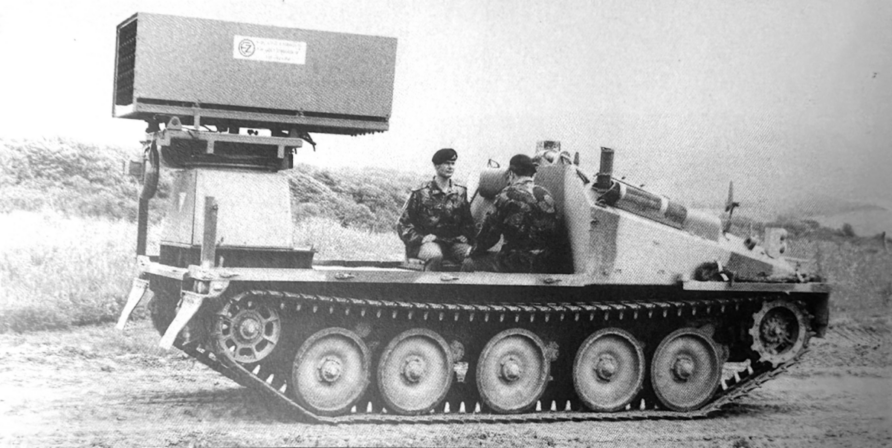
This system featured a 360-degree traversable base with elevation from 0 to +55 degrees.
Rockets could fire singly or in a full salvo within six seconds, achieving a maximum range of 9,000 metres and saturating an area of 200 by 300 metres. Warhead options varied, including anti-armour (penetrating over 350 millimetres), anti-personnel (with over 8,000 fragments and a lethal radius of 18-21 metres), illuminating, and cargo submunitions.
The Mobile Advanced Robotics Defence Initiative (MARDI) programme was initiated in 1989 at the Royal Armament Research and Development Establishment (RARDE) in Chertsey, Surrey, as a collaborative effort between the UK Ministry of Defence, industry partners (including Alvis, British Aerospace, CAP Scientific, GKN Defence, and Lucas Applied Technology), and universities.
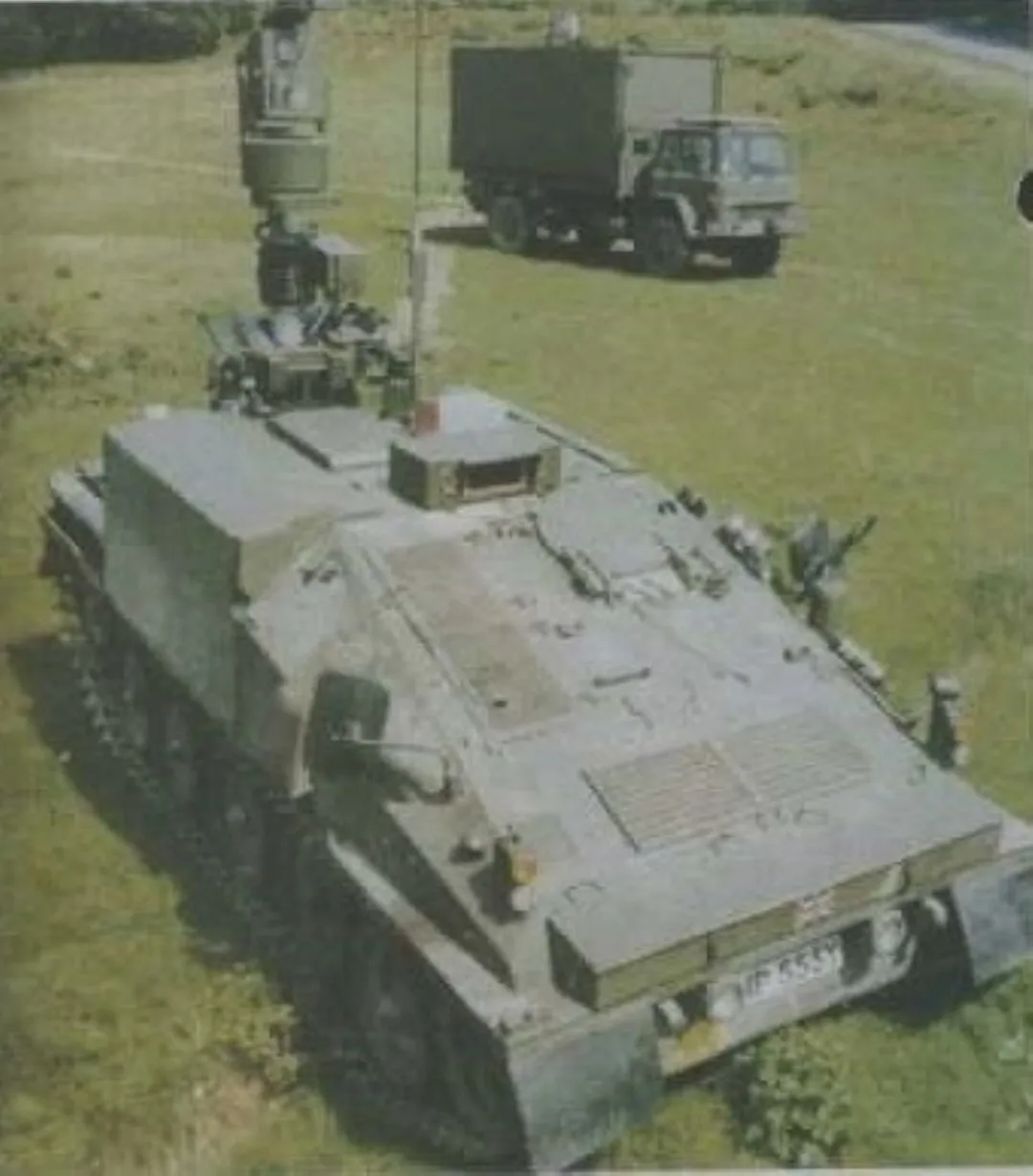
MARDI made use of a Streaker base vehicle.
Mobility Concepts #
A turretless CVR(T) Scorpion was used by the Military Vehicles Engineering Establishment Chertsey in the late 70s early 80s for high-speed track and suspension testing.
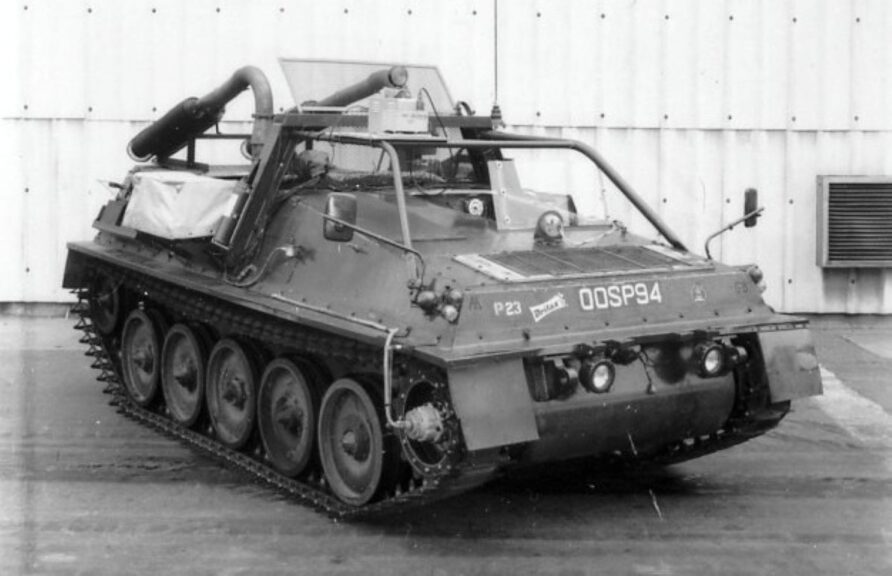
It was powered by an AVO-Lycoming 7.2L petrol engine mounted in the turret well.
The SITV (Sprung Idler Test Vehicle) was a high-mobility trials vehicle developed by Military Vehicles and Engineering Establishment (MVEE) in the 1970s-1980s to evaluate advanced suspension systems for tracked vehicles. It featured a “sprung idler” mechanism—a hydraulically adjustable front idler wheel designed to improve ride quality, reduce track wear, and enhance cross-country performance at high speeds.
It wasn’t a specific CVR(T) variant, but used some CVR(T) components.
Air-portable Self-Propelled Anti-Tank (ASPAT) #
ASPAT was a 1978 concept that examined designs for lightweight vehicles.
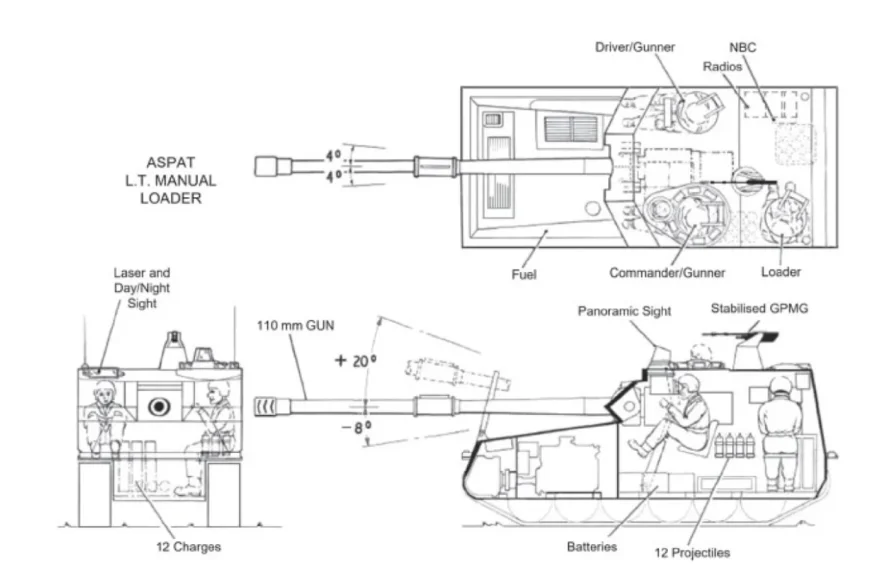
The design drew heavily upon CVR(T) automotive elements, including the suspension and powertrain, aiming for an overall weight of approximately 12 tonnes.
Proposals for the armament centred on a 110 mm gun, with two loading configurations under consideration: an auto-loading system that accommodated nine rounds (typically six armour-piercing discarding sabot (APDS) and three high-explosive squash head (HESH)) or a manual-loading arrangement that allowed for up to 12 rounds.
ASPAT did not progress beyond the initial concept stages.
Sabre #
When Scorpion and Fox were withdrawn, there was an opportunity to generate a useful uplift in the number of vehicles available to the British Army by utilising surplus Scorpion Hulls and CVR(W) Fox turrets.
Trials confirmed it was feasible, and accepted into service in 1993.
In effect, this turned a Scorpion into a Scimitar, although the list of modifications was more extensive than that, including stowage bins, turret hatches, replacement of the coaxial machine with a 7.62mm Chain Gun (this is one of the easiest ways to tell Sabre apart from Scimitar)
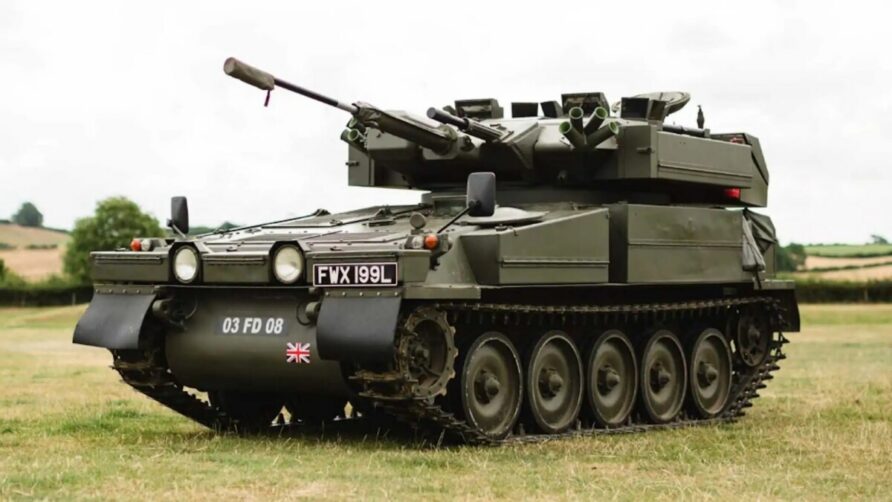
Alvis Vehicles supplied conversion kits to the British Army, and the work was undertaken at the Army Base Repair Organisation (ABRO) facility at Donnington.
Sabre was withdrawn in 2004.
Milan Compact Turret #
The Milan Compact Turret (MCT) was added to approximately 70 Spartan hulls between 1984 and 1986.
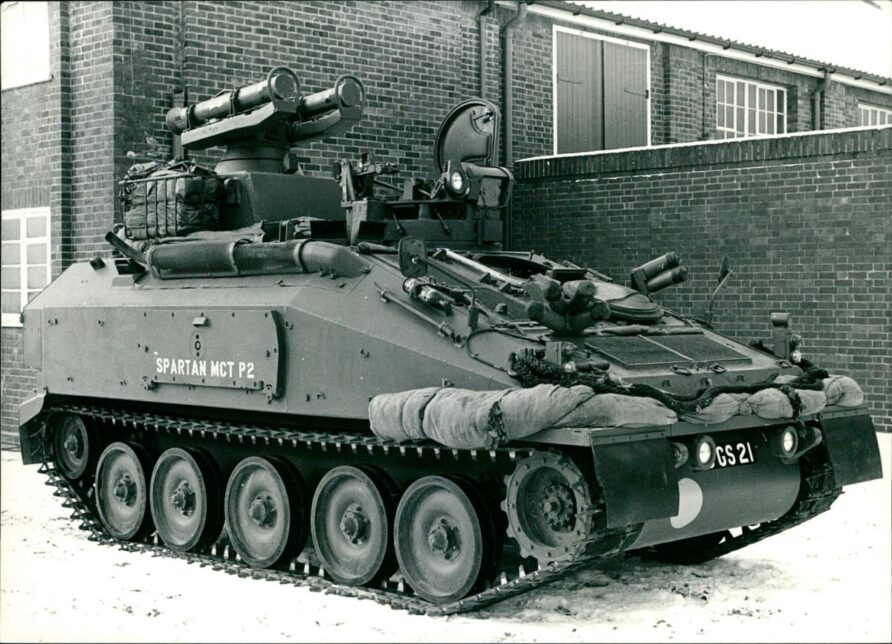
Milan entered service with the British Army in the early seventies, a wire guided anti tank guided weapon (ATGW) with a range of 2,000 metres.
Spartan MCT featured two MILAN launchers on the turret, with capacity for 11-13 additional missiles stored internally.
The MCT Spartans saw service in the 1991 Gulf War,
As with Scorpion/Salamander, some surplus MCT Spartans were converted to BATUS OPFOR vehicles, designated Sturgeon.
Repaircraft Scorpion 2000 #
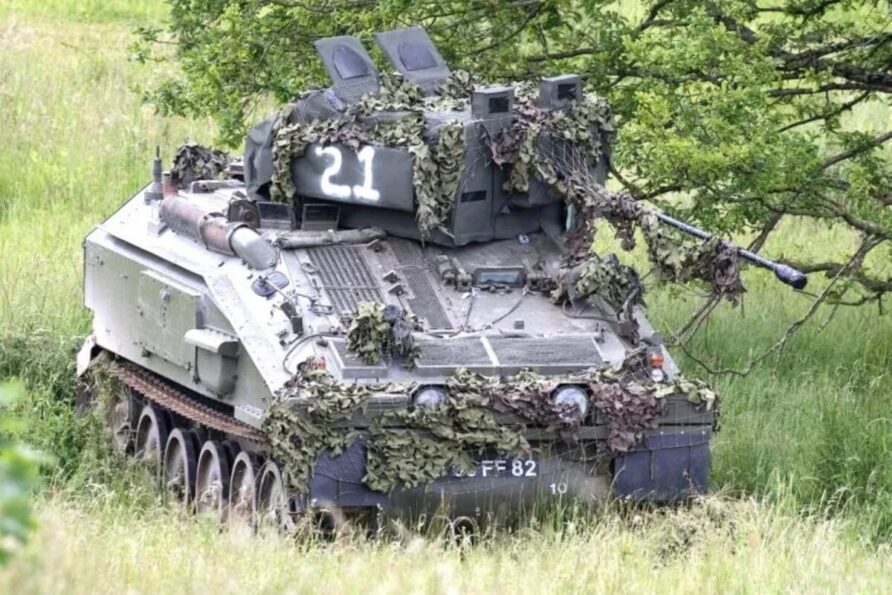
The Repaircraft Scorpion 2000 was a late nineties proposed modernisation package for the FV101 Scorpion. Developed by Repaircraft PLC, a UK-based firm specialising in the overhaul, repair, support, and upgrade of armoured vehicles, along with the provision of defence and aerospace spare parts, this upgrade was intended to extend the operational life of CVR(T).
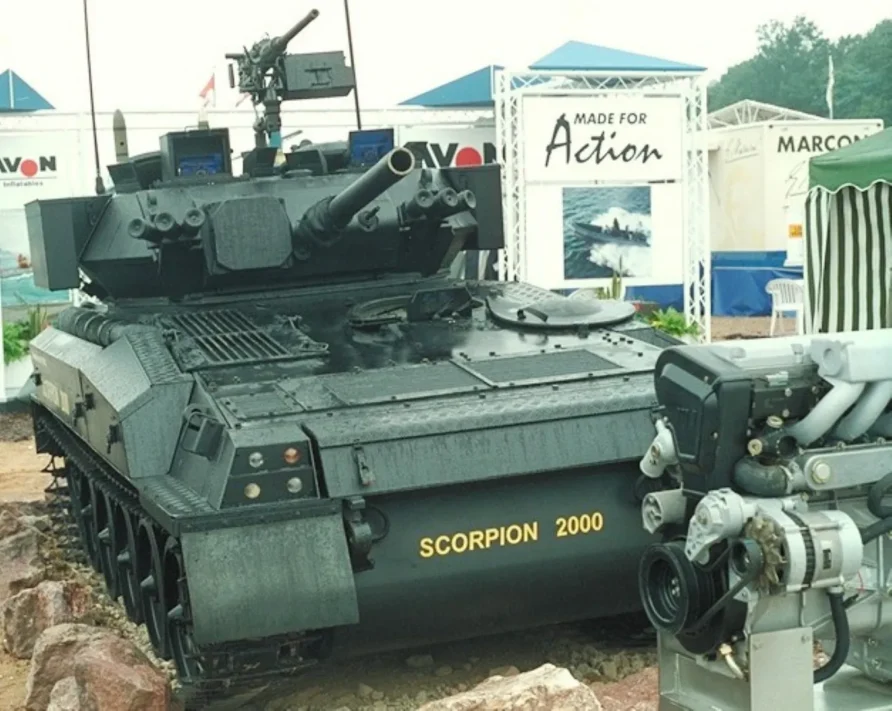
The Scorpion 2000 incorporated several enhancements to improve reliability, crew comfort, and combat effectiveness without fundamentally altering the vehicle’s lightweight aluminium hull or core mobility characteristics.
Oviks Meerkat #
The OVIK Meerkat, also referred to as the Super Light Tracked Vehicle (SLTV), was a conceptual multirole armoured vehicle developed by OVIK, a British specialist vehicle manufacturer and engineering consultancy focused on military platforms.
Introduced as a demonstrator at the Defence Security and Equipment International (DSEI) exhibition in 2011, it was based on the chassis of the Combat Vehicle Reconnaissance (Tracked) (CVR(T)) family
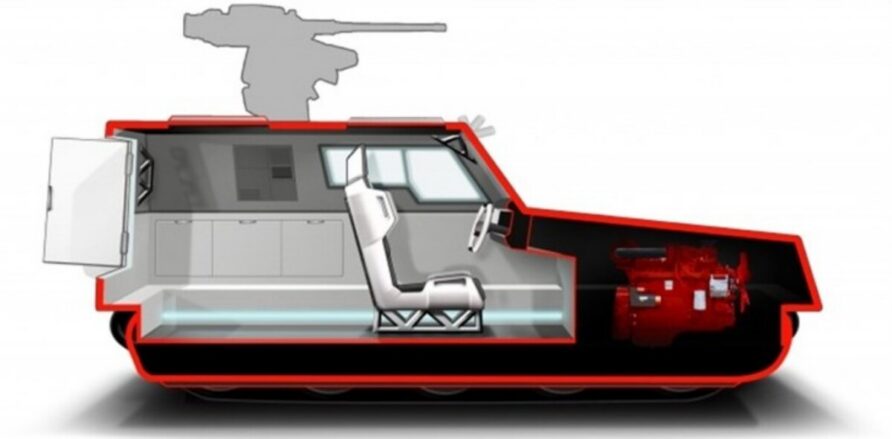
The design aimed to refurbish and modernise surplus CVR(T) vehicles anticipated to become available as the British Army and other operators phased them out, extending their service life for export markets or specialised roles.
The Meerkat included a Cummins 6.7-litre ISB diesel engine, paired with an automatic transmission (uprated DB TN15E+) and Stormer final drives.
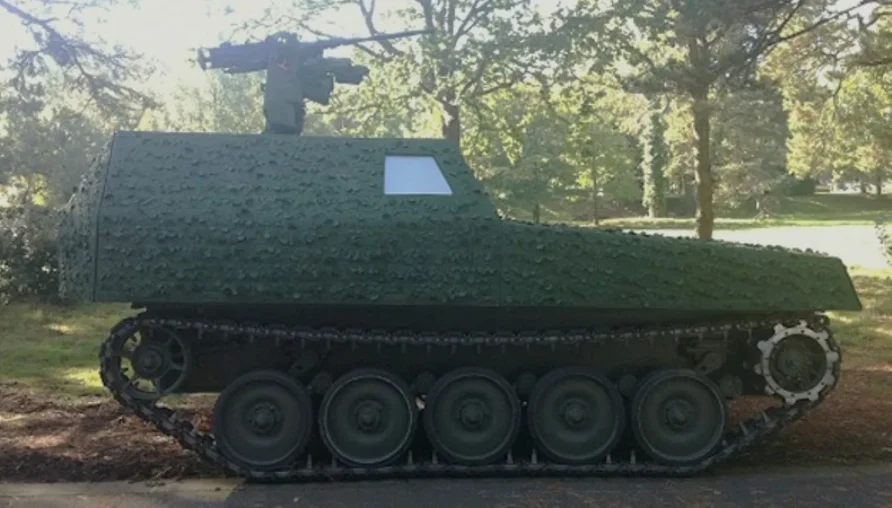
The driver was moved into the main fighting compartment, joined by a commander, who was provided with Kongsberg Protector TWS equipped with a 12.7 mm (.50 calibre) M2 HB machine gun.
CVR(T) Mk2 #
One of the first trials for what would go on to become CVR(T) Mk2 involved a Spartan and Scorpion turret, and when the potential was recognised, a more formal process emerged.
The contract, valued at approximately £30 million, was awarded to BAE Systems in December 2010.
A series of tests were completed on the Mk2 vehicles in Jordan, including continuous rubber tracks from Soucy.
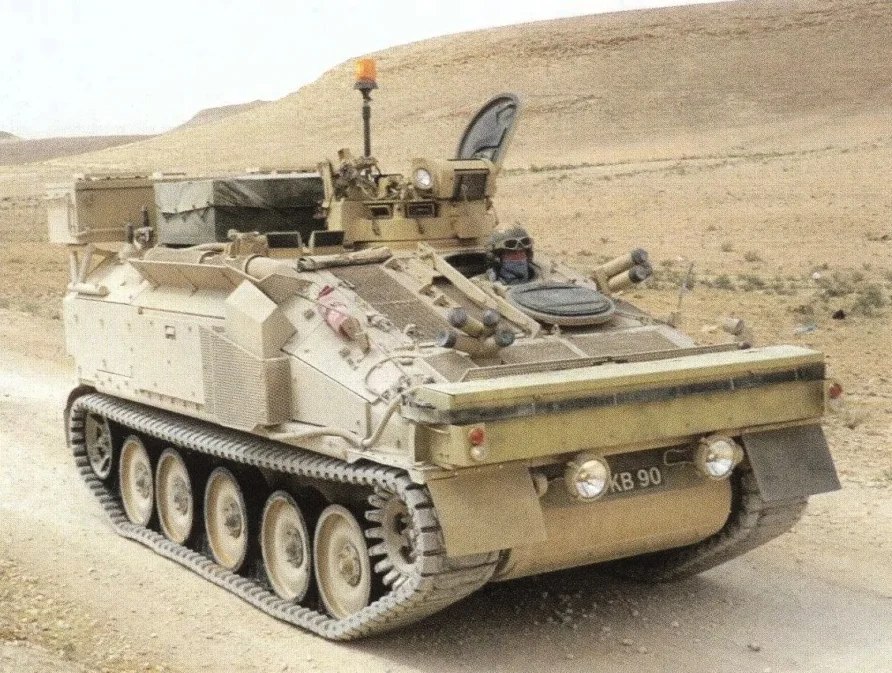
There were improvements across almost every aspect of the vehicle, but the difference between Mk2 and the other upgrades was provision for a wholly new hull manufactured from modern aluminium armour.
The first Mk2 vehicles were delivered in September 2011 and made ready for deployment to Afghanistan.
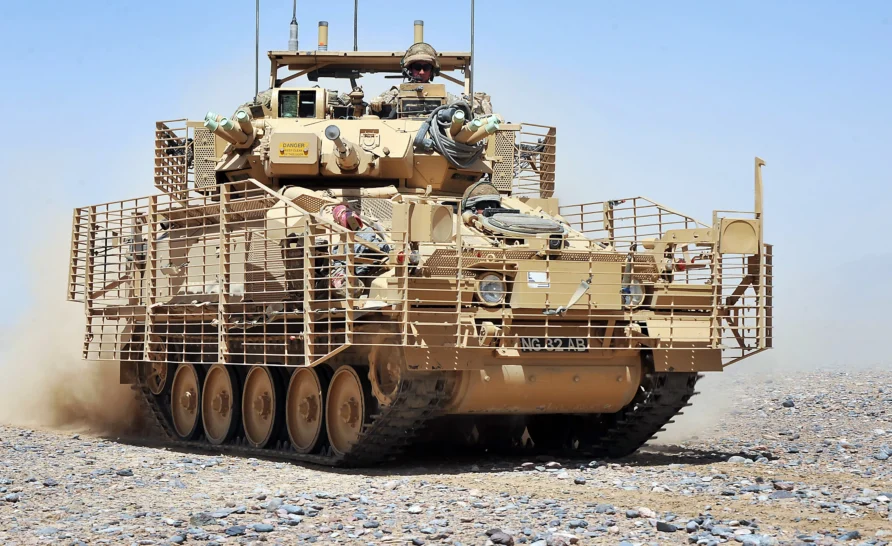
The Mk2 upgrade was applied to five core variants of the CVR(T) family, with Scimitar Mk2 constituting the bulk of the order, 58 were produced at a cost of £30 million. The key difference with Scimitar Mk2 is immediately apparent, it being based on a Spartan with a Scimitar turret.
Additional rollover protection systems fitted in 2014, after an incident involving fatalities.
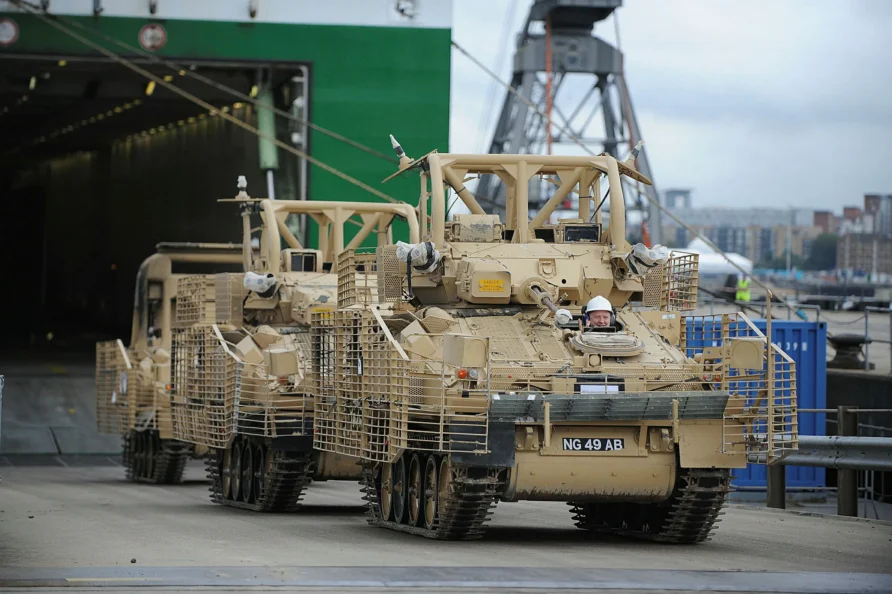
They were subsequently deployed to Estonia under Operation Cabrit and NATO Enhanced Forward Presence. With the wider withdrawal of the fleet, the vehicles were transferred to Ukraine.
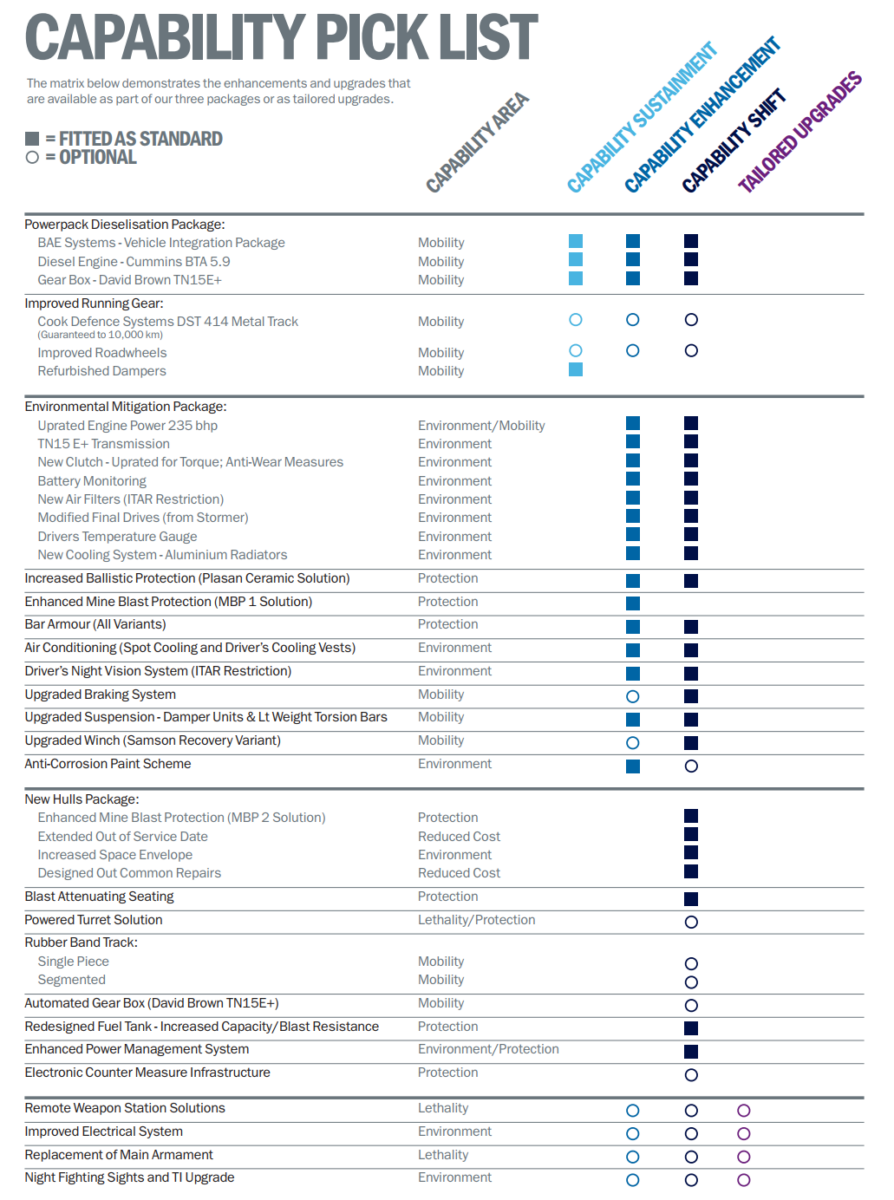
BAE have incorporated the various Mk2 and earlier improvement programmes into a single package comprising three packages called Capability Sustainment, Capability Enhancement, and Capability Shift, providing existing users with a range of upgrade options.
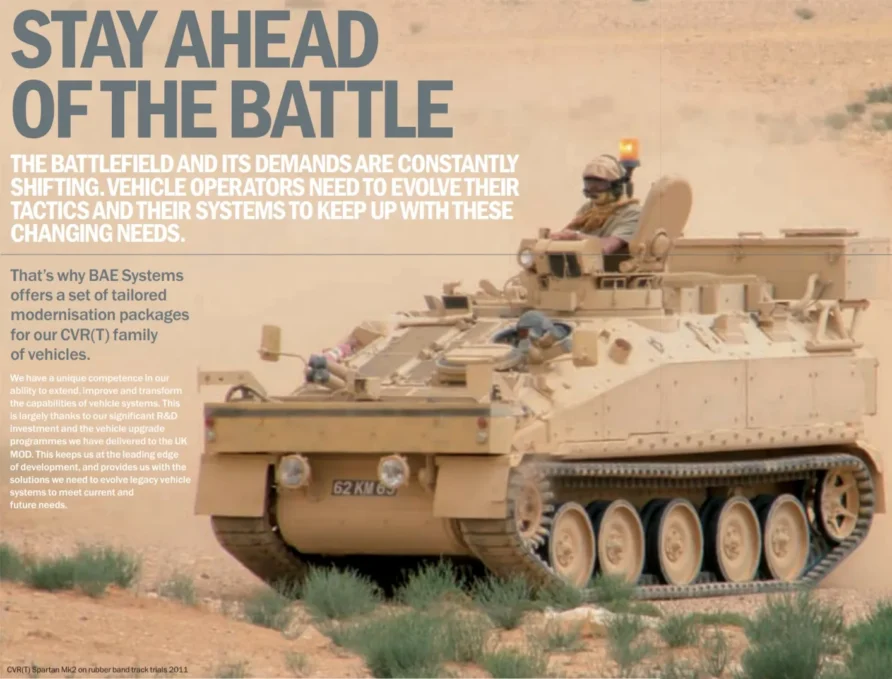
Sustain is aligned with the original British Army upgrade programme (LEP); Cummins 6 BTA 5.9-litre diesel engine developing 235 hp coupled to a modified David Brown TN15E+ transmission. Further options include improved road wheels from GKN and a Cook Defence Systems DST 414 metal track that is guaranteed to 10,000 km
Phase Enhance is aligned with the various Iraq and Afghanistan UORs; This includes appliqué armour to hull and turret, bar armour to provide enhanced protection against RPG-7 rocket-propelled grenades, belly armour, wire cutters, mesh protection for turret sights, enhanced driver’s night vision and an environmental cooling unit. A new clutch, cooling system, fuel system, and final drives complete the package.
Shift is aligned with the CVR(T) Mk2 described above, developed under Project Transformer. This features a new build hul, and the Scimitar turret fitted to a Spartan hull.
Other Turrets and Modifications #
Although it was not implemented and the Striker variant progressed instead, there was initial consideration given to using the Daimler Ferret Mark 5 (FV712) Swingfire turret on a Scorpion hull.
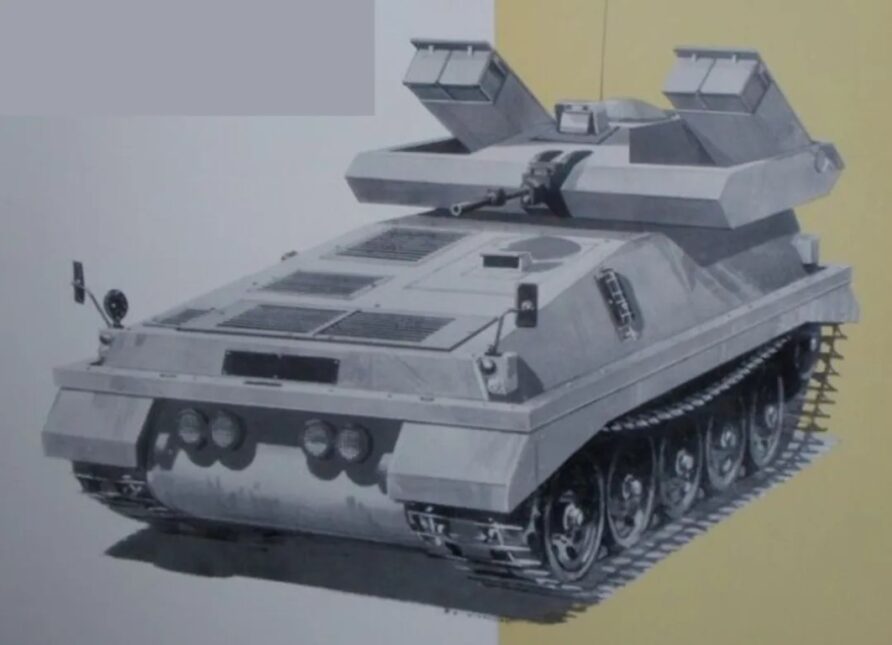
Shorts in Belfast proposed a Blowpipe turret for Spartan, but it did not progress beyond concept stage
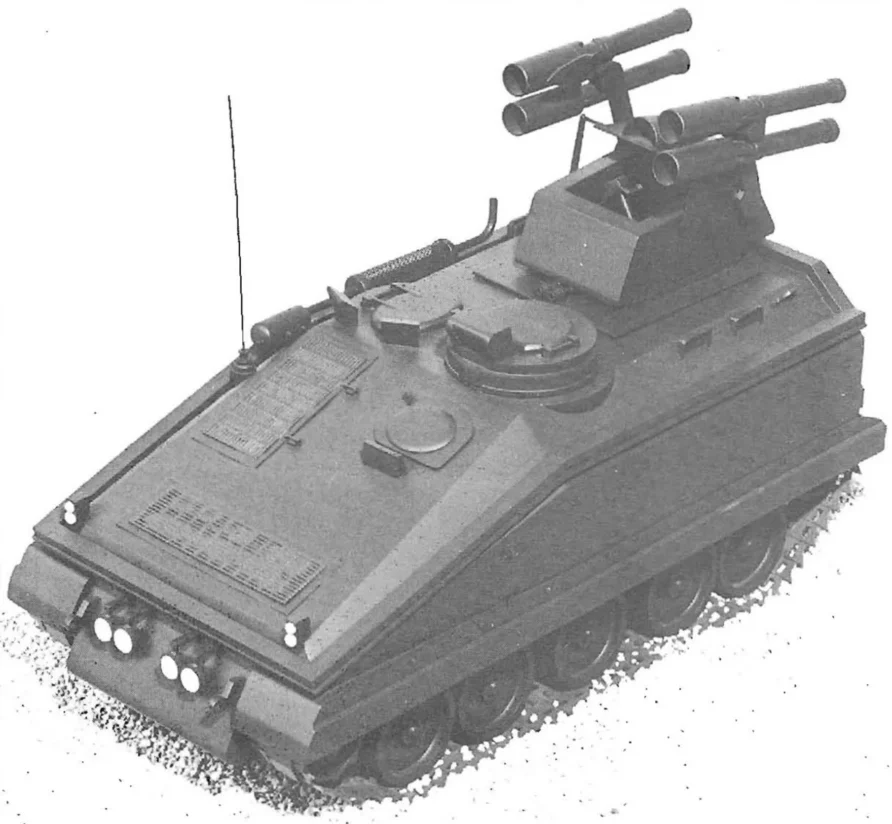
As part of a bit for the French VBCI programme, A Scorpion was fitted with a 25 mm Bushmaster armed Helios FVT925 turret
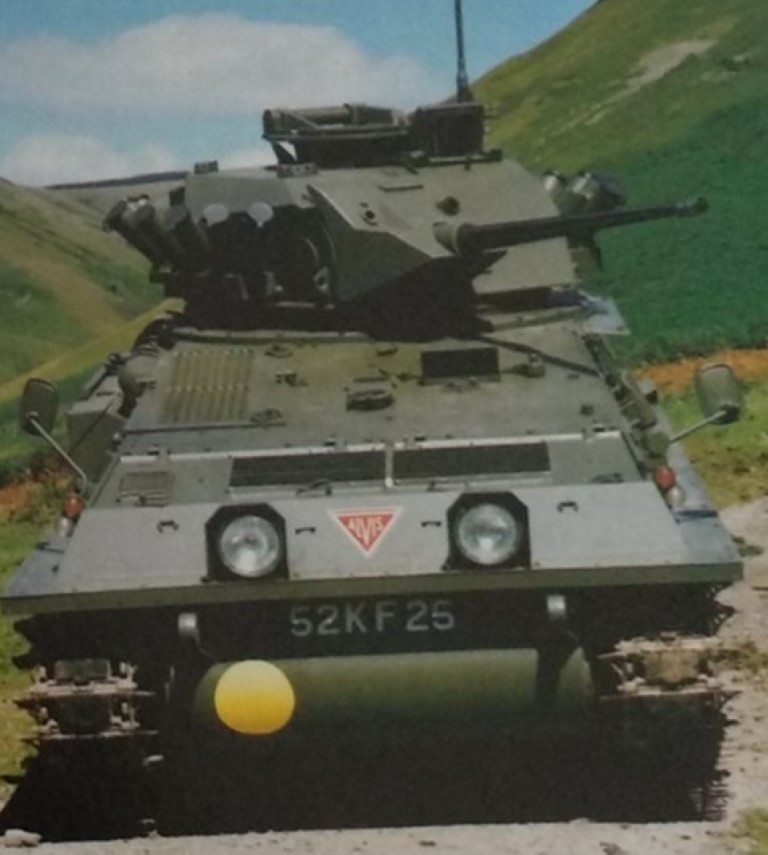
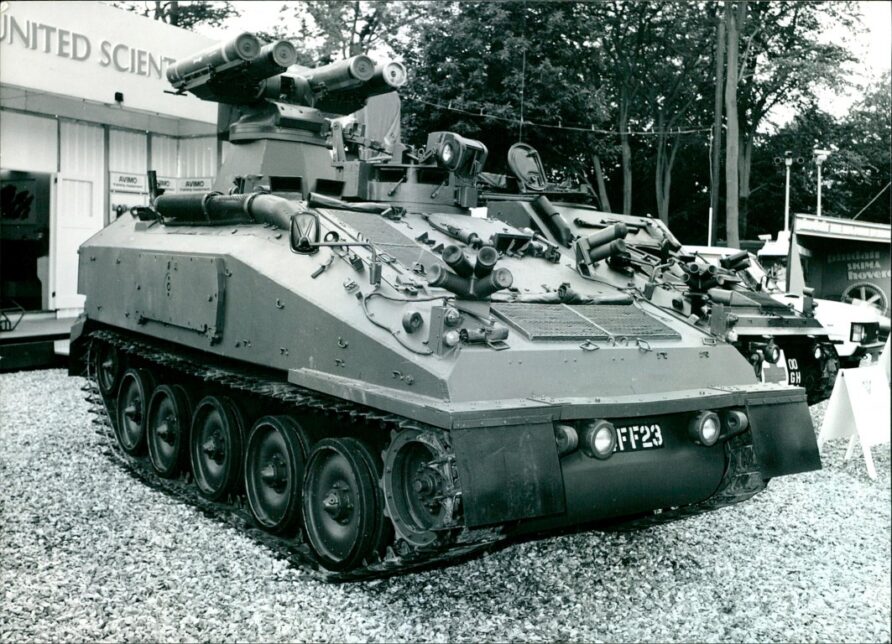
The Venezuelan and Indonesian Scorpion 90s were armed with the Cockerill 90 mm Mk III gun capable of firing APFSDS ammunition, an Avimo fire-control system incorporating a laser range-finder, Helio periscopes and an external GPMG mount.
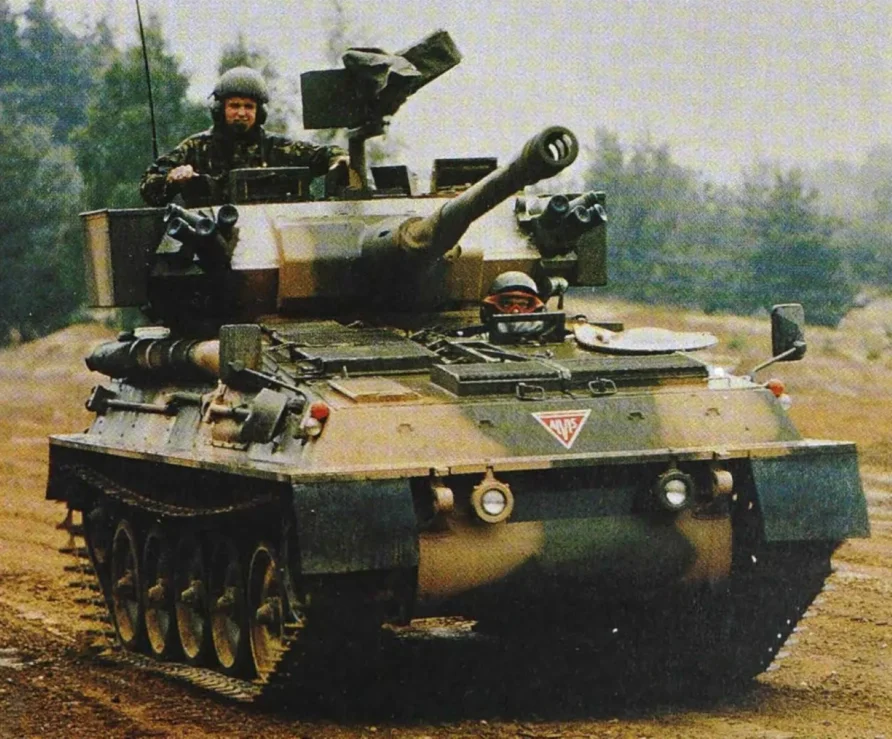
The UTM800 turret mounted four ready to fire High-Subsonic Optically Teleguided (HOT) ATGW, with the sight stabilised. An additional eight reloads were carried in the hull.
As part of wider improvements delivered under Urgent Operational Requirements, the MoD ordered 20 ODIN Turrets from AEI Systems in 2009 for CVR(T) Spartan.
It could be fitted with either a 7.62mm GPMPG or 12.7mm HNG, allowing the vehicle commander to conduct stoppage and loading/unloading drills with protection from 7.62mm armoured piercing rounds. The turret also had fume extraction, a spotlight, and reversionary sight.
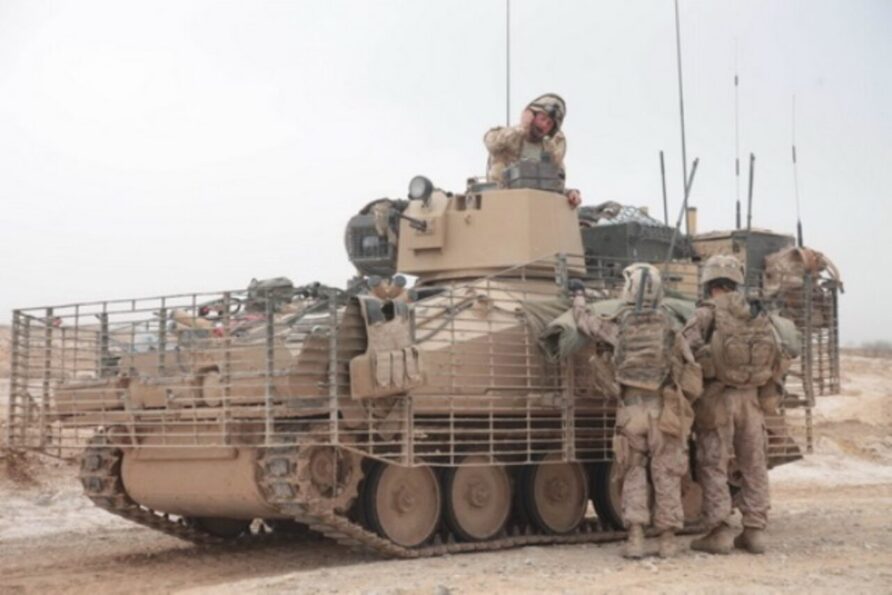
A side-mounted Thales (formerly SELEX) STAWS thermal imager was also fitted for day/night observation and targeting. The ODIN turret added 600kg weight and 710mm height.
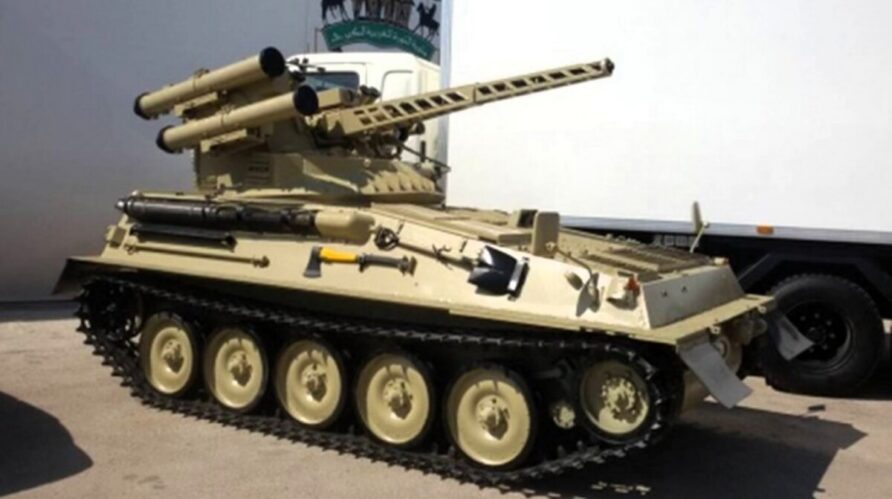
In 2005, Denel announced a prototype Scorpion conversion that had been engineered at its UAE facility, working in collaboration with Wesco, and Jordanian Armed Forces engineers.
The conversion included a two axis stabilised Recon Optical remotely operated weapon station fitted with a Denel GA1 automatic cannon firing 20 x 82 mm ammunition, although the vehicle on show in the image below, was fitted with 12.7mm HMG
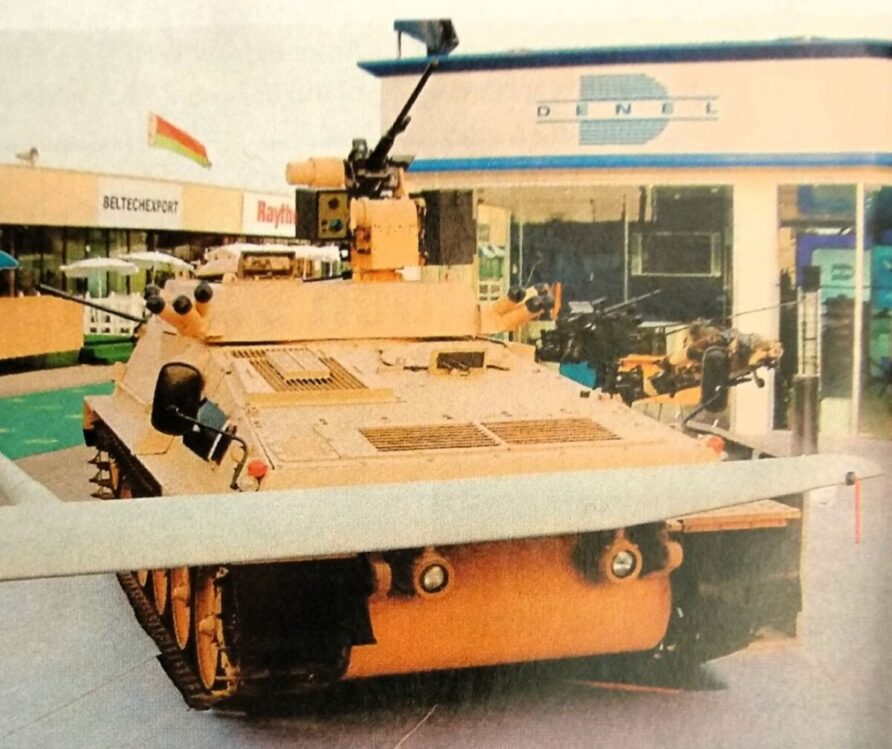
Jordan has a long track record in upgrading their CVR(T) vehicles, the AB4 (‘Al Akrup’) Upgrade Programme in 1996, general fleet modernisation and diesel engine retrofits, and the JRESCO Anti-Tank Upgrade programme in 2005.
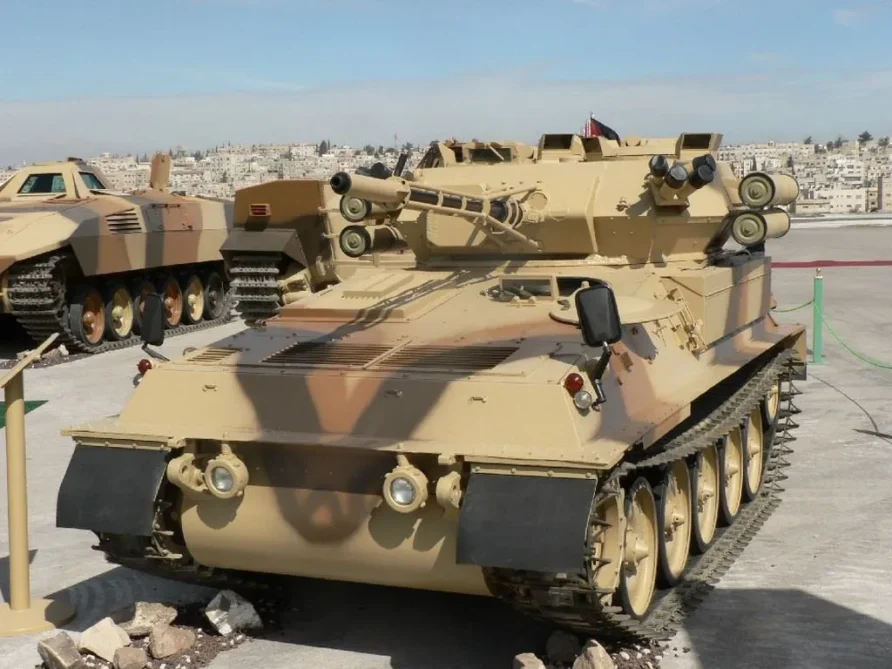
The King Abdullah II Design and Development Bureau (KADDB) was established in 1999 and has completed many of these upgrade programmes. A later KADDB proposal in 2016 introduced the Kastet variant, replacing the 76mm gun with a Ukrainian Shkval-derived system fitted with a 30 mm ZTM-1 autocannon, two Barrier ATGMs, a 7.62 mm KT machine gun, and advanced optics.
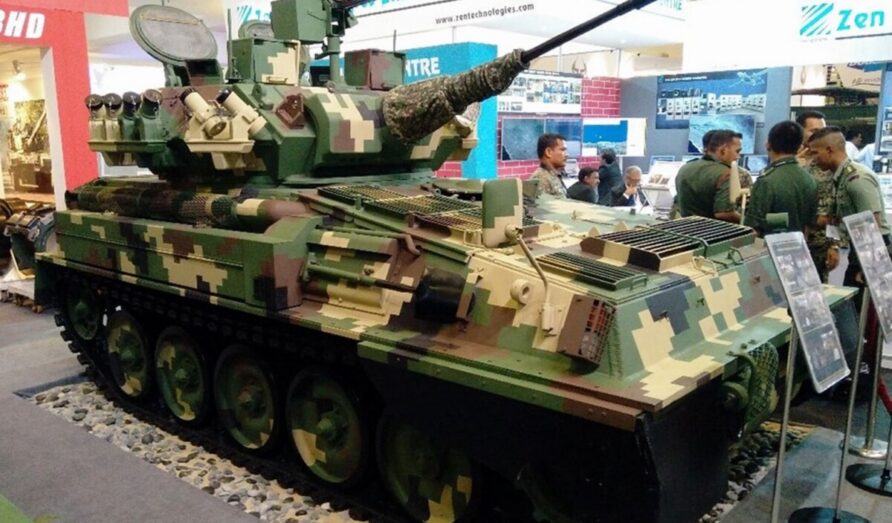
In the mid-2010s, Kembara Suci Sdn Bhd (KSSB), now known as Mildef International Technologies, proposed upgrades to the Malaysian Scorpions to extend their service life.
Javelin was successfully test fired from an RWS equipped Javelin by the British Army Armour Trials and Development Unit (ATDU) in 2016
Five missiles were launched using the Kongsberg M151 Protector remote weapon station mounted on the Spartan, with engagement ranges varying from 1,500 m to 4,300 m. All firings successfully struck their designated stationary ground targets, demonstrating extended range capabilities beyond the standard 2,500 m specification of Javelin.
More recently, Ukraine has retrofitted Scimitar turrets with 14.5 mm KPVT heavy machine gun

Ukraine has also developed and fitted variations on counter drone screens.
If you found value in this article, help me keep Think Defence going.
Think Defence is a hobby, a serious hobby, but a hobby nonetheless. I have removed those annoying adverts, but hosting fees, software subscriptions and other services add up.
To help me keep the show on the road, I ask that you support the site in any way you can. It is hugely appreciated.
You can click on an affiliate link, Buy Me a Coffee at https://ko-fi.com/thinkdefence, download an e-book at https://payhip.com/thinkdefence or even get some TD merch at https://www.redbubble.com/people/source360/
Youtubers, if you are going to lift content from here, the decent thing to do would credit me


