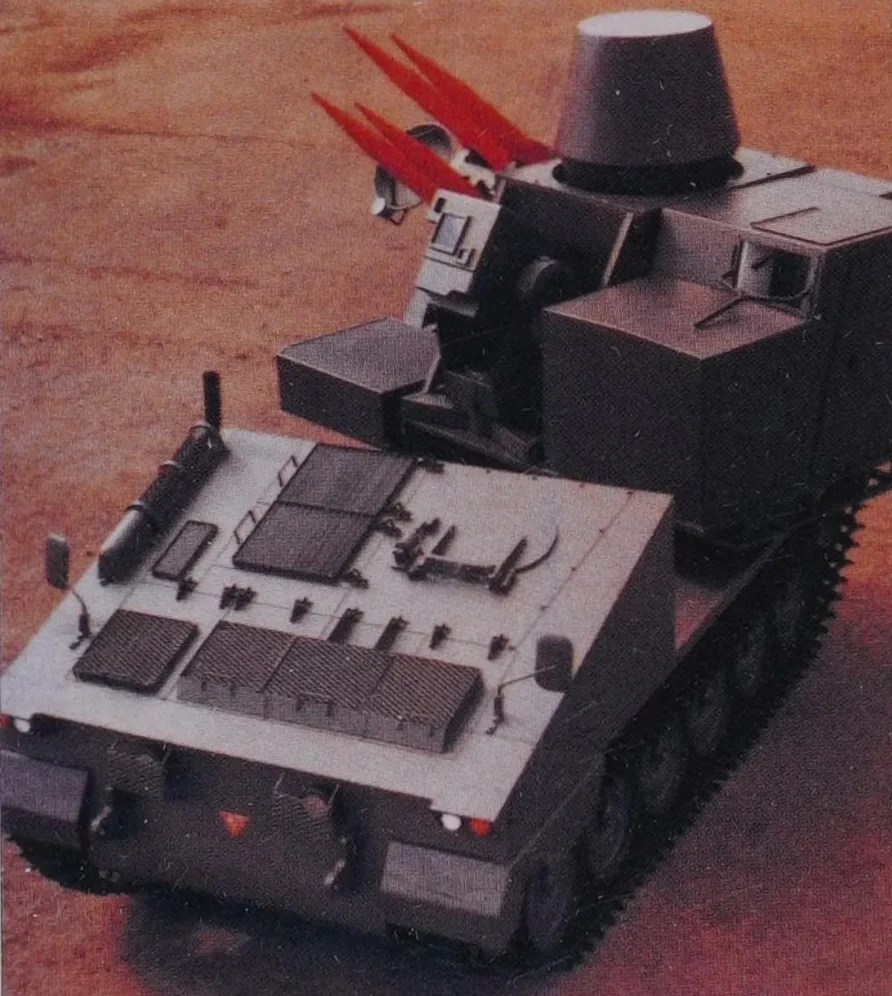
Stormer is a British armoured vehicle derived from the CVR(T)
Stormer History #
Stormer has its genesis in the CVR(T) development programme.
The image below shows the CVR(T) Scorpion prototype number 11 after it had been cut and extended with the addition of an extra road wheel.
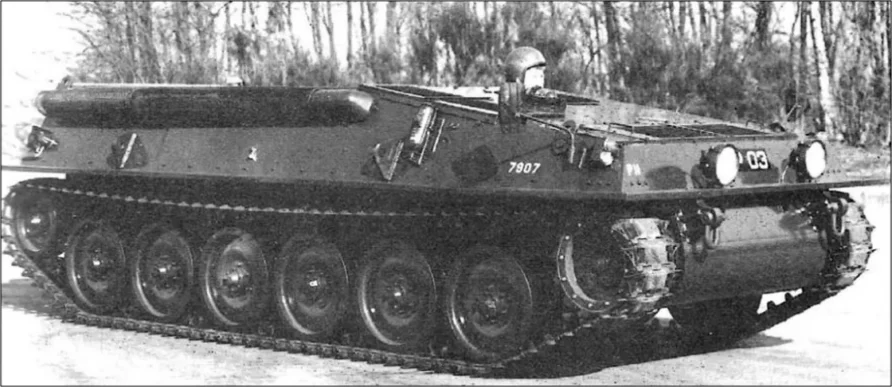
In the mid-seventies, Military Vehicles and Engineering Establishment (MVEE) further developed the concept and a prototype was first shown at the 1978 the British Army Equipment Exhibition at Bovington, Dorset.
In 1980, Alvis purchased the manufacturing and marketing rights to the FV4333 from the British Ministry of Defence (MoD).
By June 1981, Alvis announced that the FV4333 had been redesignated the Stormer.

Production of the Stormer began in earnest in 1982, with an initial batch of three vehicles manufactured for evaluation by the United States.
Concurrently, Malaysia placed an order in late 1981 for 25 Stormer APC’s alongside 26 Scorpion 90 vehicles. 12 of the Malaysian Stormer APC’s were fitted with a Helio FVT 900 one man turret equipped with a 20 mm Oerlikon Contraves automatic cannon, and the remainder with a twin 7.62mm GPMG turret.

The Alvis Sagitar was a conceptual armoured fighting vehicle (AFV) project developed by Alvis Limited in the early eighties, primarily as a series of study proposals submitted to the United States Army Tank Automotive Command (TACOM) for the Mobile Protected Weapon System (MPWS) and Mobile Protected Gun System (MPGS) programmes.
Alvis submitted three distinct studies for the MPWS requirement, all based on a modified chassis derived from the Stormer armoured personnel carrier (APC). The hull design was lower profile than Stormer.
The three proposals were
MPWS Proposal 1: A two-man turret fitted with the Royal Ordnance Factories 76 mm L23A1 gun (as used on the Alvis Scorpion) and a twin launcher for Hughes TOW anti-tank guided weapon (ATGW).
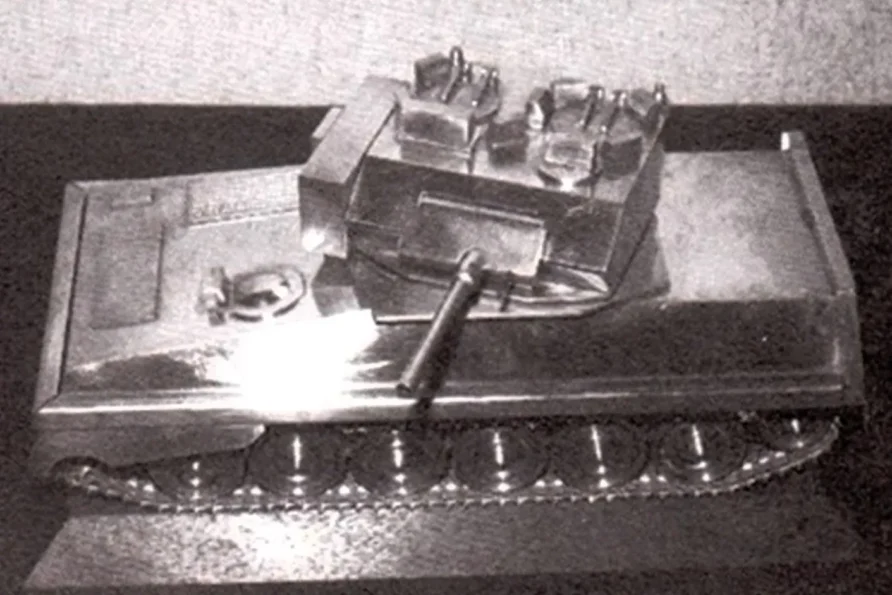
MPWS Proposal 2: A two-man turret armed with a 75 mm ARES automatic cannon.
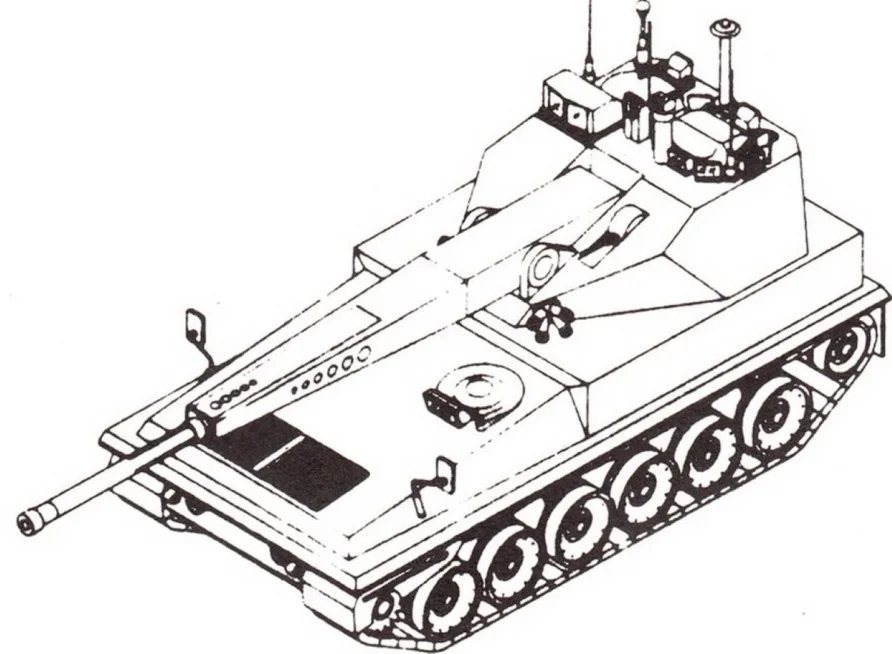
MPWS Proposal 3: A conceptual design featuring a Royal Ordnance Factories low-pressure gun, potentially based on modified 105 mm L19 (L118 Light Gun) ordnance, capable of firing standard high-explosive (HE) shells or a new fin-stabilised armour-piercing discarding sabot (FSAPDS) round.

Together with the British Army, Military Vehicles and Engineering Establishment (MVEE) conducted a study called the Family of Light Armoured Vehicles (FLAV) that was intended to inform replacements for CVR(T), FV432, Fox and Ferret, Saxon and Saracen, and some B vehicles.
CVR(T) was already in use, and Stormer was a larger version that Alvis proposed to replace FV432.
Although only the basic APC was presented as a prototype, other variants were also included as potential components of FLAV.

Like the Sagitar, the Low Profile Experimental Vehicle (LPXV) programme was also a private venture initiative undertaken by Alvis Vehicles Limited during the late 1980s and early 1990s.
The first Low Profile Experimental Vehicle (LPXV) shown in 1988 incorporated a GIAT Industries TS-90 two-man turret armed with a 90 mm CN90F4 rifled gun.
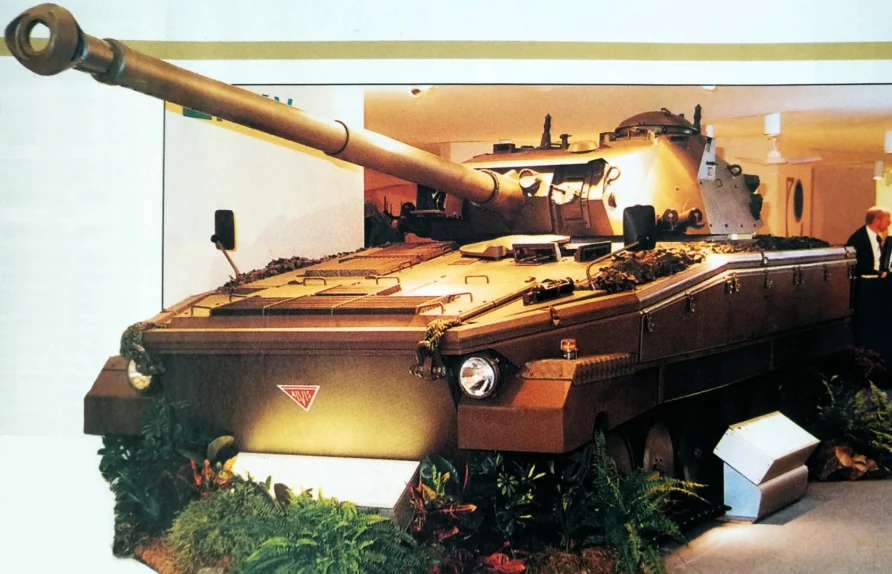
This was also referred to as Storm 90.
In 1986, Stormer was selected as the base vehicle for a new lightweight air defence that was being competed between the Shorts Starstreak High Velocity Missile System and the British Aerospace Thunderbolt.

Whichever missile system was selected, it would be carried on Stormer.

In the late 1980s, Alvis developed the Stormer Air Defence prototype, equipped with a dual Stinger missile launcher and either a 25 mm GAU-12/U or 30 mm GAU-13/A cannon.
In 1991, Alvis showed an upgraded LPXV concept for the United States Army’s Armoured Gun System (AGS) programme, featuring a 15 tonne configuration armed with a 105 mm EX-35 rifled gun and designed for parachute deployment from a C-130.
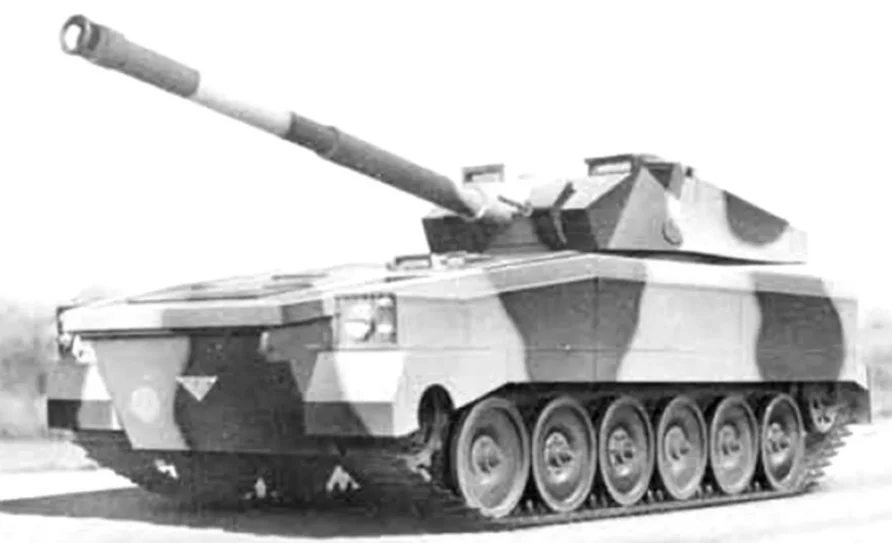
This bid, which included a Cadillac Gage LAV-105 turret with an XM35 low-recoil gun and 8-round autoloader, was not advanced beyond the request for information stage due to its developmental nature and non-compliance with non-developmental item requirements.
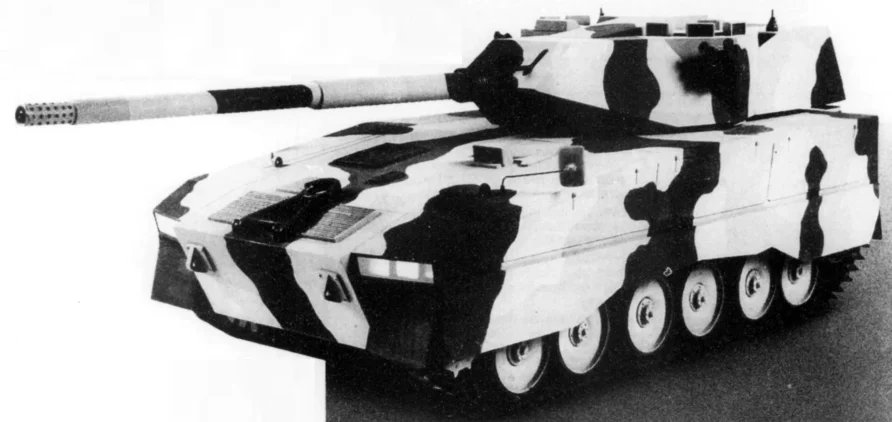
In 1998, FLAV became Future Family of Light Armoured Vehicles (FFLAV).
Alvis again proposed Stormer

The early nineties Alvis Vetronics Integration Demonstrator (AVID) programme was a Stormer fitted with an elevated sensor mast. It was similar to VERDI in some ways, investigating integration issues, advanced sensors, navigation and communications.
A new concept for VERDI-2 was to team the 2-man Warrior with a Troop Leader’s Stormer vehicle, communicating in real-time to establish a ‘recce team’. This vehicle acted as a communications and data hub and was equipped with additional data networking and processing equipment.

The Vehicle Launched Scatterable Mine System (VLSMS) was a noteworthy development.
VLSMS were procured as an Urgent Operational Requirement for the 1991 Gulf War. This project started from a clean sheet of paper. There was no Stormer flatbed at any stage of development, it was not just a case of adding the mine equipment to an already in service flat bed type vehicle. The majority of the parts were from a Stormer, but the hull, electrical harnesses, and GIAT Minotaur system interface were all new.
The first VLSMS vehicle was in Kuwait just 14 weeks later.

In those 14 weeks the design was created, the hull designed, the plates drawn, the Military Vehicles and Engineering Establishment (MVEE) Spec 1318 armour stock purchased and delivered, the plates plasma cut and edges profiled, the hull jigs and fixtures made, new components ordered and manufactured, the hulls welded/machined/painted, the wiring harnesses designed and hull measured for cable lengths, the harnesses manufactured, the Stormer parts sourced, the vehicle assembled, and the interface electronics designed and manufactured.
The GIAT system arrived in the UK and was mounted on the Stormer flatbed, the vehicle was tested, the mine system was tested, and the complete design signed off (interim clearance, I suspect) before the was vehicle shipped.
The six units ordered were delivered at one-week intervals thereafter. It was never used in anger and withdrawn soon after GRANBY. Ultimately, the GIAT system was replaced with Shielder that used a Honeywell Volcano system.
Oman acquired four units in 1993, primarily for APC duties.
In 1995, the British Army ordered the Stormer High Velocity Missile (HVM) variant, integrating the Thales Starstreak surface-to-air missile system. The same year, Indonesia received its first Stormer command post vehicles, with deliveries completed within six months of the order.

Following experience in 1991 with the Vehicle Launched Scatterable Mine System (VLSMS) in 1991, the British Army articulated a more enduring requirement for a vehicle mounted mine scattering system. A contract for 29 systems was placed in 1995, with the platform adapted from the existing Stormer flatbed configuration.
The TRACER study that succeeded FFLAV was far more ambitious. As the TRACER programme progressed, the vehicles grew larger and heavier, although still nowhere near MBT size. There seemed to be a capability gap opening up between Land Rover-sized CVR(T) and this new breed of digitised high-tech reconnaissance vehicles.
Many in the industry saw a need for light armour and moved to offer solutions – Stormer 30 being an obvious example.

Designed for air transportability by C-130 Hercules or CH-53 helicopters, it remained a prototype and did not enter service.
A flat-bed Stormer variant was introduced around this time to support the Shielder mine laying system, providing a transport platform for rapid deployment of anti-tank mines.
By 1999, the Starstreak missile entered British Army service.
Shielder entered service in late 1999, with 29 vehicles in total.
In 2003, the British Army deployed Stormer HVMs and Shielder to Iraq during Operation Telic
By 2004, the UK fleet was reduced significantly amid budget constraints.
Further reductions occurred in 2009, with Hansard confirming 115 Stormer in UK service. Shielder was progressively withdrawn from 2013. Under the 2010 Strategic Defence and Security Review (SDSR) and subsequent Army 2020 restructuring, the Stormer HVM.
BAE mooted a new light armoured vehicle concept starting in 2012.
BAE Systems is looking to breathe new life into the lightweight tracked tank market with a vehicle design that it is taking to the upcoming Eurosatory defense show in Paris next month to canvas potential customer opinion on their requirements.
The company’s Global Combat Systems arm has already sanctioned funds to build a representative demonstrator later this year but has stopped short of a full launch of the program while executives scout potential customer reaction to the 15-ton to 17-ton vehicle armed with anything up to a 40mm cannon.
A concept illustration was released, called CV-21.

This was specifically aimed to counter the trend towards increasingly heavy reconnaissance vehicles like the emerging FRES/SV/Scout requirement.
BAE believes there is a major capability gap for a lightweight tracked vehicle offering good protection but with high mobility in areas where the infrastructure of roads and bridges limits the ability of 36-ton to 40-ton platforms — such as BAE’s CV90 Scout and General Dynamics U.K.’s Scout vehicle — to move around.
CV-21 exploited Stormer and CVR(T) components.
By 2013, Stormer equipped three regular batteries in 12 Regiment Royal Artillery (RA) and two reserve batteries in 106 Regiment RA
To demonstrate the enduring value of the CVR(T)/Stormer design, the Imperial Forces deployed one to Jedha as the TX-225 GAVw “Occupier” combat assault tank, a surplus Stormer!
CV-21 was developed, but subsequently disposed and continues to appear at enthusiast events.
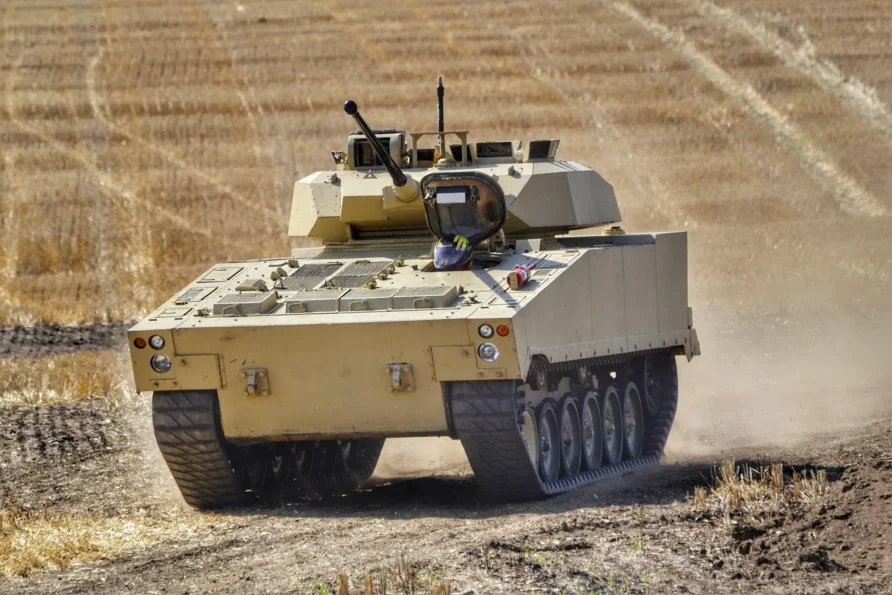
In 2022, following Russia’s invasion of Ukraine, the UK donated at least six Stormer HVM systems to Ukraine. Ukrainian personnel trained in the UK, with the vehicles arriving by 24 July 2022.

Over 220 Stormer vehicles were produced.
Stormer Capabilities and Variants #
Stormer’s hull is constructed from all-welded aluminium armour.
The design extends the CVR(T) chassis by approximately 0.48 metres, adding a sixth road wheel per side to support heavier payloads.
The driver’s position is located at the front left, with the engine compartment to the right, and the personnel or equipment compartment at the rear.
The vehicle’s powertrain includes a Perkins T6.3544 water-cooled, six-cylinder turbocharged diesel engine, delivering 250 hp at 2,600 rpm. This is coupled to a David Brown T300 or TN15D automatic transmission with seven forward and seven reverse gears, incorporating a controlled differential steering system for variable turning radii and pivot turns.
Suspension utilises torsion bars with hydraulic dampers, enabling a ground clearance of 0.425 metres and the ability to negotiate gradients up to 60% and side slopes of 35%.
Stormer is amphibious with preparation, capable of fording 1.1 metres of water, and has a fuel capacity of 405 litres.
| Parameter | Specification |
|---|---|
| Mass | 12.7 tonnes (13.5 tonnes for HVM variant) |
| Length | 5.27 metres |
| Width | 2.76 metres (2.40 metres over tracks) |
| Height | 2.49 metres (hull roof) |
| Ground Clearance | 0.425 metres |
| Crew | Variant dependent; e.g., 3 + 8 for APC |
| Engine | Perkins T6.3544, 6-cylinder turbocharged diesel, 250 hp (186 kW) at 2,600 rpm |
| Power-to-Weight Ratio | 21 hp/tonne |
| Transmission | David Brown T300/TN15D, automatic, 7 forward/7 reverse gears |
| Suspension | Torsion bar with hydraulic dampers |
| Track Width | 0.41 metres |
| Maximum Speed | 80 km/h (50 mph) on roads |
| Operational Range | 650 km (400 miles) |
| Gradient Capability | 60% |
| Side Slope Capability | 35% |
| Fording Depth | 1.1 metres (amphibious with preparation) |
| Fuel Capacity | 405 litres |
| Armour | Welded aluminium, proof against 7.62 mm AP rounds and 155 mm shell fragments |
Armoured Personnel Carrier/Infantry Fighting Vehicle #
The APC accommodates 8 personnel plus 3 crew.

Although the APC did not enter service with the British Army when first introduced, a version was ordered as part of the HVM Stormer purchase as a Troop Reconnaissance Vehicle.

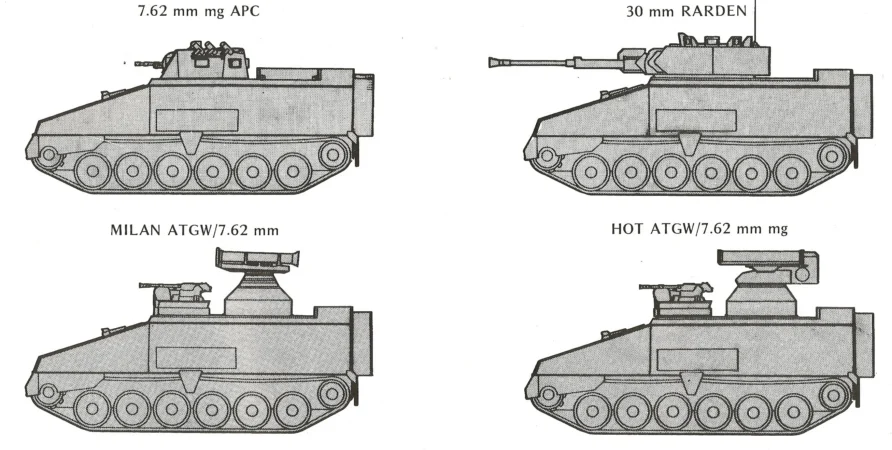
The APC variant could be fitted with different turrets.
In addition to the Helio 20mm turret described in the history section, the Helio FV925 turret was fitted with a 25mm automatic cannon.

A LAV-25 turret and in the image below, an Arrowpointe Corporation turret equipped with a Mauser MK 30 mm × 173 Model F (MK30), or a McDonnell Douglas Helicopter’s 25 mm M242 Chain Gun or an Oerlikon 20 mm cannon.
Others proposed included
High Velocity Missile (HVM) #
Read more about the Starstreak High Velocity Missile (HVM) here

Bridgelayer #
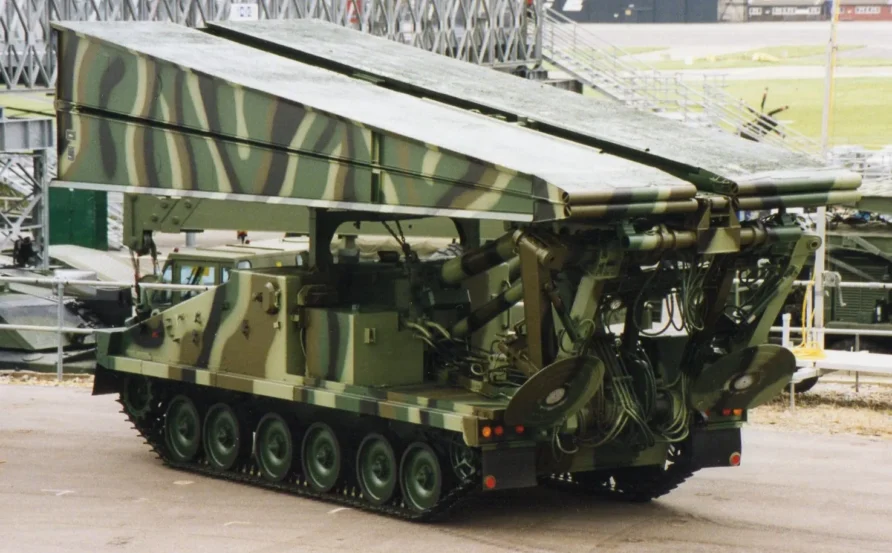
The Bridge Layer vehicle, with a Class 30 scissor bridge, is shown in the image below
Stormer 30 #
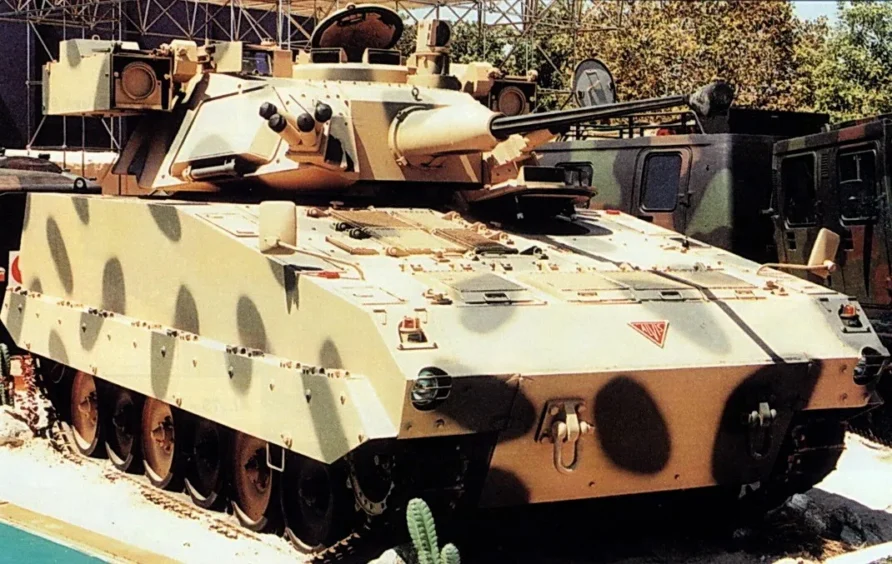
Stormer 30 included a 30mm Bushmaster automatic cannon (elevation +35°/-10°), coaxial 7.62 mm) GPMG and twin ATGW launcher.
Shielder #
Shielder used the Alliant Techsystems Volcano mine-scattering system.
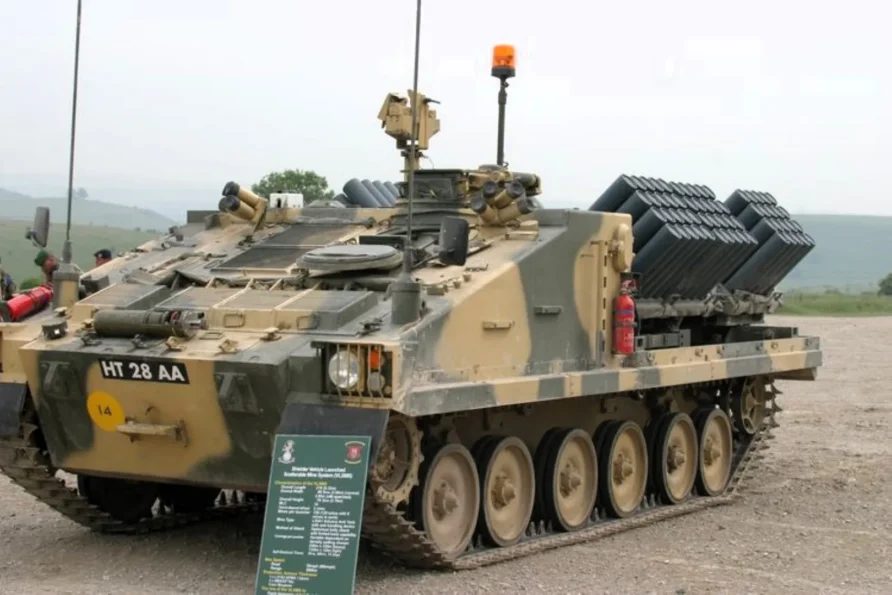
The table belows shows the key characteristics of Shielder mine system.
| Subsystem | Description |
|---|---|
| Chassis and Mobility | Flatbed Alvis Stormer tracked armoured vehicle with Perkins T6.3544 diesel engine (250 hp), torsion bar suspension, and six road wheels per side for low ground pressure (0.40 kg/cm²). Amphibious capability with preparation; maximum speed 80 km/h; range 650 km. |
| Mine Dispensers | Up to 40 modular dispensers/canisters mounted on launcher racks. Each canister contains 6 L35A1 anti-tank mines, for a total payload of 240 mines per vehicle. |
| Dispensing Mechanism | Automated ejection system for side or rear deployment while vehicle moves at speeds up to 55 mph. Mines disperse 25–60 metres from vehicle, self-orient, and arm within seconds. |
| Control System | Dispenser Control Unit (DCU) manages fire signals, system testing, arming sequence, delivery speed, and self-destruct timing for mines. |
| Mines and Fuzing | L35A1 anti-tank mines with magnetic influence fuse (sensitive to vehicles or personnel disturbance). Programmable self-destruct timer (e.g., 4–48 hours) for compliance with Ottawa Convention; no anti-handling device fitted. |
| Mounting Hardware | Vehicle-specific racks secure dispensers; compatible with inert (blue) or live (green) canisters for training or operations. |
High Mobility Load Carrier #
Unlike the CVR(T) Streaker, the Stormer load carrier included provision for a vehicle commander in addition to the driver.
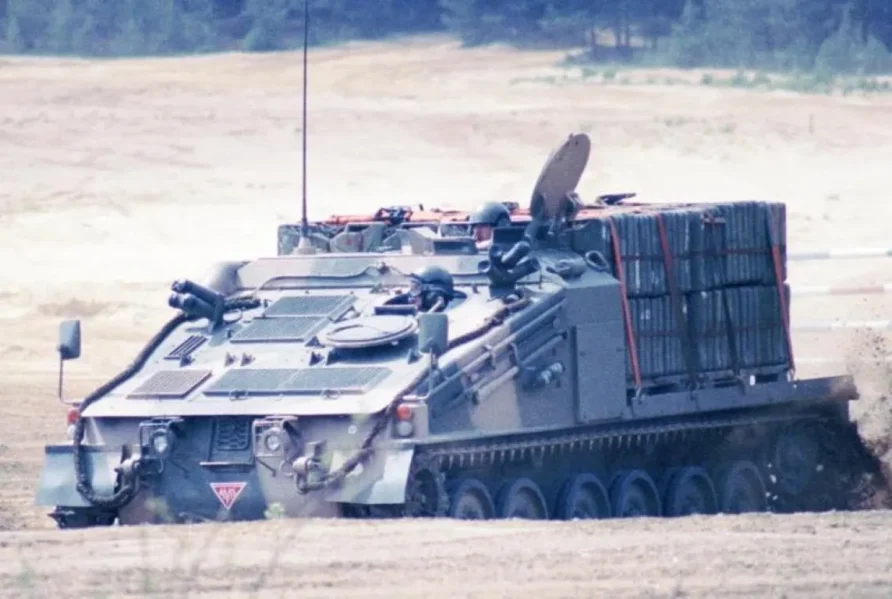
Similar to Shielder, it had a payload of 4 tonnes and a gross vehicle weight of 12 tonnes.
mPODt #
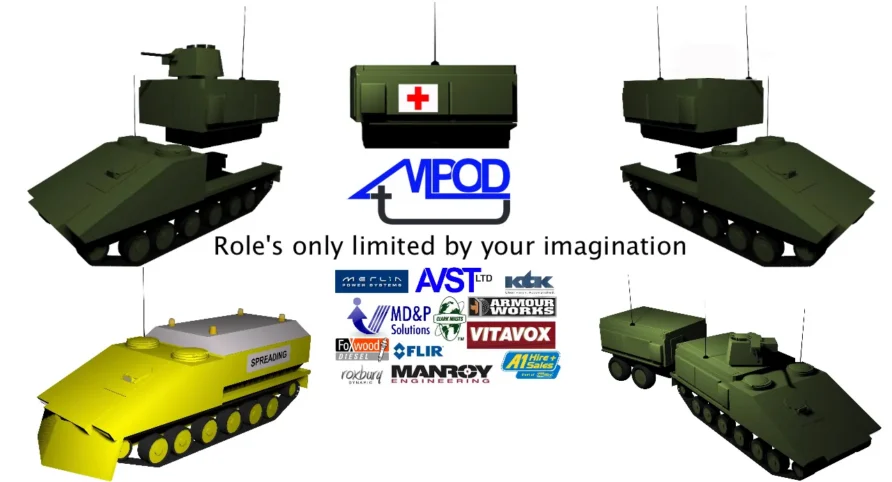
The mPODt, or multirole POD (tracked), was a conceptual design for a modular tracked armoured vehicle based on Stormer.
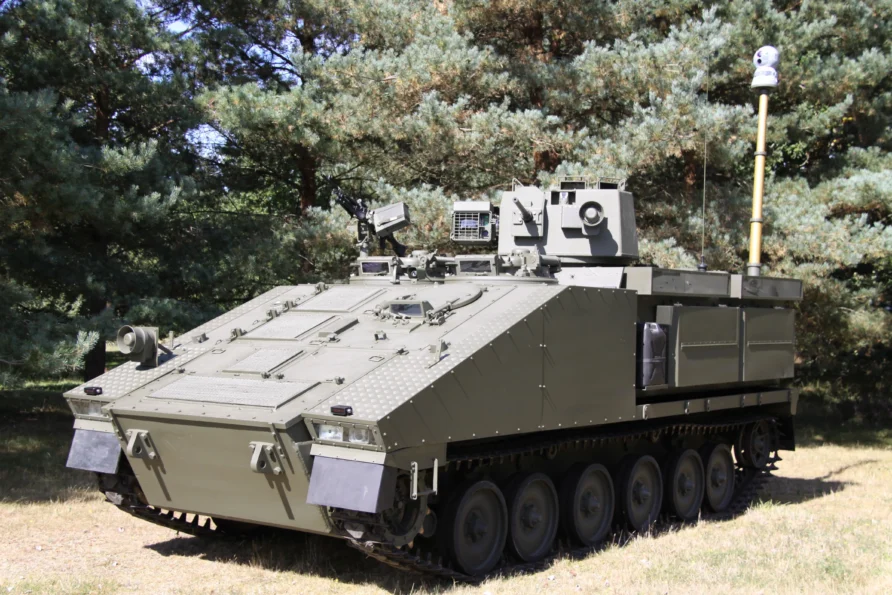
The turret was an AEI Odin turret described in the CVR(T) knowledge base article.
Its key component was payload modularity.
Air Defence #
The Stormer Air Defence included.
- 25 mm or 30 mm GAU-13/A (30 mm) or GAU-12/U (25 mm) gun system
- Twin missile launcher, normally configured with the General Dynamics Stinger system, but which could be adapted to the requirements of most other similar air defence systems.
- ESD (Electronique Serge Dassault) RA-20-S search and target designation radar, operational envelope out to 11 km in range, 360° in azimuth, and 0–45° in elevation
- FLIR/laser sighting with 2nd order digital fire control computer
It did not enter service.
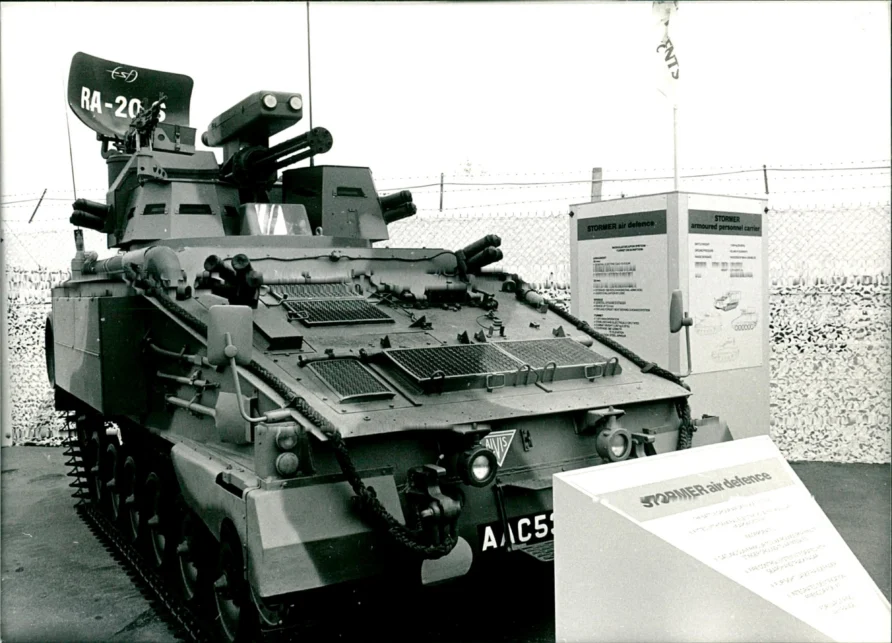
No orders were progressed.
Others #
Other proposed variants included a Rapier AA Missile carrier, observation sensor carrier, recovery, mortar, and ambulance.