
 Doc Summary

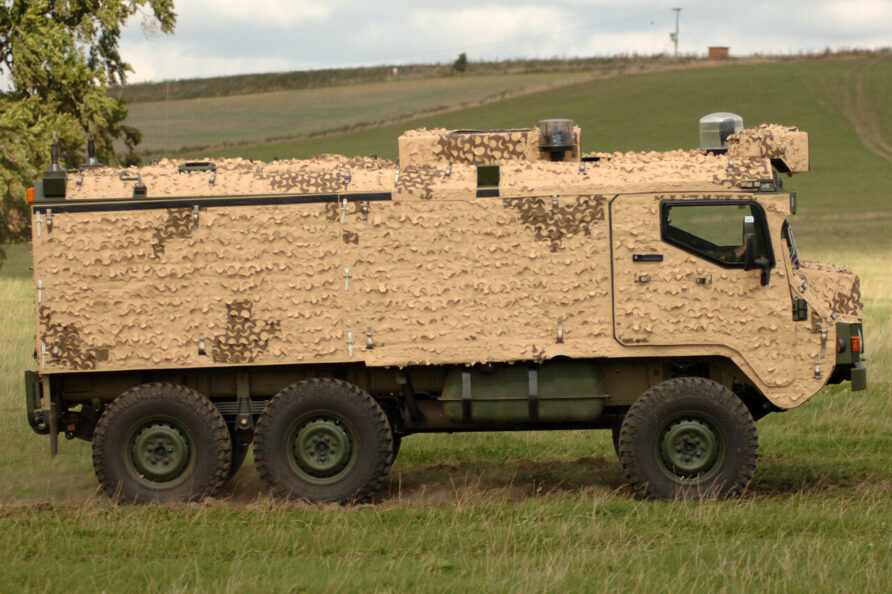
Pinzgauer Vector was a lightly armoured 6×6 protected patrol vehicle used by the British Army from 2006 to 2012 to supplement the Snatch Land Rover.
Vector History #
Vector was a modified Pinzgauer.
Pinzgauer has a long track record, developed by Steyr-Daimler-Puch in Graz, Austria, introduced on 17 May 1971 as an all-terrain vehicle as a successor to the Haflinger.
The Ministry of Defence purchased the 4×4 Pinzgauer in 1994 as the Truck Utility Medium (Heavy Duty), or TUM(HD), initially in soft-top configuration.
Additional vehicles, including the 6×6 variant, were purchased between 1994 and 1998 for specialist users such as Joint CBRN Regiment’s Light Role Teams.
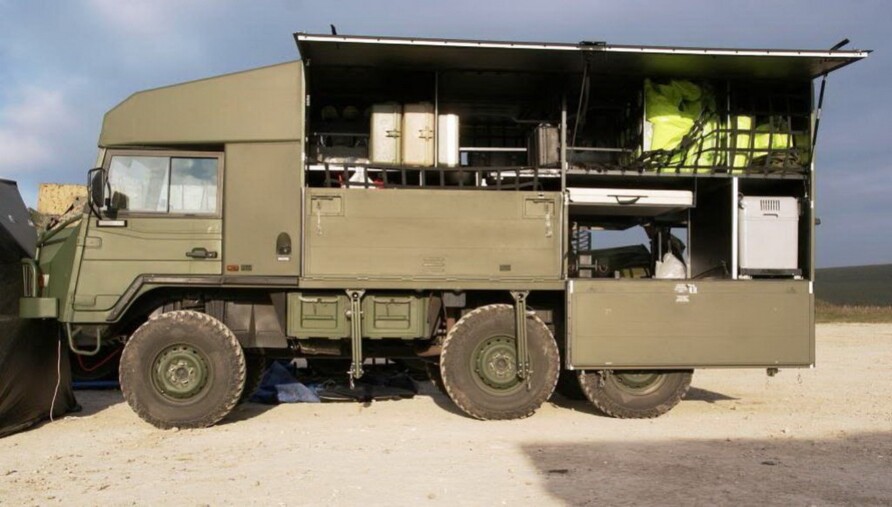
Steyr-Daimler-Puch transferred production rights to Automotive Technik Ltd in the UK in 2000.
In early 2002, the MoD started Project Duckboard, investigating options for the replacement of the Snatch Land Rover and Tavern vehicles in Northern Ireland, with a Draft User Statement was created on the 7th January 2002.
Whilst Snatch might be a well-known vehicle, Tavern was a heavier protected patrol vehicle based on a GMC cash collection truck with additional protection installed by Penman Engineering.
The invasion of Iraq took place in March 2003.
The Protected Patrol Vehicle (PPV) working group convened in July 2003 to evaluate options for enhanced protected mobility for the users and locations
- Northern Ireland
- Light forces when deployed on peacekeeping operations
- Protected mobility for RE/RLC EOD teams
Options considered including extending Snatch Land Rover service life, procuring new commercial off-the-shelf vehicles, and up-armouring existing platforms such as the Pinzgauer.
Snatch, the Light Protected Patrol Vehicle (LPPV) fork out of the Vector story at about the same time.
In response to the deteriorating security situation, 180 Snatch Land Rovers were dispatched from Northern Ireland to Iraq on 11 September 2003. By the end of the same month, the Defence Science and Technology Laboratory (DSTL) completed operational analysis, recommending further analysis for a ‘Rest of the World’ Protected Patrol Vehicle (PPV)capability to address global expeditionary threats beyond Northern Ireland.
Further analysis was completed by March 2004 by DSTL, titled ‘VECTOR Operational Analysis’
This recommended a commercial off-the-shelf (COTS) solution with an interim in-service date (ISD) of 2005 and an eight-year service life, emphasising enhanced protection against fragmentation, blast, and mines, along with compatibility for electronic countermeasures (ECM).
The Rest of the World PPV was classified as a Type B vehicle, requiring B6-level ballistic protection, improved mobility for rough terrain, and capacity for extended patrols. Initial planning called for 144 vehicles, later adjusted to 396 before reductions due to funding constraints from the 2004 Spending Review.
The PPV Working Group met again in September to discuss the requirement.
For Project VECTOR, the Rest of World PPV, a commercial off-the-shelf solution was again recommended. The decision on VECTOR was one of speed. With plans advanced for HQ ARRC to deploy to Afghanistan and a likely shift of focus from Iraq to Afghanistan, obtaining suitable vehicles for there was a high priority.
A year later, in February 2005, an investment balance review recommended Option 2, the procurement of 100–200 Vector vehicles alongside upgrades to 312 Snatch 2 vehicles, prioritising Vector for Afghanistan.
Also In 2005, Stewart & Stevenson Services, Inc. acquired Automotive Technik Holdings Ltd (the parent/company behind ATL).
In March 2006, the business case was approved for 62 Vector vehicles (£18.8 million) under Urgent Operational Requirement (UOR) for Operation HERRICK in Afghanistan.
In May 2006, Armor Holdings, Inc. acquired Stewart & Stevenson Services, Inc., which indirectly brought Automotive Technik Ltd under Armor Holdings’ control as part of that larger acquisition.
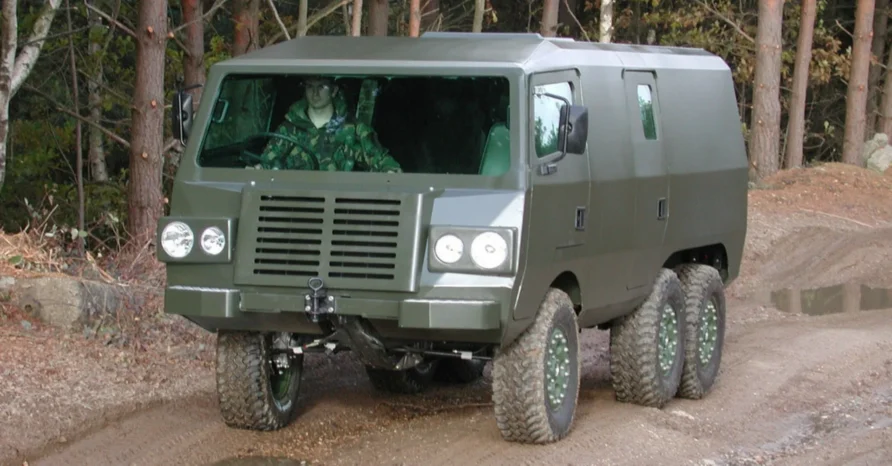
The carried on with earlier work on a protected vehicle based on Pinzgauer, with Macneillie.
One of the first pre-production models is shown below.
General Sir Richard Dannatt, then Chief of the General Staff, testified to the Chilcot Inquiry that Vector procurement was the “highest priority” for Afghanistan in March 2006, describing it as procured “in a hurry” to equip incoming brigades by spring 2007, while noting concurrency assumptions with Iraq operations influenced fleet sizing (e.g., 224 minimum vehicles if concurrent).
In June 2006, a Parliamentary debate revealed that Vector was planned to be deployed in March 2007
The right hon. Gentleman asked about the Vector vehicle. It is not planned to be available until next March, but it is planned to be deployed in Afghanistan shortly after that
On the 24th of July 2006, the UK announced it had ordered 100 Cougar vehicles from Force Protection. The same announcement also detailed the Vector order from BAE/Armor Holdings.
From Des Brown in the House of Commons:
I have made clear my determination to ensure the armed forces on operations have the resources they need to do the job. I said I would update the House on developments in two particular areas of operational capability: additional options for armoured vehicles and helicopter support for Afghanistan.
As I told the House on 26 June, I ordered an urgent review of our armoured vehicle fleet, particularly focused on the evolving threat in Iraq, but covering the whole operational picture including Afghanistan, to ensure we were providing commanders with the best options.
That review has now concluded. It has confirmed that there is a growing requirement for a protected vehicle with capabilities between our heavy armour, such as Warrior, and lighter patrol vehicles, such as SNATCH. The review has also identified feasible options to address the gap in the short term. We have now completed a very rapid assessment of those options and have identified three complementary ways forward. Two of these build on, and accelerate, work already ongoing in the Department. The third is new. The necessary funding will come in part from acceleration of existing funding within the defence budget, and in part from substantial new funding from the Treasury.The first element is an additional buy of around 100 VECTOR, our new Pinzgauer based protected patrol vehicle, for Afghanistan, on top of the 62 already on contract. VECTOR provides good protection and, importantly, increased mobility and capacity compared to SNATCH which makes it very suitable for the rugged terrain and long patrol distances in Afghanistan.
The second element is to provide around 70 additional up-armoured and upgraded FV430 to equip a mechanised infantry battlegroup for Iraq by the spring of 2007, again on top of the 54 we have already ordered. The FV430 will be delivered incrementally with the first vehicles currently expected to be delivered this autumn.
Significantly smaller and lighter than Warrior, the up-armoured FV430 will provide a similar level of protection while being less intimidating and having less impact on local infrastructure—thereby providing commanders with an important additional option. Since it is able to carry out many of the same tasks as Warrior, it will also relieve pressure on heavily committed Warrior vehicles and armoured infantry battlegroups.
The third, new element is the Cougar manufactured by Force Protection Incorporated of Charleston, South Carolina. We judge that this vehicle meets our requirement for a well protected, wheeled patrol vehicle with a less intimidating profile than tracked vehicles like Warrior or FV430. We are arranging to rapidly procure around 100 vehicles through US military sources. We have received excellent co-operation from the US Government, military and industry—an example of the special relationship bringing real benefits for our soldiers on the ground. Once we take possession of the vehicles, we must then customise them with Bowman radios and electronic counter-measures—and then fit additional armour beyond the standard level, to ensure they have the best possible protection. This procurement and enhancement process takes time. But we expect to be able to deliver the vehicles, in batches, with an effective capability in place before the end of the year and continuing through the next six month rotations in Iraq and Afghanistan.These three vehicles will complement existing Warrior and SNATCH. Warrior will continue to provide the capability to deal with the most demanding threats, but its profile and weight makes it unsuitable for some operations and situations, such as Afghanistan. SNATCH, with a much less intimidating profile, enables troops to interact with locals and promotes a sense of normality and will remain a key tool for building and maintaining consent. The up-armoured FV430, the Cougar medium PPV, and VECTOR fill the requirements for varying degrees of protection, mobility and profile between these two extremes. But I am confident that together these vehicles provide commanders with the right range of options to deal with the situations and threats they face.
Initial Operational Capability (IOC) was achieved for Vector in Afghanistan by the end of January 2007, with the first vehicles arriving late in February.
1 Royal Anglians were the first unit to receive them
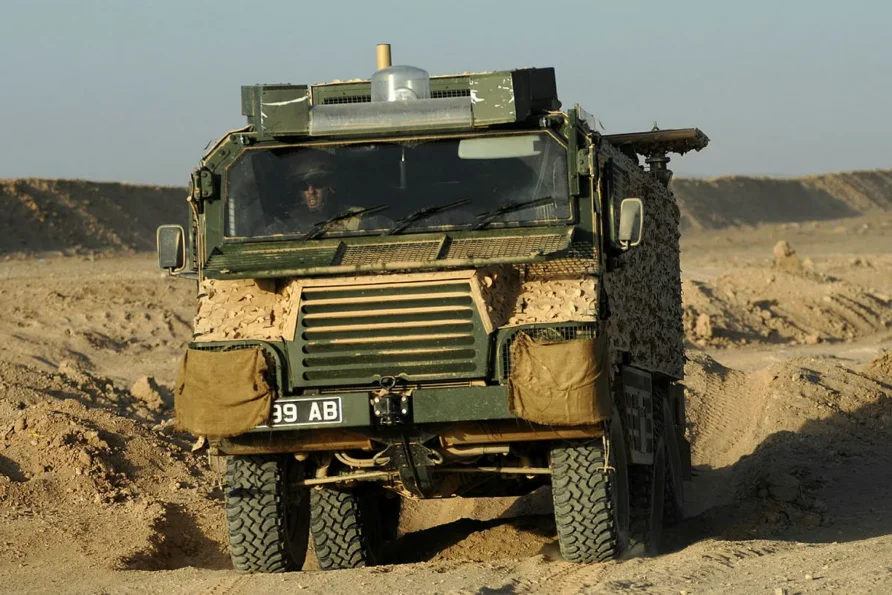
On March 20th 2007, General Houghton told the Defence Select Committee they were intended to replace Snatch in Afghanistan
Lieutenant General Houghton: Just on the specific question, the deployment of the Vector, virtually on a one for one basis, replaces the Snatch, so when they are fully deployed all the Snatch will then be removed from theatre
Armor Holdings was acquired by BAE Systems in July 2007
The Vector fleet was expanded in October 2007 to 166 vehicles (34 in theatre, 22 for training)
BAE Systems ceased UK production of Pinzgauer in January 2008, transferring it to South Africa, meanwhile restriction on the use of Vector were imposed.
Vector was briefly deployed to Iraq in May 2008, but only for lower risk areas.
Acting Cpl Marcin Wojtak, 24, from Melton Mowbray, died when his patrol vehicle hit a roadside bomb in Helmand Province on 1 October 2009.
Written Answers in 2009 revealed reliability issues with Vector and the intent to withdraw.
Dr. Fox: To ask the Secretary of State for Defence what his most recent assessment is of the performance of Vector armoured vehicles in Afghanistan, and what assessment he has made of the future status of the Vector fleet.
Mr. Quentin Davies: The evolving nature of the threat means that, following delivery of Mastiff 2, Ridgeback and vehicles from the Protected Mobility package announced by the Secretary of State for Defence on 29 October we intend to withdraw the Vector Light Protected Patrol Vehicle from operations in Afghanistan. Vector, which has also faced some reliability issues, will have a phased withdrawal once the better protected vehicles from the Protected Mobility package have been deployed.
The cost was also revealed.
The current cost estimate for the Vector vehicle procurement programme is £44.43 million. This excludes costs for trials, MOD manpower costs, and additional items such as ancillaries, fuel, transport costs, ammunition, training and maintenance costs, which are not held centrally and could be provided only at disproportionate cost.
By the end of December 2012, Vector was progressively withdrawn from British Army service
Estimated cost was £44.43 million.
Vector was a highly controversial vehicle, deployed to Afghanistan against a lot of scepticism, and most of it was proven right. Like Snatch, it became an intensely political vehicle, dubbed a ‘coffin on wheels’ and emblematic of wider problems rapidly adapting to the IED threat.
Ukraine has used some surplus Vector vehicles as ambulances.
Vector Capabilities #
Overview #
The Vector Protected Patrol Vehicle (PPV) is a 6×6 wheeled armoured vehicle developed for the British Army, based on the Pinzgauer all-terrain chassis manufactured by BAE Systems (formerly Steyr-Puch).
It was introduced in early 2007 to enhance patrol capabilities in operations such as those in Afghanistan, offering improved mobility, payload, and protection compared to lighter vehicles like the Snatch Land Rover.
The Vector was designed to balance agility over rugged terrain with basic blast and ballistic resistance, though it was later criticised for inadequate protection against improvised explosive devices and was withdrawn from frontline service by 2010.
Approximately 180 units were procured, with an out-of-service date planned for 2015 at the time.
Key Technical Specifications #
The following table summarises the principal technical characteristics of the Vector PPV.
| Characteristic | Specification |
|---|---|
| Configuration | 6×6 all-wheel drive, forward-control layout |
| Crew Capacity | 2 (driver and commander) + 4 personnel |
| Dimensions (L × W × H) | 5.308 m × 2.16 m × 2.44 m |
| Ground Clearance | 360 mm |
| Track Width | 1.52 m |
| Gross Vehicle Weight | 6,000–6,600 kg |
| Payload Capacity | 1,600 kg |
| Engine | Volkswagen 5-cylinder Euro 3 turbocharged diesel |
| Power-to-Weight Ratio | 13.33 hp/tonne (approximately 80–90 hp output, based on weight) |
| Maximum Road Speed | 105 km/h |
| Operational Range | 700 km (on road) |
| Fuel Consumption | 125 g/hp·h |
Vector incorporates a range of protection features, but many argued that it was insufficient against the IED threat in Afghanistan and the weight of armour placed significant demand on the chassis.
This weight severely impacted mobility and reliability, at least compared to the base Pinzgauer.
If you found value in this article, help me keep Think Defence going.
Think Defence is a hobby, a serious hobby, but a hobby nonetheless. I have removed those annoying adverts, but hosting fees, software subscriptions and other services add up.
To help me keep the show on the road, I ask that you support the site in any way you can. It is hugely appreciated.
You can click on an affiliate link, Buy Me a Coffee at https://ko-fi.com/thinkdefence, download an e-book at https://payhip.com/thinkdefence or even get some TD merch at https://www.redbubble.com/people/source360/
Youtubers, if you are going to lift content from here, the decent thing to do would credit me


