
 Doc Summary

The Mastiff protected patrol vehicle (PPV) is a British-adapted variant of the American Cougar mine-resistant ambush-protected (MRAP) vehicle, originally developed by Force Protection Inc. (later acquired by General Dynamics).
It was procured under an Urgent Operational Requirement (UORs) to provide protected mobility during operations in Iraq.
The vehicle’s V-shaped hull provides enhanced protection against improvised explosive devices (IEDs) augmented by bar armour against rocket-propelled grenades.
Integration of British-specific enhancements, including armour, electronics, and communications, was handled by NP Aerospace (now part of Morgan Advanced Materials).
The Mastiff fleet has evolved through three principal versions, Mastiff 1, Mastiff 2, and Mastiff 3, with sub-variants tailored for roles across the British Army, Royal Air Force (RAF) Regiment, and Royal Engineers.
Total procurement reached approximately 314 vehicles across all marks, though attrition, upgrades, and disposals have reduced active numbers.
Mastiff was procured during the same period as Vector, Bushmaster, Snatch, and after Tempest, click the links to read more about those vehicles as they overlap with those.
Mastiff History #
Although not directly linked to Mastiff, in early 2002, the MoD started Project Duckboard, investigating options for the replacement of the Snatch Land Rover and Tavern vehicles in Northern Ireland, with a Draft User Statement was created on the 7th January 2002.
2003 to 2007 #
The invasion of Iraq took place in March 2003.
Snatch and Vector fork out of the Mastiff story towards the end of 2003, evolving on linked but separate timelines with, culminating in the Light Protected Mobility Vehicle (LPPV) vehicle and Vector UOR, based on Pinzgauer. LPPV would go to become Foxhound.
With decreasing security in Iraq, US forces had contracted with Force Protection Inc for Buffalo and Cougar vehicles, and some informal discussion between Force Protection and the MoD reportedly took place in 2004.
Defense Review published an article in May 2006 about the success of the Force Protection 4×4 Cougar JERRV operated by the USMC, highlighting resistance to IED attacks in Iraq.

In the House of Lords, on the 12th of June 2006, Lord Astor of Hever asked the government about protected vehicles and the response from The Parliamentary Under-Secretary of State, Ministry of Defence (Lord Drayson) was;
My Lords, I am sure the House will wish to join me in expressing our sincere condolences to the families and friends of the soldiers killed and injured in Afghanistan yesterday. We do not comment on the level of protection of specific vehicles, for obvious reasons. Protected patrol vehicles are only one of a range of vehicles available to commanders to allow them to balance mobility, protection and profile based on the threat, the terrain and the task. PPVs offer a level of protection commensurate with their weight, size and role, together with good mobility and a low profile.
My Lords, I do not accept that Snatch Land Rovers are not appropriate for the role. We must recognise the difference between protection and survivability. It is important that we have the trade-offs that we need for mobility. The Snatch Land Rover provides us with the mobility and level of protection that we need. We had 14 RG-31s in Bosnia, which we took out of service some time ago due to difficulties with maintenance. We have looked at the RG-31 alongside a number of alternatives for our current fleet and concluded that the size and profile did not meet our needs. Size is important in the urban environment. The RG-31 cannot access areas that Snatch Land Rovers can get to
On the 26th of June 2006, Des Brown announced a review of armoured vehicles in Iraq:
As I have already said to the House, it is open for commanders to deploy vehicles that have heavier protection than the Snatch Land Rover … Other vehicles are available to them; there is a choice. However, commanders must be free to make decisions in relation to the operations for which they deploy soldiers. I have already said to the House that I am aware of the issue: I could not but be aware of it following my visit last week and, indeed, my earlier visit. I have asked for a review of what we can do in the long term and immediately. I shall see what we can do immediately to respond to the changing situation, although significant measures other than those in relation to the vehicle’s armour must be taken. We are at the leading edge of some of them, and electronic counter‑measures, in particular
In a 7th July memo, Lt Gen Houghton was unequivocal on the requirement for a medium PPV.
Later in the same month, Lord Drayson met with Major General Applegate to discuss suitable vehicles to meet the requirement. Although 25–30 Bushmasters were available as a loan from Australia, the two other most suitable contenders were the Protector (a variant of the RG-31) and the Iraq Light Armoured Vehicle (ILAV), a somewhat misleading title for what was a version of the Force Protection Cougar often referred to as Badger.
Additional work to determine the best option was then carried out.
By the end of July 2006, the MoD had selected the Force Protection Cougar to meet the Medium PPV requirement.
The business case concluded that the RG-31 Mk2 Protector was immature and that the Bushmaster needed further investigation.
On the 24th of July 2006, the UK announced it had ordered 100 Cougar vehicles from Force Protection. The same announcement also detailed the Vector order from BAE.
From Des Brown in the House of Commons:
I have made clear my determination to ensure the armed forces on operations have the resources they need to do the job. I said I would update the House on developments in two particular areas of operational capability: additional options for armoured vehicles and helicopter support for Afghanistan.
As I told the House on 26 June, I ordered an urgent review of our armoured vehicle fleet, particularly focused on the evolving threat in Iraq, but covering the whole operational picture including Afghanistan, to ensure we were providing commanders with the best options.
That review has now concluded. It has confirmed that there is a growing requirement for a protected vehicle with capabilities between our heavy armour, such as Warrior, and lighter patrol vehicles, such as SNATCH. The review has also identified feasible options to address the gap in the short term. We have now completed a very rapid assessment of those options and have identified three complementary ways forward. Two of these build on, and accelerate, work already ongoing in the Department. The third is new. The necessary funding will come in part from acceleration of existing funding within the defence budget, and in part from substantial new funding from the Treasury.The first element is an additional buy of around 100 VECTOR, our new Pinzgauer based protected patrol vehicle, for Afghanistan, on top of the 62 already on contract. VECTOR provides good protection and, importantly, increased mobility and capacity compared to SNATCH which makes it very suitable for the rugged terrain and long patrol distances in Afghanistan.
The second element is to provide around 70 additional up-armoured and upgraded FV430 to equip a mechanised infantry battlegroup for Iraq by the spring of 2007, again on top of the 54 we have already ordered. The FV430 will be delivered incrementally with the first vehicles currently expected to be delivered this autumn.
Significantly smaller and lighter than Warrior, the up-armoured FV430 will provide a similar level of protection while being less intimidating and having less impact on local infrastructure—thereby providing commanders with an important additional option. Since it is able to carry out many of the same tasks as Warrior, it will also relieve pressure on heavily committed Warrior vehicles and armoured infantry battlegroups.
The third, new element is the Cougar manufactured by Force Protection Incorporated of Charleston, South Carolina. We judge that this vehicle meets our requirement for a well protected, wheeled patrol vehicle with a less intimidating profile than tracked vehicles like Warrior or FV430. We are arranging to rapidly procure around 100 vehicles through US military sources. We have received excellent co-operation from the US Government, military and industry—an example of the special relationship bringing real benefits for our soldiers on the ground. Once we take possession of the vehicles, we must then customise them with Bowman radios and electronic counter-measures—and then fit additional armour beyond the standard level, to ensure they have the best possible protection. This procurement and enhancement process takes time. But we expect to be able to deliver the vehicles, in batches, with an effective capability in place before the end of the year and continuing through the next six month rotations in Iraq and Afghanistan.
These three vehicles will complement existing Warrior and SNATCH. Warrior will continue to provide the capability to deal with the most demanding threats, but its profile and weight makes it unsuitable for some operations and situations, such as Afghanistan. SNATCH, with a much less intimidating profile, enables troops to interact with locals and promotes a sense of normality and will remain a key tool for building and maintaining consent. The up-armoured FV430, the Cougar medium PPV, and VECTOR fill the requirements for varying degrees of protection, mobility and profile between these two extremes. But I am confident that together these vehicles provide commanders with the right range of options to deal with the situations and threats they face.[
This period was intensely political, the Government was being accused of neglect and plain old lies by many MPs and commentators, and parts of the media were repeating MoD media’s lines to take, all whilst personnel in Iraq were struggling with an evolving threat.
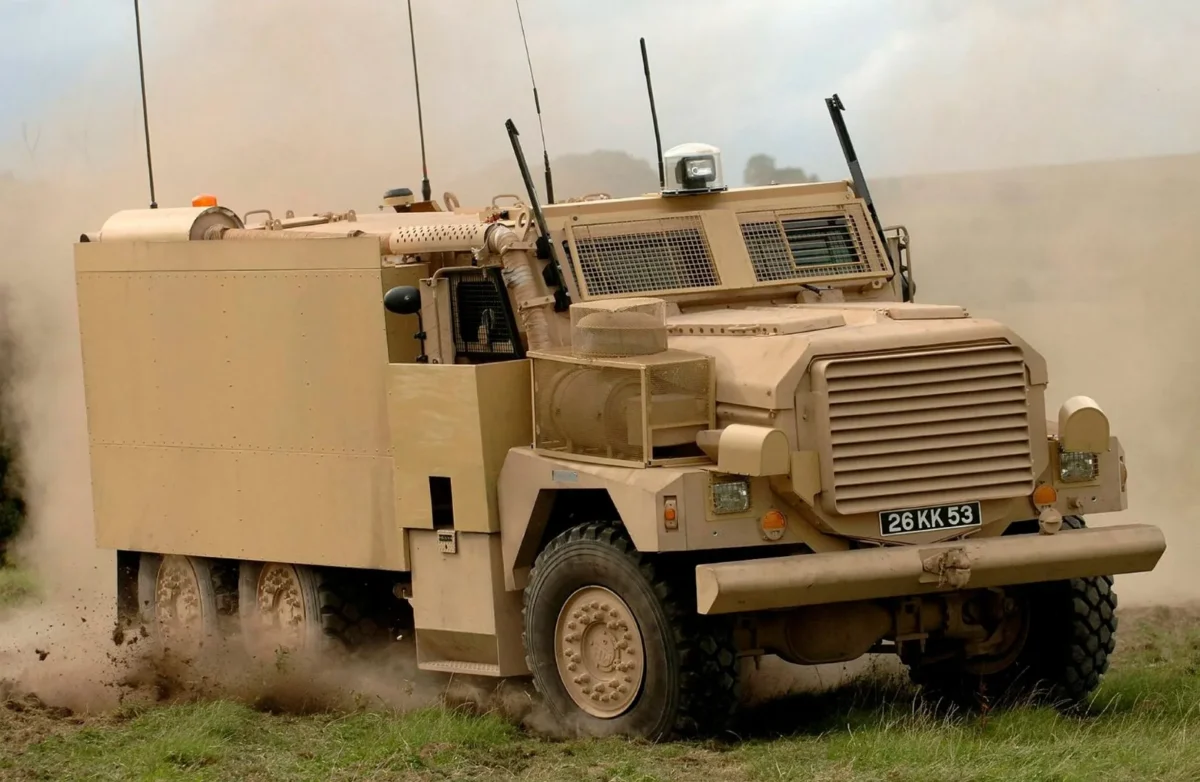
By the end of 2006, the first Mastiff vehicles were delivered to British forces in Iraq, some twenty-odd weeks after order, a brilliant performance by all those involved.
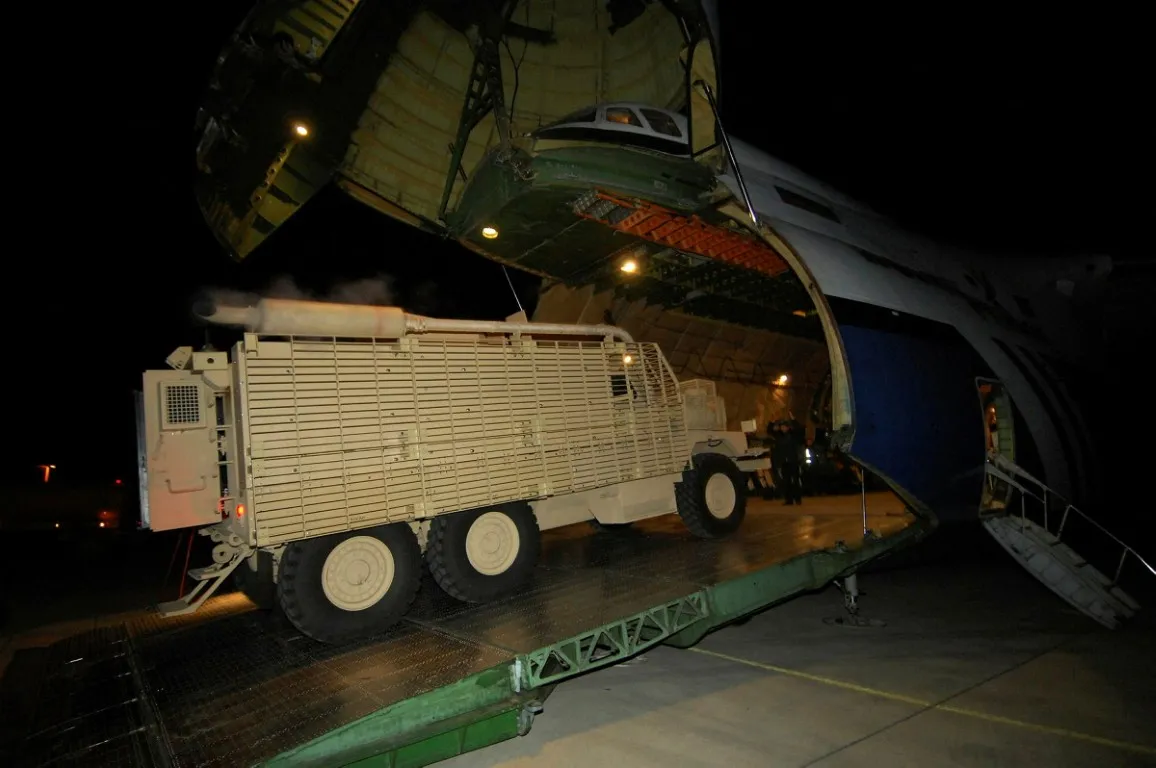
The Mastiff and Vector purchases were expected to cost approximately £120 million, Mastiff using UOR Treasury funding and Vector coming from Army budgets. In response to the explosively formed penetrator threat, the UK Mastiffs would be fitted with additional side armour to counter the EFP threat.
Perhaps somewhat against the prevailing narrative at the time, only a large vehicle with three axles could support the additional weight of side armour that could counter the prevailing Explosively Formed Penetrator (EFP) threat in Iraq.
It was later revealed that this initial batch of Mastiff cost £70m
The Treasury is providing around £70 million to fund the procurement of 108 Mastiff vehicles, subject to finalisation of commercial arrangements, and around £30 million is being provided by the Treasury to fund about 70 additional up-armoured and up-graded FV430 vehicles, which will be known as Bulldog.
The MoD announced in October 2007 an additional order for 140 Mastiff vehicles, most of them destined for Afghanistan.
This video from 2007 provides a good overview of Mastiff use in Afghanistan.
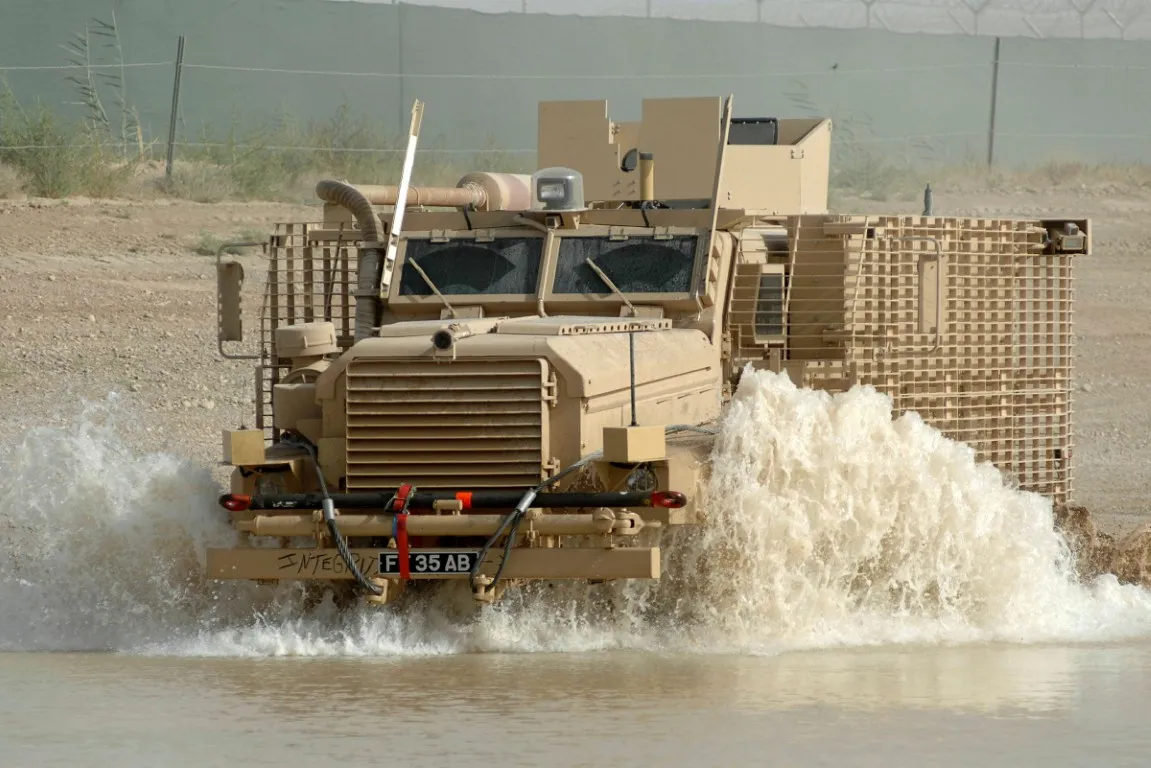
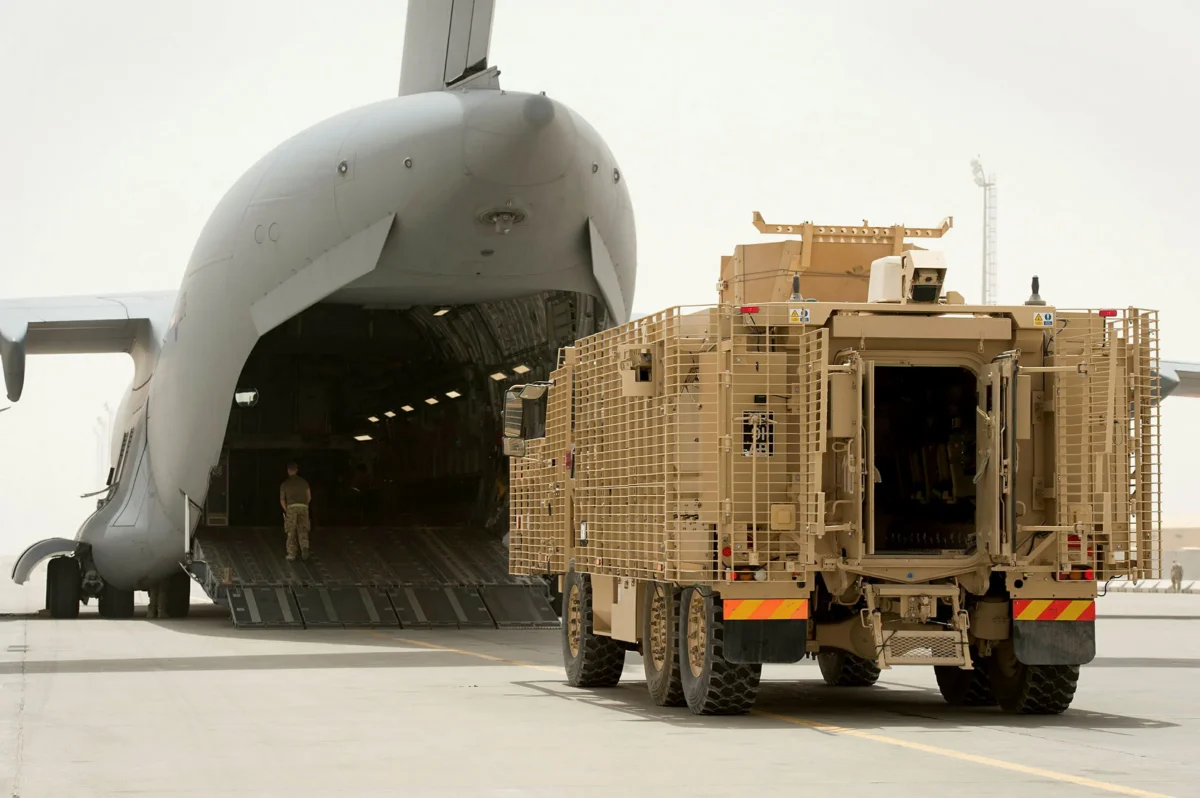
The image shows a Mastiff at Kandahar Airbase in May 2007
2008 #
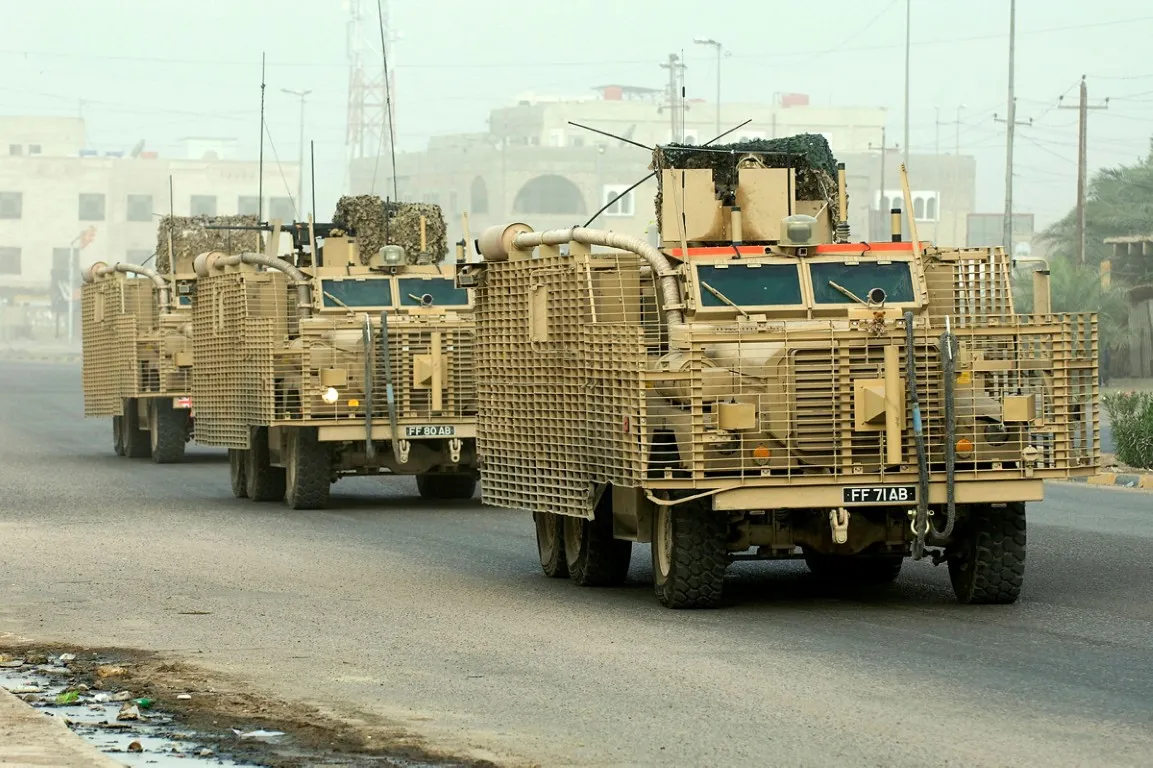
By January 2008, all the initial order for Mastiff (bar four ambulance variants) had been delivered.
They had transformed mobility in Iraq.
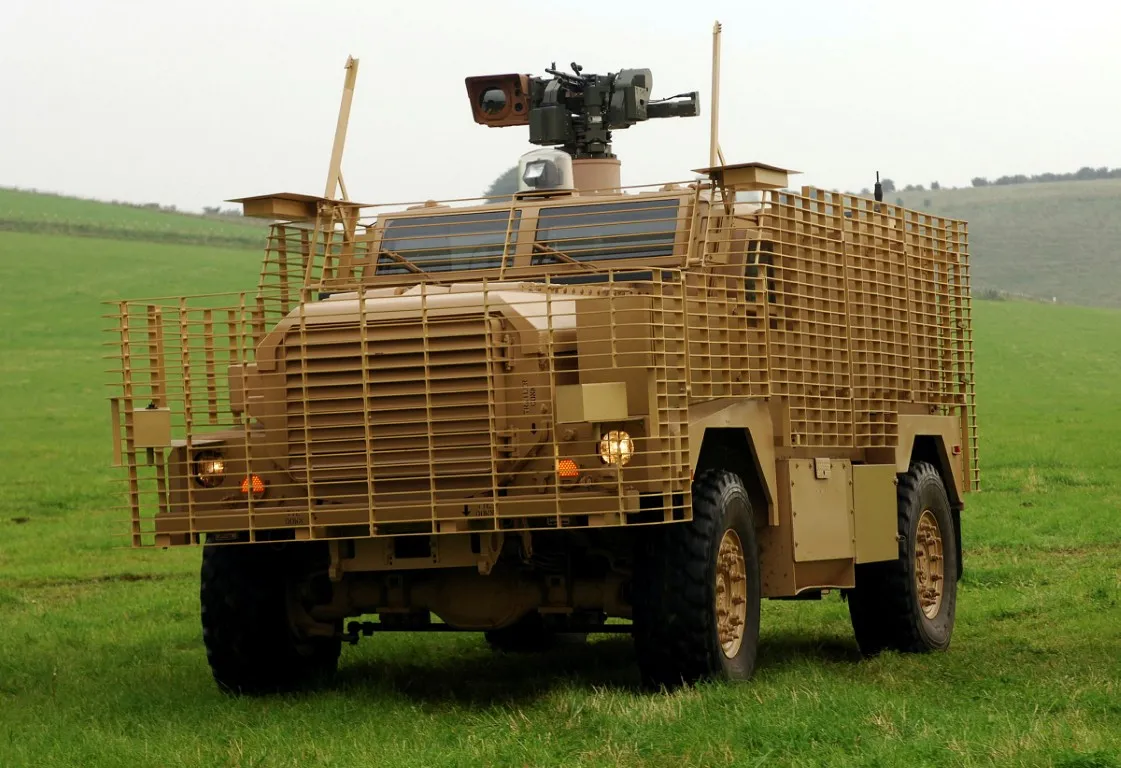
An order was placed in May 2008 for a 4×4 variant called Ridgeback.
The first batch of 151 Ridgeback was delivered to the UK in August, following a contract award to Force Protection that also included the Wolfhound Tactical Support Vehicle and the development of the Mastiff 2. It also included better seating and driver’s vision equipment.
The additional protected mobility contracts were formally announced on the 29th of October 2008, mentioning the earlier order for Ridgeback
Defence Secretary John Hutton has announced a package worth £700 million today, which will pay for some 700 new armoured vehicles to further improve the safety and protection of troops on operations in Afghanistan. The Protected Mobility Package announced by Mr Hutton today, Wednesday 29 October 2008, includes provision of £350 million for 400 brand new armoured support trucks which will be used to accompany patrols and carry essential supplies such as water and ammunition. The three distinct categories of Tactical Support Vehicles (TSV) are:
Wolfhound: TSV (Heavy). Heavy armoured support trucks – supporting and re-supplying Mastiffs in the highest threat areas. These vehicles will have the highest levels of mine blast protection;
Husky: TSV (Medium). Medium armoured support trucks – carrying out the support roles in lower threat areas and where heavy vehicles, like Mastiff, cannot be used;
Coyote: TSV (Light). Light armoured support vehicles – supporting Jackals across the harsh terrain of Afghanistan.
Other vehicles which will be paid for out of the £700 million include:
Over 100 brand new cross-country vehicles called Warthog which, with greater protection levels, will replace Vikings in Afghanistan, and over 100 more Jackals, the extremely agile all-terrain vehicles which include high-levels of off-road mobility and firepower.
£96 million from the package will also be used to develop a specialist route clearance system known as Talisman, which will provide a new high-tech way of dealing with the IED (Improvised Explosive Device) threat. Among the Talisman vehicles to be developed will be the Buffalo mine-protected vehicle and the Engineer Excavator.
In addition, new vehicles, and upgrades and modifications were also announced today. 30 base Cougar vehicles will be purchased, a mixture of 4x4s and 6x6s, which will be modified to boost our training fleets for Mastiff and Ridgeback.
The new Panther vehicle has been modified and upgraded to prepare for its arrival in Afghanistan and a new variant of the Snatch has been developed, known as the Snatch-Vixen, which, specially designed for Afghanistan, has been given extra power and payload which enhances the mobility and protection of the vehicle.
Today’s announcement builds on previous measures that are already making a difference in Iraq and Afghanistan including the introduction of the hugely successful Mastiff with its superior levels of protection and the Jackal with its impressive firepower and speed, allowing troops to get off the tracks and roads and strike hard at the enemy from all directions. Mastiff’s smaller brother Ridgeback, due to arrive on operations early in the new year, will also add to these measures, delivering protection levels close to that of the Mastiff in a package that gives better access to urban areas. £500 million of the funding for the Protected Mobility Package has been allocated from the Treasury Reserve while Defence will fund a part of the package in acknowledgement of the long-term benefit to core defence capability these vehicles offer beyond our current commitments
The Wolfhound was a tactical support vehicle, designed for carrying stores and equipment.

A Parliamentary Question revealed more details on Talisman
Ann Winterton: To ask the Secretary of State for Defence which vehicles make up the Talisman project currently subject to an urgent operational requirement; and what the in-service date of the project is.
Mr. Quentin Davies: Talisman is a project which will deliver a system of vehicles, sensors and techniques to counter improvised explosive devices. In doing this, the system will better enable safe movement along routes in Afghanistan.
Initially the system will include three vehicle types: Mastiff, Buffalo and High Mobility Engineer Excavator.
Talisman is scheduled for initial fielding during late 2009, although its development will continue beyond that point.
The Mastiff command vehicle for Talisman had an elevated ROTAS sensor and could be used with the CHOKER IED pre-detonation rollers, 100 Panama City Mine Roller Systems Gen III were ordered, the same that the USMC had used since 2006 and made by the Naval Surface Warfare Center

In April 2009, the first Ridgebacks began arriving in Afghanistan.
Later in 2009, the RAF Regiment introduced a version of Mastiff 3 called Praetorian
The British Army withdrew from Iraq in 2011.
In April 2013, the MoD placed an order with Force Protection for 47 Mastiff-protected vehicles and some conversion contracts were also let
- Mastiff Troop Carrying Variant (MAS TCV) to Mastiff Enhanced Communications Variant (MAS ECV) Conversion,
- Ridgeback Troop Carrying Variant (RBK TCV) to Ridgeback Command Variant (RBK CV) Conversion,
- Wolfhound Explosive Ordinance Disposal (WHD EOD) variant to Wolfhound Military Working Dog (WHD MWD) variant Conversion,
- Mastiff 1 to Mastiff 2 Conversion.
In the same month, news of the first casualties from an IED whilst in a Mastiff was released.
A tragic milestone, but Mastiff had been in theatre for six years without a casualty, testament to the design and work completed by the MoD, industry and the British Army.

The British Army effectively ceased operations in Afghanistan in October 2014, although some Mastiff and Ridgeback would be retained supporting training and security as part of Op TORAL.

Post Afghanistan and Iraq #
With operations in Afghanistan and Iraq concluded, most Mastiff and Ridgeback vehicles were recovered back to the UK, and discussions were held about bringing them into the core equipment plan and how they would be employed in future operations.
In Army 2020 restructuring (announced 2012, implemented 2013), Mastiff and Ridgeback were integrated into heavy protected mobility battalions, mechanising three infantry battalions in Multi-Role Brigades.
The MoD confirmed the status of the Protected Mobility fleet in a parliamentary answer in late 2019
| Fleet | In Forward Fleet | In Reserve | In Storage | Total |
| Mastiff | 177 | 77 | 163 | 417 |
| Ridgeback | 53 | 21 | 94 | 168 |
| Wolfhound | 57 | 10 | 58 | 125 |
| Husky | 200 | 40 | 80 | 320 |
| Coyote | 57 | 7 | 8 | 72 |
| Warthog | 91 | 91 |
It is difficult to conclude that Mastiff/Wolfhound and Ridgeback were anything apart from an unqualified success, quick into service (after some decision-making delay), extremely effective, and continually developed over time.
Mastiff would have one last hurrah, in Mali.
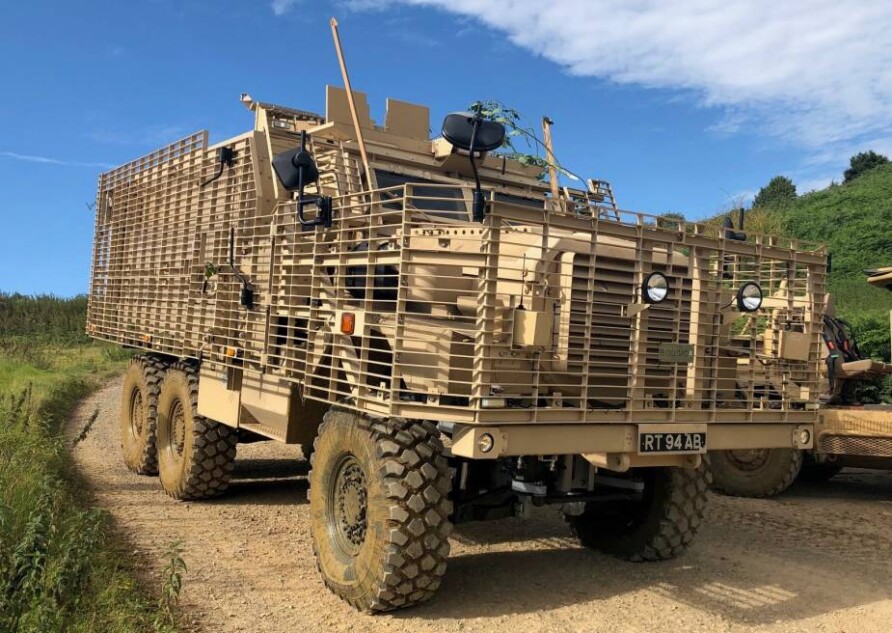
Against an Urgent Capability Requirement, NP Aerospace was awarded a £7m Protected Mobility Engineering & Technical Support (PMETS) Contract in 2019 for the non-recurring design and implementation of a range of mobility and other improvements for 12 vehicles, both Mastiff and Ridgeback.
The contract was described as;
As engineering authority for the protected mobility fleet, NP Aerospace is leading the project with support from companies including HORIBA-MIRA, Horstman, Texelis, Timoney, Tyron and Universal Fabrications. A number of vehicles have already been deployed on operation during COVID-19 restrictions with the first wave delivered in just over 80 working days.
New vehicle systems have been implemented within the Ridgback and Mastiff to increase mobility, enhance safety and introduce new capabilities. These enhancements include state-of-the art, independent suspension systems incorporating Ride Height Control, along with upgraded driveline, steering and braking systems, central tyre inflation systems and increased diameter tyres.
£7m for 12 vehicles might sound expensive, but this is a small order with all the design work front-loaded, if additional vehicles are upgraded to the same specification, unit costs would be much lower.
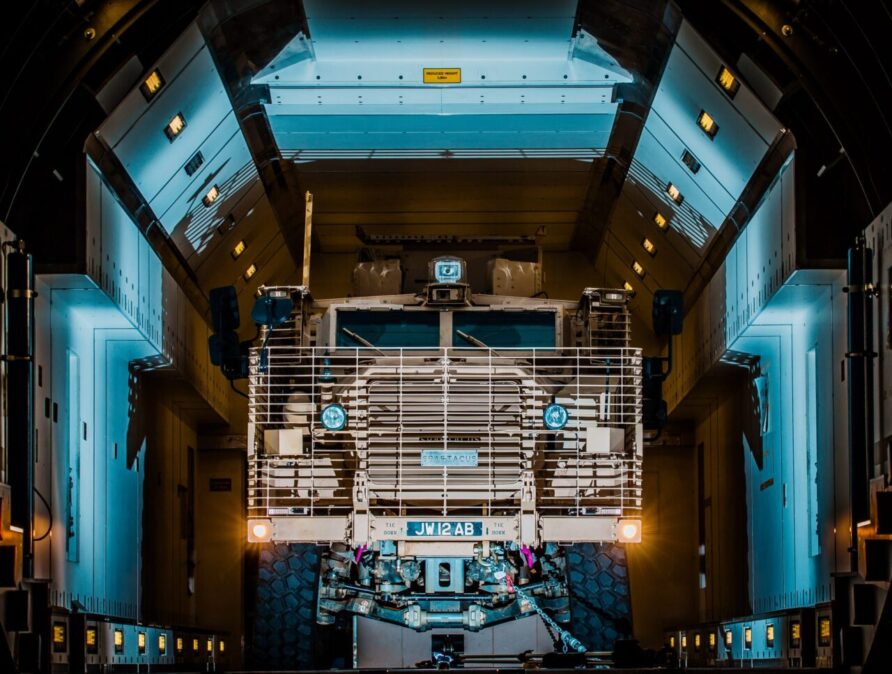
The vehicles were deployed to Mali in 2020
In December 2019, a first contingent of the armed forces of the United Kingdom arrived in Mali to support and strengthen the contribution of MINUSMA to the protection of civilians in the Gao region. As a permanent member of the United Nations Security Council, the UK has committed to a three-year deployment under MINUSMA, joining the other 59 nations already contributing to the UN Mission.
In response to a written question from Mr Kevan Jones MP on the 29th of June 2020, the MoD described the intent to withdraw Mastiff from service
The Army continues to rationalise its legacy vehicle fleets, work commenced in 2017 under the Land Environment Fleet Optimisation Plan. This work has already removed 2,831 vehicles from service and disposed of a number of legacy vehicle fleets. The next strand of this work seeks to remove several further legacy vehicle types from service, including the disposal of the Mastiff, Ridgeback and Wolfhound fleets.
Feedback on Mastiff XC in Mali was reportedly excellent.

Mastiff vehicles were deployed to Eastern Europe, shown below in 2025 for example,

39 Mastiff and one Ridgeback transferred to Ukraine as military aid.
Disposals continued through 2026.
Mastiff Details #
The Ministry of Defence obtained Mastiff, Ridgeback, and Wolfhound in the following quantities.
| Fleet (all Variants) | Total Number Procured |
| Mastiff | 450 |
| Ridgeback | 171 |
| Wolfhound | 125 |
The table below summarises key technical specifications, drawing from official British Army data, manufacturer details, and verified secondary sources. Note that exact figures vary slightly by variant and loadout; Mastiff has undergone upgrades (Mk 1, Mk 2 with increased capacity and weight, Mk 3 with enhanced Dyneema armour)
| Specification | Mastiff (6×6 PPV) | Ridgeback (4×4 PPV) | Wolfhound (6×6 TSV) |
|---|---|---|---|
| Configuration | 6×6 wheeled drive | 4×4 wheeled drive | 6×6 wheeled drive (cargo flatbed) |
| Dimensions (L x W x H) | 7.94 m x 3.2 m x 3.2 m | 5.92 m x 2.59 m x 2.64 m (3.3 m with gun shield) | 7.08 m x 2.74 m x 2.64 m |
| Weight (kerb / gross) | Mk 1: 17.7 t / ~22 t Mk 2: ~23.6 t | 14.5 t / 17.2 t | ~17.2 t |
| Ground clearance | 0.41 m | 0.38–0.41 m | ~0.41 m |
| Engine | Caterpillar C7, 330 hp (243 kW) | Caterpillar C7, 330 hp (243 kW) | Caterpillar C7, 330 hp (243 kW) |
| Transmission | Allison 3500 SP (6-speed automatic) | Allison 3500 SP (6-speed automatic) | Allison 3500 SP (6-speed automatic) |
| Max speed | 90–105 km/h (55–65 mph) | 90–105 km/h (55–65 mph; 88 km/h run-flat) | 90 km/h |
| Range | 900–966 km | 676–966 km | ~966 km |
| Crew + capacity | 2 + 6–8 troops Payload: 5.2–5.9 t | 2 + 4 troops (up to 10 max) Payload: 2.72 t | 2 crew + 10 troops or cargo Payload: ~5 t (estimated) |
| Armament | 7.62 mm GPMG, 12.7 mm HMG, or 40 mm AGL (pintle or remote weapon station) | 7.62 mm GPMG, 12.7 mm HMG, or 40 mm AGL (pintle or remote weapon station) | 7.62 mm GPMG (self-defence) |
| Protection | V-hull (MRAP Cat I), ballistic/mine/IED (>STANAG 4569 Lv 4 front), RPG slat armour, ECM, NBC sealed | V-hull (MRAP Cat I), ballistic/mine/IED, RPG slat armour, ECM, NBC sealed, run-flat tyres | V-hull, enhanced mine/IED, ballistic, ECM; flatbed for logistics |
| Procured (approx.) | ~470 (all marks) | 168–180 | 125 |
| Entry to service | 2006 (Mk 1); upgrades to 2012+ | 2009 | 2010 |
| Variants | Patrol, ambulance | Troop carrier, ambulance, command, weapons station | Logistics tractor, gun limber, cargo |
All variants have a high degree of commonality, with a Caterpillar C7 inline-six turbocharged diesel engine developing 330 hp (243 kW) at 2,400 rpm, coupled to an Allison 3500 SP six-speed automatic transmission.
They are equipped with Bowman digital radios, air-conditioning, and central tyre inflation systems
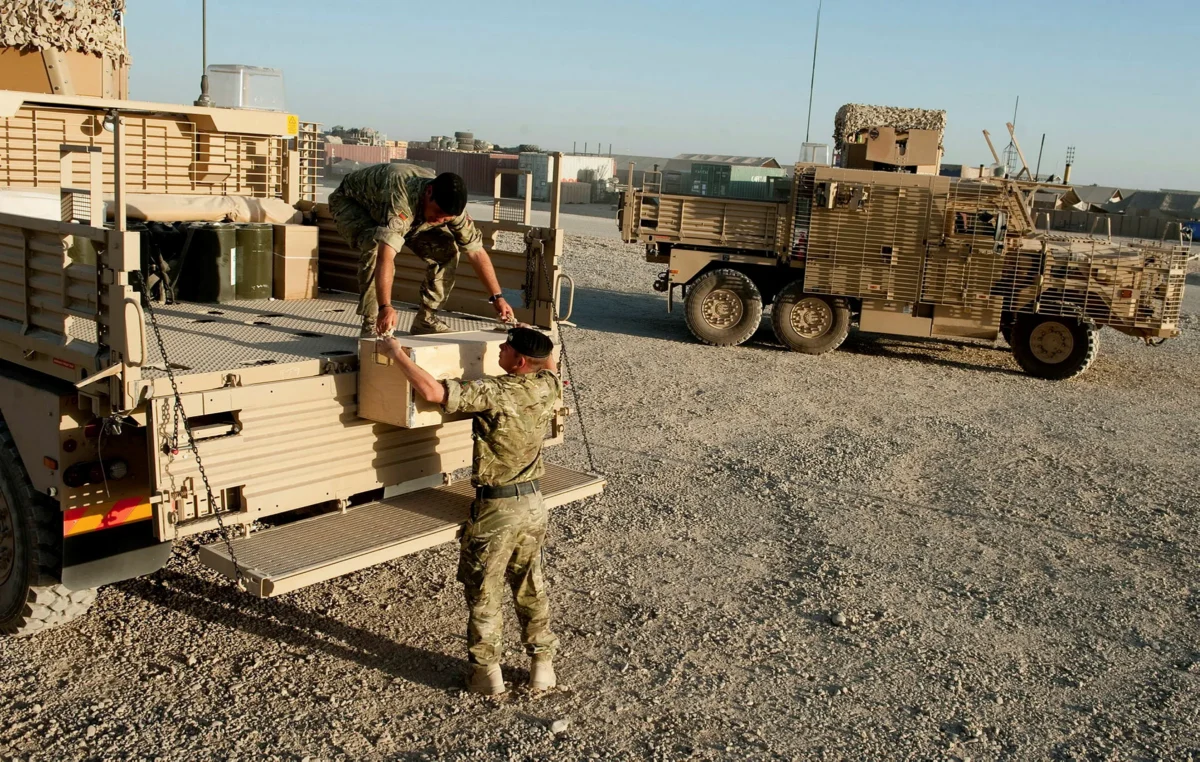
The image below shows the load bed of the Wolfhound variant
And the interior of the Mastiff

This video from NP Aerospace provided an overview of the range of options and upgrades for Mastiff post operations.
With a follow on video detailing the latter XC upgrades.
If you found value in this article, help me keep Think Defence going.
Think Defence is a hobby, a serious hobby, but a hobby nonetheless. I have removed those annoying adverts, but hosting fees, software subscriptions and other services add up.
To help me keep the show on the road, I ask that you support the site in any way you can. It is hugely appreciated.
You can click on an affiliate link, Buy Me a Coffee at https://ko-fi.com/thinkdefence, download an e-book at https://payhip.com/thinkdefence or even get some TD merch at https://www.redbubble.com/people/source360/
Youtubers, if you are going to lift content from here, the decent thing to do would credit me
Read more [Amazon Affiliate Link]


