
 Doc Summary

The ARTEC Boxer is a wheeled or tracked armoured vehicle, this article describes its general capabilities and vehicle details.
Boxer is described by ARTEC as;
BOXER is a truly modular vehicle providing multiple functions for its users, several communication interfaces for participation in network-enabled warfare and diverse mission relevant capabilities. The flexibility of its modularity allows BOXER to be easily adapted to meet diverse mission requirements, in rapidly changing circumstances and global environments. BOXER has impressive integral growth potential so that future emerging military roles and changing requirements can be met, without degrading the vehicle’s capabilities such as mobility.
The British Army is a Boxer user.
Read more about the history of the British Army’s three times Boxer related programmes.
- Multi Role Armoured Vehicle (MRAV), click here
- Future Rapid Effects System (FRES), click here
- Mechanised Infantry Vehicle (MIV), click here
In addition to the programme histories, more details about Boxer variants, click here
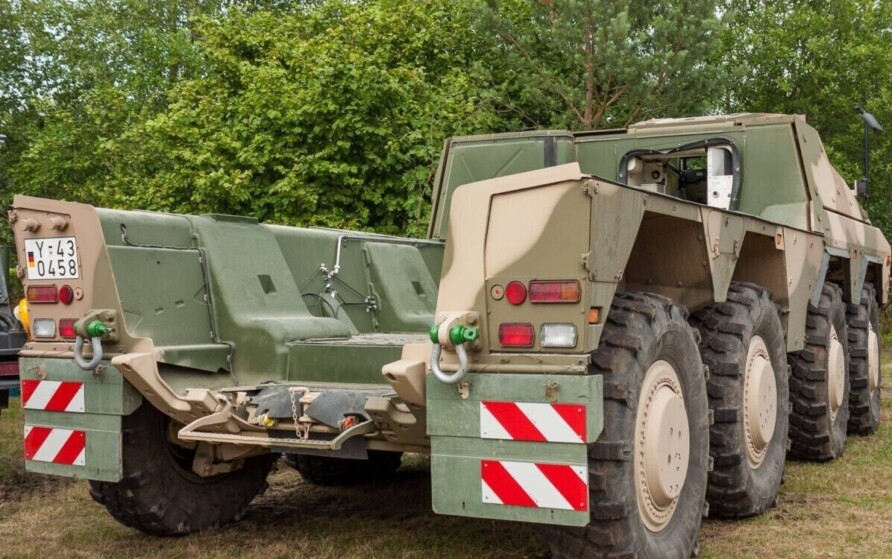
Boxer Drive Module – Wheeled #
Weights, Dimensions, and Performance #
When it was introduced, Boxer was significantly larger than in contemporaries, but recent vehicles have caught up somewhat. The reason for its size (and resultant high weight) was high levels of protection (especially top protection against fragments and cluster weapons) and a desire to ensure sufficient space to accommodate the embarked personnel with their stores rather than hanging things on the outside.
In common with all similar vehicles, its combat weight has crept up since its introduction, with different equipment fits and protection influencing the final weight and dimensions.
| Length (APC) | 7.93m |
| Length (155 mm) | 10.5m |
| Width | 2.99m |
| Height (Hull Roof) | 2.38m |
| Height (Lance Turret Roof) | 3.24m |
| Height (155 mm Turret Roof) | 3.94m |
The maximum gross vehicle weight is 38.5 tonnes, this has increased since first introduced through the A1 and A2 revisions.
Comparing that with transport aircraft dimensions and capacities below.
| Width | Height | Length | Payload | |
| C-130J | 3.12m | 2.74m | 12.1m | 15–16 tonnes |
| C-130J-30 | 3.12m | 2.74m | 17.0m | 15–16 tonnes |
| A400M | 4.00m | 3.85m | 17.0m | 30–37 tonnes |
| C-17 | 5.50m | 3.80m | 26.0m (inc. ramp) | 60–64 tonnes |
Width and length are no problem for all those above but a Boxer complete with both drive and payload module would be too heavy for a C-130 and at the upper end of the weight, marginal at best for the A400M.
Although A400M has a ‘brochure’ maximum payload of 37 tonnes the actual useable maximum weight will likely be less and in any case, towards the top end of the payload, the range would be restricted.
The maximum vehicle weight includes fuel, ammunition and other items that could often be removed for flight, but it is hardly ideal and in general, compromises would need to be considered if the Boxer is likely to be transported by air.
The C-17 could easily carry one at substantial distances although, for both, the 155 mm artillery variant will be challenging regarding height. The Air Portable Ferry Bridge has an MLC of 35 so would be unsuitable for Boxer, a variant. With an MLC of 50, the Rapidly Emplaced Bridge System (REBS) would be suitable.
As weight has grown, transportability by air has been affected. Although the UK’s A400M’s have a stronger floor (to accept Terrier) than standard A400M’s, recent German trials have confirmed that the A2 variant will need to be carried on A400M in a split configuration, drive unit and module in separate aircraft, it is planned that three A400M will be able to accommodate two Boxer.
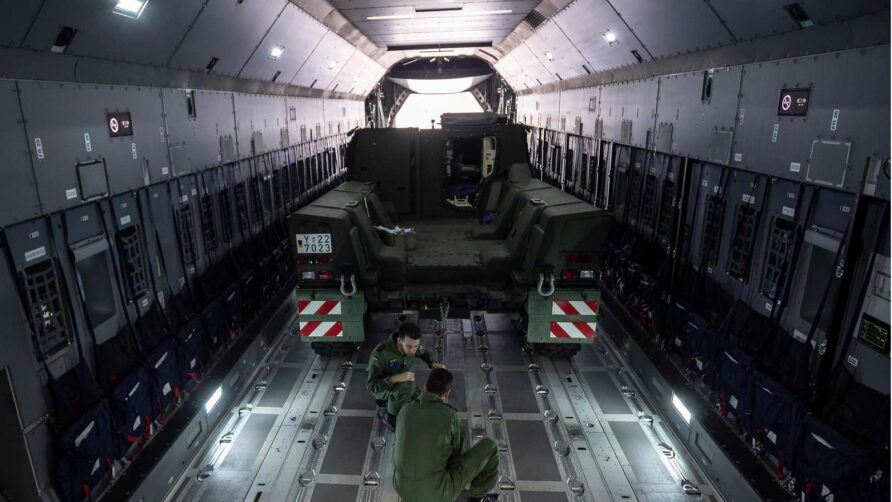
This will restrict air landing operations and place a greater demand on finite transport but perhaps this can be offset by a likely infrequent deployment by air.
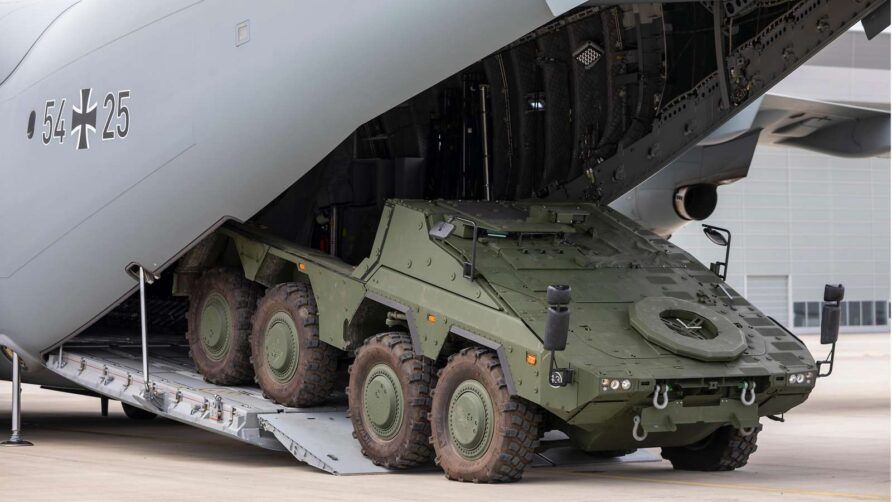
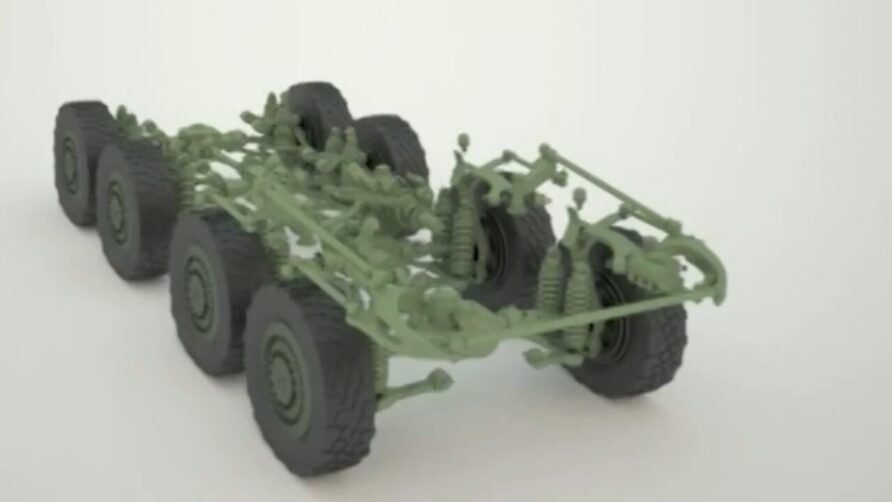
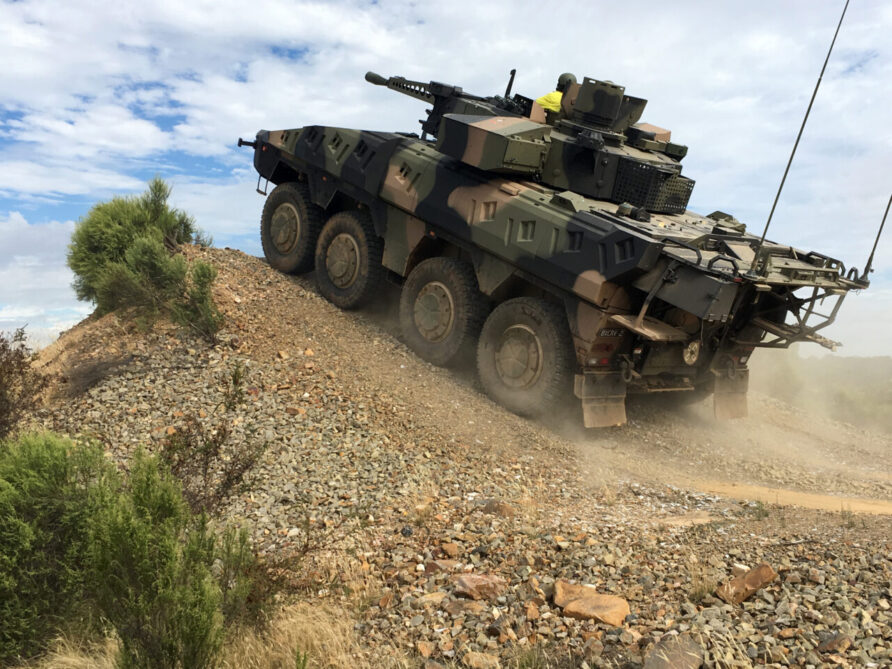
The Trench crossing is 2m, step climbing 800 mm, gradient 60%, side slope 30%, and it has a ground clearance of 500 mm. Mobility is reported to be excellent with all wheels being driven, the front two axles steering with selectable four-axle differentials and two inter-axle differentials.
A central tyre inflation system is fitted to enhance mobility.
The Dutch/Germans use Michelin 415/80R685 XML tyres (27 inches (0.69 m) in metric) which are ‘tuned’ to give maximum soft soil (mud) traction, but only carry 4.5T per tyre. Block 1 of Australian Boxers will be fitted with 415/80R685 XForce 2 tyres (higher load rating @5T and sand-optimised) and Block 2 (and all future Boxers for Australia) will be fitted with 415/80R685 XForce ZL tyres (even higher load rating @5.6T allowing further growth potential and all-round off-road pattern).
Future Boxers are likely to be heavier than the initial Dutch and German vehicles, so they are likely to be fitted with the XForce ZL tyre.
None of this negates the need for a recovery variant, as the video below demonstrates
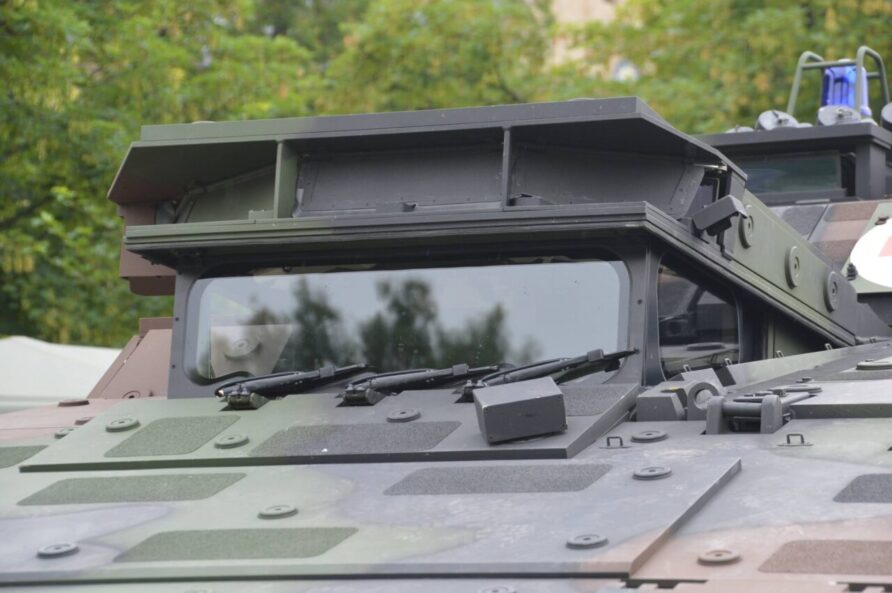
The driver position has a fully protected hatch with integral vision equipment.
Automotive and Capacities #
Boxer is fitted with an MTU/Rolls-Royce 8V199 TE20 multifuel engine, based on the Mercedes-Benz Series OM500 truck engine, developing 530kW (710 bhp), with 600 kW options for A3/uprated variants, coupled to a 7 forward 3 reverse speed Allison HD4070 automatic transmission. The Euro III-compliant Series 199 has a two-stage intercooler and has been optimised for military use with modifications to the lubrication system, turbocharging system and electronics.
To reduce thermal signature, the hot exhaust is discharged together with the cooling air via thermally insulated ducts.
The engine series is the same one that powers Ajax. Pack change can be completed in less than 30 minutes.
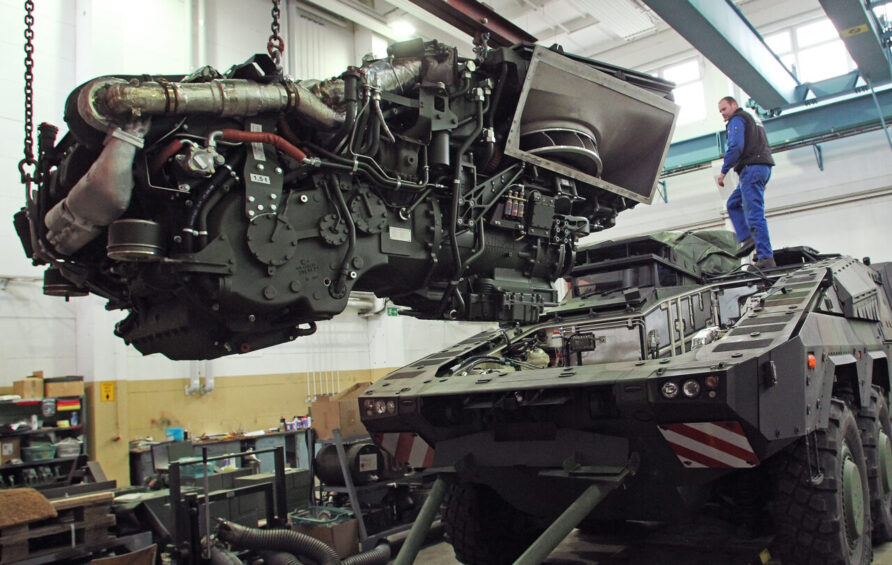
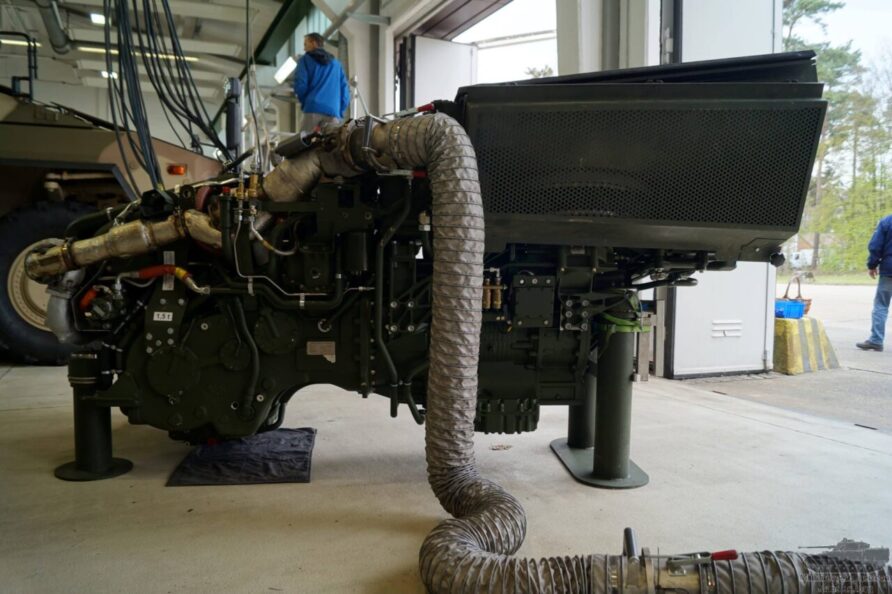
Its maximum speed is 103 km/h with a road range of 1,050 km to support longer self-deployments.
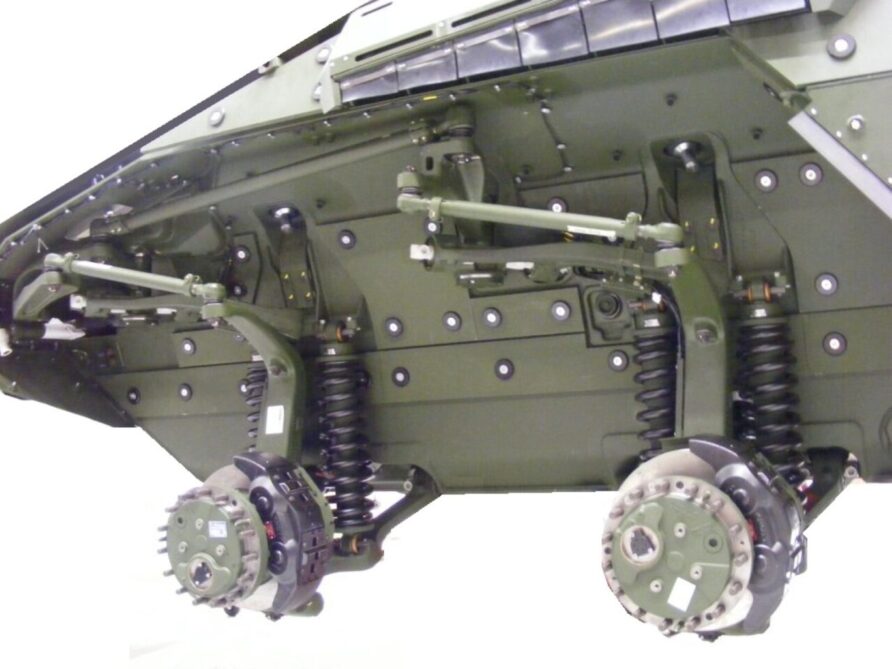
The suspension arrangement is shown below.
Boxer Drive Module — Tracked #
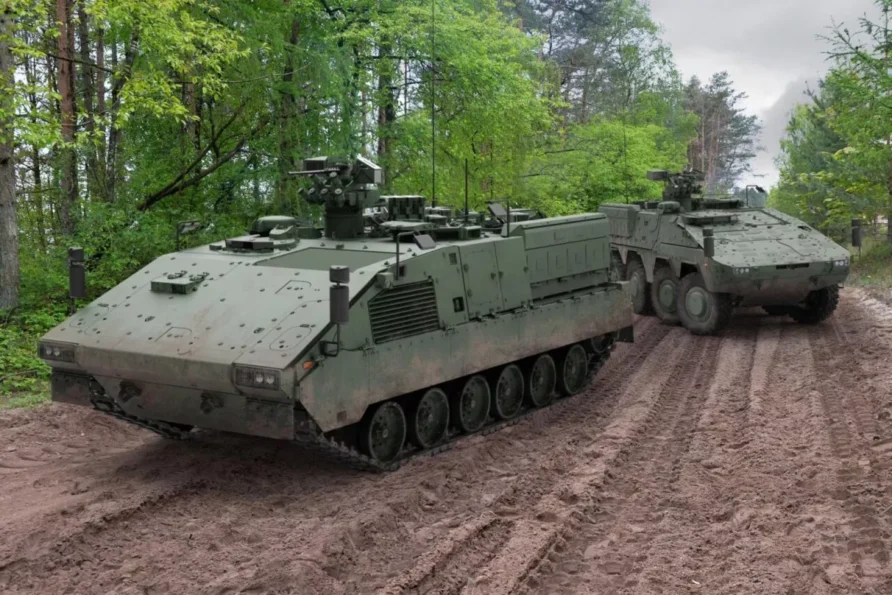
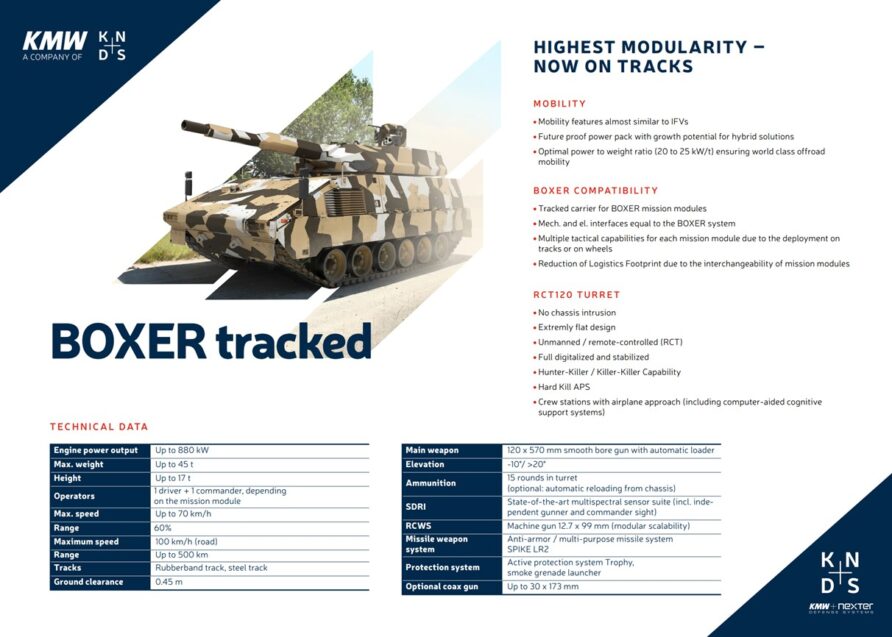
KMW recently revealed a concept of a tracked drive module.
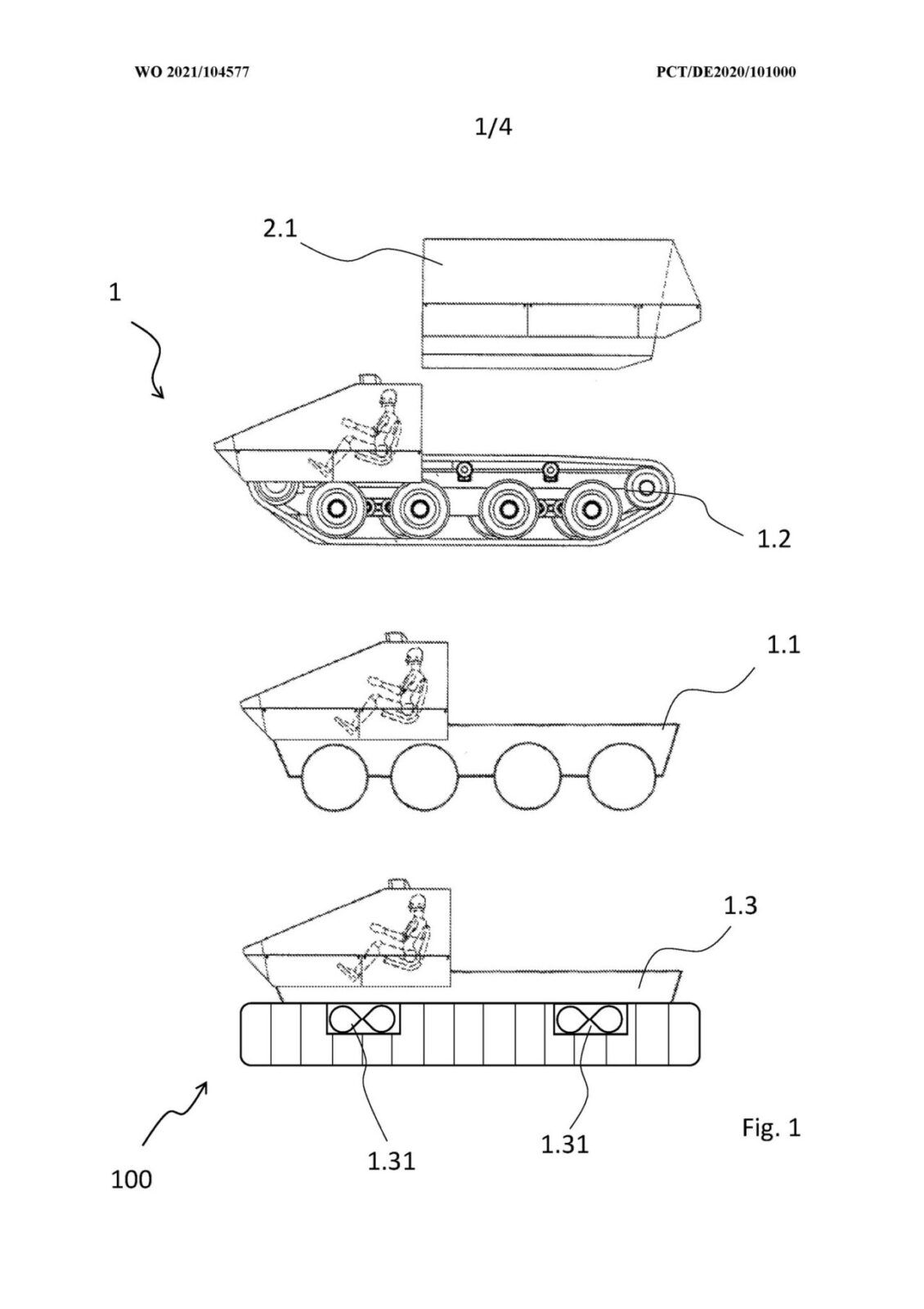
First shown in 2022. the tracked drive module is larger than the wheeled version but can use any of the mission modules
Boxer Protection #
The vehicle is constructed from welded steel armour and with an AMAP composite armour provides baseline protection of STANAG 4569 Level 4 all-around (resistant against 14.5 mm armour-piercing, 155 mm artillery shell splinters at 30m and 10 kg mine). Crew areas are also provided with an AMAP-L spall liner. Blast attenuating seats are also fitted as standard.
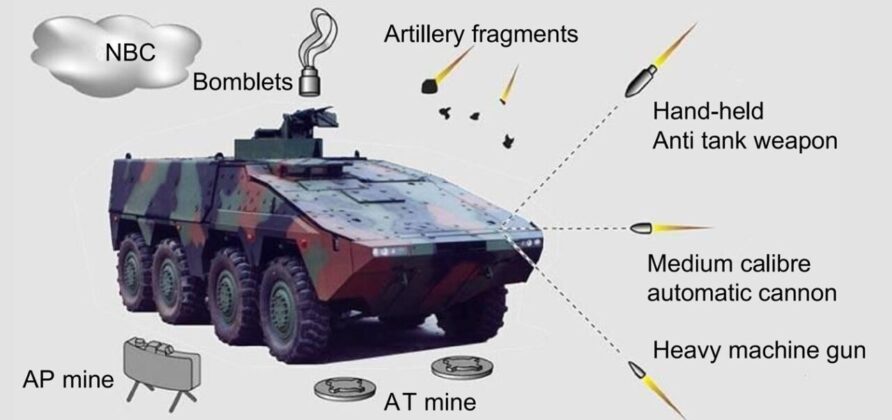
Reduction of thermal, acoustic, and radar signature is core to the design, actively cooled plates around the engine compartment, exhaust vent placement and triple-layer floors for example. Hydraulic liquids and fuel are placed outside the main mission modules, and a full CBRN protection system is fitted as standard.
Additional passive and active protection systems can be fitted. The Australian specification, for example, called for very high protection levels, STANAG 4569 level 6/6+. For the Australian vehicles, based on the A2 configuration, the local situational awareness system will be provided by Tectonica
Rheinmetall has demonstrated the Boxer CRV with the ADS – Gesellschaft für aktive Schutzsysteme active defence system called AMAP-ADS and several countermeasures. ADS appears to be a very impressive system, now renamed Strike Shield by Rheinmetall, but it remains to be seen how it will compare with other comparable systems with trainable submunition launchers.
The UK is currently evaluating a number of active protection systems so it will be interesting to see if any are selected for Ajax, MIV or Challenger 2, and it is likely that the comprehensive work completed for Ajax and Generic Vehicle Architecture will find its way into MIV at some stage. Certainly, UK Boxers will have excellent protection.
Some armour kits for UK Boxers will be provided by EODH Protection

Modularity #
The modularity of Boxer is both unique and widely misunderstood.
A Boxer vehicle generally consists of two components, the Drive Module, common to all variants and roles, and the Mission Module.
This modular concept was integral to harmonised MRAV/GTK/VBM requirements when Boxer was accepted by the UK, Germany and France as a means of maximising commonality to drive down through-life costs, AND, meet national requirements for roles and variants whilst supporting national industry partners.
Modularity adds parasitic weight and in some cases, might restrict weight distribution, but it is at the core of the Boxer concept and has advantages in several areas.
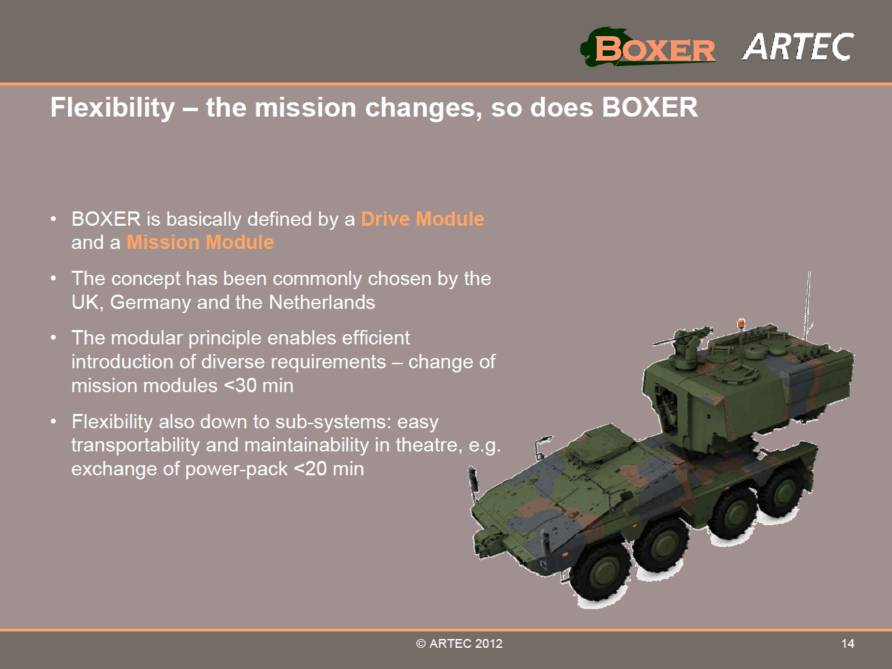
The Drive Module contains the power pack, suspension and driveline, fuel system, electrics, driver station, CBRN and fire detection/extinguishing system and rear ramp equipment (described above)
The Drive and Mission Modules will have different costs but for some of the more expensive modules, turreted or command, for example, the differential is significant.
The Drive Module contains wearing parts, the engine, pumps, suspension, and components that are subject to regular maintenance, wear, and damage just from driving around, let alone arduous driving or battle damage.
So when the Drive Module needs to be taken off the road for maintenance or repair, with a conventional vehicle, the ‘payload’ is also taken off the road. Inspections, changing a fuel filter or carrying out a repair means downtime for the costly parts of the overall package.
With a modular approach, getting the expensive modules back into service when the cheaper Drive Module is out of action is simply a case of swapping the module onto a serviceable Drive Module. In theatre technical reserves can be optimised, reducing the overall logistics demand.It is this cost differential and ability to swap modules that can potentially drive overall capital and operating costs down by improving fleet availability.
Modelling would allow the optimum number of drive and mission modules to be obtained.
For a specific deployment, the force package can be tailored from a large pool of modules.
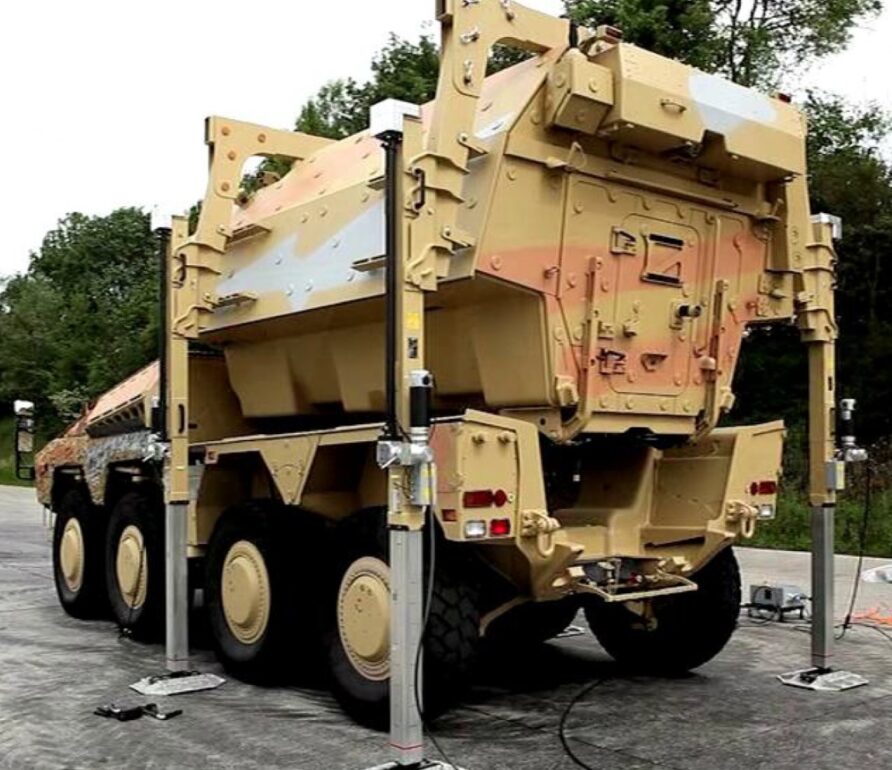
Modules can be changed within 30 minutes as per the video below, using suitable cranes
Cranes tend to have relatively limited availability so simple lifting jacks can also be used.
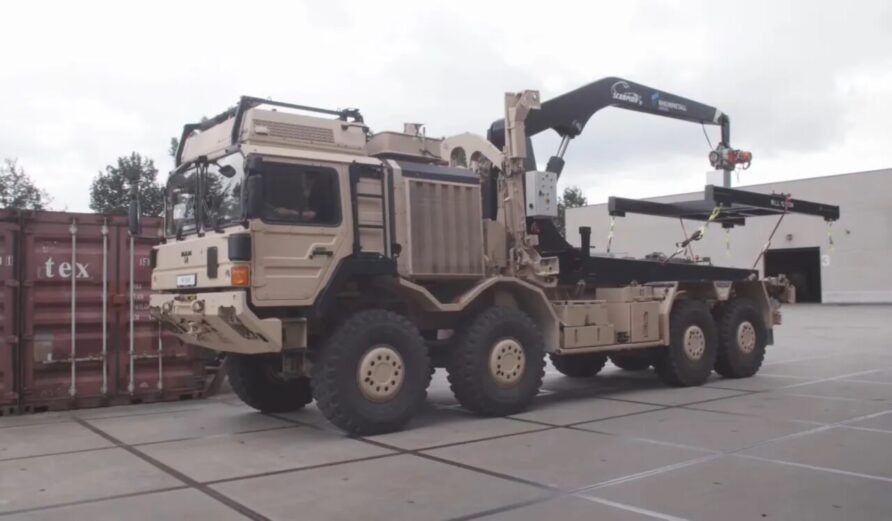
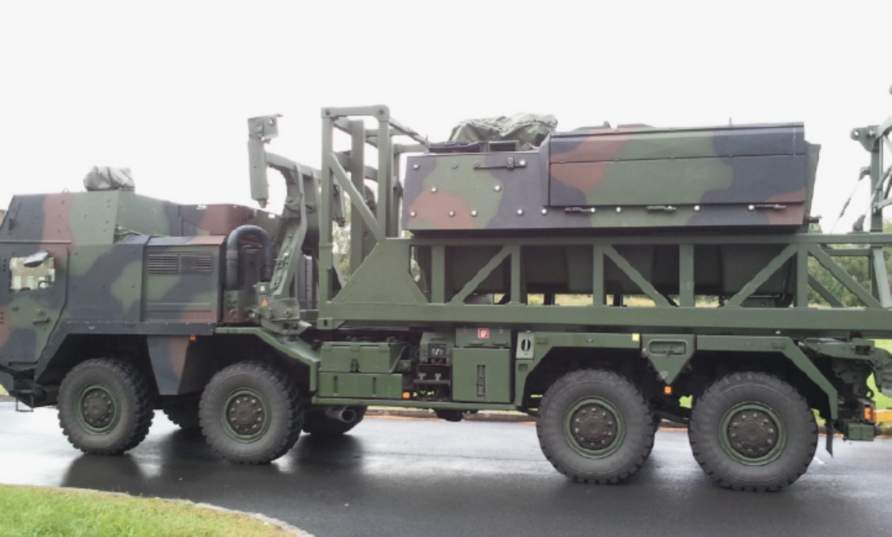
Rheinmetall has also designed a produced a lifting frame called Scorpion
At first glance, Scorpion offers little over and above a crane, but it is demountable using a DROP/EPLS type hook lift which provides additional flexibility and alternatives for transport/
Mission Modules can also be transported separately and for the heavier variants, the ability to split and transport separately allows aircraft loading to be tailored using different transport aircraft, military and civilian.
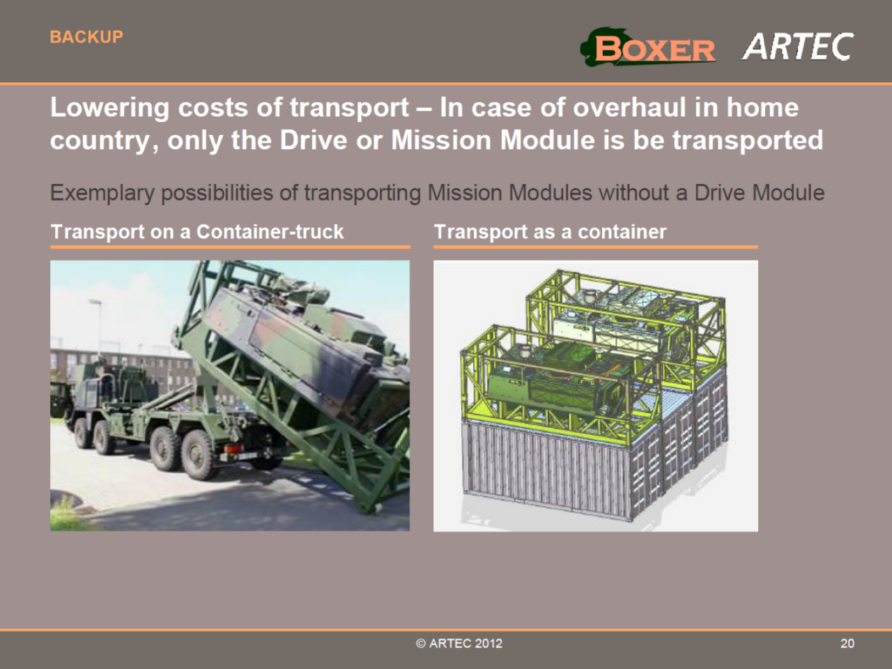
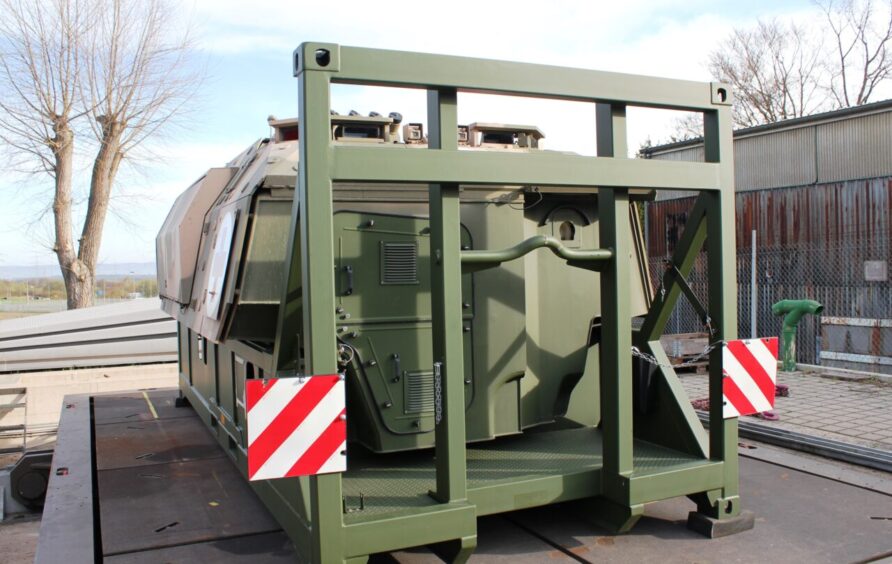
Artec has developed an ISO-compatible lifting and transport frame that allows modules to be transported as an ISO container or using a DROPS/EPLS type hook lift.
The ISO frame can be stacked as per conventional shipping containers.
The final advantage is one of national industry. Each user nation can develop modules and add them to the options list for others, according to national priorities or strengths. Australia might develop a repair and recovery module that can simply be purchased off the shelf by others and added to their fleet, for example.
If you found value in this article, help me keep Think Defence going.
Think Defence is a hobby, a serious hobby, but a hobby nonetheless. I have removed those annoying adverts, but hosting fees, software subscriptions and other services add up.
To help me keep the show on the road, I ask that you support the site in any way you can. It is hugely appreciated.
You can click on an affiliate link, Buy Me a Coffee at https://ko-fi.com/thinkdefence, download an e-book at https://payhip.com/thinkdefence or even get some TD merch at https://www.redbubble.com/people/source360/
Youtubers, if you are going to lift content from here, the decent thing to do would credit me


