The Future Protected Vehicle (FPV) capability vision was a research project initiated by the Ministry of Defence (MoD) in 2009.
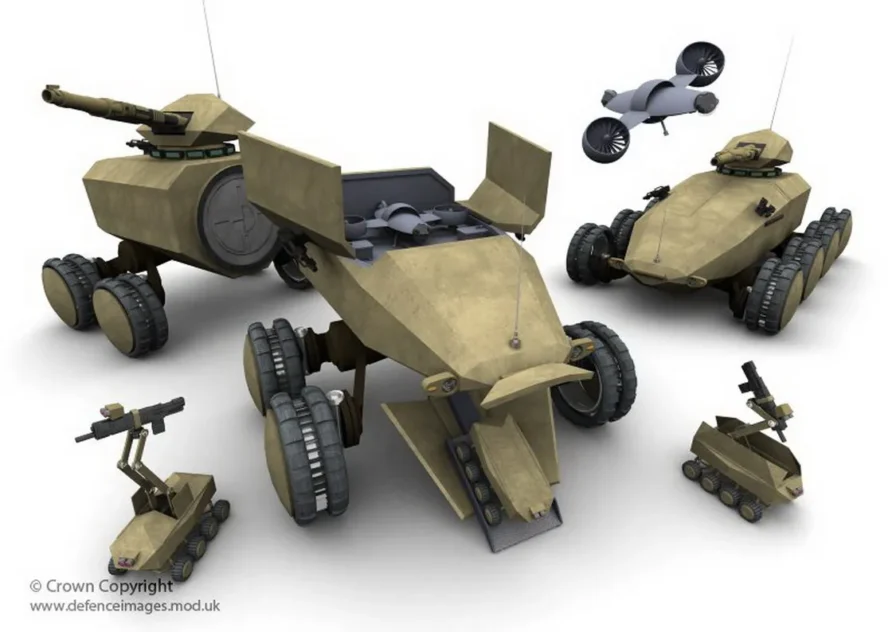
Future Protected Vehicle Capability Vision History
At the beginning of 2009, General Richards as CIC (Land) had launched OPERATION ENTIRETY. The defence main effort was Afghanistan and the entirety of the MoD would be focussed on it, hence the name.
Two things happened in February 2009.
First, the Defence Select Committee issued an excoriating report into the state of FRES, calling it a fiasco.
And two, the MoD and Defence Science and Technology Laboratory (DSTL) launched the Defence Technology Plan.
The strategy included projects such as D30, a long chain polymer that could be used in body armour, a device that could help helicopters to land in a dust storm, the Future Protected Vehicle (FPV)
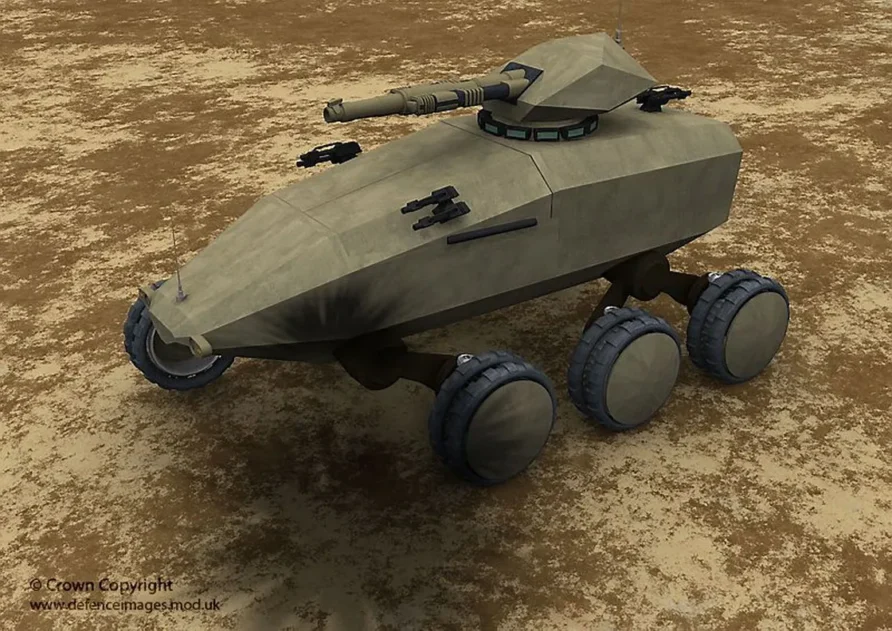
Gadgets and gizmos that could equip the British troops of the future helped launch the MOD’s new Defence Technology Plan on Thursday 26 February 2009. One of the concepts showcased at the launch was the Future Protected Vehicle – lightweight vehicles designed to achieve the effectiveness and survivability of a main battle tank. This computer animation shows how these vehicles could be used in one battlefield scenario.
The MoD released a video to illustrate the requirement.
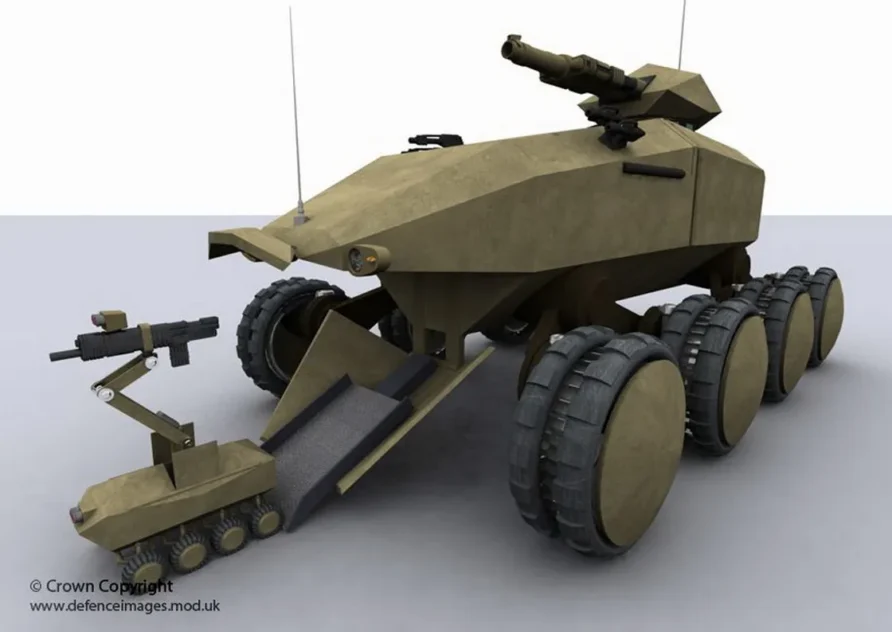
And a collection of computer-generated graphics
A more in-depth series of presentations were released in June 2009 as part of the research call.
We are looking for highly innovative ways of delivering the same capability as our current Main Battle Tanks, but in a significantly lighter package that is more easily transportable, fuel efficient and less reliant on the supporting military infrastructure. This is part of the Future Protected Vehicle Capability Vision.
A potential solution is the use of Hybrid Electric Drive Technologies that can significantly enhance mobility over demanding terrain with the benefits of good fuel efficiency and high reliability. Creative ideas that will provide the overall systems architecture that will host all military vehicle functions should also be included. We will award a number of contracts to demonstrate proof of principle of innovative technologies and applications of technology that will improve the mobility and overall effectiveness of the Future Protected Vehicle.
Technologies that can significantly enhance mobility over demanding terrain with the benefits of good fuel efficiency and high reliability. Creative ideas that will provide the overall systems architecture that will host all military vehicle functions should also be included. We will award a number of contracts to demonstrate proof of principle of innovative technologies and applications of technology that will improve the mobility and overall effectiveness of the Future Protected Vehicle.
Following the seminar on 25 June, proposals for these short, focussed demonstrations need to be submitted to Centre for Defence Enterprise by the 3rd September 2009. Winning proposals will get a contract award within a few weeks leading to demonstration of their proof of principle within 3-4 months after contract award.
The headline scope was;
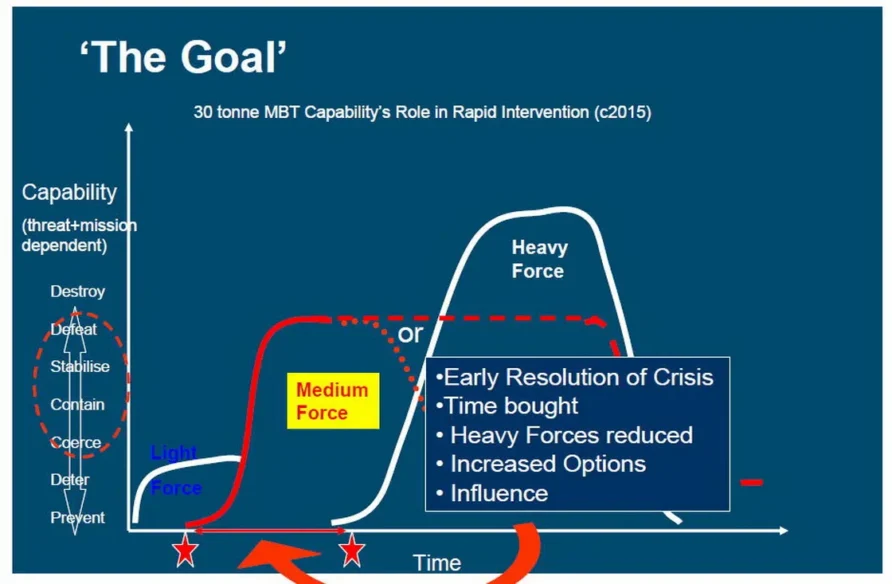
An Electric 30 tonne Armoured Fighting Vehicle with the ‘punch’ of a current Main Battle Tank
An electric 30 tonne vehicle which will embody the effectiveness and survivability currently associated with a Main Battle Tank but with high tactical mobility, reduced logistic footprint and strategic mobility of a rapidly deployable, air portable system
It will employ a modular, open architecture approach to underpin a future generation of mission configurable platformA ‘Troop Carrier’ variant capable of carrying a fully equipped eight man section is to be the main demonstration focus
An electric 30 tonne vehicle which will embody the effectiveness and survivability currently associated with a Main Battle Tank (MBT) but with high tactical mobility, reduced logistic footprint and strategic mobility of a rapidly deployable, air portable system.It will employ a modular, open architecture approach to underpin a future generation of mission configurable platforms
A ‘Troop Carrier’ variant capable of carrying a fully equipped eight man section is to be the main demonstration focus
Enhance survivability and other performance aspects, through adjustable ride height (2 meters of suspension travel is the target)Test Bed Demonstrator within 4 years
Experimental Operational Capability: ~2013
That was certainly an ambitious timeline, especially against the backdrop of the FRES Technology Demonstration Programme.
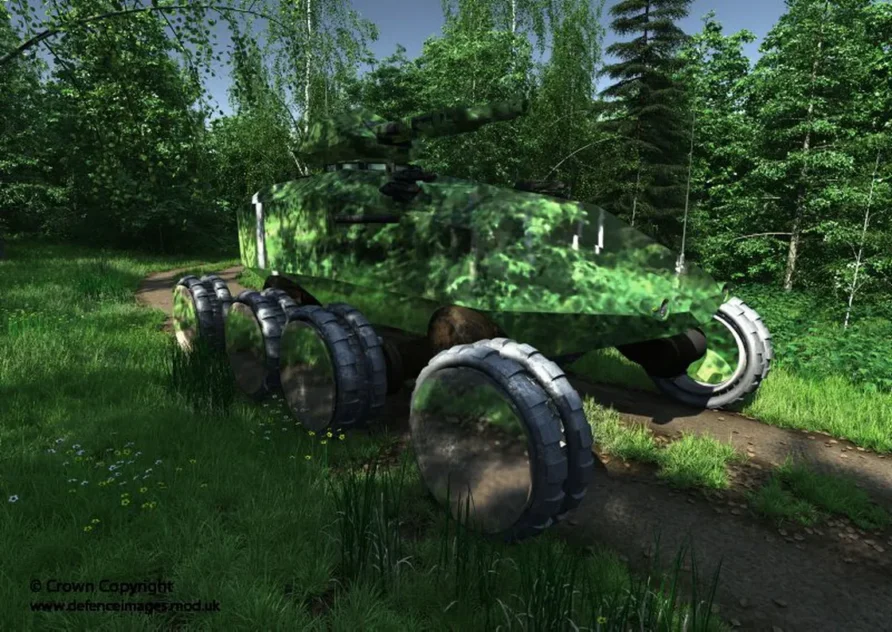
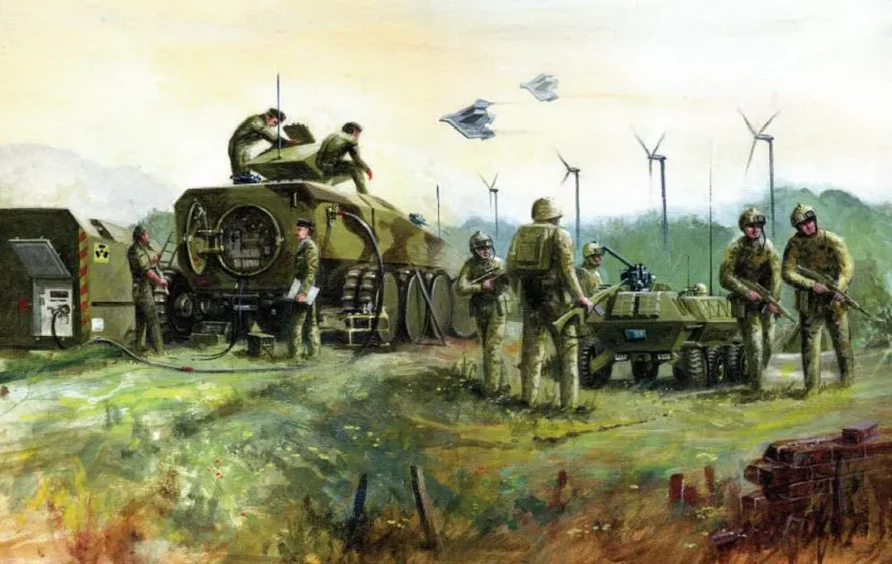
Additional concept images were shown.
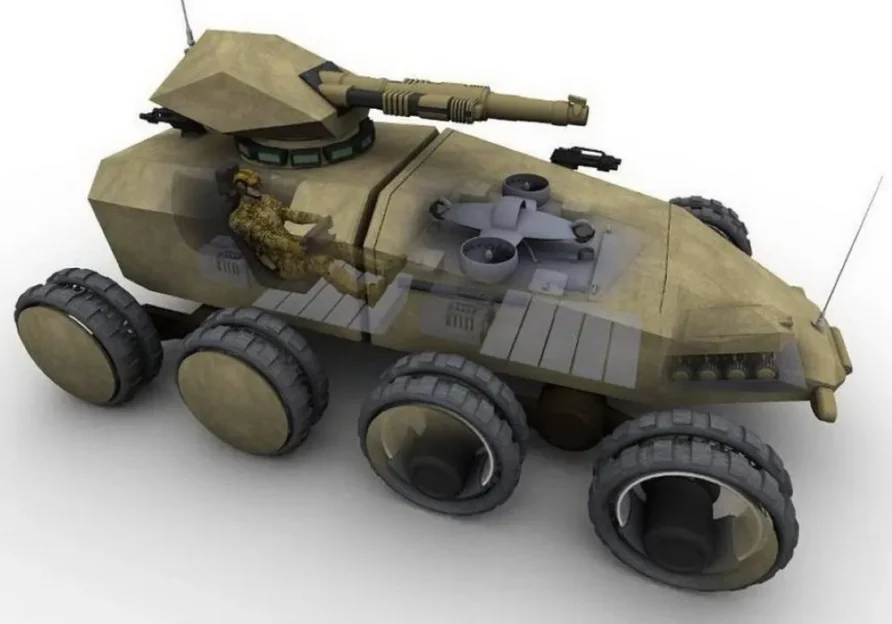
Adaptive camouflage.
An ability to remain mobile with one wheel station missing.
Power export and recharging
And variable height suspension
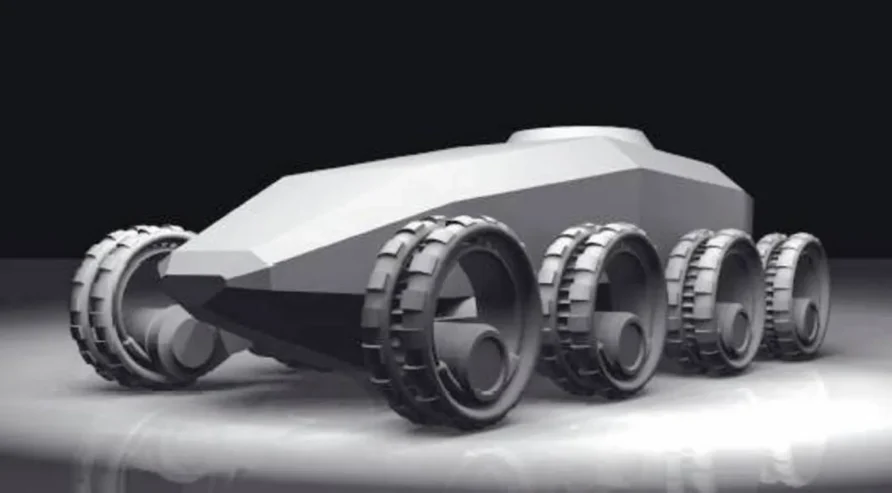
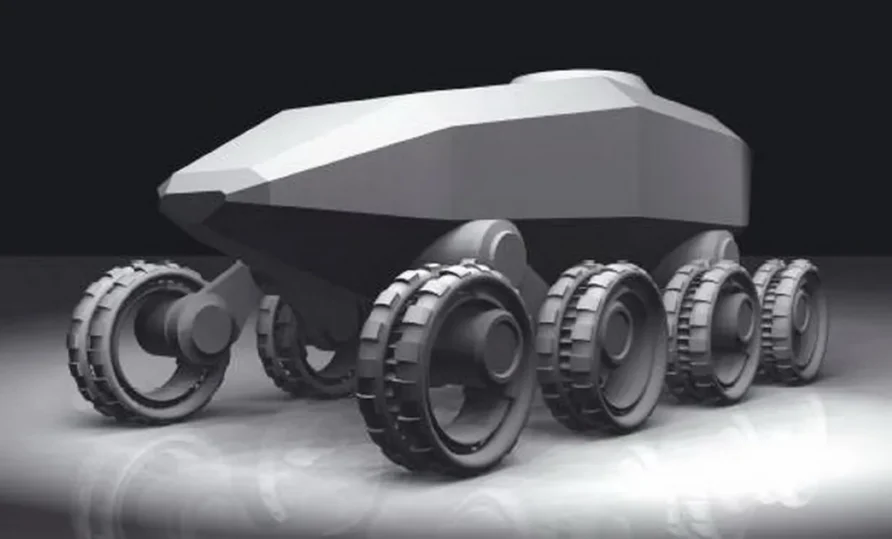
In the programme delivery details, the presentations appeared to reference the FRES weight split of Heavy, Recce and Utility
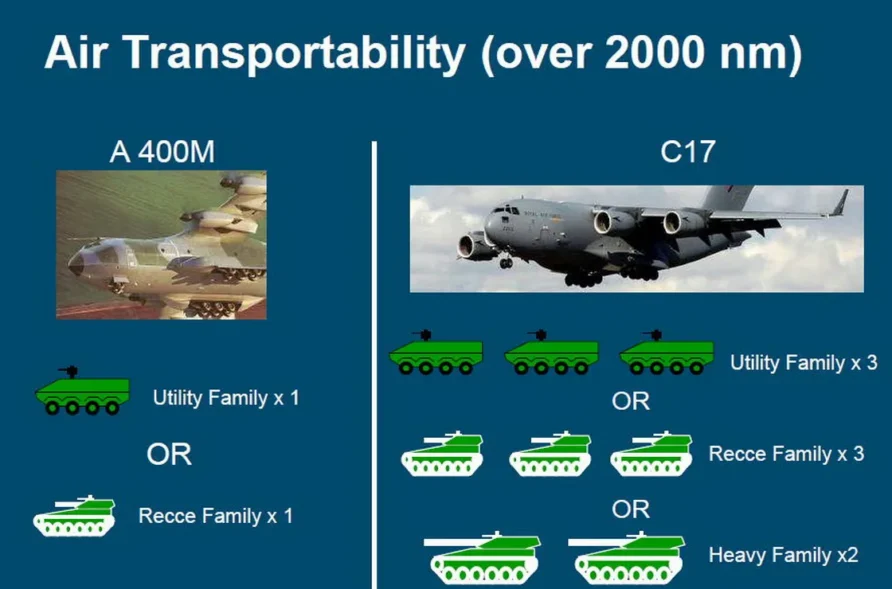
And similar early intervention concepts.
Two teams were selected, BAE and Innov8 (a team led by Thales)
There were six technical study subjects
Systems integration and Architecture
- Vetronics and Architectures requirements data collation
- Vetronics architecture technology review
- Electrical power generation, management and control requirements
- Man–Machine Interface (MMI) requirements
- Vetronics architecture definition
- Power system solution definition
- Software and middleware definition
Reduced Footprint and Burden
- Review logistics and supportability issues
- Identification of key drivers
- Guidelines for CV design
- Framework for assessment
- Technical solution review
Mission effects (Including lethality)
- Role capability/functionality review
- Technology review
- Subsystem Solution Analysis
- Definition of baseline and STR technologies
- Infrastructure requirements
Integrated Survivability
- Review current and future survivability technologies
- Burdens and infrastructure requirements
- Define candidate technologies and technology groups for the CV
- Define key concept design features; Platform layout and design, redundant systems, CBRN decontamination and Mine protection
Mobility
- Review of mobility requirements
- Review of current and future mobility technology
- Review of HED demonstrator and other hybrid electric drive activities
- Recommend and justify mobility concepts, including whether FPV CV Demonstrator is to be tracked or wheeled, suspension and running gear requirements, power and drive train
- Review of key risks and assessment criteria and define phase 2 risk reduction, analysis and trials requirements
System Concepts
- Identify total systems level requirements for the CV demonstrator
- Identify the total sub-system fit requirements
- Develop high-level concepts for the CV design
- Down select concepts
- Design of CV demonstrator
- Identification of key risks for CV build
In addition, Multidrive partnered with QinetiQ on their Hybrid Electric Drive (HED) demonstrator vehicle. Under the Applied Research Programme (ARP) contract, QinetiQ was to act as systems integrator for the design and build of a 6-wheel, 18-tonne technology demonstrator, with individual wheel control.
This would inform Future Protected Vehicle

The FPV Capability Vision vehicle was required to have the following characteristics:
- Weight: 30t (plus growth potential)
- Speed: 80kph, Road range 500km
- Ground pressure: 270kPa VLCI (equivalent to 200kPa MMP)
- Water crossing: ability to ford to depths of 1.4m
- Reconfigurable between roles: Lethal Effects, Recce, Troop Carrier, General Utility
- Survivability. Very High level of crew survivability across all scenarios
- All environment, all weather, day/night capability
- Low signature
- Modular vetronics infrastructure
- High-performance long travel active suspension with energy recovery (2m) –to enhance survivability and provide a stable high-speed weapons platform
- High voltage power system supporting weapons and protection systems
- Built in HUMS, diagnostics and automatic fall back modes
- Multifunction crew stations to share workload, embedded training
- High efficiency sub-systems
- Organic renewable energy power generation systems
Another set of BAE concepts included a family of vehicles called Pointer, Safeguard, Bearer, Raider, Atlas, Wraith and Charger.
Charger (top left) was a 30 tonne assault vehicle equipped with non-line-of-sight vertically launched missiles and an automatic loading mortar. It was designed specifically for breaking through walls and had a spaced armour concept that elevated armour panels using electro-magnets.
Wraith (top right), a low-signature scout vehicle for infiltration.

Raider (bottom left), a 2-tonne UGV for autonomous scouting and Bearer (bottom right) was a logistics vehicle that could be configured as an ambulance or command vehicle.
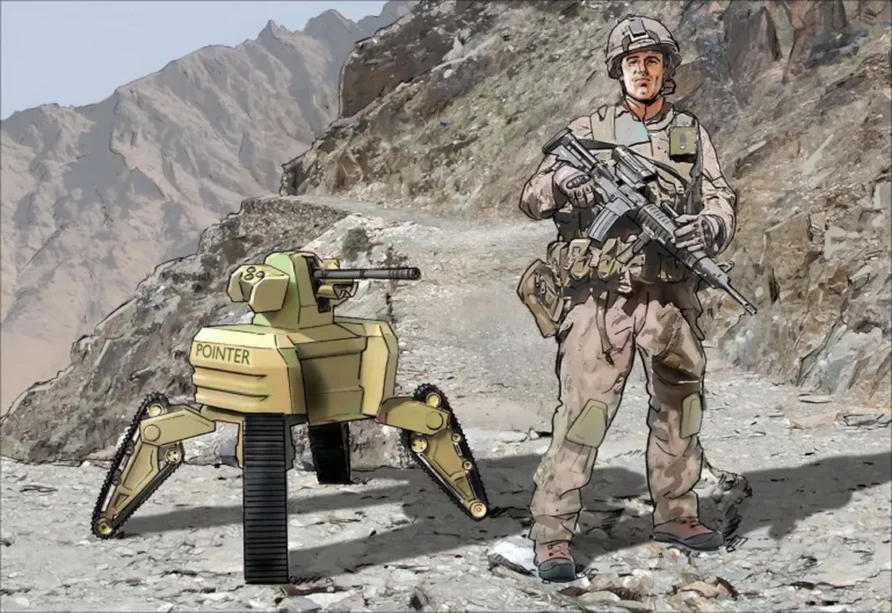
Pointer was a small Unmanned Ground Vehicle (UGV) that would provide various observation, reconnaissance and fire support for dismounted personnel in limited terrain, especially caves and urban areas. Powered by a fuel cell, it would have an endurance of 8 hours.
Safeguard was an armoured infantry carrier with integrated command systems, accommodating eight soldiers or UGVs and Atlas, a convoy system using drive-by-wire technology for teleoperated or autonomous resupply, minimising human risk.
The three main vehicle studies were
Land Apache, a 13-tonne lightweight, agile platform with advanced suspension and electric drive for high mobility. Equipped with long-range sensors, missiles, and networking capabilities to integrate with UAVs for intelligence gathering and threat neutralisation.

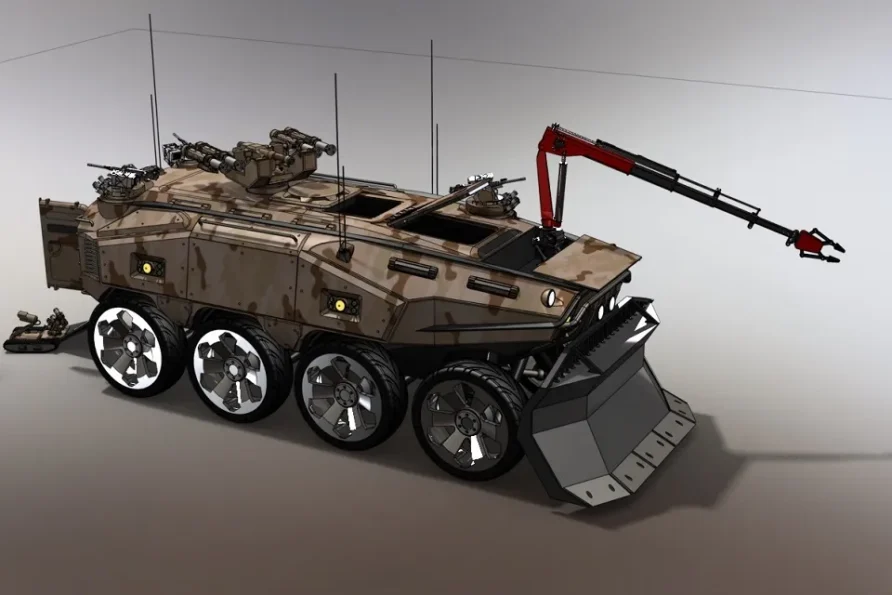
Urban Operations Vehicle, a 22-tonne medium-weight design optimised for complex urban environments. Features include multi-wheel steering, long-travel suspension, electric propulsion for enhanced agility, multiple sensors and weapon systems for 360-degree threat detection, active protection against short-range weapons like RPGs, and modular attachments such as a dozer blade or robotic arm for clearing obstacles.
Force Protection Unmanned Vehicle, a 2-tonne high-mobility UGV capable of speeds up to 80 km/h, configurable for reconnaissance, route proving, or perimeter defence with sophisticated countermeasure launchers.
In December 2010, BAE issued a press release detailing their progress on Future Capability Vision
“Armoured Vehicle Study Turns Sci-fi to Sci-fact”
FARNBOROUGH, UK – A vehicle which can “sweat” to improve stealth was among hundreds of ideas presented to the UK Ministry of Defence from a BAE Systems study designed to show them the future.
The Future Protected Vehicle programme aims to highlight both short and long-term technologies and concepts which can be used to boost the effectiveness of lightweight armoured vehicles.
The numbers give an idea of the scale of the programme: 567 technologies and 244 vehicle concepts were investigated following engagement with 35 organisations.
From this array of concepts, the team subsequently developed seven concept vehicles, each highlighting technologies which could support a particular specialisation. No fewer than 47 of the technologies were highlighted as being suitable for immediate pursuit.
The BAE Systems team made a point of gathering ideas from as wide a spectrum as possible, including academe and industry. A series of “Dragons’ Den*” style panels identified ideas for further study, funded out of the £2 million DSTL (Defence Science and Technology Laboratory) contract.
The team even engaged Shanklea Primary School near Newcastle where pupils were invited to participate in design classes to stimulate interest in engineering as a career.
The study was managed for the MoD by DSTL. Its land strategy lead John Hunt commented: “I was very impressed by the work. Not just by the outputs, but also the inclusivity with which the study was carried out and the robust systems engineering methodology underpinning it.”
“The ‘quick wins’ element was particularly pleasing as support to current operations is vital,” Hunt added.
Hisham Awad, who works on emerging technologies for BAE System’s Vehicles business, commented: “BAE Systems has signalled intent for future armoured vehicles programmes by bidding and winning the research contracts that enable bright ideas to become new innovative and highly capable vehicles.”
The team already has a contract extension to do further work and will bid for the next phase virtual prototyping work.
The seven concept vehicles were:
* Pointer: an agile robot which can take over dirty, dull or dangerous jobs, such as forward observation to support the dismounted soldier;
* Bearer: a modular platform which can carry a range of mission payloads, such as protected mobility, air defence and ambulance;
* Wraith: a low signature scout vehicle;
* Safeguard: an ultra-utility infantry carrier or command and control centre;
* Charger: a highly lethal and survivable reconfigurable attack vehicle;
* Raider: a remotely or autonomously controlled unmanned recce and skirmishing platform; and
* Atlas: a convoy system (retrofittable if necessary) which removes the driver from harm’s way.
Ideas identified for exploitation include:
* Sweating vehicle could use water from a diesel or fuel cell propulsion system to reduce a vehicle’s thermal signature by “sweating” it out through pores in the vehicle skin. That same water could also be reclaimed to enable soldiers to stay in the field for longer.
* eCamouflage will allow a vehicle to match its camouflage to its surroundings by using electronic ink – rather like a squid.
* Integrated biometrics will ease the workload on soldiers in complex crowd situation such as roadblocks and riots by running video surveillance through facial recognition and behaviour modelling software to spot potential troublemakers.
* Active protection will intercept incoming fire or disrupt targeting mechanisms while actuated spaced armour will allow a vehicle to deploy in “compact” mode before extending its armour to provide increased stand-off distance. A version of this is envisaged as employing electro-magnetic magnets to “float” above a vehicle to provide protection from aerial threats.
Quick wins using available technology include:
* Advanced oil filtration will remove water and tiny particles from engine oil to extend to the life of the engine and eliminate oil changes;
* Handheld target acquisition devices integrated into the vehicle architecture will improve flexibility and capability; and
* Thermo-electric power generation, which uses the temperature difference between the inside and outside of the exhaust pipe, offers better fuel efficiency, more electrical power and improved stealth.
“Dragons’ Den” is a BBC TV programme in which budding entrepreneurs bid for cash from venture capital “dragons” for their business ideas.
Follow on studies carried on until 2019.
If you found value in this article, help me keep Think Defence going.
If you found value in this article, help me keep Think Defence going.

Think Defence is a hobby, a serious hobby, but a hobby nonetheless. Hosting, security and other support software all adds up.
E-books and merch
Downloadable PDFs, and the Redbubble shop.
Amazon links in posts are affiliate. Firearm designs on Redbubble may be marked mature.
Thank you for reading, and for any support. It really is appreciated and helps me keep the show on the road.
