
 Doc Summary

Foxhound is a lightweight protected patrol vehicle (LPPV) in service with the British Army, designed for high mobility and blast resistance.
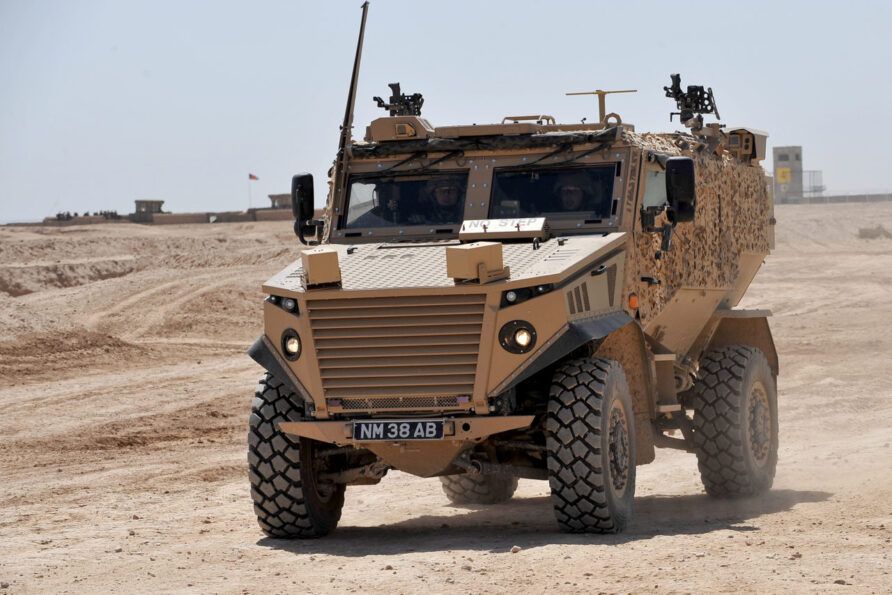
The Foxhound entered British Army service in 2012 as a replacement for the Snatch Land Rover, with an initial procurement of 300 vehicles, supplemented by an additional 25 in the same year, leading to a total fleet of approximately 400 by 2023.
Read more about the Light Protected Patrol Vehicle (LPPV) and the early development of Ocelot (renamed to Foxhound) at this link
Foxhound Post Introduction History #
The first Foxhound vehicles were deployed to Afghanistan in June 2012
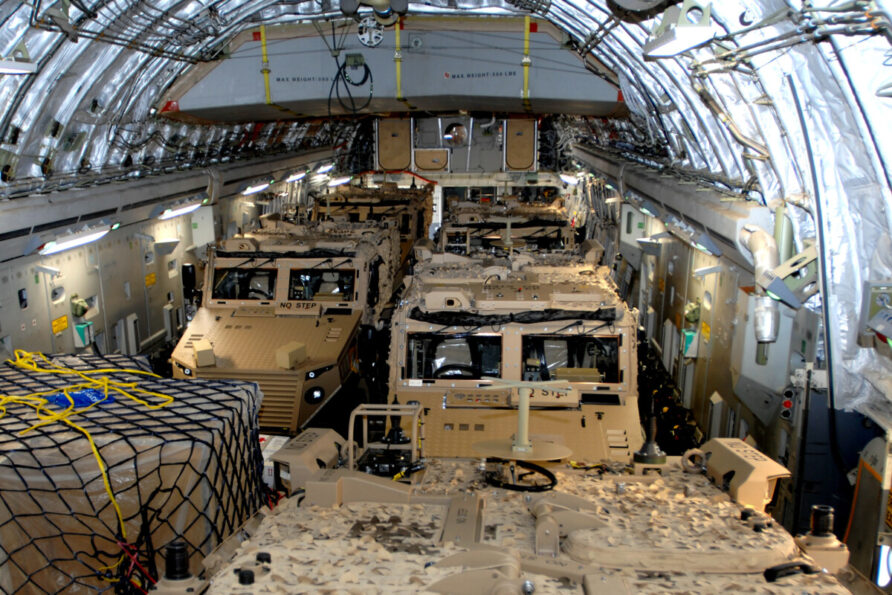
BFBS released a news report in the same month highlighting the new in theatre Foxhound.
Followed up with another a few months later.
General Dynamics also showed a cargo carrying variant of Foxhound at the Defence Vehicle Dynamics exhibition in June 2012
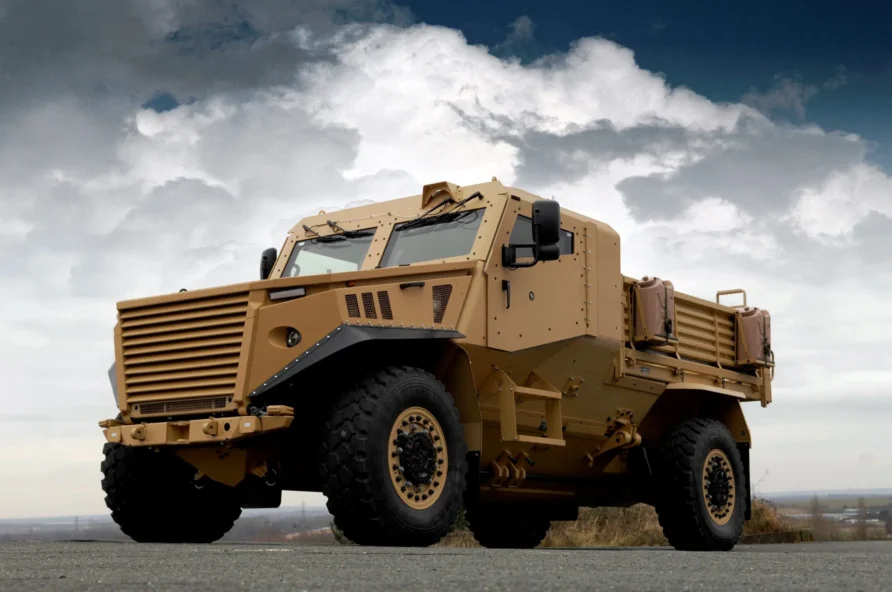
General Dynamics contracted production of the 100 vehicle order to Ricardo in June 2012.
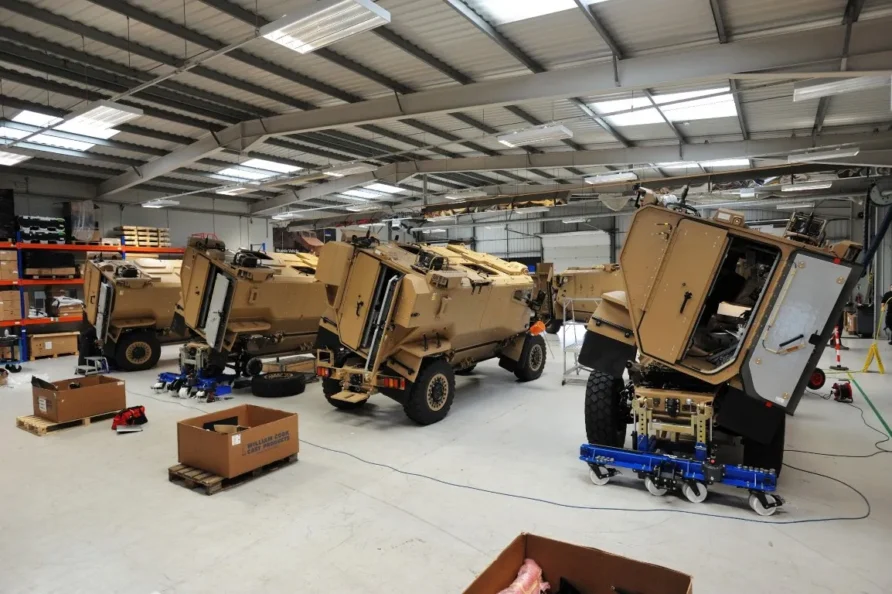
Another 25 Foxhound vehicles were ordered by the MoD in August 2012.
The MOD made an initial order for 200 Foxhound vehicles in November 2010 and a further 100 were requested late last year as part of a £400m package. The latest 25 will be in addition to this at a cost of £30m.
In November 2012, General Dynamics released details of an uncrewed variant of Foxhound/Ocelot for use in Counter IED operations.
In the same month, the MoD announced an order for additional 51 Foxhound vehicles
The MOD is investing £46 million in acquiring 51 new Foxhound patrol vehicles for soldiers serving on the front line in Afghanistan
Foxhounds were repainted in ‘Army Green’, starting in mid 2013
The MoD announced a further 24Foxhound vehicle order in September 2013, with additional contract awards from General Dynamics to Ricardo for production
As part of the Army 2020 restructuring, some infantry battalions such as 1 Royal Irish converted to Light Protected Mobility, with Foxhound, starting in 2014.
The British Army and Royal Air Force continued to use Foxhound as part of Op TORAL after major combat operations in Afghanistan had ceased.
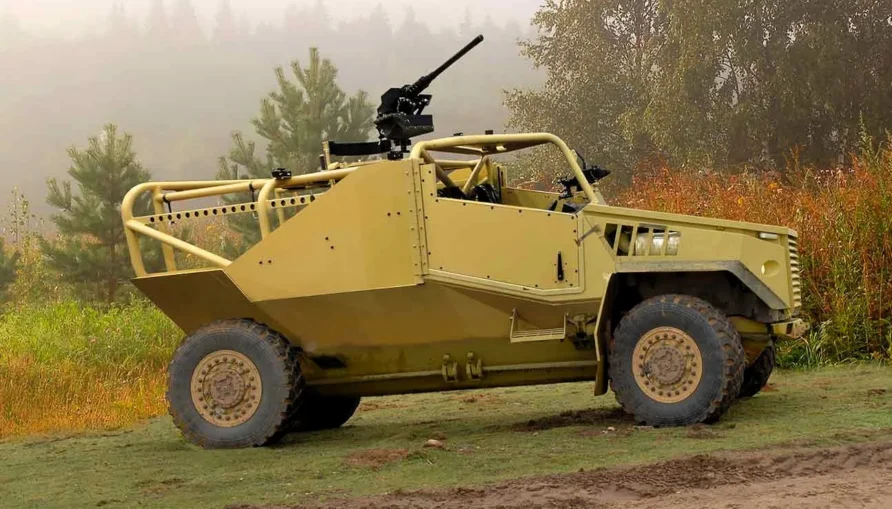
At DVD in 2016, General Dynamics showed the WMIK, or weapons carrier variant.
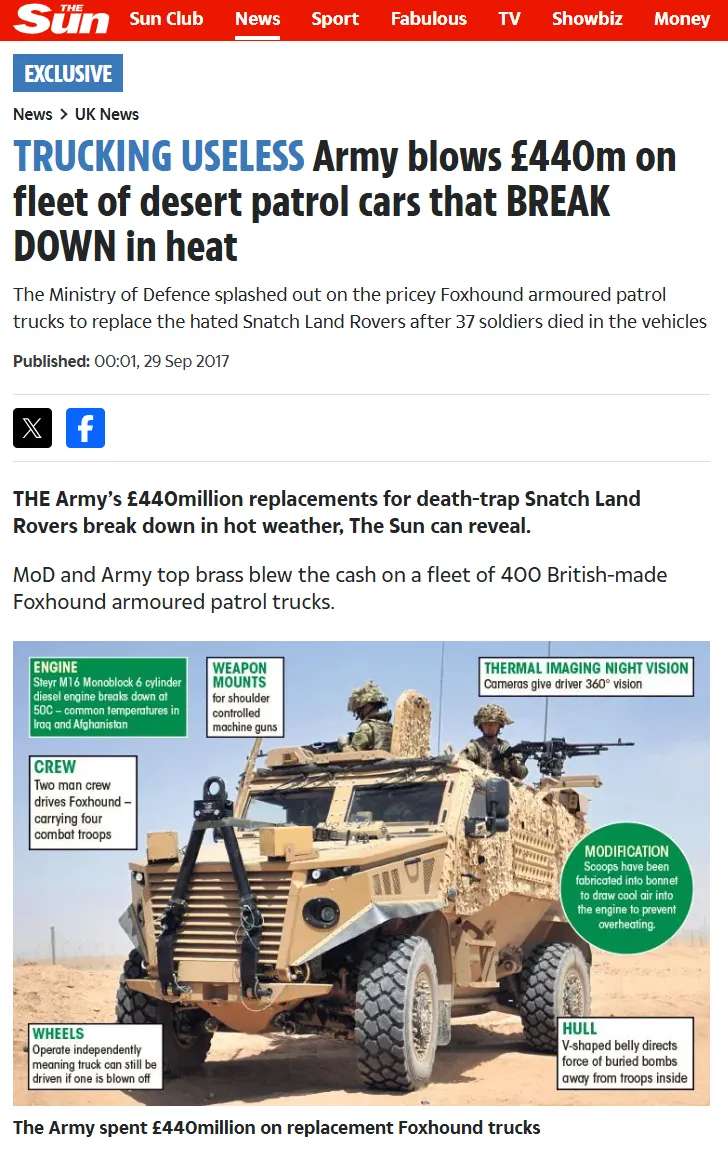
Media outlets such as the BBC and Sun newspaper reported ongoing reliability issues with Afghanistan due to overheating in 2017.
Armoured vehicles designed to protect British troops from roadside bombs keep breaking down, the BBC understands.
Foxhounds – first deployed in 2012 – were designed to safeguard soldiers in a blast and operate in hot conditions. An Army sergeant in Iraq, responsible for maintaining a fleet of seven Foxhounds, told the BBC the vehicle was “a massive waste of money”.
The Ministry of Defence said Foxhound had dealt with “demanding conditions in Iraq” and was “keeping soldiers safe”. But troops say there are serious problems with their reliability. The Army sergeant, who did not want to be named, said the vehicles keep overheating.
“They break down all the time. They cannot handle the heat, they have a massive problem with it. “At 50 degrees the engine cooks out.” He said he was having to strip the vehicles down every five or six weeks to keep them running. Normally, this would only be done twice a year.
The soldier said he had had to alter the bonnets to try to increase the air supply to cool down the engines. Tools were not provided to deal with this so he bought his own specialist equipment, he said.
But an Army source later disputed that claim.
Defence sources did not dispute there had been reliability issues.
The Sun was more direct.
The PMETS (Protected Mobility Engineering & Technical Support) contract was let to NP Aerospace in 2019, including Foxhound.
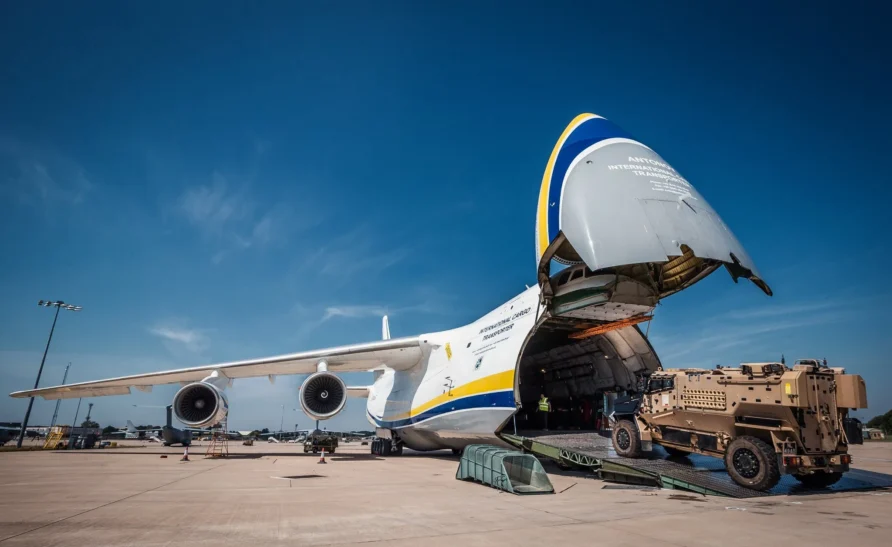
Foxhound was deployed to Bosnia and Herzegovina under Operation Althea in 2019 and 2020, after vehicle upgrades as part of conversion to the Public Order Vehicle (POV) variant.
The vehicles were delivered to theatre using an Antonov AN-124.
NP Aerospace awarded a contract to General Dynamics in September 2020 to demonstrate an electric drive version of Foxhound.
The contract will enable General Dynamics Land Systems–UK to demonstrate an innovative e-drive solution for Foxhound, which is intended to deliver:
- silent mobility
- enhanced Silent Watch capabilities
- off-board electrical power for light infantry soldiers
- increased onboard power for the insertion of the latest technologies
General Dynamics Land Systems–UK is partner vehicle OEM for Foxhound and Magtec is the electric drive and battery technology partner
The £3 million Technology Demonstrator 6 (TD6) project also included a Supacat Jackal.
Op TORAL drew to close in June 2021, with Foxhound vehicles being transported back to the UK.
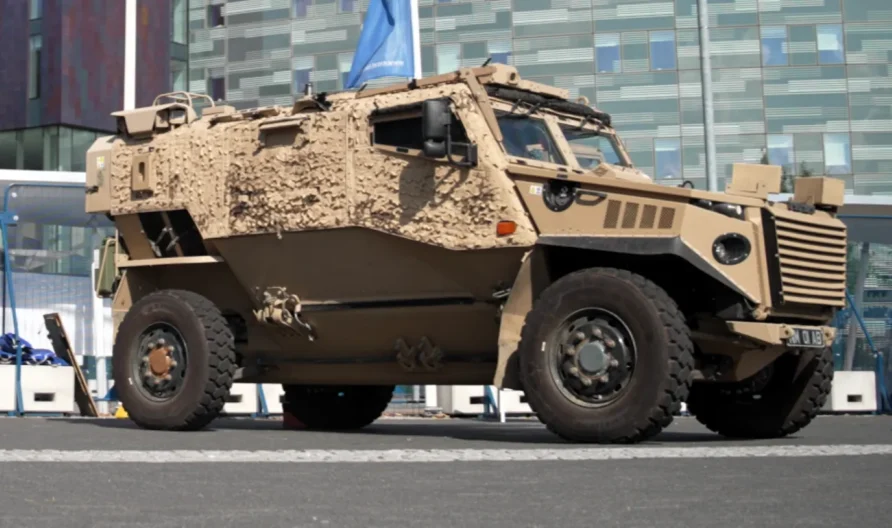
Also in 2022, the Armoured Trials and Development Unit (ATDU) tested Foxhound with a number of different vinyl wraps to test the effectiveness of different camouflage patterns.
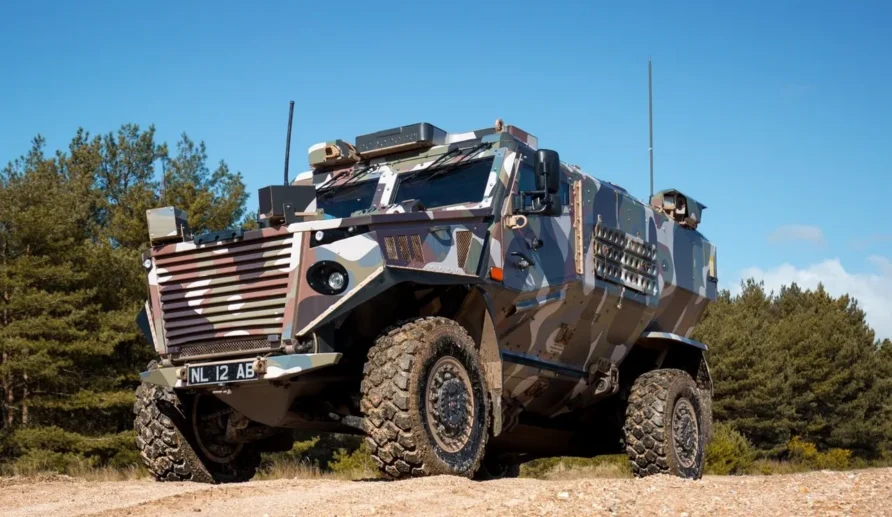
In 2023, Foxhound was integrated with 7 Light Mechanised Brigade as part of NATO’s Very High Readiness Joint Task Force (VJTF), providing protected mobility in Eastern Europe
The Command Post variant was announced in November 2023, with up to 50 being converted from existing stock.
The £19.76 million contract was awarded to General Dynamics and involved fitting enhanced high-frequency (HF), very-high-frequency (VHF), and ultra-high-frequency (UHF) radio equipment and Bowman data terminals.
In November 2024, General Dynamics showcased an improved Foxhound at the Defence Vehicle Dynamics show. The vehicle was in the General Multi-Role Vehicle (GMRV) variant configuration with an open load bed to the rear, and prominent helicopter sling attachment points.
Another vehicle was in the Command and Control (C2V) variant.
A Mk2 development proposal was also announced, equipped with a Ford 3 Litre V6 diesel, alongside an engineering development project to explore hybrid propulsion.
At the DSEi exhibition in September 2025, a Foxhound was displayed with a Moog RIwP turret, extended crew cab, and 10-tonne gross vehicle weight uplift.
Foxhound Details #
The basic Foxhound features an innovative modular system.
Chassis #
The chassis is a protected “skateboard” platform with an armoured V-hull spine containing the engine, transmission, fuel tanks, batteries, and generator.
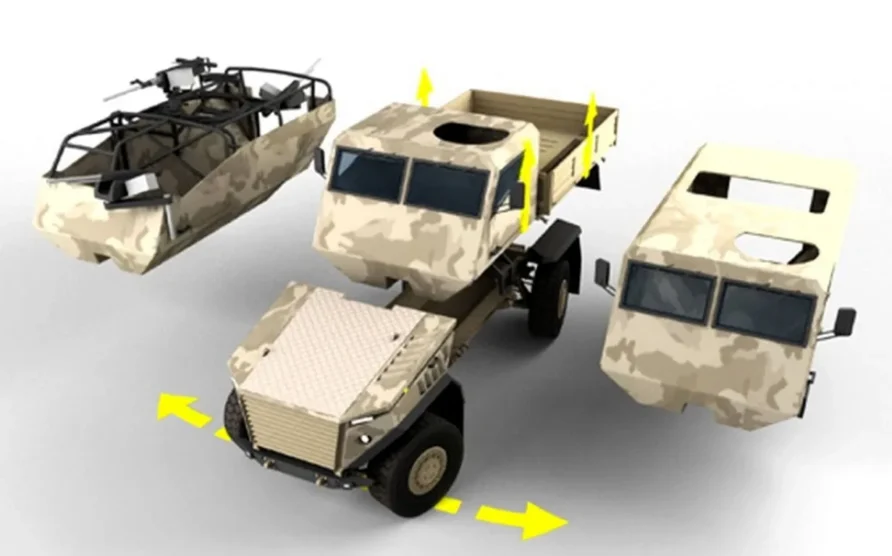
Mission pods are constructed from lightweight composite materials (although steel have also been proposed to reduce costs), secured via a quick-release system and can be swapped in approximately 30 minutes.
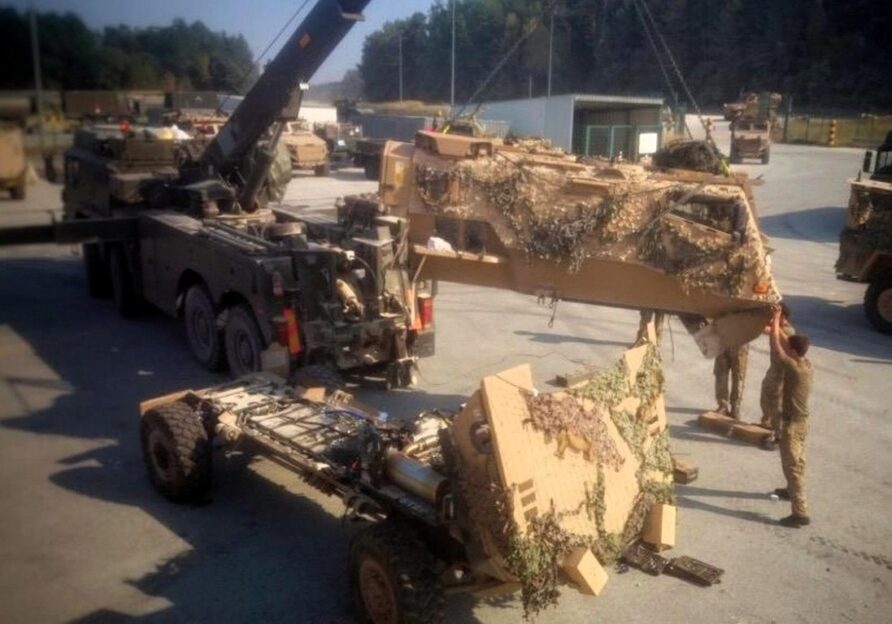
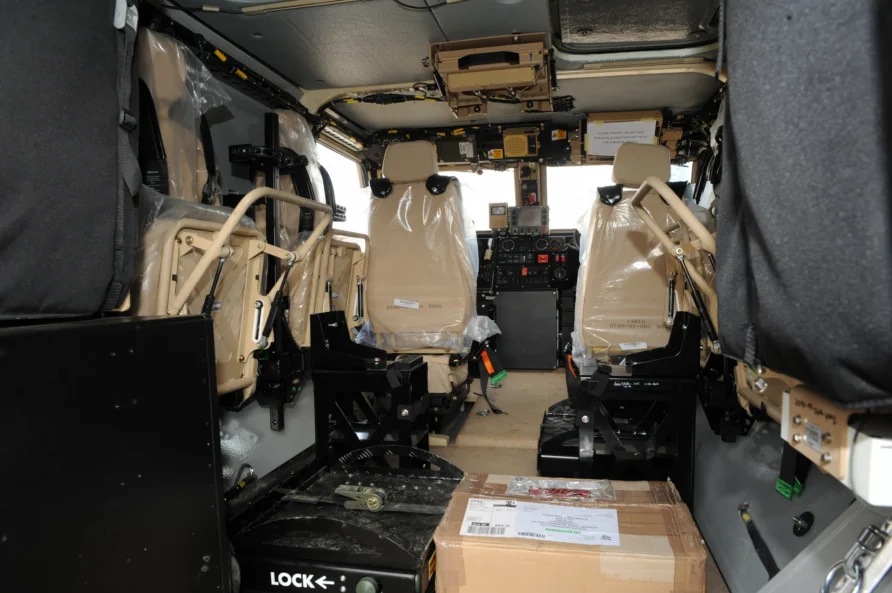
The design ensures no mechanical components penetrate the crew compartment, maximising internal space and blast protection.
Pods can be tilted for maintenance access.
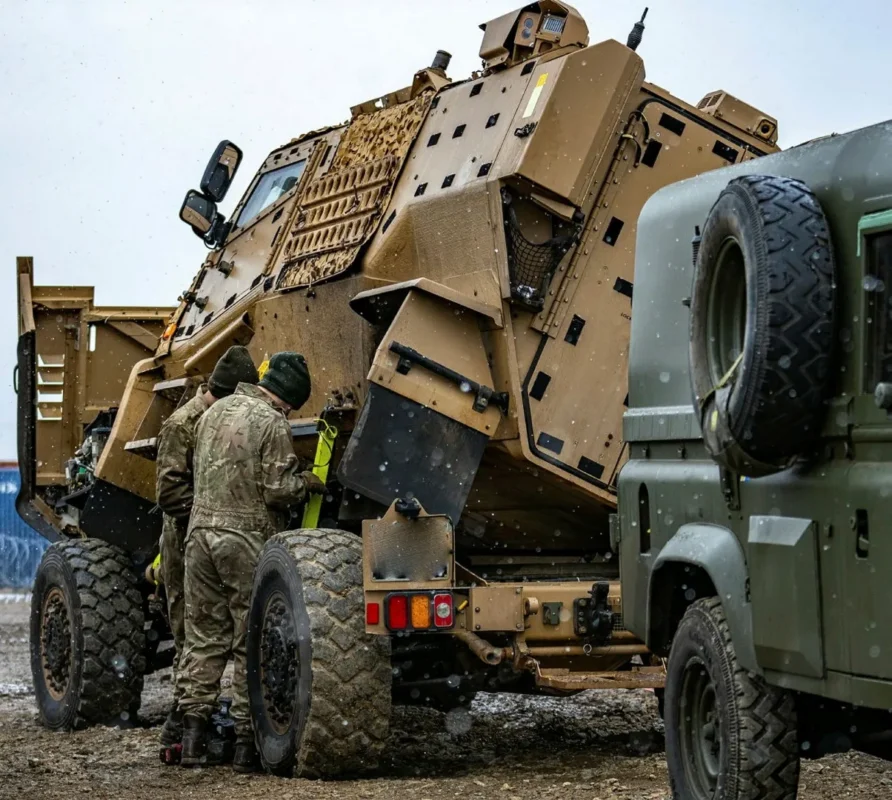
Protection #
Baseline ballistic protection meets STANAG 4569 Level 2, with mine/IED resistance at least Level 2a/2b (likely exceeding this in operational configurations).
Seats feature five-point harnesses and suspended seats mitigate shock transmission.
The V-hull deflects blast energy outwards, and torsion bar suspension (unusual on a vehicle of this size) are external to preserve pod integrity in the event of a mine or IED explosion.
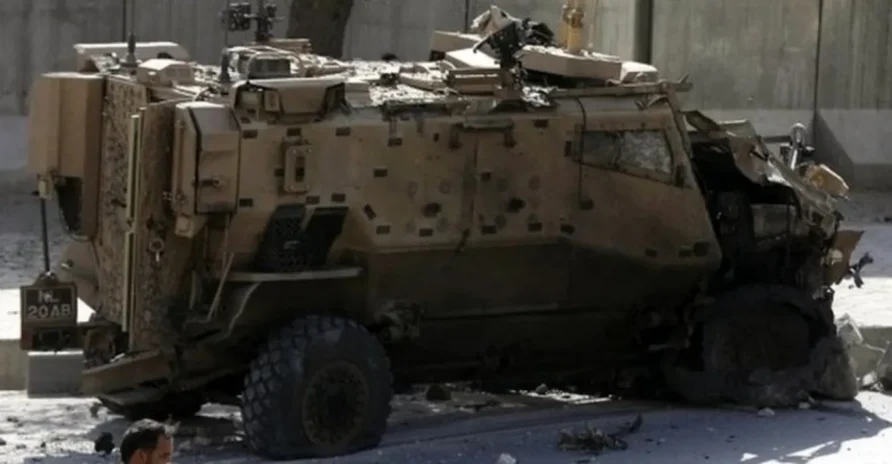
Foxhound is fitted with the Halo light system from Aeroglow.
Mobility #
Independent locking differentials, four-wheel steering (yielding a 12-metre turning circle), and a central tyre inflation system (CTIS) enable operation on varied terrain.
This small turning circle was a key user requirement and because of the v shaped hull, necessitated four wheel steering to achieve. Anecdotal online comments suggest the four wheel steering system has caused reliability issues.
The vehicle can continue movement on three wheels if one is damaged by a mine.
Electronics #
Foxhound was the first British Army Generic Vehicle Architecture (GVA) Def Stan 23-09 compliant vehicle
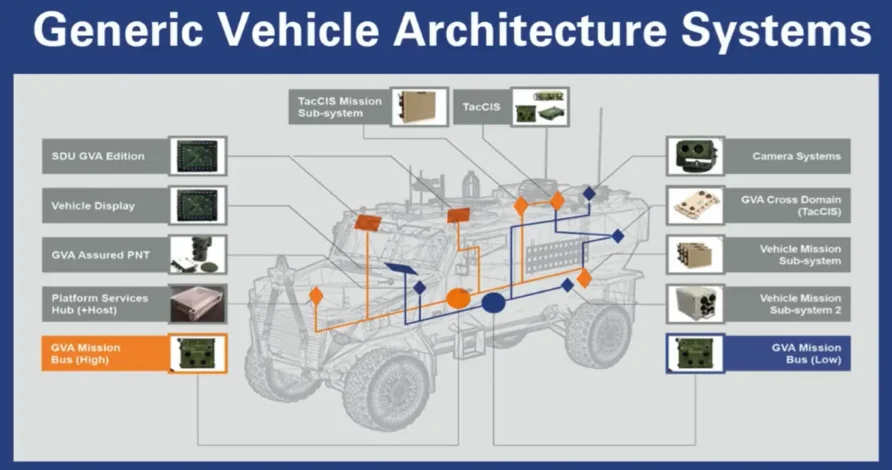
This incorporated Data Distribution Service (DDS) middleware for modular electronics integration and includes situational awareness cameras, crew displays and optional remote weapon stations (RWS).
Data Table #
| Category | Specification |
|---|---|
| Dimensions | Length: 5.32m–5.4 m Width: 2.1 m Height: 2.34m–2.35 m Wheelbase: 3.66 m |
| Weights | Gross Vehicle Weight (GVW): 7.5–8.5 tonnes Kerb Weight: 5.5 tonnes Payload: 2 tonnes |
| Crew Capacity | 2 (driver + commander) + 4 personnel |
| Powertrain | Engine: Steyr M16-Monoblock 3.2-litre inline six-cylinder turbocharged diesel Power: >200 hp (148–202 kW) Torque: ~600 Nm Transmission: ZF 6HP28 six-speed automatic Fuel capacity ~200 litres for 600 km range. |
| Performance | Maximum Speed: 110–112 km/h Acceleration: 0–80 km/h in 19.7 seconds Gradient: 60% Side Slope: 30% |
| Suspension and Tyres | Independent torsion bar with telescopic shock absorbers Tyres: 335/80 R20 run-flat with CTIS |
| Armament | Optional: 7.62 mm GPMG on pintle or RWS |
Foxhound Variants #
The basic patrol variant features a crew of 2 plus 4 personnel.
One of the earliest proposed variants was a Weapons Mount Installation Kit (WMIK), although this has not entered service.
Another variant not in service, and shown early in the Foxhound post-production period, was a cargo version with a Marshal load bed and hydraulic loader job.
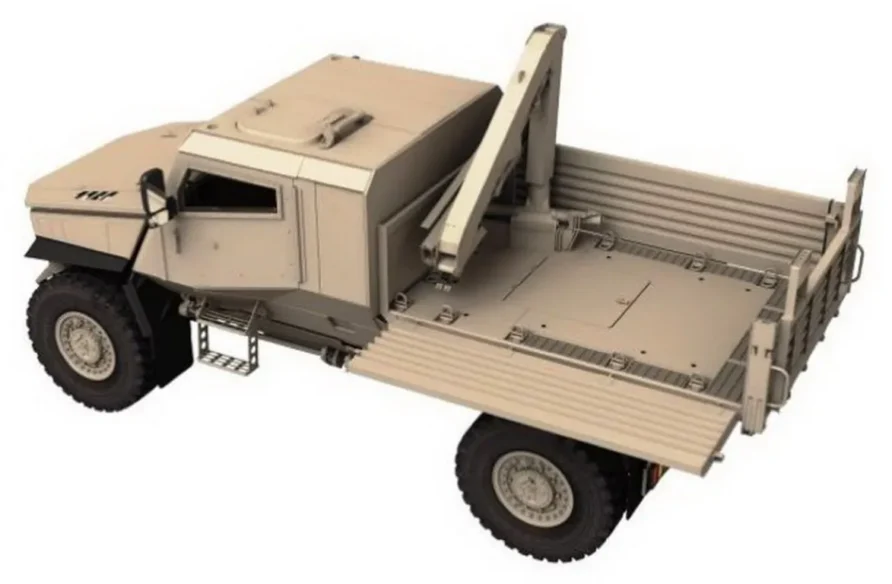
General Dynamics developed this variant.
This appears to have evolved more recently, with prominent lifting lugs, a shorter load bed and a RWS.
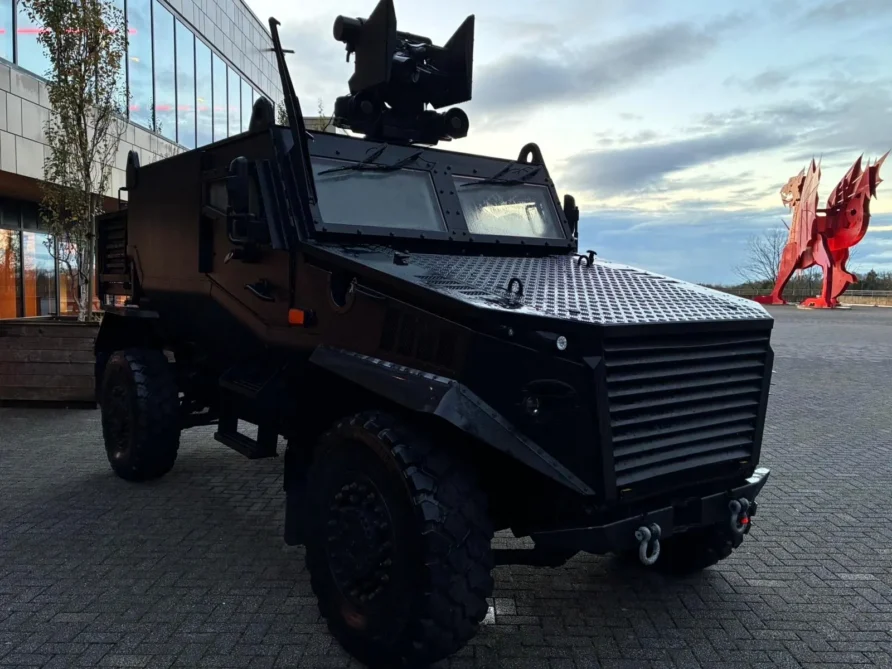
General Dynamics have designated this the General Multi-Role Vehicle (GMRV) variant.
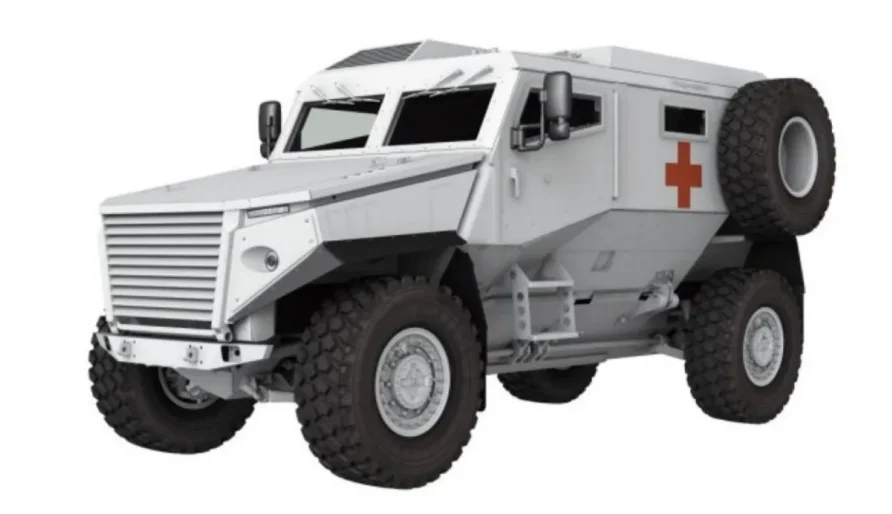
An ambulance version was another early concept
As have stretched versions, either with our without an additional axle.
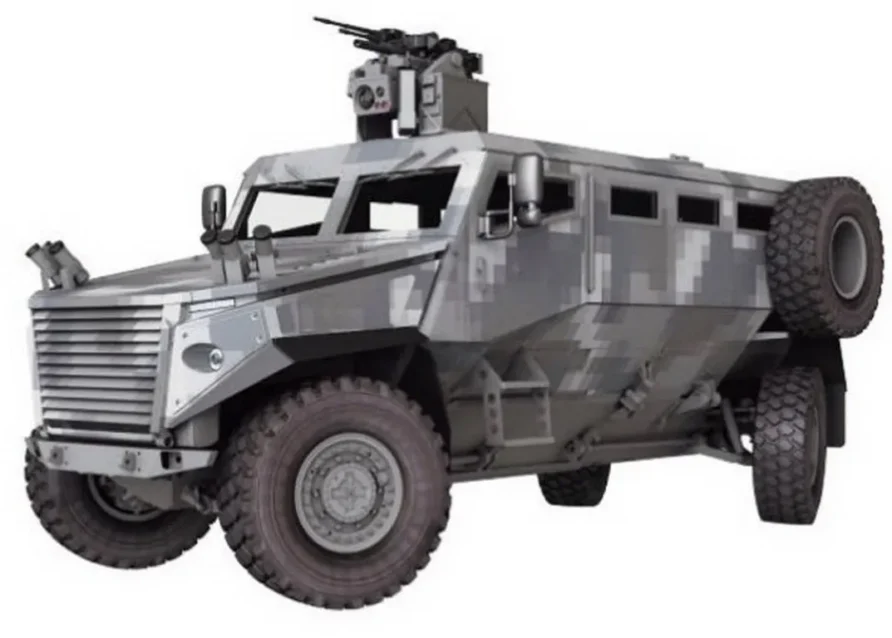
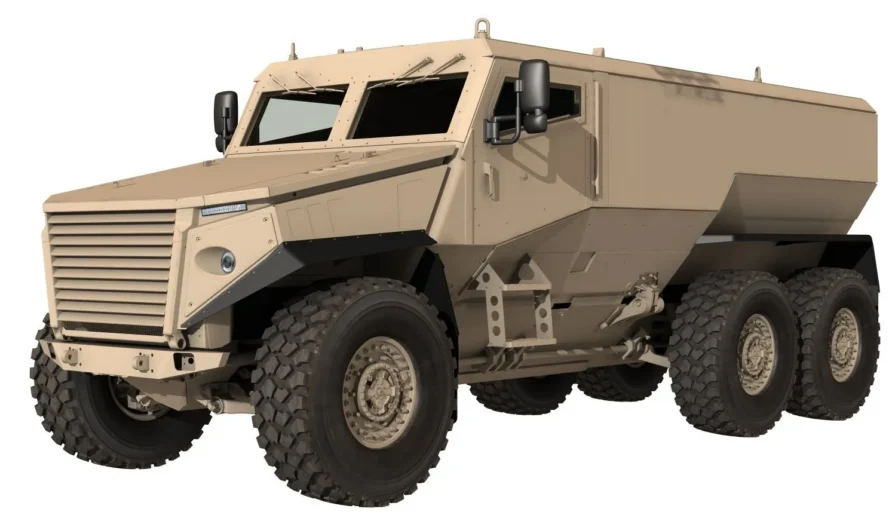
The Command (sometimes referred to as Enhanced Communication) variant described above has additional electrical and radio systems.
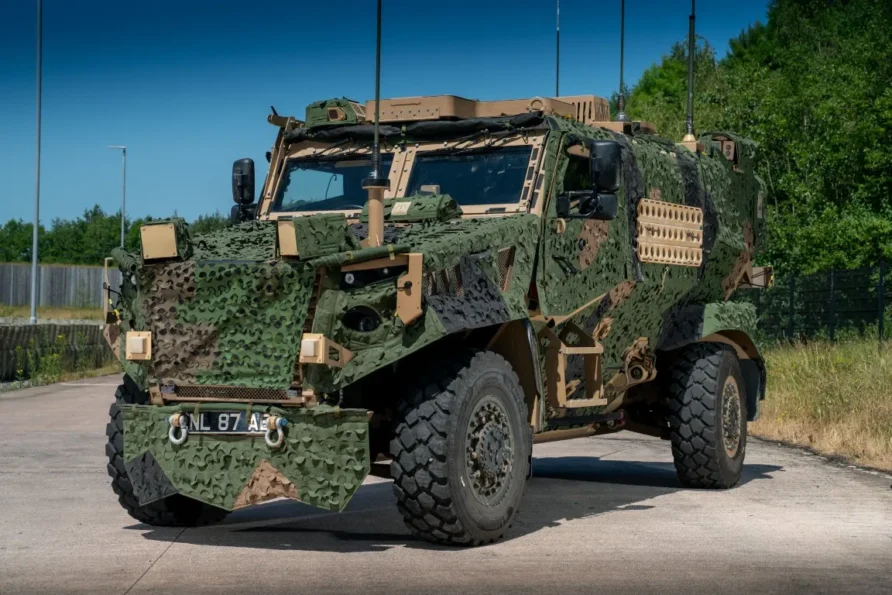
The front wing mounted antenna holder is a good recognition feature for this variant.
With additional protection, the Public Order Variant is shown below
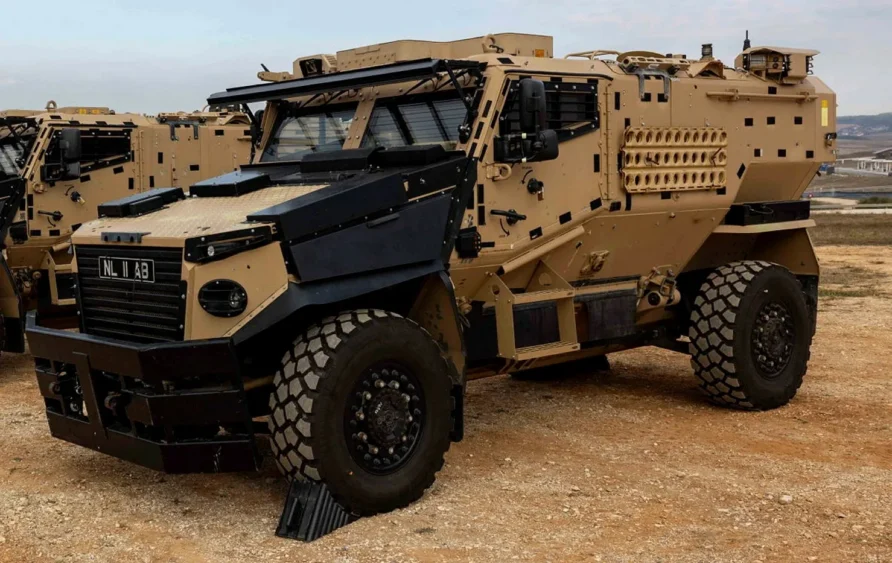
Only completed as an engineering project, the Hybrid Foxhound retains the existing engine but replaces the transmission with a battery system and in wheel hub drives.
The 60 kWh battery system supported up to 2 hours drive time.
A Protected Joint Fires variant has been developed, equipped with an elevating sensor.
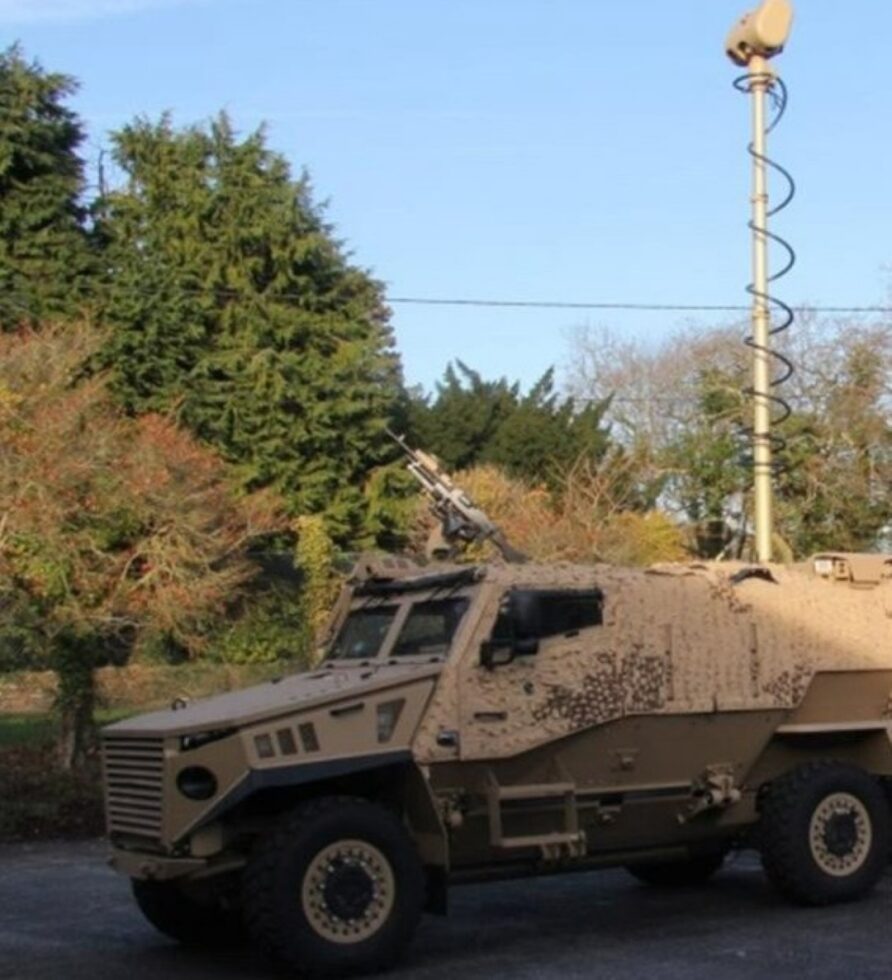
More recently, General Dynamics and Moog have showcased a weapons carrier variant equipped with a Moog Reconfigurable Integrated-weapons Platform (RIwP).
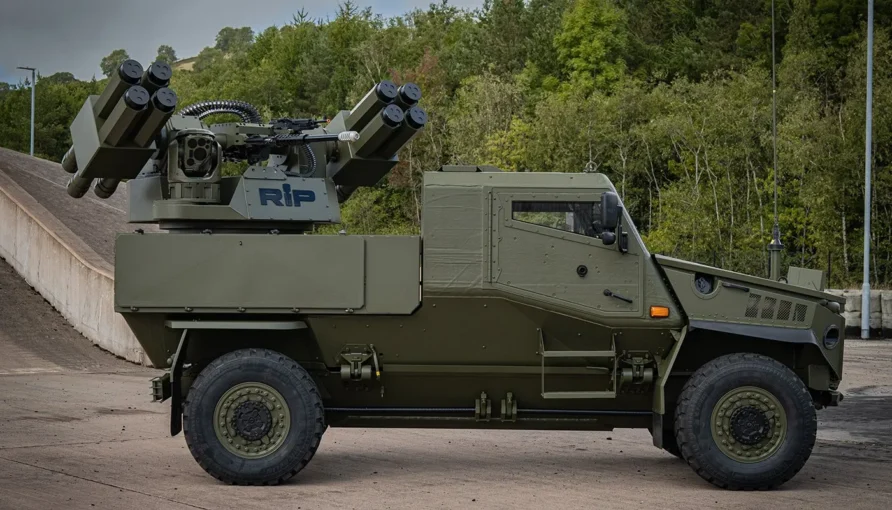
The configuration included a sensor system, M230 30×113 mm automatic cannon, a 7.62 mm machine gun, and up to 8 Starstreak HVM or Martlet missiles.
Moog has also suggested that Brimstone could be fitted, so the same basic vehicle, depending on missile fit, could provide both short range air defence and mounted close combat overwatch.
If you found value in this article, help me keep Think Defence going.
Think Defence is a hobby, a serious hobby, but a hobby nonetheless. I have removed those annoying adverts, but hosting fees, software subscriptions and other services add up.
To help me keep the show on the road, I ask that you support the site in any way you can. It is hugely appreciated.
You can click on an affiliate link, Buy Me a Coffee at https://ko-fi.com/thinkdefence, download an e-book at https://payhip.com/thinkdefence or even get some TD merch at https://www.redbubble.com/people/source360/
Youtubers, if you are going to lift content from here, the decent thing to do would credit me


