
 Doc Summary

The Alvis Saladin (FV601) was a British 6×6 wheeled armoured car of the Cold War period.
Developed from the late 1940s as part of the modular FV600 series, which shared its chassis and drivetrain with vehicles including the FV603 Saracen Armoured Personnel Carrier (APC), Saladin entered operational service with the British Army in 1959.
Armed with a 76 mm low-pressure gun, Saladin achieved export success and combat effectiveness in theatres ranging from the Aden Emergency to the Dhofar Rebellion.
Development of the Alvis Saladin (1946 to 1958) #
The British Army had long relied primarily on wheeled armoured fighting vehicles (AFVs) in the reconnaissance role.
From late 1944, light and medium tanks began to be incorporated into the reconnaissance troops of armoured regiments. Reconnaissance units used a wide range of armoured cars and scout cars, including many improvised wartime designs of limited effectiveness.
Armoured car regiments continued to operate in locations such as Palestine (until 1948), Libya, Egypt, and Malaya, as well as with the British Army of the Rhine in Germany.
The main vehicles in use were Daimler armoured and scout cars, and the AEC Mk III, armed with a 75 mm gun, in the support troops. American Staghounds and Humber armoured cars were phased out in the late 1940s, though Humber scout cars were issued to Divisional Reconnaissance Regiments until 1952.
Apart from a few six-wheeled Lanchester and Crossley vehicles, British Army armoured cars were all of a four-wheeled configuration.
Despite this, the superior performance of six and eight-wheeled vehicles was recognised, and the General Staff Operational Requirement (GSOR) was issued in January 1946, it specified an improvement in performance over the Daimler
This would eventually lead to the Saracen and Saladin.
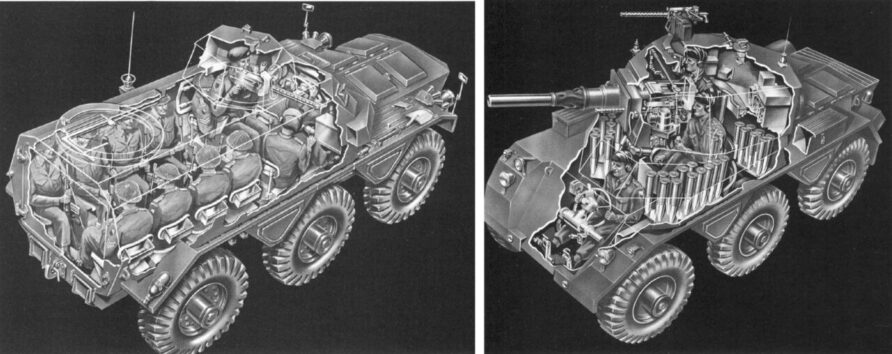
The British Army rejected further development of the two-axle Coventry armoured vehicle and retained in service the Daimler MkII and AEC Mk III until a new vehicle could be introduced.
With this in mind, work started on defining a requirement for a high mobility wheeled fighting vehicle design that could operate in all environments and offer a high degree of commonality between variants.
One of the first issues to resolve was the number of axles; a two-axle design was discounted because of mobility and weight-carrying concerns, and an eight-wheel design was discounted because of the weight and complexity.
A 6×6 design was ultimately thought to be the best compromise.
The US T19 (based on the T18E1), the T28 and T66 were all examined and generally considered to be a good series of general design concepts to emulate, especially the T28 with its independent suspension, although there is no direct link.

The requirement envisaged a 3 or 4-man crew, 6×6 vehicle armed with an improved version of the 40mm mm 2 Pounder as used on the AEC, Daimler, Coventry and Marmon-Herrington armoured cars.
High reverse speed, ease of servicing, mobility and vision were also key elements of the requirement.
Protection was defined as the ability to withstand 7.93 mm Armour Piercing from all angles, 25 Pounder (equivalent) shell splinters at 9m and a 9 kg mine under any wheel, close to Level IIIa in today’s standard, STANAG 4569.
The image below shows an early wooden mock-up, produced by the newly renamed Fighting Vehicle Research and Development Establishment (FVRDE) with the 2 Pounder.
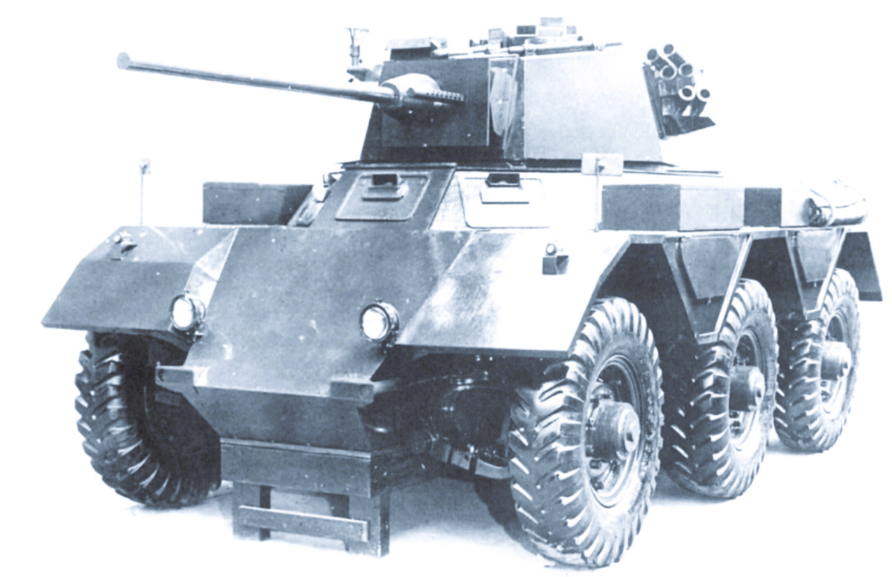
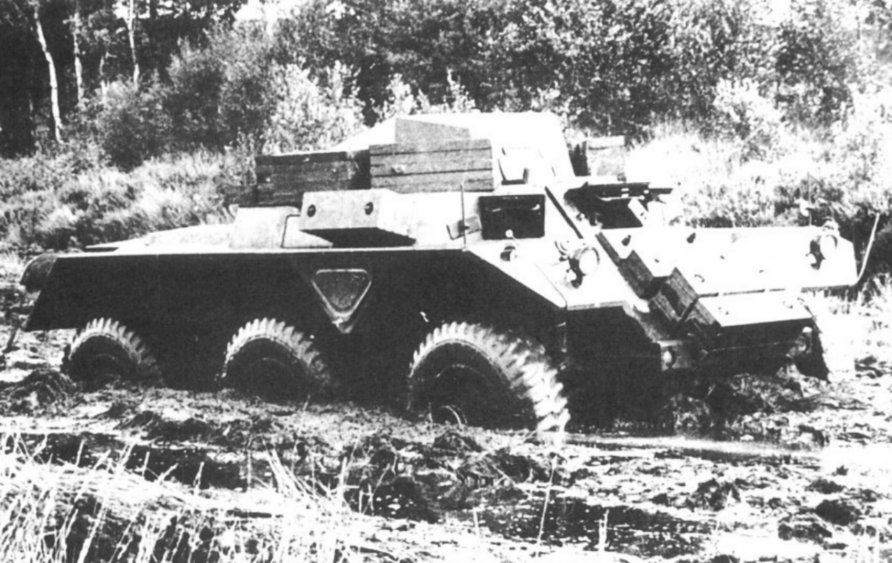
A contract was placed with Alvis in 1947 for the production of two prototypes of the FV601, one of which was subcontracted to Crossley Motors.
The image below shows chassis testing with weights in place of the turret.
Doubts about the specification began to set in almost as soon as Alvis had started work, specifically in relation to the main armament.
The weight of Saladin rose slightly during later versions of the initial concept development work, creating an opportunity for using an emerging concept in standardised military engines; the Rolls-Royce B series.
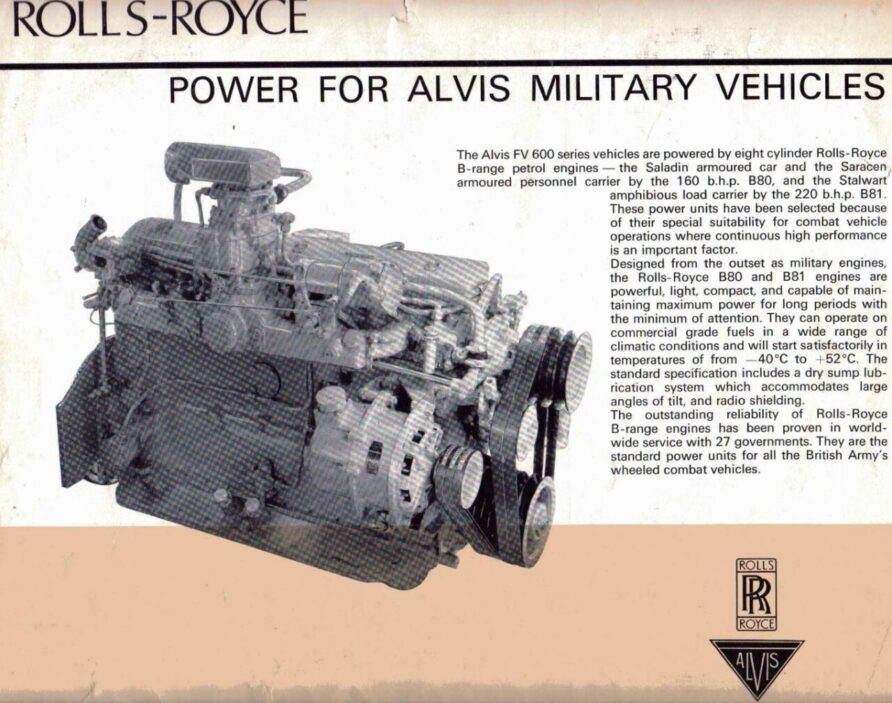
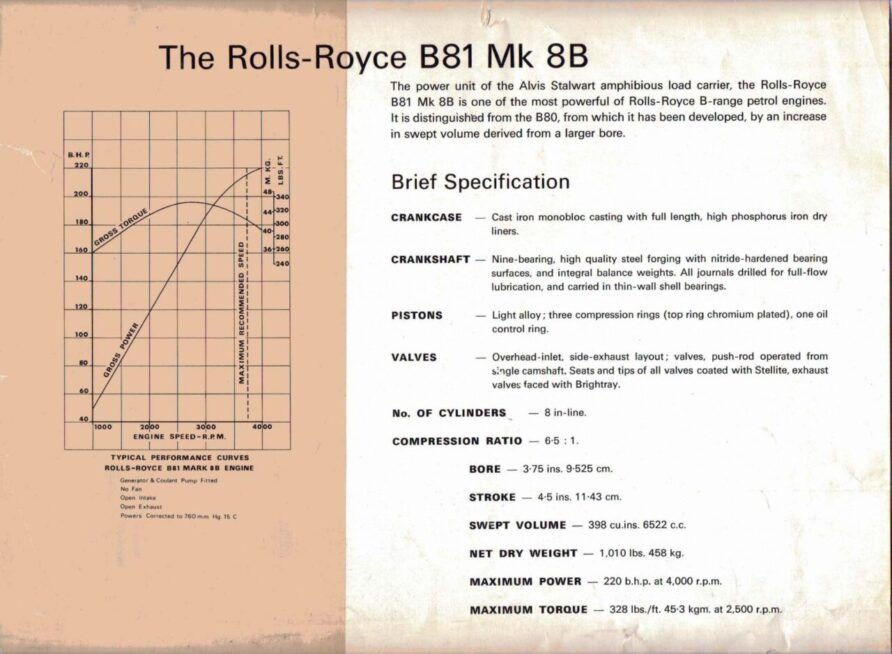
This standardised engine series design also meant the elimination of different thread types and the resultant need for two sets of tools and fastenings.
After much back and forth, the Armaments Design Establishment (ADE) decided to develop a brand-new gun specifically for the vehicle; the 76 mm L5A1.
This larger gun displaced the third crew member from the earlier turret design.
Saladin could be reasonably described as being built around two components;
- The Rolls-Royce B Series Engine
- The L5A1 76 mm Gun
Other requirement changes resulted in modifications to the turret layout, along with more delays.
Saladin was intended to carry out the following tasks.
- Reconnaissance including advance-to-contact battle reporting, observation and surveillance, and rapid forward recce
- Delaying action in withdrawal
- Flank guards
- Anti-airborne and anti-helicopter borne operations
- Independent raids and deep penetration tasks
- Escorting unprotected columns
- Exploiting a gap in the advance
- Internal security; mobile patrols, anti-arms smuggling patrols, roadblocks, escorts for convoys, IS operations, peace-keeping duties, national, international, NATO, etc., and communication tasks.
- Counter-insurgency tasks; armoured close support of infantry, and fire support when artillery is not available or unable to get into action.
During the development phase, Saracen was prioritised over Saladin to provide protected mobility vehicles for Malaya.
The image below encapsulates this, leading the patrol is a Daimler Armoured Car, not a Saladin.
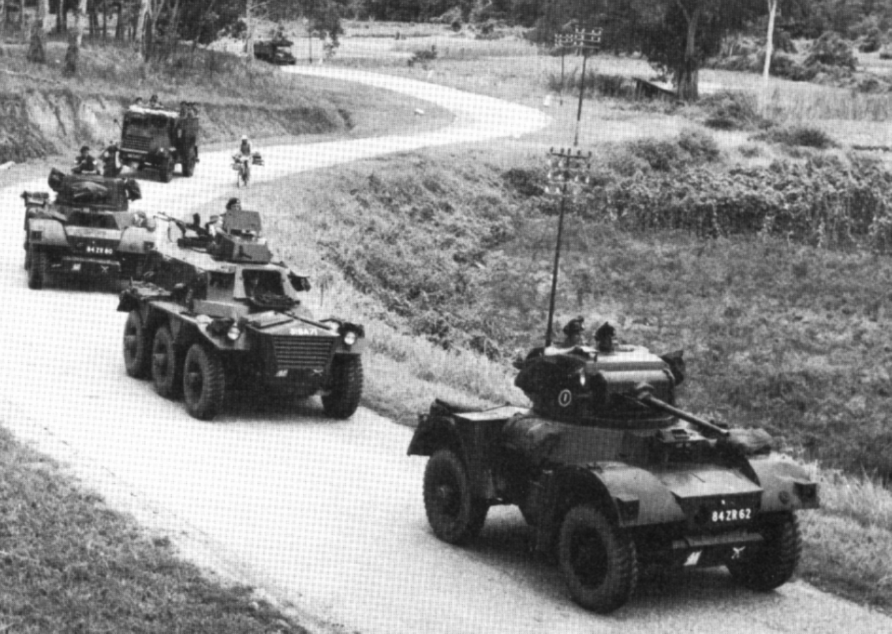
By the mid-fifties, Malaya had been stabilised to a point where the large numbers of Saracens originally envisaged were no longer required and the focus shifted back to Saladin.
Alvis Saladin Production (1958 to 1972) #
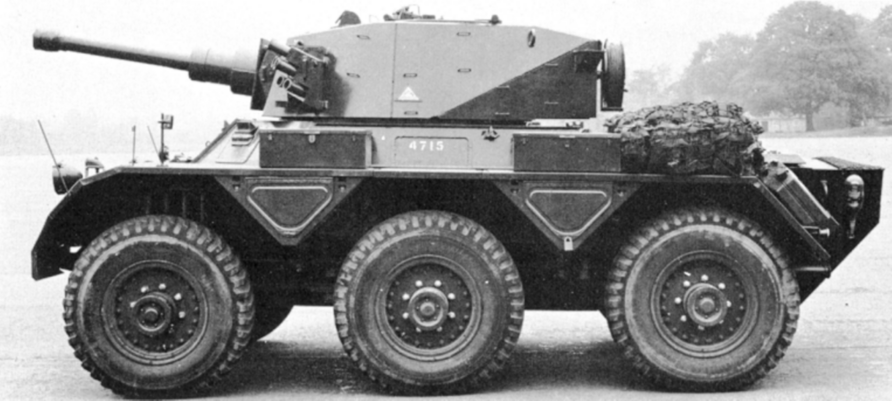
Production of the Saracen was then slowed to allow export production orders to catch up.
It wasn’t until 1958 that the FV601C Saladin Mk2 entered production, 13 years after the initial requirement was defined, and the design work had started.
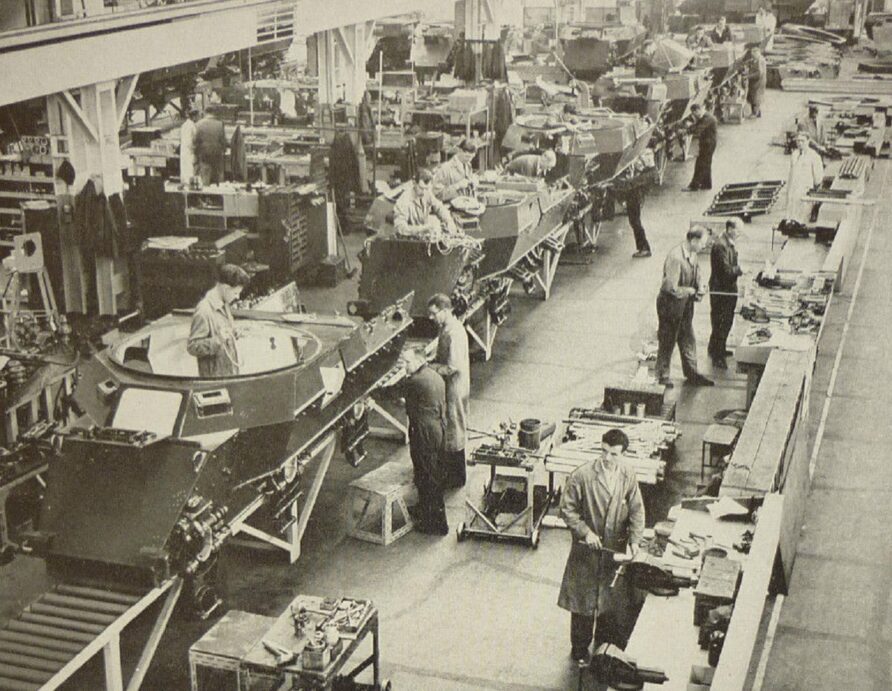
Production of Saladin ran from 1958 to 1972, with 1,177 built, and operated by 26 nations.
Operational Use #
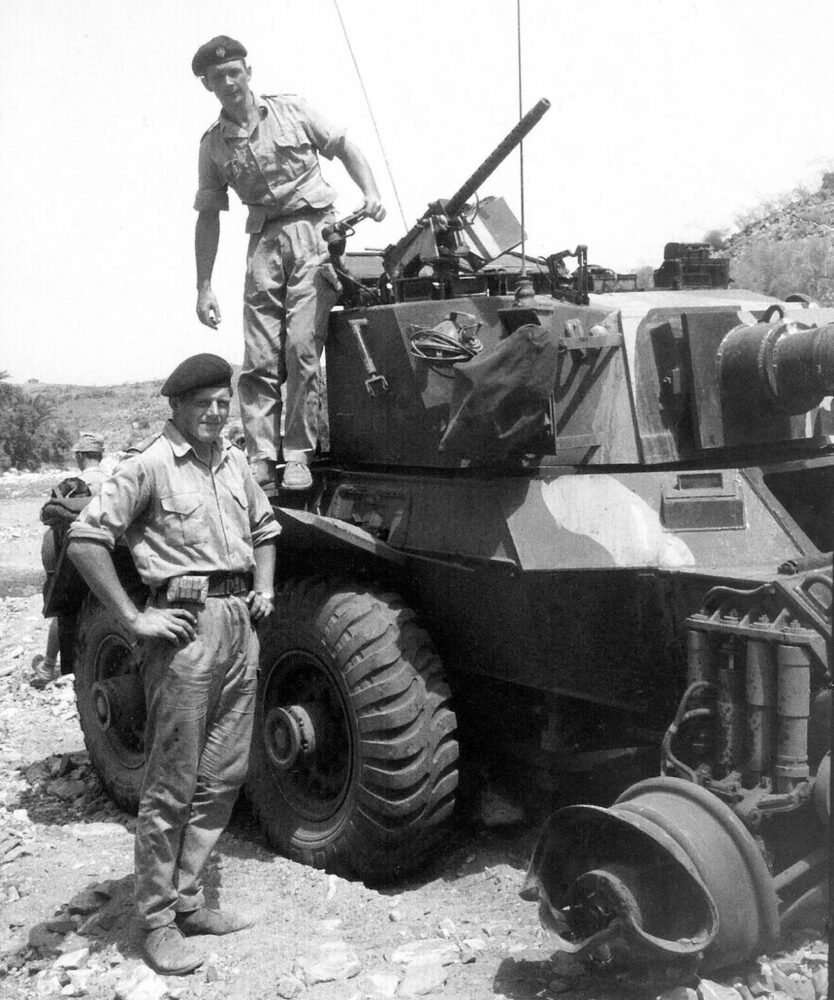
Although FV432 was in service in Germany from the early sixties, Saracen and Saladin continued to be used in Aden, Libya, Borneo, and other overseas locations.
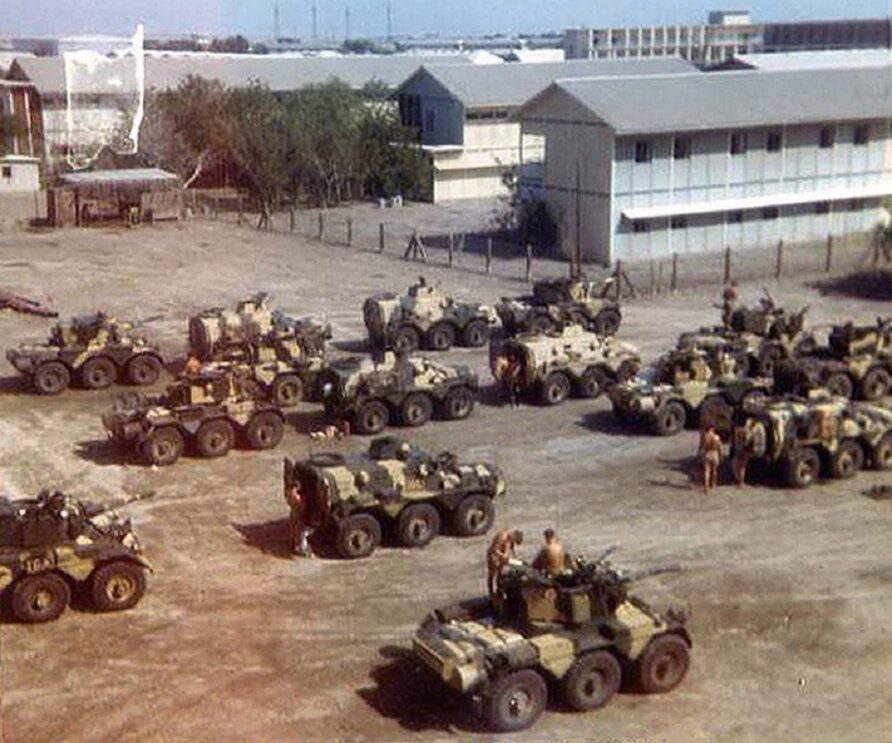
Demonstrating its blend of firepower and mobility was relevant then, as it was when conceived in the late forties.
Development of air despatch and air carriage continued over the Saladin’s service history
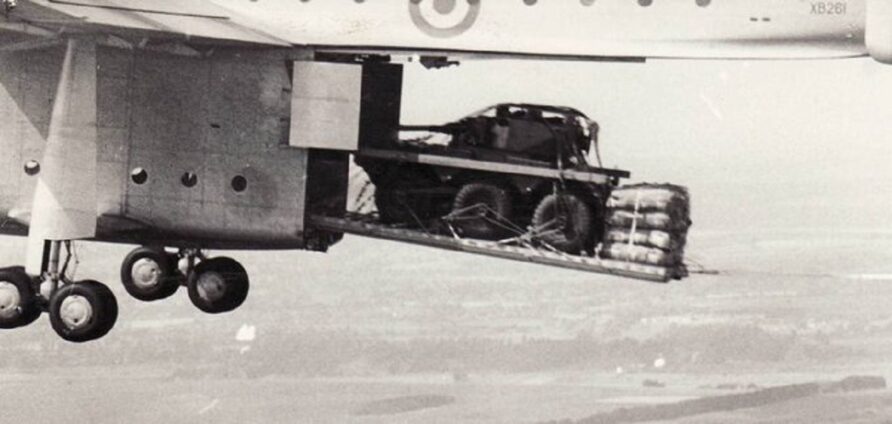
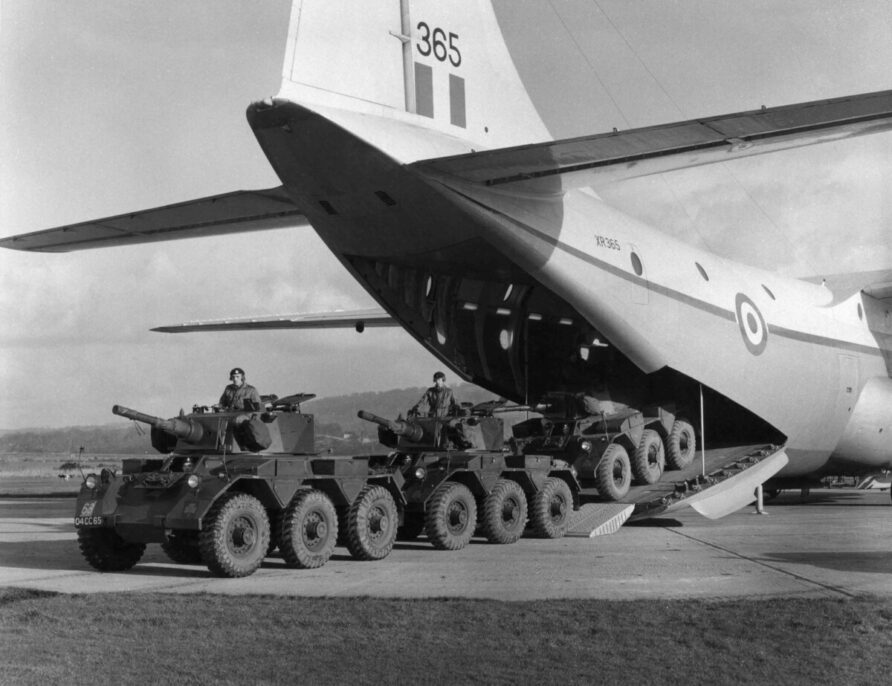
Saladin was a robust vehicle.
Alvis Saladin Capabilities #
Saladin did not change a great deal over its service life.
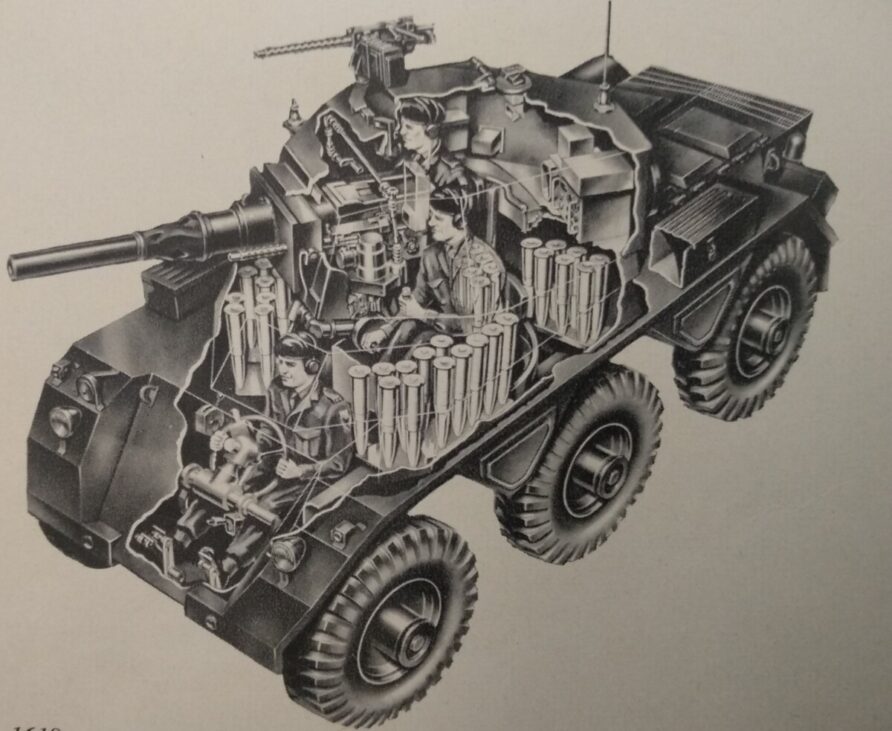
Design and Layout #
The Saladin featured a welded steel hull and turret, with a compact, octagonal upper superstructure mounted on a V-shaped lower hull for enhanced mine resistance.
The layout positioned the driver at the front centre, the turret slightly forward of the hull’s midpoint, and the engine compartment at the rear. It had a crew of three: driver, gunner, and commander (who also serves as loader). Access was provided via hatches for the commander and gunner on the turret, and a hull hatch for the driver.
The vehicle’s 6×6 configuration provided all-wheel drive, with steering applied to the front and middle axles for improved manoeuvrability. Suspension was independent on each wheel, utilising coil springs and hydraulic shock absorbers.
Although not inherently amphibious, a flotation kit was available to enable water crossings at speeds up to 6.9 km/h, although this was removed when it entered service.
Specifications #
Key technical specifications for the FV601C Saladin Mk 2 are summarised in the table below.
| Characteristic | Details |
|---|---|
| Weight | 11.6 tonnes (combat loaded) |
| Dimensions | Length: 5.28 m (with gun forward), 4.93 m (hull only) Width: 2.54 m Height: 2.39 m (to turret roof) |
| Crew | 3 (driver, gunner, commander/loader) |
| Engine | Rolls-Royce B80 Mk.6A, 8-cylinder inline petrol, 5.6 litres, water-cooled, producing 170 hp (127 kW) at 3,750 rpm |
| Transmission | Semi-automatic pre-selector gearbox with 5 forward and 5 reverse gears |
| Power-to-Weight Ratio | Approximately 14.65 hp/tonne |
| Maximum Speed | 72 km/h (45 mph) on roads; 48 km/h (30 mph) cross-country |
| Operational Range | 400 km (250 miles) on roads |
| Ground Clearance | 0.41 m |
| Obstacle Crossing | Vertical: 0.46 m Trench: 1.52 m Gradient: 60% Fording: 1.07 m (unprepared), 2.13 m (with preparation) |
| Fuel Capacity | 241 litres |
These figures reflect the standard production model (Mk 2).
Armament and Fire Control #
The primary armament was the Ordnance Quick-Firing (QF) 76 mm L5A1 low-pressure rifled gun, mounted in a two-man turret with 360-degree traverse and elevation from -10° to +20°. It fired high-explosive squash head (HESH), high-explosive (HE), smoke, and canister rounds at a maximum rate of 6 rounds per minute, with an effective range of up to 1,300 m for direct fire. Ammunition stowage allows for 42 rounds.
Secondary armament consisted of a coaxial 7.62 mm Browning machine gun and an additional 7.62 mm machine gun mounted on the turret roof for anti-aircraft or anti-personnel use, with a total of 3,500 rounds carried. Two banks of three smoke grenade dischargers were fitted on the turret sides for obscuration.
Fire control was manual, with optical sights for the gunner and commander.
Night vision equipment was limited in early models but could be retrofitted; some variants included image intensifiers or thermal sights in later upgrades.
The low-pressure gun prioritised anti-personnel and light anti-armour capabilities over high-velocity anti-tank performance, making it effective against soft targets and fortifications but less so against heavily armoured vehicles.
Protection #
Armour thickness varied from 10-16 mm on the hull sides and rear to a maximum of 32 mm on the turret front and glacis plate.
This provided protection against small arms fire (up to 7.62 mm armour-piercing rounds at close range) and shell fragments, but not against anti-tank weapons or heavy machine guns.
The V-shaped hull floor offered some resistance to mines and improvised explosive devices.
Nuclear, biological, and chemical (NBC) protection was optional via overpressure systems in some export models.
Variants and Upgrades #
- FV601A (Prototype): Early models with minor differences in turret design.
- FV601B (Pre-production): Tested with flotation kits and other modifications.
- FV601C (Production Mk 2): Standard model, with diesel engine retrofits in some fleets for improved fuel efficiency.
- Upgunned Variants: Some users (e.g., Nigeria) fitted 90 mm guns; others added anti-tank missiles like Swingfire.
Retrofits included enhanced night vision, improved radios, and armour appliqués for urban operations.
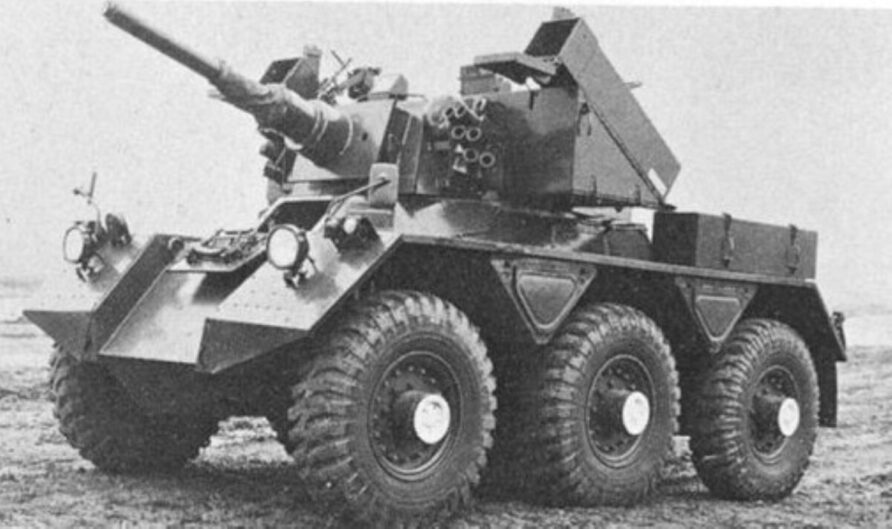
Saladin Swingfire #
A version of Saladin was fitted with the Swingfire ATGW missile
Saladin Repower #
A F Budge and Alvis developed a repower package for Saladin in 1991. The existing petrol engine was replaced by a Perkins 180 MTi diesel, developing 180 hp. Additional improvements were made to the chassis including a modern cooling pack, a new electrical system, upgraded brakes, a fire suppression system and the replacement of the original transmission with a more modern automatic transmission.
Saladin 90 #
GKL Group developed an upgraded Saladin with a Mecar 90 mm gun called Saladin 90 in 1988
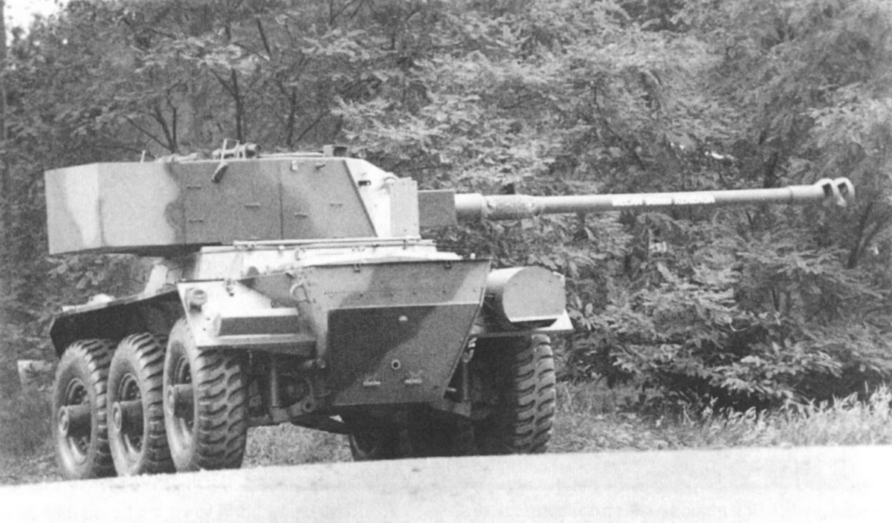
The original 76 mm L5Al gun was replaced by a Belgian NIECAR 90 mm KEnerga gun fitted with a muzzle brake that can fire a wide range of ammunition types, including APFSDS and HEAT.
This gun was capable of defeating a NATO medium triple target at a range of 2000 m and a NATO heavy target at a range of 1000 m. The existing turret bustle was extended to allow for an additional 20 rounds of 90 mm ammunition to be carried with a further 20 rounds being carried in the hull.
The original Rolls-Royce B80 petrol engine was replaced by a diesel engine connected to an MT 600 fully automatic transmission with four forward and one reverse gears. When fitted with a 250 bhp diesel engine the upgraded Saladin 90 mm has an operational range of 500 km and a power-to-weight ratio of 22 bhp per tonne.
Saladin RARDEN #
This was an export concept study to exploit the same 30 mm RARDEN cannon and a modified CVR(T) turret.
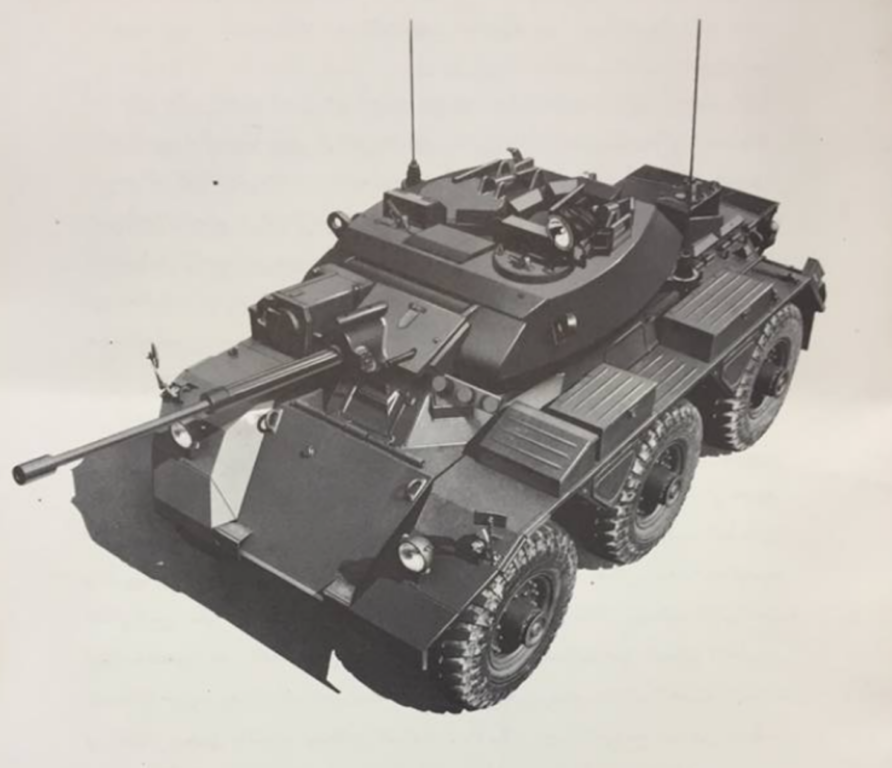
It did not go beyond concept stage.
If you found value in this article, help me keep Think Defence going.
Think Defence is a hobby, a serious hobby, but a hobby nonetheless. I have removed those annoying adverts, but hosting fees, software subscriptions and other services add up.
To help me keep the show on the road, I ask that you support the site in any way you can. It is hugely appreciated.
You can click on an affiliate link, Buy Me a Coffee at https://ko-fi.com/thinkdefence, download an e-book at https://payhip.com/thinkdefence or even get some TD merch at https://www.redbubble.com/people/source360/
Youtubers, if you are going to lift content from here, the decent thing to do would credit me


