
 Doc Summary

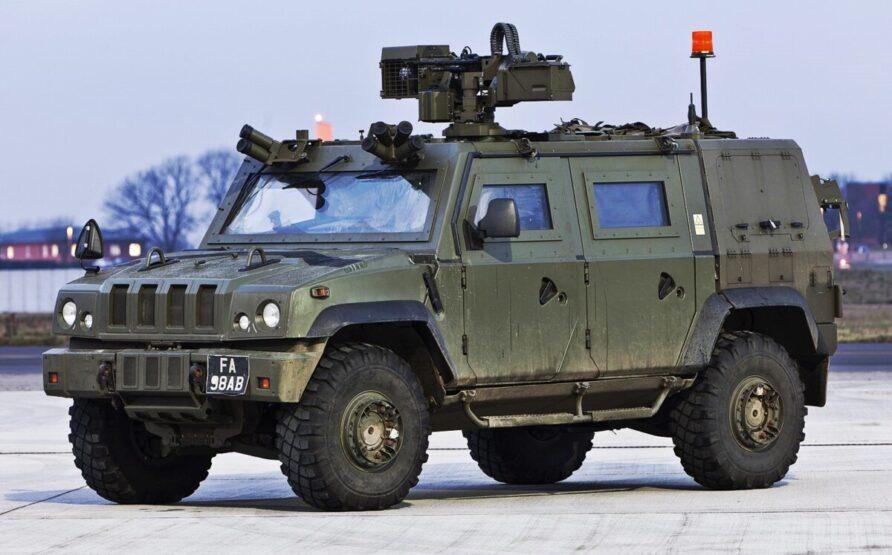
The Panther Command and Liaison Vehicle (CLV) entered service in June 2008, a result of the Future Command and Liaison Vehicle (FCLV) programme.
Panther Command and Liaison Vehicle (CLV) History #
Almost immediately after entry into service, BAE was awarded a £28 million contract in 2008, for support services on the Panther vehicle to provide better availability and lower costs.
A £28 million support contract awarded by the UK Ministry of Defence (MOD) to BAE Systems for the new Panther Command and Liaison Vehicle (CLV) holds the promise of better vehicle availability at lower through-life cost. The Panther System Support Arrangement (SSA) was announced today at DVD™ 2008, an annual event held by UK MOD.
The contract, incentivises BAE Systems and its supply network to guarantee availability and reduce cost of ownership for the British Army from the day the vehicle enters service. The Panther is the first UK military vehicle to be entering service under this type of arrangement BAE Systems Land Systems support director Ian McNeeney commented: “This contract sets the standard for all future support arrangements for military vehicles.
It represents a new way of contracting with the MOD in the land sector and includes a mechanism to continually improve vehicle reliability and service delivery to provide a more responsive, lower-cost service to the front line.” The SSA takes a phased approach.
An initial 21-month baselining will collect key data on cost and reliability as the vehicle is deployed worldwide on training and operations to determine operating cost and support requirements for Phase 2. Phase 2 will provide a steady-state five-year support service that could be extended to cover the vehicle through life.
The contract requires that BAE Systems provides 90 per cent availability of materiel plus technical support services to the front line, including BAE Systems’ own field support technicians deployed with Army units in UK, Germany & BATUS, the British Army training area in Canada.
Panther is also the first British Army armoured vehicle to be fitted with a health & usage monitoring system (HUMS) which will monitor the vehicle’s performance and provide front line operating data.
Col John Ogden, Light Armoured Systems team leader at Defence Equipment and Support added:
“Following successful reliability trials, BAE Systems has delivered 217 of 401 Panthers to date. In conjunction with the signing of a support contract with BAE Systems, this enabled the MOD to formally announce ISD. This achievement is a tribute to both the quality of the vehicle and the effectiveness of the working relationship between the MoD and BAE Systems project teams. We are confident that soldiers on the ground will like this new capability and appreciate the benefits of its support arrangement.”
The contract will be managed by a joint MOD/BAE Systems team co-located at the MOD’s Defence Equipment & Support Abbeywood offices, Bristol, with “back office” support at Newcastle, where Panther undergoes final assembly and integration and at Telford, the BAE Systems support centre for Light and Medium Vehicles.
A total of 401 Panthers is scheduled to be delivered by summer 2009. They will replace or supplement a range of vehicles including the Land Rover, Saxon and some tracked reconnaissance vehicles.
The Panther was reported to be a maintenance intensive vehicle with poor availability.
In 2008, Iveco proposed a new version of the Panther/LMV to meet the then open Operational Utility Vehicle System (OUVS) requirement.
After a £20m upgrade and preparation contract, the first Panthers were deployed to Afghanistan in 2009.
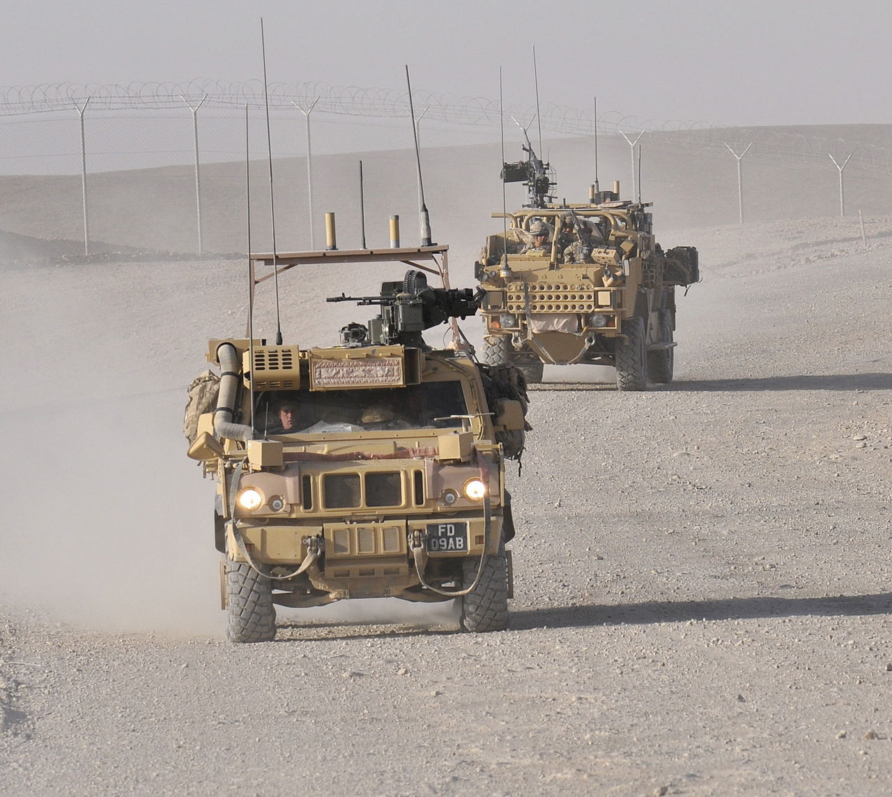
This Theatre Entry Standard (Helmand) was for 67 vehicles only, the remainder of the 401 strong Panther fleet not being deployed. Improvements included additional ECM equipment, a rearview camera, additional roof hatch, extra armour and a redesigned engine air intake.
In 2015, the MoD consolidated support contracts for various vehicles into a single £50 million support contract with BAE>
The innovative contracting arrangement merges existing support contracts into a more efficient and effective agreement. Under its terms, BAE Systems – which maintains design authority – will continue to provide support to Warrior; Titan; Trojan; Panther; Bulldog; Combat Vehicle Reconnaissance (Tracked); the Challenger Armoured Repair and Recovery Vehicle (CVR(T)) as well as the main battle tank of the British Army – Challenger 2. The Company’s unique engineering expertise in the upgrade and support of complex military vehicles is unparalleled in the UK with engineers holding specialist knowledge, skills and capabilities in areas such as survivability, combat engineering, vetronics (vehicle electronics) and product safety. The work will be carried out predominantly in Telford, Shropshire, with engineers from Newcastle and Filton, Bristol supporting the heavy armoured vehicles and Panther respectively. Trials work will take place at MOD test sites such as Bovington in Dorset.
In 2017, BAE was awarded a contract to supply two experimental STRIKE Tactical Hotspots, an innovative communication solution to support the bandwidth and communications demands of STRIKE Brigades.
The equipment was to be fitted into a modified Panther vehicle.
The experimental STRIKE Tactical Hotspots which will be used by the British Army are the product of a technology development programme funded by us in collaboration with General Dynamics and Airbus. The Hotspot integrates Falcon broadband with Bowman TacCIS and SATCOM-on-the-Move, enhanced with the power of 4G, WiFi and Tactical Datalinks (WEnDL™) capability.
In May 2018, it was widely reported that Panther CLVs had been placed on the disposal list, although no news on this since.
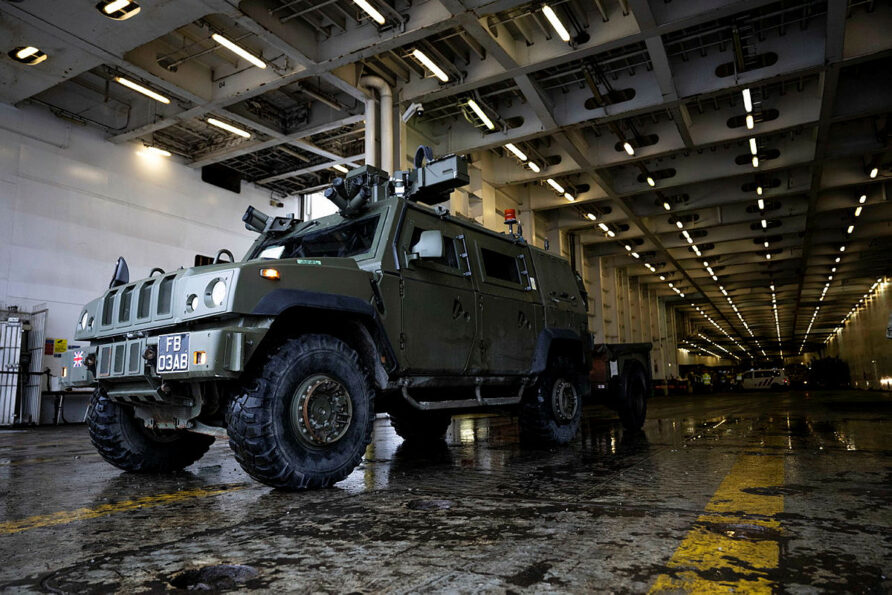
It remains in service, scheduled to leave service in 2037.
Panther Command and Liaison Vehicle (CLV) Capabilities #
The Panther Command and Liaison Vehicle (CLV), the British Army’s variant of the Iveco Light Multirole Vehicle (LMV), is a 4×4 protected mobility platform primarily used for command, liaison, and light patrol roles in armoured, reconnaissance, infantry, engineer, and supporting units.
- Role: Command and liaison vehicle; provides protected mobility for commanders, sergeant majors, liaison officers, and specialist platoons (e.g., anti-tank, mortar, engineers). It supports Battlegroup communications rebroadcast and is equipped for extensive radio fits (e.g., Bowman system).
- Crew/Capacity: 1 driver + 3 passengers (4 total); reduced from the base Iveco LMV’s typical 1+4 to accommodate bulky communications gear inside the protected compartment.
- Weight: Approximately 7 tonnes (combat weight; up to ~7.2 tonnes in up-armoured configurations).
- Dimensions:
- Length: 4.687 m base, up to 5.50 m including some fittings
- Width: 2.05 m.
- Height: 1.95 m (to roof).
- Engine: Iveco F1C 3.0-litre turbocharged diesel, producing 190 hp (142 kW), with common-rail injection and automatic 6-speed transmission (ZF).
- Mobility/Performance:
- Maximum road speed: Up to 120–130 km/h (official British Army figure often lists ~80–100 km/h operational).
- Range: ~500 km on internal fuel (can carry additional 40L).
- Ground clearance: ~473 mm (underbelly).
- Independent suspension (double A-arm), run-flat tyres, high mobility across varied terrain.
- Air transportable: Underslung under Chinook helicopter; fits in C-130, C-17, etc.
- Protection: Modular/tuneable armour (monocoque hull with composite/steel elements).
- Standard: STANAG 4569 Level 1–2 (protection against 5.56/7.62mm ball rounds, grenades, small AP mines, artillery fragments).
- Up-armoured (e.g., TES for Afghanistan): Up to STANAG Level 3–4 (14.5mm AP rounds, 10kg underbelly mine, improved blast deflection via V-hull/sandwich floor, sacrificial ends).
- Features blast-resistant seats, reduced thermal/radar signature (slanted windows, exhaust routing).
- Armament: Enforcer (or similar) Remote Weapon Station (RWS/RCWS) by SELEX/BAE, typically fitted with 7.62mm L7 GPMG (upgradable to 12.7mm HMG or 40mm grenade launcher), plus day/night sighting system. Operated from inside via joystick and camera.
- Other Features: High all-terrain capability, stealth design elements (low signature), Bowman digital comms integration, potential for ECM/jammers in upgrades. Maintenance-intensive in some reports, with availability challenges noted historically.
If you found value in this article, help me keep Think Defence going.
Think Defence is a hobby, a serious hobby, but a hobby nonetheless. I have removed those annoying adverts, but hosting fees, software subscriptions and other services add up.
To help me keep the show on the road, I ask that you support the site in any way you can. It is hugely appreciated.
You can click on an affiliate link, Buy Me a Coffee at https://ko-fi.com/thinkdefence, download an e-book at https://payhip.com/thinkdefence or even get some TD merch at https://www.redbubble.com/people/source360/
Youtubers, if you are going to lift content from here, the decent thing to do would credit me


