
 Doc Summary

The TRIGAT (Third Generation Anti-Tank Guided Weapon) programme was a multinational European collaborative effort initiated in the late 1980s to develop advanced anti-armour missile systems capable of countering evolving threats from heavily protected tanks and other armoured vehicles.
The programme encompassed two primary variants: TRIGAT-MR (Medium Range), designed as a crew-portable system for infantry use, and TRIGAT-LR (Long Range), intended for vehicle or helicopter-mounted applications with fire-and-forget capabilities.
TRIGAT Initial Development #
In 1983, the Government further outlined their intent on future missile systems.
Swingfire, our long-range anti-tank missile mounted on tracked vehicles, has been provided with a thermal imaging sight and an improved warhead. A similar sight, together with an improved warhead, is currently being provided for Milan, and an improved warhead for TOW, our helicopter-borne anti-tank missile, is also now in service.
Research and development work has also started on our next generation of anti-tank missiles to replace Milan, Swingfire and TOW in the 1990s, work on which I am glad to say we are in partnership with France and Germany.
The FV438 vehicles were withdrawn in the mid-eighties, but Swingfire and Striker remained.
There was some talk of putting a TOW launcher on a Spartan, but this did not progress beyond a single concept image
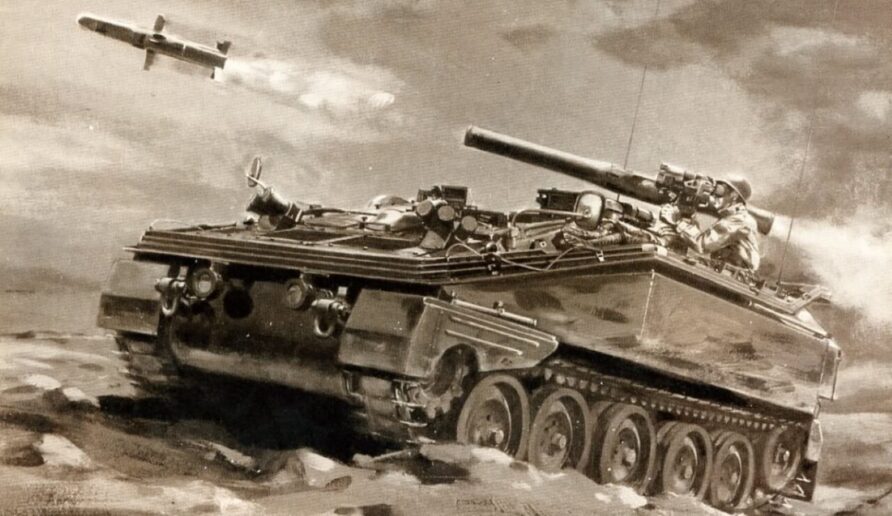
Initial feasibility studies were completed in 1986.
In 1988, the UK, France and Germany signed a Memorandum of Understanding (MoU) to cooperate on the joint development of an anti-tank missile family (medium and long-range) that would replace Milan, HOT and Swingfire; Euromissile was intended to be the industrial vehicle.
The missiles were to be called TRIGAT- MR and TRIGAT-LR and both would utilise a tandem shaped-charge warhead and either a laser beam riding or IR homing guidance. The LR variant was intended to have a range exceeding 5,000m and employ a terminal dive attack profile to target thinner top armour of armoured vehicles.
Development contracts followed, and the missile progressed through early-stage firings.
The intent was that TRIGAT-MR would replace the British Army Milan ATGW, and TRIGAT-LR would replace both the TOW and Swingfire missiles on Lynx and Striker/FV438 respectively.
TRIGAT- MR #
The original intent for the MR variant was that it could use Milan firing posts and sighting systems.
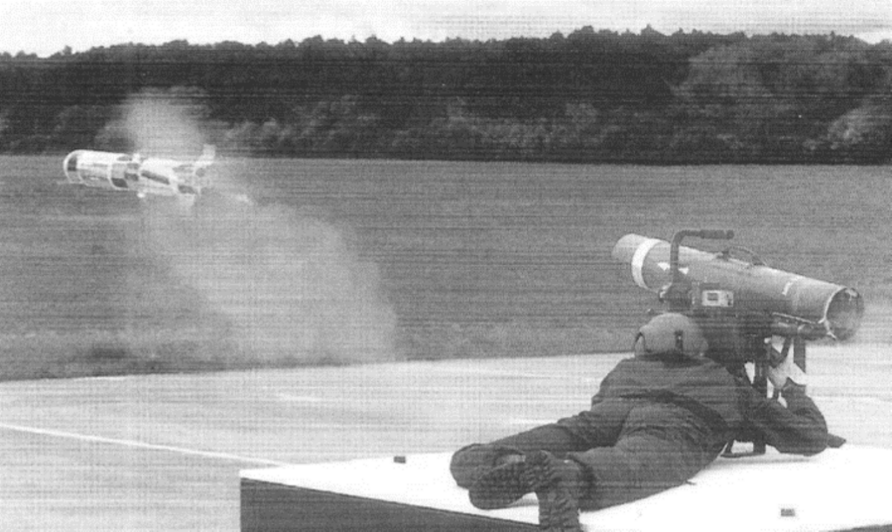
The 1999 National Audit Office Major Projects Report described TRIGAT as;
Medium Range (MR) TRIGAT is a crew-portable anti-tank guided weapon system, for the infantry and Royal Marines, which will be capable of defeating improved enemy armour at a maximum range of 2400m. It will replace MILAN, and comprises a firing post, a missile and a thermal sight, allowing effective operation at night and in adverse weather conditions. MR TRIGAT is a multi-lateral project with the United Kingdom, France and Germany as Pilot Nations and Belgium and the Netherlands as Associate Nations. It is currently nearing the end of full development.
TRIGAT MR used a pulsed carbon dioxide laser beam guidance system, like Javelin S15, the operator simply placed the beam onto the target and the missile acquired it and followed it in.
A thermal imaging system provided day/night capability, and the missile itself had a maximum range of 2,400m.
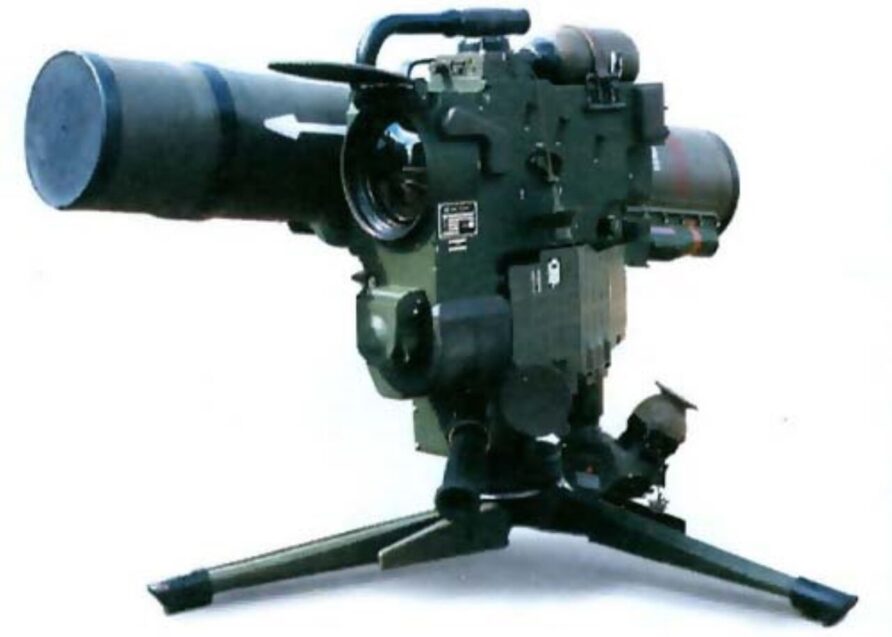
The missile was designed to have a high level of agility for use against fleeting and crossing targets, and with a soft launch system, easy to use in confined spaces.
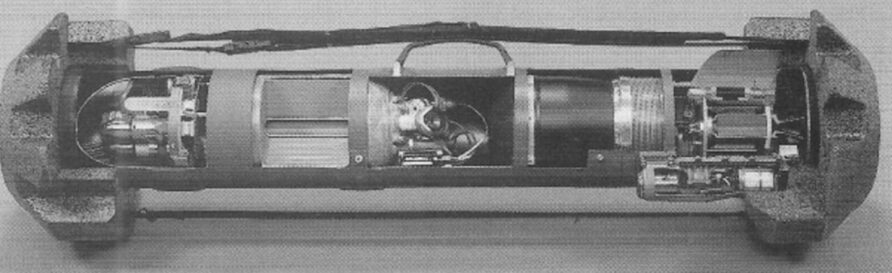
Trials in the UK continued.
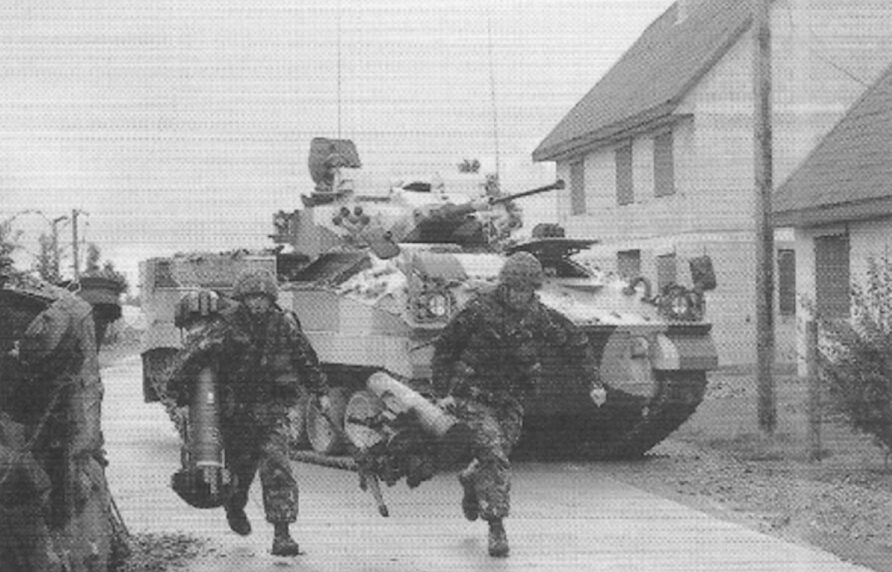
The UK signed an MoU for production in 1999 with the expectation of a contract to follow that ensured no gaps would exist between TRIGAT-MR coming into service and Milan going out of service in 2005.
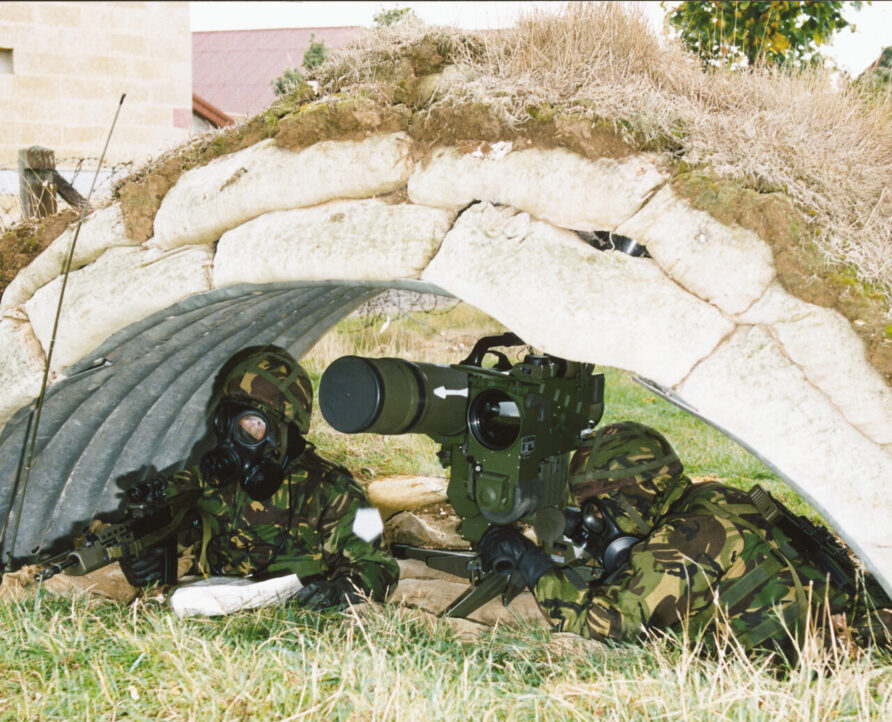
Aerospatiale was prime contractor for the TRIGAT-MR, with individual responsibility for the munition and training equipment. MBB was responsible for the firing post, thermal imager and warhead; the TGZ consortium (TRT, GEC Sensors and Zeiss) for the laser beam-riding guidance system, with Ferranti and SFENA providing the laser Giravions Dorand is supplying the simulators; and British Aerospace the maintenance equipment.
TRIGAT-LR #
TRIGAT-LR would also be used as a helicopter-launched weapon, at the time, envisaged to be the Joint European Helicopter Tonal or Light Attack Helicopter (LAH).
We expect to mount a variant of TRIGAT on the light attack helicopter, on which we hope shortly to sign an agreement to proceed with project definition based on the Al29 helicopter, with the Italians, Dutch and Spanish.
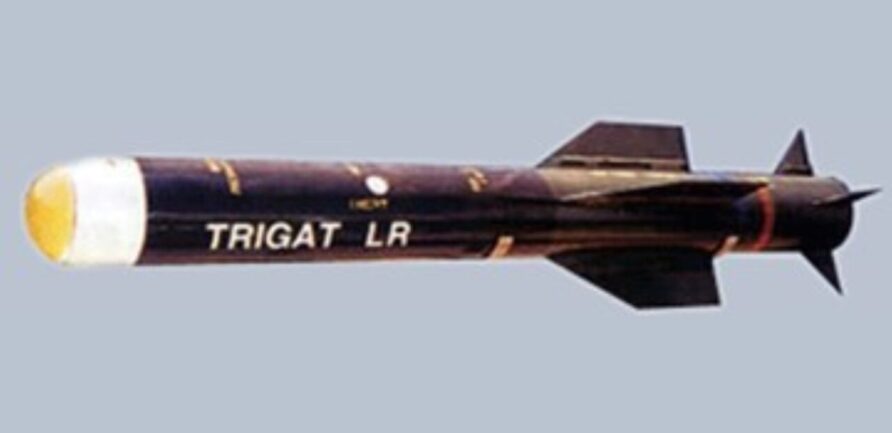
The Trigat LR was a more capable missile than just an increase in range over the MR variant.
It was a fire-and-forget, top-attack missile that used an Imaging IR seeker, operating at 8-12 micron bandwidth.
Its maximum range was 4,500 metres when ground-launched, or 5,000 meters from helicopters
BAe was responsible for the long-range munition, its integration with ground vehicles and the Imaging IR seeker (in collaboration with BGT and Thomson-CSF); MBB responsible for helicopter integration and for the warhead (with Royal Ordnance and SERAT); and Aerospatiale responsible, under MBB, for the Osiris mastmounted sight that would be fitted on the Franco-German Tiger helicopter.
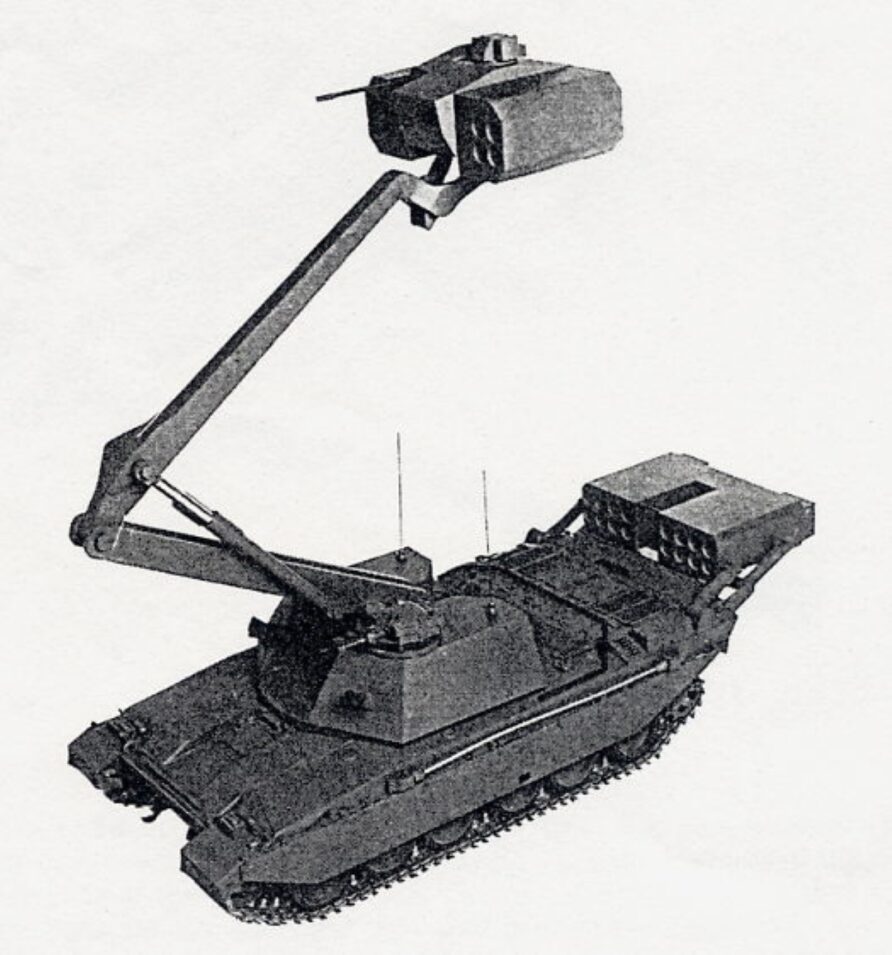
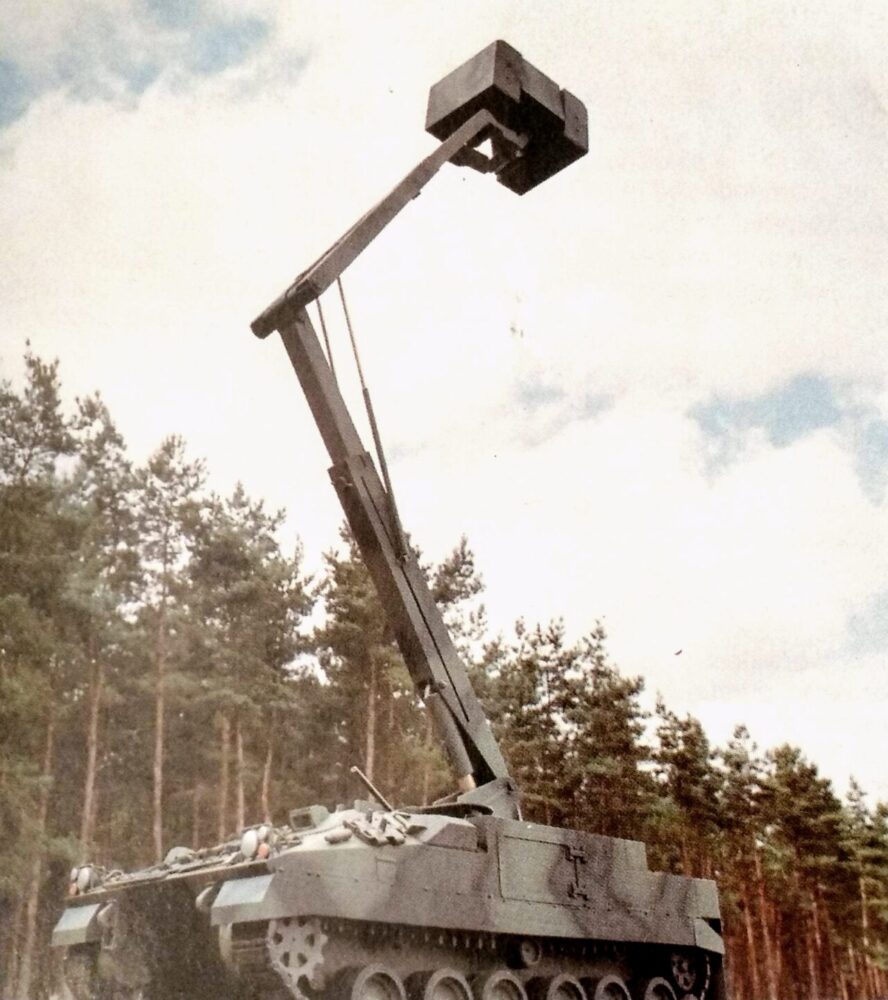
Whilst many know that the Germans proposed various combinations of elevating masts with HOT, Milan and TRIGAT missiles on Marder, Leopard 1 and truck base vehicles, less well known is that the British Army also considered the concept.
Some of the studies that were looking at TRIGAT-LR as a replacement for Swingfire considered using the Challenger 1 Main Battle Tank.
A TRIGAT-LR version of Warrior was also proposed.
TRIGAT-LR was closely tied to the development of the Eurocopter Tiger attack helicopter, but as the UK eventually selected the AH-64 over Tiger and A.129 Mangusta, the choice of Hellfire over TRIGAT-LR was already made.
TRIGAT Delays and Cancellation #
Delays in signing from Belgium and the Netherlands for TRIGAT-MR, and, as usual, Germany revising down their required quantities, meant the delays would potentially leave the UK with a capability gap.
The cost to the MoD at this stage was forecast to be £122 million.
In the 1991 Major Projects Statement, the following update on TRIGAT-LR was provided
Formal notice of the UK’s intention to withdraw from the Long-Range project was given to our French and German partners in September 1991.
The National Audit Office published a report on the Introduction of the Apache Helicopter in 2002.
The decision to procure an Attack Helicopter was taken in the early 1990s. At that time, military doctrine was based on the assumption that the most likely threat to the United Kingdom was from the Eastern bloc and the Attack Helicopter was therefore seen as a direct replacement for the existing Lynx based capability. By the time the contract for the supply of 67 WAH 64 Apache helicopters was placed with GKN-Westland Helicopters Ltd (Westland) on 1 April 1996
Alongside the helicopter, the decision was also taken to select the Hellfire ATGW, replacing TOW.
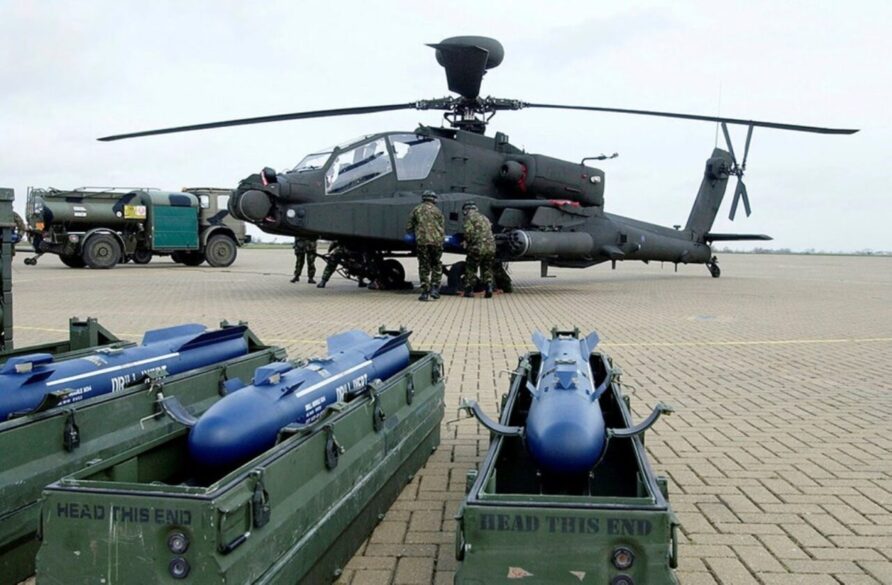
Brimstone was selected for the RAF’s SRA 1286 in 1996, the same year that the WAH-64D Attack Helicopter was contracted for manufacture by the British Army.
In September 2000, the Government formally announced the UK’s withdrawal from TRIGAT completely.
Baroness Symons of Vernham Dean Minister of State (Defence Procurement), Ministry of Defence
The UK signed the Memorandum of Understanding for the industrialisation and production phase of MR TRIGAT in June 1999 in the expectation that we would shortly proceed to contract and maintain the programme to deliver a modern anti-tank guided weapon capability by 2005 (when stocks of the existing MILAN system start to run down).
Regrettably, MOU signature by all five participating nations has still not been achieved. Some 12 months after our MOU commitment we are no nearer to contract placement than we were then. This additional delay, to a programme that is already 10 years behind its original schedule, and the additional risk and uncertainty it creates is unacceptable. The UK’s priority has to be to deliver the capability and equipment needed by our Armed Forces in an acceptable timescale.
We have therefore decided that the UK should withdraw from the MR TRIGAT industrialisation and production programme and will pursue an alternative national procurement of an anti-tank guided weapon system. We plan to issue an invitation to tender in the next few weeks for the supply of commercially available systems to meet the requirements of our infantry light forces by 2005. In parallel, we are reviewing our requirements for an anti-tank capability for mechanised and armoured infantry units prior to determining whether these too could be met by similar commercially available systems. Our initial assessment is that the alternative systems now available will be in many ways more capable than MR TRIGAT and offer significant financial savings.
We recognise that this decision will be a disappointment to our partners and to those areas of UK industry that had expected to benefit from MR TRIGAT. The UK remains committed to the principles of European collaboration provided it is in the UK’s best interests. Regrettably it was not possible to proceed on this basis with MR TRIGAT, but there are a range of other programmes on which we remain engaged to good effect with our European partners.
A report from the NAO later in the year reinforced the point.
As a result of continuing and open ended delays it became clear that the basis on which the UK had agreed to proceed to the I&P phase of MR TRIGAT could no longer be sustained. The Secretary of State announced the UK’s withdrawal from the I&P phase of MR TRIGAT on 28 July 2000
And that was the end of TRIGAT-MR
This also resulted in a bit of a problem, the Milan systems would be life-expired by 2005. Eventually, Javelin replaced MILAN.
France exited the TRIGAT-LR programme in 2001, leaving Germany to continue alone under the PARS 3 LR (Panzerabwehr Raketensystem 3) name, integrating it with the Eurocopter Tiger helicopter.
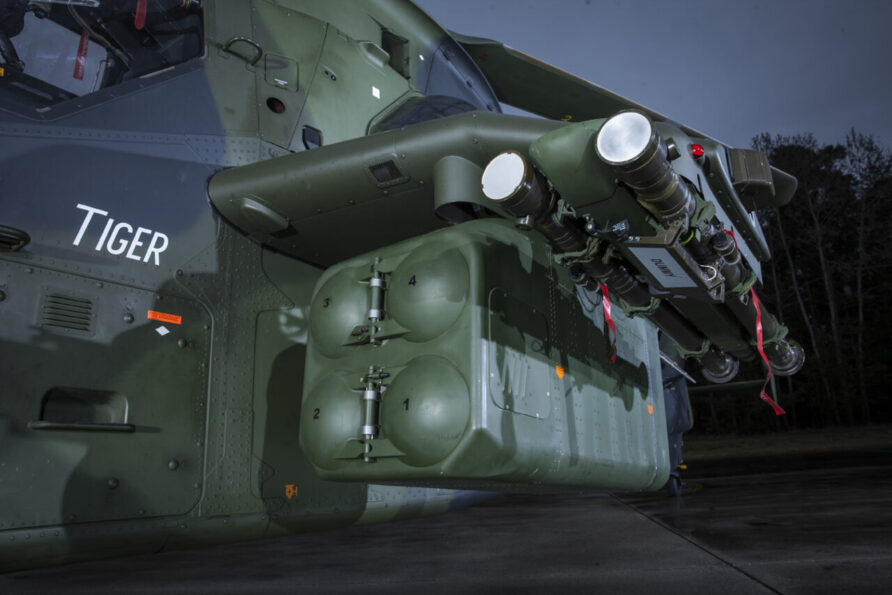
PARS 3 LR entered German service in 2012.
The UK withdrew from both elements without proceeding to production, resulting in the costs being written off as constructive losses.
These were accounted for in the Ministry of Defence’s 2005-06 Departmental Resource Accounts as follows:
- TRIGAT-LR: A constructive loss of £205 million, following the decision in 1995 not to proceed into production for the long-range anti-tank guided weapon system. This aligns with earlier parliamentary records indicating the UK’s share of development costs up to 31 May 1995 as £210 million (at 1995-96 prices). The UK opted instead for alternative systems, such as Hellfire missiles for its attack helicopters.
- TRIGAT-MR: A constructive loss of £105.343 million, following the decision in 2000 not to proceed into production for the medium-range anti-tank guided weapon system. This decision was driven by the need for a more advanced solution at lower through-life cost, leading to the subsequent adoption of the Javelin system as a replacement for Milan.
The total losses from withdrawal from both programmes amounted to £310 million. These figures represent sunk development costs, with the UK gaining some technological insights and potential future royalties from third-party sales under the programme’s memoranda of understanding. Parliamentary scrutiny highlighted these as examples of procurement inefficiencies, with similar totals (e.g., over £314 million) cited in debates on defence expenditure
If you found value in the article, help me keep Think Defence going.
Think Defence is a hobby, a serious hobby, but a hobby nonetheless. I have removed those annoying adverts, but hosting fees, software subscriptions and other services add up.
To help me keep the show on the road, I ask that you support the site in any way you can. It is hugely appreciated.
You can click on an affiliate link, Buy Me a Coffee at https://ko-fi.com/thinkdefence, download an e-book at https://payhip.com/thinkdefence or even get some TD merch at https://www.redbubble.com/people/source360/
Youtubers, if you are going to lift content from here, the decent thing to do would credit me


