
 Doc Summary

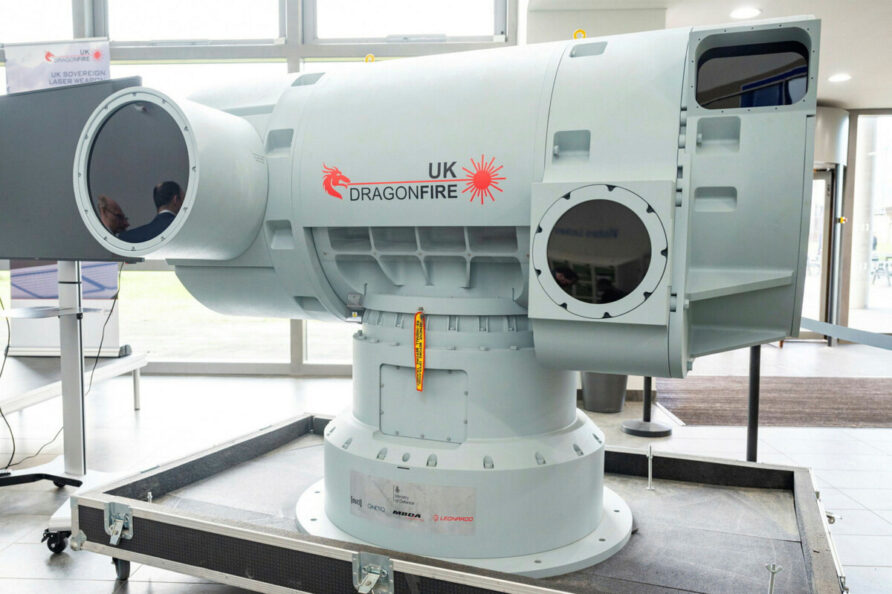
The DragonFire laser directed energy weapon (LDEW) represents a pivotal advancement in the United Kingdom’s defence capabilities, marking a transition from traditional kinetic munitions to high-energy, precision-based systems.
Developed as a sovereign technology to counter emerging threats such as unmanned aerial vehicles (UAVs), missiles, and mortar rounds, DragonFire leverages decades of collaborative expertise from British industry and government.
UK Laser Weapon Use Before Dragonfire #
Although not widely know, the Royal Navy deployed laser weapons during the 1982 Falklands Conflict.
A recently declassified letter from the Secretary of State for Defence (Michael Heseltine) in January 1983 stated;
You may recall, however, that we developed and deployed with great urgency a naval laser weapon, designed to dazzle low flying Argentine pilots attacking ships, to the Task Force in the South Atlantic. This weapon was not used in action and knowledge of it has been kept to a very restricted circle
The Laser Dazzle Sight was reportedly developed by the Royal Signals and Radar Establishment and the Admiralty Research Establishment in 1981.
They were also deployed on various ships in the nineties, especially those deployed to the Gulf of Arabia.

The MoD have always made it very clear that these were not designed to blind, but merely dazzle.
More recently, the US has developed and tested a number of ship-based laser systems, although nothing yet is in service. The images below show the Laser Weapon System (LaWS) onboard the USS Dewey, and there have also been trial aboard other vessels.
Dragonfire #
The genesis of the DragonFire programme can be traced to the mid-2010s, when the UK MoD recognised an imperative for directed energy weapons to counter the escalating proliferation of low-cost aerial threats, such as drones and precision-guided munitions.
In response, the MoD’s Chief Scientific Advisor’s Research Programme initiated exploratory investments in laser technologies. Although the UK had been involved with a number of small scale demonstrations through DSTL.
The Laser DEW project is led by Dstl with system-level studies undertaken by industry. This work will be exploited through the Laser Capability Demonstrator project which will be competed during 2015 the first major development contract was awarded to MBDA in September 2016.
The first major announcement was in 2016.
The £30 million Laser Directed Energy Weapon Capability Demonstrator (LDEW CD) will be delivered by a consortium led by MBDA.
The project will assess innovative laser directed energy weapon technologies and approaches, culminating in a demonstration of the system in 2018/19.
The contract will assess how the system can acquire and track targets at range, in varying weather conditions, over land and water, and, crucially, with sufficient precision to enable safe and effective engagement.
This is a significant demonstration programme aimed at maturing our understanding of what is still an immature technology. It draws on innovative research into high power lasers so as to understand the potential of the technology to provide a more effective response to the emerging threats that could be faced by UK armed forces
The project was to assess the technologies and approaches leading to a demonstration in 2018/19.
The award was commented on by Rear Admiral Paul Bennett;
The Royal Navy remains committed to the rapid exploitation of revolutionary concepts and scientific advances. The LDEW project sits alongside other cutting edge initiatives that together keep the Royal Navy at the forefront of change and well placed to be an early adopter of innovative technologies.
Other members of the consortia include;
- BAE Systems
- Leonardo
- Marshall Defence and Aerospace
- Qinetiq
- GKN
- Arke
What can be seen by this membership list is experience and investment in power storage (possibly the biggest issue to deal with), beam combining, sighting and command and control.
MBDA assumed overall responsibility for system integration and command-and-control (C2) development, leveraging its expertise in missile systems. Leonardo contributed the advanced beam director, essential for precise targeting across varied environmental conditions.
QinetiQ developed the high-power laser source, a 50 kW-class solid-state generator using phase-combined fibre optics. DSTL, acting on behalf of the MoD, provided oversight and ensured alignment with national defence priorities
MBDA in particular, have been working on lasers for several years, read more here
The system was publicly unveiled as a technology demonstrator at the Defence and Security Equipment International (DSEI) conference in London in September 2017.
In January of this year, 2017, the Defence Science and Technology Laboratory (Dstl), awarded a contract to the Dragonfire consortium, worth £30million to UK industry, to demonstrate the potential of Laser Directed Energy Weapons (LDEW).
Dstl supplies high-impact science and technology for the defence and security of the UK. Scientists from Dstl, working with industry partners under contract to Dstl, have been working on laser technology since the 1970s, with the intent of realising the benefit of an affordable and precise weapon for the UK military.
Testing of the demonstrator will begin on UK ranges in 2018, culminating in a major demonstration in 2019. The Dragonfire solution is based on unique technical approaches developed in the UK under MOD and industry funding centred on high energy lasers and will address the challenges associated with engaging aerial targets safely. It represents the major element of the Dstl led LDEW project, which draws on expertise across Dstl and contributes to internal collaborative programmes.
UK Dragonfire, led by MBDA in the UK under contract to Dstl, has brought together the best of relevant UK industry expertise to deliver the highly challenging and complex programme. The team capitalises on the strengths of the individual companies involved, which include QinetiQ, Leonardo, GKN, Arke, BAE Systems and Marshall Land Systems.
The LDEW technology provides operational advantage to the UK military and the potential to export such systems in support of the Prosperity agenda, as advocated in the UK’s 2015 Strategic Defence and Security Review, by developing on-shore industrial capability.
This marked the first exposure of DragonFire to international audiences, positioning it as a sovereign UK capability aimed at short-range air defence and close-in protection for naval vessels.
Dragonfire was positioned initially as a naval weapon, with the Royal Navy focussing on a variety of crewed and uncrewed threats.
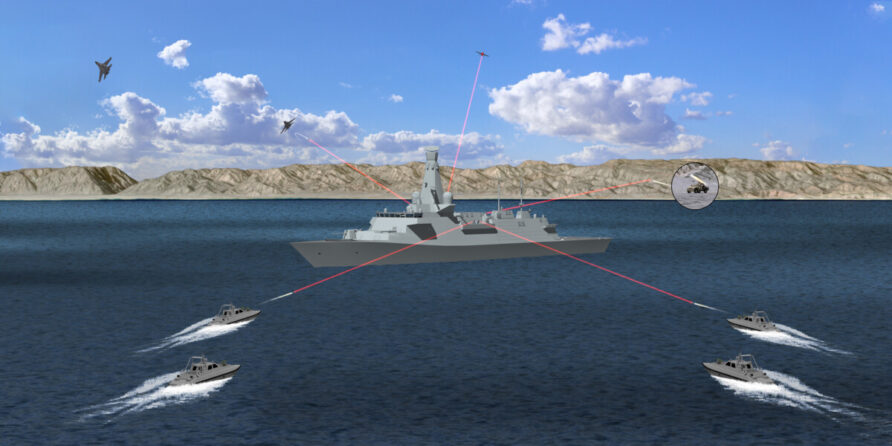
The initial focus was on proving conceptual viability, with an emphasis on integrating disparate technologies into a cohesive demonstration.
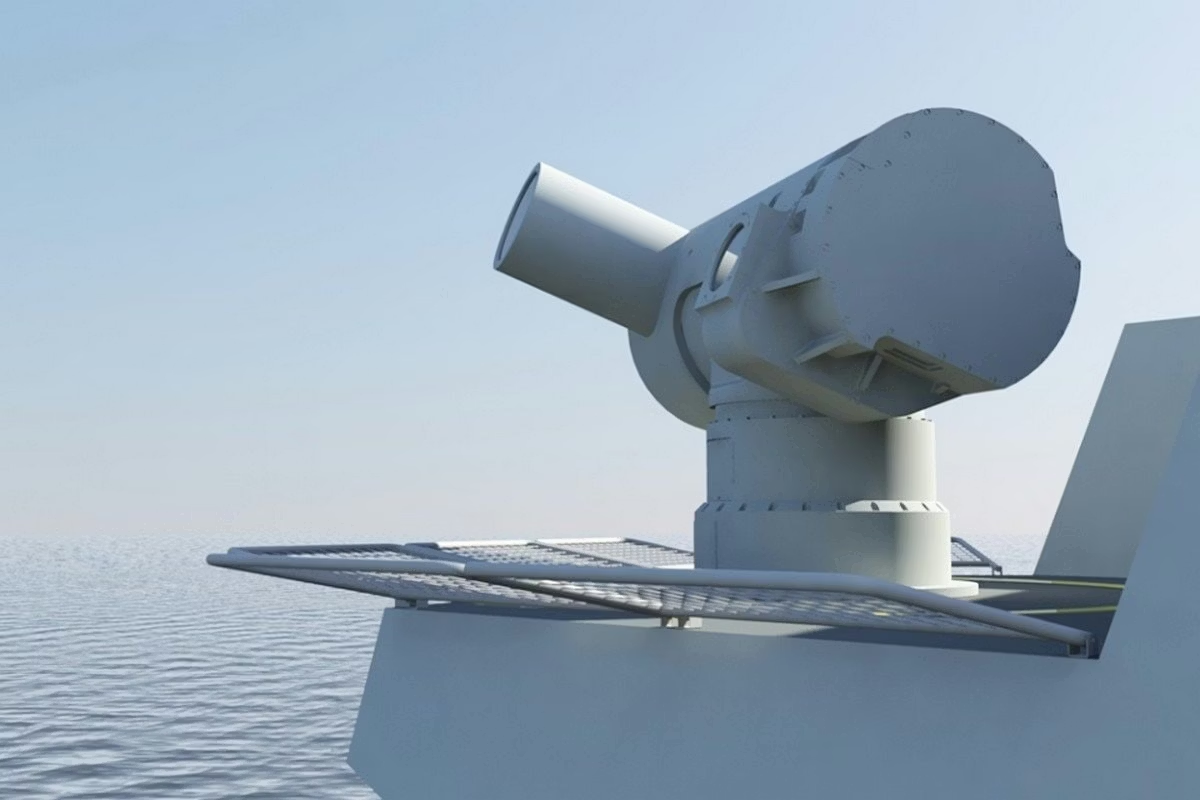
Not much was released publicly in 2018 but in May 2019, the MoD announced wider investment plans to include three demonstrators in addition to Dragonfire
The MOD aims to invest up to £130-million in this package of Directed Energy Weapons, including the construction of the demonstrators, the creation of a new Joint Programme Office and the recruitment of personnel to manage the programme.
These demonstrators are part of the MOD’s “Novel Weapons Programme” which is responsible for the trial and implementation of innovative weapons systems to ensure the UK remains a world leader in military technology. They are expected to reach the frontline within 10 years.
The MOD already has plans for initial trials of laser weapons systems, with the Dragonfire demonstrator commissioned by the Defence Science and Technology Laboratory to be tested later this year.
These includes a CIWS system
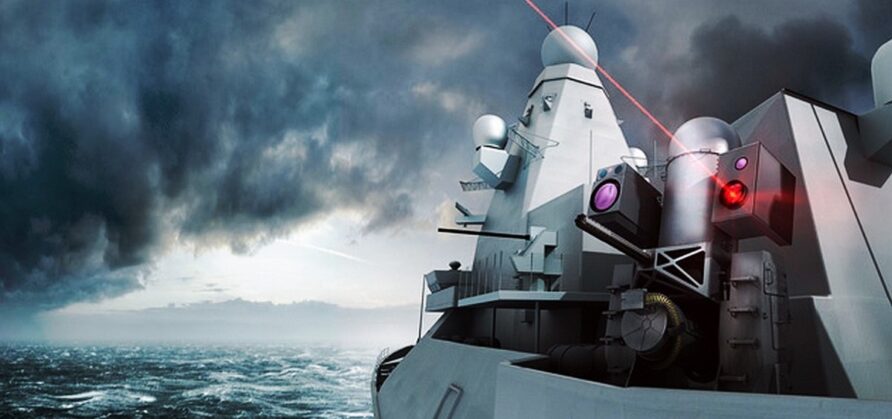
And a weapon capable of being carried by a Wildcat helicopter.
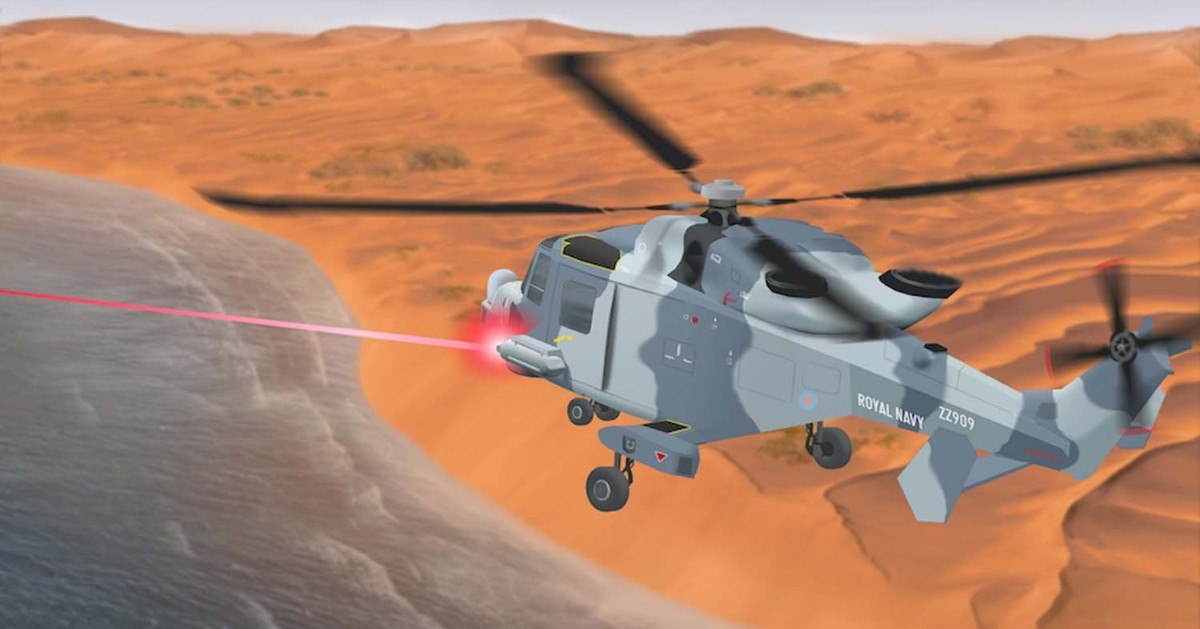
Details also emerged in 2019 of the use of a Flywheel Energy Storage System (FESS)
The Flywheel Energy Storage System (FESS) uses innovative high-speed & lightweight flywheels to provide high-power electrical pulses that these future systems require, reducing the impact of these systems to the rest of the ship, while avoiding the widely reported safety concern around battery-based systems.
Fundamental to the success of the project has been the collaborative testing of the FESS at both UK and US facilities. This was undertaken under the Advanced Electric Power and Propulsion Project Arrangement (AEP3), an arrangement between Dstl and DE&S in the UK, and NAVSEA’s Electric Ship Office and the Office of Naval Research (ONR) in the USA. USA testing was also supported by US Coalition Warfare Program (CWP) funding.
Two other contracts were awarded in 2021, not to the Dragonfire consortium, but Thales and BAE for Project Tracey Chess Dynamics, Vision4CE and IPG were also part of this demonstration contract.
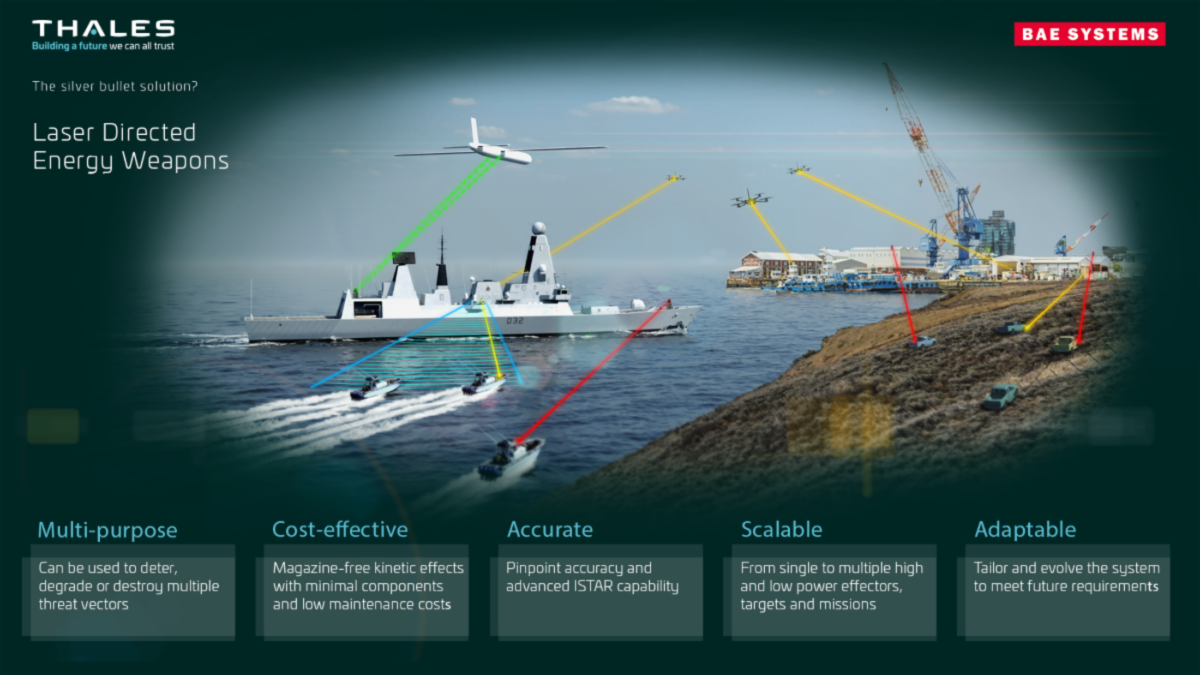
And to Raytheon for a demonstration of their High-Energy Laser Weapon System (HELWS).
An additional RF Directed Energy Weapon contract was also placed.
In July 2022, DragonFire completed static high-power laser discharge tests at the MoD’s Porton Down facility.
A second set of trials, in November 2022, proved the tracking capability of the Dragonfire laser beam director.
The MoD released further information to mark these trials.
The MOD’s Defence Science and Technology Laboratory (Dstl) has hosted the UK’s first high-powered, long range laser directed energy weapon (LDEW) trial on its ranges at Porton Down.
The trials involve firing the UK DragonFire demonstrator at a number of targets over a number of ranges, demanding pinpoint accuracy from the beam director.
These tests improve the UK’s understanding of how high-energy lasers and their associated technologies can operate over distance and defeat representative targets. The ability to deliver high levels of laser power with sufficient accuracy are two of the major areas that need to be demonstrated in order to provide confidence in the performance and viability of LDEW systems.
Additional images were also released.
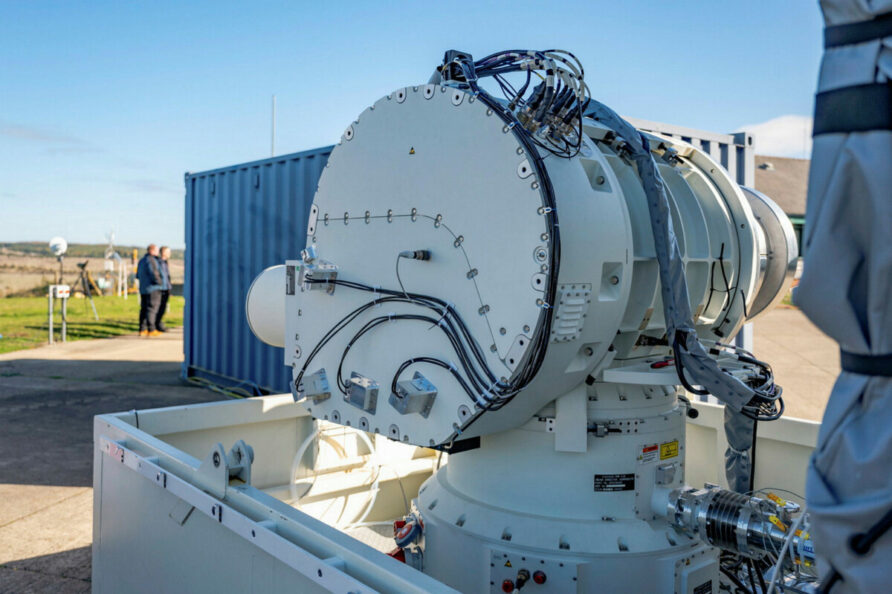
Both tests were against land based targets, with the maximum range of 3.4km defined by safety limitations of test range clearances.
Further development and test activity was carried out in 2023.
The Thales/BAE demonstration included the project name of MIMAS and was planning for a 2025 demonstration onboard a Royal Navy Type 23 Frigate.
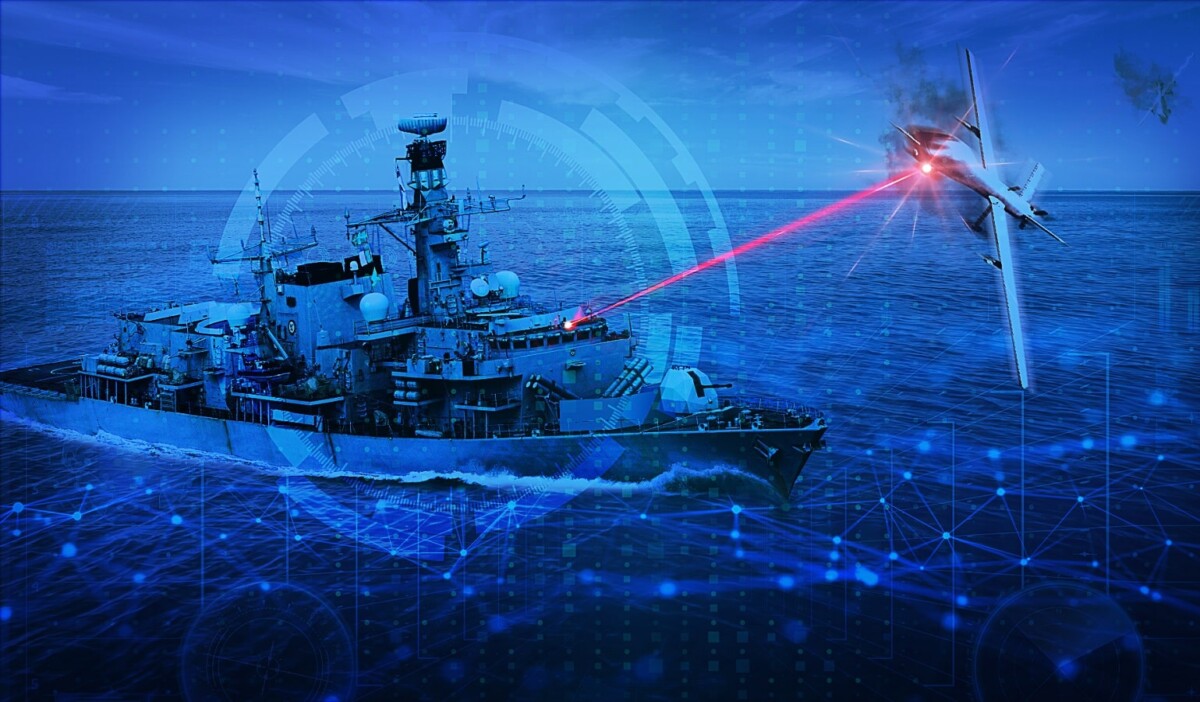
Towards the end of 2023, Raytheon also demonstrated models of their laser weapon on a Wolfhound tactical support vehicle.
in January 2024, DragonFire conducted the UK’s first high-power laser firing against aerial targets at the MoD’s Hebrides Range
The DragonFire laser directed energy weapon (LDEW) system achieved the UK’s first high-power firing of a laser weapon against aerial targets during a 2024 trial at the MOD Hebrides Range.
The latest trial, delivered by Dstl and the DragonFire partners – MBDA, Leonardo and QinetiQ – builds on a series of highly successful trials, including the first static high-power laser firing of a sovereign UK capability and demonstration of the DragonFire system’s ability to track moving air and sea targets with very high accuracy at long range.
The UK DragonFire collaboration brings together the best of UK industry and leverages decades of weapon system manufacturing expertise to deliver enhanced layered air defence capabilities in the land and maritime domains.
The DragonFire weapon system is the result of a £100 million joint investment by industry and the UK Ministry of Defence, and together the companies involved are supporting highly skilled UK jobs in new cutting-edge technologies that are delivering a significant step-change in the UK’s capability in LDEW systems.
Chris Allam, Managing Director, MBDA UK, said: “Together, the DragonFire partners and Dstl are demonstrating exceptional UK capability in laser directed energy weapons. The DragonFire system has been successfully proven to date and we are now closer than ever to having a unique weapon that will enable frontline commands to meet the rapidly changing threats they face.”
Mark Hamilton, Managing Director Electronics UK, Leonardo, said: “UK Dragonfire is a great example of how a partnership-based UK enterprise approach can be successfully applied to a major national research and technology challenge. Leonardo is drawing on decades of laser technology heritage at our Edinburgh site in our work on the project: Our beam director technology is delivering ultra-precise tracking/pointing accuracy and stability, at long range, and whilst handling such high-power laser energy passing through it. We’re pleased to have successfully tested the system against a representative aerial target at varying ranges, altitudes and speeds, supporting the first UK High Energy Laser (HEL) firing against aerial targets across its operational field of regard.”
Steve Wadey, Group Chief Executive Officer, QinetiQ, said: “Achieving the UK’s first high-power firing of a laser weapon against aerial targets at the QinetiQ-managed MOD Hebrides range is a significant milestone. Our world-leading science and technology capabilities have been applied to the continued development of our advanced coherent beam-combining technology, which is delivering enhanced performance and scalability. I’m proud of the critical role we are playing in collaboration with industry partners and Dstl to support the development, test and evaluation of this sovereign capability.”
The MoD also provided additional imagery and video to make these tests
In April 2024, the Royal Navy announced Dragonfire would be installed on a Type 26 Frigate by 2027.
A powerful laser weapon will be added to the Royal Navy’s arsenal in the next three years as the need for weapons to counter drone and missile threats – like those fired by Houthi rebels – grows.
The cutting-edge DragonFire laser will be installed on a warship in 2027, adding to the Royal Navy’s potent array of air defence weaponry, which includes the Sea Viper and Sea Ceptor missile systems which have recently shot down Houthi targets in operations in the Red Sea with HMS Diamond and HMS Richmond.A burst of the high-intensity beam from DragonFire costs no more than £10 – yet can engage targets – drones, missiles, aircraft – at the speed of light by concentrating it on a target.
The laser has been under development for nearly a decade and underwent tests by government scientists on the Ministry of Defence’s ranges in the Hebrides at the start of this year.
Now, plans have been brought forward five years from 2032 to install DragonFire on a Royal Navy ship under new procurement rules which were introduced this week.
Captain Matt Ryder, responsible for new capabilities as Head of Above Water Battlespace in the Royal Navy’s Develop Directorate, said: “The Royal Navy has always been on the front foot to embrace new technologies to enhance our capability.
“We recognise this cutting-edge UK laser weapons technology as highly relevant and the need to accelerate it into service on board our ships at the earliest opportunity.
“Clearly a current operational focus is on protecting Freedom of Navigation in the Southern Red Sea as part of Operation Prosperity Guardian, where in recent months HMS Diamond and HMS Richmond have each successfully deployed Air Defence capabilities to defend legitimate shipping in the area against drone and missile threats.
“Noting the quantity and varied sophistication of air and missile threats seen in the Southern Red Sea, we see a very relevant and current example of where laser weapons could provide an additional layer of defence to protect shipping, at a potentially much lower cost per shot and without the inherent onboard magazine and silo capacity constraints associated with interceptor missiles.”
The Royal Navy also released concept imagery of a Type 26 frigate equipped with Dragonfire.
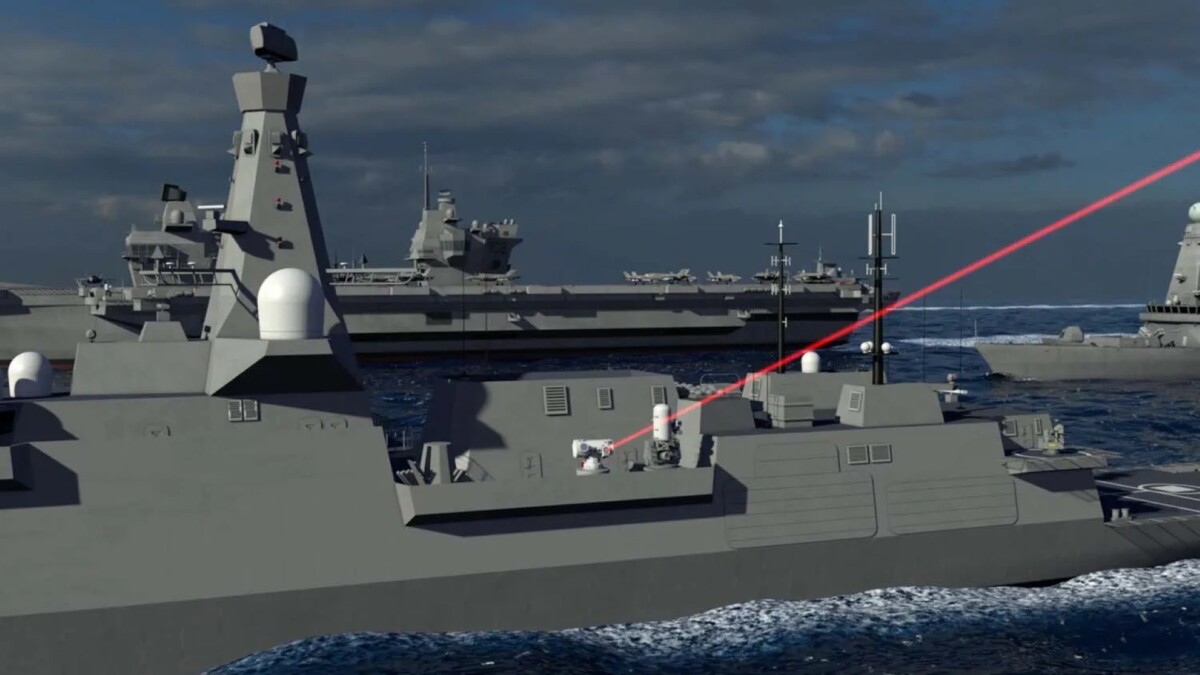
MBDA awarded £316 million contract to deliver new DragonFire systems to the Royal Navy from 2027, after achieving UK first in latest testing by shooting down high-speed drones with new laser system.
The laser system costs just £10 per shot and is accurate enough to hit a £1 coin from a kilometre away. It is a more cost-effective method in comparison to traditional missile systems, which cost upwards of hundreds of thousands of pounds per shot. DragonFire will be fitted to a Royal Navy Type 45 destroyer by 2027 – five years faster than originally planned.In November 2025, MBDA was awarded a £316 million contract to progress to the next stage of development.
This release updated the vessel type, from the Type 26 Frigate to the Type 45 Destroyer.
DSTL also provided additional information
It uses UK Coherent Beam Combination (CBC) laser technology, which has higher beam quality and improved accuracy in contrast to other emerging LDEW technology across the globe. This sovereign technology has been developed by Dstl and industry partners MBDA, Leonardo and QinetiQ.
Whilst the technology is still developing, recent trials saw the weapon successfully fire at a target with such precision that, in real terms, was the equivalent of hitting a £1 coin from a kilometre away. The beam can also take down drones at a distance of more than three miles.
Although Dragonfire has been predominantly focused on naval deployment, the image below shows a potentual vehicle based option.
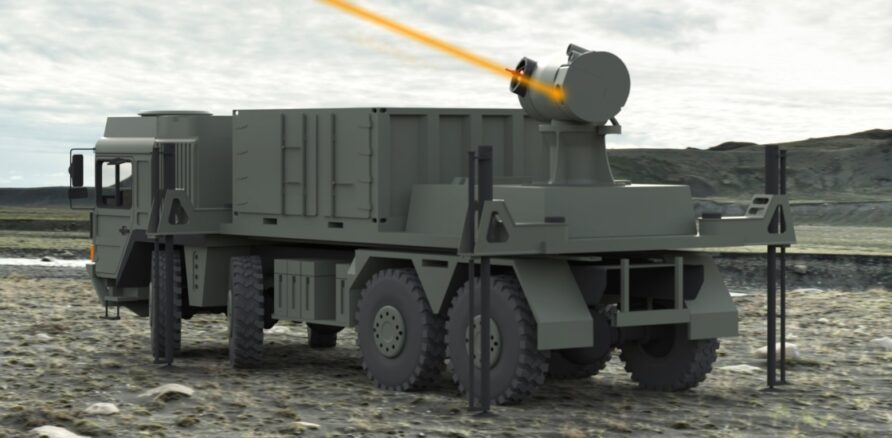
Four Type 45 Destroyers will be fitted with Dragonfire as part of the demonstration contract.
MBDA closed 2025 with a progress video.
If you found value in this article, help me keep Think Defence going.
Think Defence is a hobby, a serious hobby, but a hobby nonetheless. I have removed those annoying adverts, but hosting fees, software subscriptions and other services add up.
To help me keep the show on the road, I ask that you support the site in any way you can. It is hugely appreciated.
You can click on an affiliate link, Buy Me a Coffee at https://ko-fi.com/thinkdefence, download an e-book at https://payhip.com/thinkdefence or even get some TD merch at https://www.redbubble.com/people/source360/
Youtubers, if you are going to lift content from here, the decent thing to do would credit me


The fact that it has yet to be deployed after several years in the making suggests twopossible problems with Dragonfire. What we do know is that it is not deployed in the Ukraine. That could be, of course, be understandable reticence based upon fear that it could be compromised to Russia if deployed in the UKaine . The other, of course, that the hype given to this weapon has exceeded its demonsgrted capabilities ?
The chronology is useful, particularly the distinction between the earlier Type 26 concept and the later Type 45 installation plan. I would separate the quoted cost of a laser burst from the cost of a successful interception: tracking time, repeat engagements, cooling and weather availability still matter. Your section on flywheel energy storage is especially relevant here. Are any public results available on sustained firing and recovery time, rather than individual target defeats?
Disclosure: I am commenting for Gefechtsklar. The website field links to our German-language overview of laser programmes, including DragonFire, for background.