
 Doc Summary

The L23A1 was a lightened version of the earlier L5A1 fitted to the FV601 Saladin, and was closely associated with the CVR(T) Scorpion light armoured vehicle.
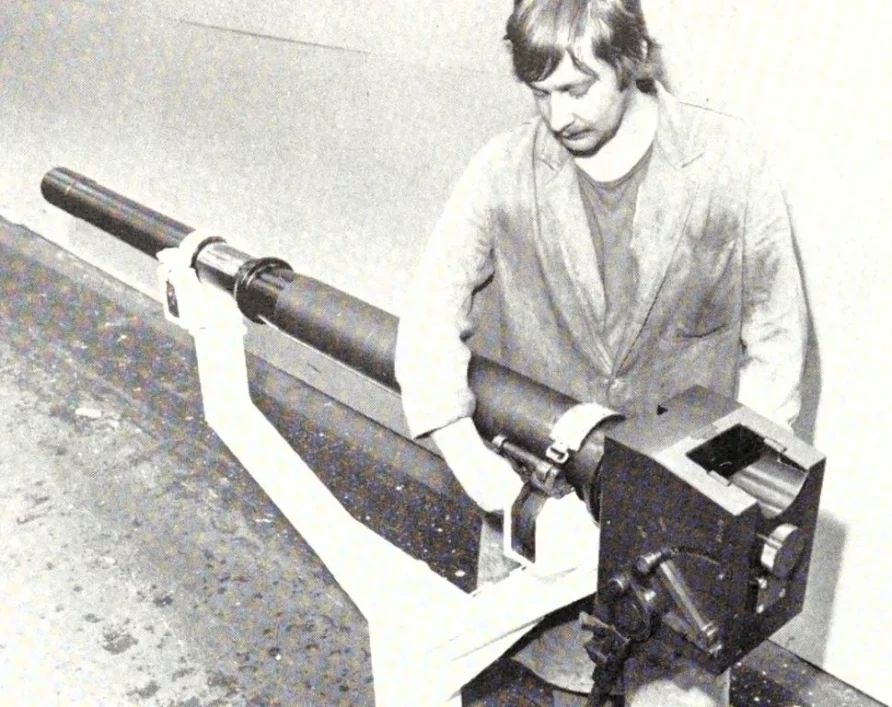
76 mM L23A1 gun Development #
The development of the 76 mm L23A1 gun was linked to the British Army’s Combat Vehicle Reconnaissance (Tracked) (CVR(T)) programme of the 1960s, which sought a family of lightweight, air-transportable armoured vehicles optimised for reconnaissance and fire support roles.
The L23A1 was designed and manufactured by Royal Ordnance (later part of British Aerospace Defence Ltd, Royal Ordnance Division) at Nottingham as a lighter derivative of the earlier 76 mm L5A1 gun, which had armed the Alvis FV601 Saladin 6×6 armoured car but was no longer in production.
The new weapon retained the conventional rifled barrel, semi-automatic vertical sliding breech-block and fixed ammunition system of its predecessor, but was specifically lightened and adapted with a hydropneumatic recoil system to suit the CVR(T) family’s compact two-man turret and overall mass limitations.
Ammunition interchangeability with the L5A1 was deliberately preserved to simplify logistics.
Detailed design and integration work proceeded in parallel with the vehicle programme managed by the Fighting Vehicles Research and Development Establishment.
By March 1970, as recorded in a House of Commons debate on the Army Estimates, the Scorpion with its 76 mm gun had reached the final phase of development.
Subsequent minor refinements to the gun mounting and mantlet armour addressed early stress-corrosion issues identified in service, but the core ordnance design remained unchanged from the prototypes through to volume production.
Post-Introduction Service History, Exports and Operational Employment #
Production of the gun and its associated two-man turret continued steadily at Royal Ordnance facilities, reaching approximately 2,000 units by January 1993.
The weapon equipped not only the FV101 Scorpion but also derivative fire-support applications, including the Australian Army’s M113A1 programme and the Canadian Cougar 6×6 vehicle.
In domestic British service the L23A1 saw active operational employment on multiple occasions. During the 1982 Falklands campaign, four Scorpions from B Squadron, The Blues and Royals, landed with 2nd Battalion The Parachute Regiment and provided direct fire support during the assaults on Wireless Ridge and Mount Tumbledown; one vehicle was disabled by an Argentine anti-tank mine on 14 June.
In the 1991 Gulf War (Operation Granby), Scorpions operated forward of main armoured formations in the reconnaissance role with the 16th/5th The Queen’s Royal Lancers, while No 1 Squadron RAF Regiment fielded Scorpion/Spartan combinations attached to 1 Armoured Division.
CVR(T) also formed part of the British contribution to IFOR peacekeeping operations in Bosnia in the mid-1990s.
Front-line withdrawal of the 76 mm Scorpion from the British Army occurred around 1994 due to fume issues, although a number remained in reserve stocks or as opposing-force training vehicles thereafter.
By the early 1990s the L23A1 turret was in service with the armed forces of Australia, Belgium, Brunei, Canada, Honduras, Iran, Ireland, New Zealand, Nigeria, Oman, the Philippines, Spain, Tanzania, Thailand, the United Arab Emirates and the United Kingdom, among others.
Technical Specifications #
The 76 mm L23A1 is a lightweight, low-velocity rifled ordnance developed by Royal Ordnance (later British Aerospace Defence Ltd, Royal Ordnance Division) as a purpose-designed derivative of the earlier 76 mm L5A1 gun.
It was engineered specifically for integration into the compact two-man Alvis turret of the FV101 Scorpion and related CVR(T) variants, with emphasis on reduced mass, controlled recoil, and full interchangeability of fixed ammunition with the L5A1 system.
Characteristics
- Calibre: 76.2 mm
- Ordnance (barrel) length: 2 062 mm
- Overall length: 2 157 mm
- Weight (complete): 150.59 kg (approximately 25 per cent lighter than the L5A1 through use of higher-tensile-strength steel)
- Rifling: orthodox, plain barrel (no muzzle brake or bore evacuator)
- Breech mechanism: semi-automatic vertical sliding block
- Firing mechanism: electro-mechanical (solenoid) or mechanical (foot-firing pedal)
- Recoil system: hydropneumatic, concentric, with external replenisher; recoil length 280 mm
- Barrel life: 4 750 equivalent full charges (EFC)
Performance
- Rate of fire: 6 rounds per minute (practical)
- Maximum direct-fire range: 2 200 m
- Maximum indirect-fire range: 5 000 m
- Effective combat range (typical): 2 200 m
When mounted in the standard Alvis 76 mm two-man turret the ordnance permits manual elevation of −10° to +35° and 360° traverse (power traverse and elevation optional at up to 45°/s).
Ammunition
All rounds are fixed quick-firing (QF) with projectiles rigidly attached to brass cartridge cases.
The following British-service natures were standard for the L23A1:
- L29 HESH-T (High-Explosive Squash Head – Tracer): complete round 7.41 kg; projectile 5.39 kg; muzzle velocity 533 m/s; base-detonating fuze L71A1; defeats 90 mm RHA at 60° up to 2 500 m; excellent graze performance against armour, concrete and field fortifications.
- L24A1/A2 HE-T (High-Explosive – Tracer): complete round 7.35 kg; projectile 5.37 kg; muzzle velocity 514 m/s; point-detonating fuze L17A6 series; general-purpose fragmentation round.
- L32 Smoke BE (Base-Ejection White Phosphorus): complete round 10.21 kg; projectile 8.53 kg; emits dense smoke for approximately 50 seconds.
- L33 Canister: complete round 6.76 kg; projectile 4.71 kg; steel-pellet payload; lethal anti-personnel effect to 100 m.
- L42 Illuminating: complete round 9.62 kg; projectile 7.1 kg; parachute-suspended star for 30 seconds illumination.
- L40A1 SH/Prac and L25 HE/Prac: inert training rounds ballistically matched to HESH-T and HE-T respectively.
A total of 40 rounds (10 ready in the turret basket) were normally stowed in the FV101 Scorpion.
If you found value in this article, help me keep Think Defence going.
Think Defence is a hobby, a serious hobby, but a hobby nonetheless. I have removed those annoying adverts, but hosting fees, software subscriptions and other services add up.
To help me keep the show on the road, I ask that you support the site in any way you can. It is hugely appreciated.
You can click on an affiliate link, Buy Me a Coffee at https://ko-fi.com/thinkdefence, download an e-book at https://payhip.com/thinkdefence or even get some TD merch at https://www.redbubble.com/people/source360/
Youtubers, if you are going to lift content from here, the decent thing to do would credit me


