
 Doc Summary

The Naval Strike Missile (NSM) is a stealthy Norwegian developed fifth-generation anti-ship and land-attack missile produced by Kongsberg, entering Royal Navy service in 2024 as an interim replacement for the retired Harpoon.
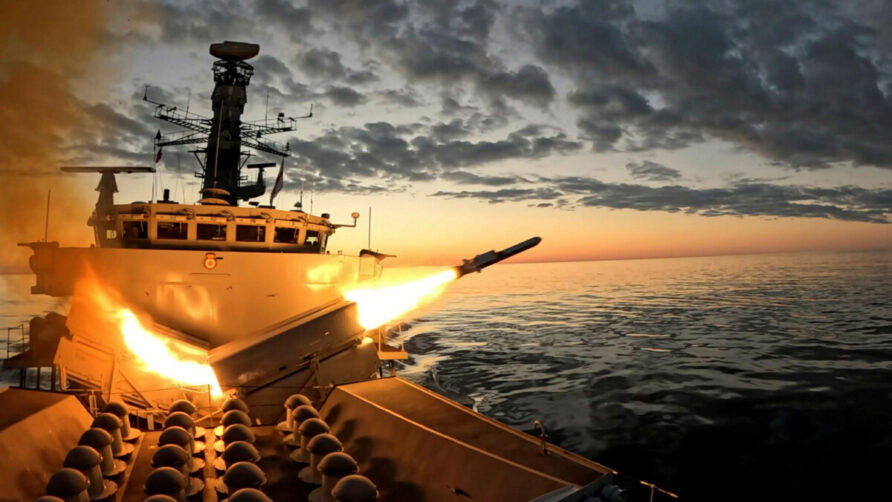
Naval Strike Missile (NSM) Development #
Development of the Naval Strike Missile (NSM) started in the late 1990s as a successor to the Penguin anti-ship missile.
In 1996, the Norwegian government awarded Kongsberg a contract for full-scale development of the Nytt sjømålsmissil (New Sea Target Missile), later marketed internationally as the Naval Strike Missile.
The programme emphasised stealth through composite materials and aerodynamic shaping, passive imaging infrared (IIR) seekers for terminal guidance, and multi-platform compatibility, including surface ships, coastal batteries, and potential air-launch variants.
Challenges arose during development, including delays and cost overruns, extending the timeline and increasing expenditures.
Despite these obstacles, the project advanced through iterative prototyping and testing, culminating in the award of an initial production contract in June 2007.
The NSM achieved operational status with the Royal Norwegian Navy in 2012, following the first live firing from a Skjold-class patrol boat in October of that year.
A significant validation occurred in June 2013 with a live-warhead test against the decommissioned frigate HNoMS Trondheim.
Export success began early: Poland became the first international customer in 2008, fielding a coastal defence variant by 2013.
Subsequent milestones included U.S. Navy testing aboard the Littoral Combat Ship USS Coronado in 2014, leading to selection in 2018 as the over-the-horizon weapon for LCS platforms, with Raytheon as the U.S. production partner (designated RGM-184A).
Interim Surface to Surface Guided Weapon System (I-SSGW) #
At the UK/French 2016 Summit, an intent to co-develop a joint concept phase for the Future Cruise/Anti-Ship Weapon (FC/ASW) programme was announced.
This system would replace Harpoon in Royal Navy Service and Storm Shadow in RAF service.
The MoD provided greater detail the following year;
The Mk41 Vertical Launch silo provides the flexibility to field a variety of weapons, which may include the next generation of ship-launched strike weapons – including the Future Offensive Surface Weapon and the Next Generation Land Attack Weapon – being developed through the MOD’s current ten-year, £178 billion equipment plan.
The planning assumption was that the Future Cruise /Anti-Ship Weapon would enter service on the T26 Frigate and Typhoon aircraft in 2028 and 2030 respectively
The Out of Service Date (OSD) for Harpoon was planned to be 2018, the In-Service Support contract with Devonport Royal Dockyard Ltd ran to November 2018. Like all planned OSD though, this changed with a slight extension to 2023 to retain it in service until the Interim Surface to Surface Guided Weapon System (I-SSGW) enter service.
The Royal Navy continuously reviews the capabilities it requires. While work is in hand to consider options for the replacement of the Harpoon missile system, the Navy has decided to extend its service life beyond 2018.
On the 28th of August 2019, the MoD issued a tender note for the Interim Surface to Surface Guided Weapon System (I-SSGW)
The TTH project team, part of the UK Ministry of Defence, hereafter referred to as the authority, has a requirement for the provision and introduction into service of the I-SSGW system as an interim replacement for the existing system that is going out of service. The I-SSGW is to provide a ship launched over the horizon precision anti-ship capability and a terrain following precision maritime land attack capability. It is anticipated that the I-SSGW capability will operate on X 5 Type 23 (Towed Array) frigates capable of concurrent Anti-submarine warfare (ASW) and Anti Surface Warfare (ASuW) operations in protection of a formed Maritime Tasking Group, for a 10-year period.
The terrain-following requirement likely excluded Harpoon and Exocet.
It was speculated that bidders might include the Lockheed Martin Long Range Anti-Ship Missile (LRASM), Kongsberg Naval Strike Missile (NSM), SAAB’s RBS15 Mk4 Gungir and the Gabriel V from Thales/IAI called the Sea Serpent.

A March 2021 Written Answer provided an update
The interim surface-to-surface guided weapon will replace the Royal Navy’s existing Harpoon missile capability. There was a healthy response from Industry to the Pre-Qualification Questionnaire and we are planning to proceed to issue an Invitation to negotiate to the down selected bidders later this year.
In February 2022, the MoD confirmed I-SSGW had been cancelled,
The industry was formally notified by the Ministry of Defence (MoD) earlier this month that the Interim Surface-to-Surface Guided Weapon (I-SSGW) programme had been cancelled. This decision came despite a commitment in the March 2021 Defence Command Paper to procure a replacement for the RN’s legacy ship-launched Boeing Harpoon Block 1C missile.
In somewhat of a reversal, a Defence Select Committee evidence session on the 5th July 2022 saw this statement from the Secretary of State for Defence (Ben Wallace MP)
there is an interim plan to replace Harpoon in between what we might settle upon in the long term. I can’t provide details yet as I’m not sure when it will be put out to tender but there is a plan to do so.
At about the same time, a number of defence media sources speculated that the Royal Navy favoured the Kongsberg/Raytheon Naval Strike Missile.
In November 2022, Kongsberg and the MoD confirmed the selection of the Naval Strike Missile
UK and Norwegian authorities have today announced that they have agreed to further strengthen existing defence ties. The Royal Navy will receive the Naval Strike Missile (NSM), outfitted on Type 23 frigates and Type 45 destroyers, in a collaboration with the Norwegian government.
And from the Royal Navy
Eleven Type 23 frigates and Type 45 destroyers will be fitted with the sea-skimming Naval Strike Missile, capable of knocking out major enemy warships at ranges of more than 100 miles away. The MOD today ordered the missile system as the interim replacement for the existing Harpoon, which reaches the end of its active life next year.
The Naval Strike Missile will plug the gap between Harpoon and the advent of its permanent successor, the ‘future offensive surface weapon’, which will become the Fleet’s premier long-range, heavy duty anti-ship missile in 2028, carried by the Royal Navy’s next-generation Type 26 frigates, currently under construction on the Clyde.
UK defence firms Babcock and BAE Systems will install NSM on the 11 warships, with the first ship due to be operational by the end of next year.
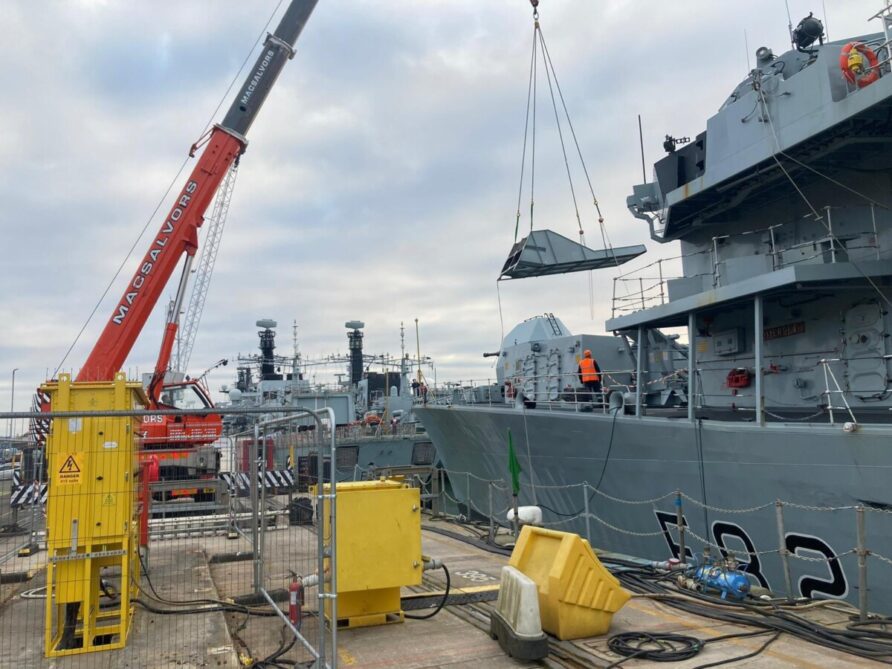
Work started on HMS Somerset in January 2023 to integrate NSM
Maritime Offensive Strike System (MOSS) #
The system changed from Interim Surface to Surface Guided Weapon System (I-SSGW) to Maritime Offensive Strike System (MOSS) in December 2023, when Initial Operating Capability (IOC) was declared.
In December 2024, the Royal Navy provided an update on NSM entry into service.
HMS Portland has become the second Royal Navy warship to be fitted with new missiles capable of taking out enemy ships at ranges of more than 100 miles away.
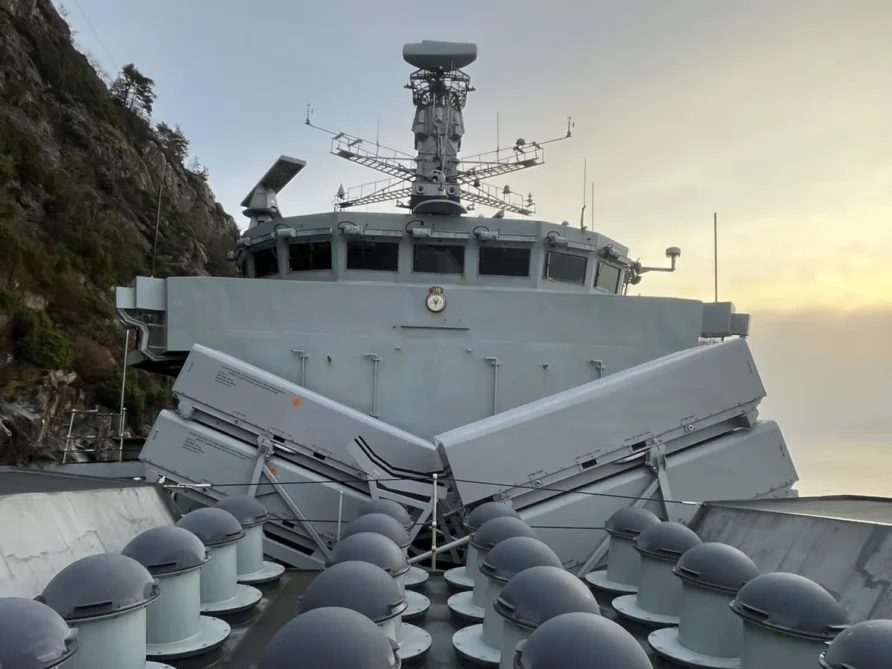
The Plymouth-based frigate follows the first, HMS Somerset, in completing trials and loading eight of the upgraded Naval Strike Missiles (NSM) in Norway, with the rest of the Royal Navy’s Type 23 and Type 45 destroyer fleet now set to follow.
The 400kg Naval Strike Missile – which is also in service with the Norwegian, US and Polish navies – replaces the now-retired Harpoon system. It travels at speeds close to Mach 1 and can strike targets more than 100 miles away, evading detection by skimming on the sea.
Portland carried out alignment and sea acceptance trials with Kongsberg Defence & Aerospace, Norway’s premier supplier of defence systems, and the UK’s Defence Equipment & Support (DE&S) at Haakonsvern Naval Base, the Norwegian Navy’s primary base, near Bergen.
“Through close collaboration with Kongsberg Defence & Aerospace and DE&S Torpedoes and Maritime Strike, the successful completion of NSM trials has ensured that HMS Portland is prepared for future tasking,” said Lieutenant Commander Gary Chambers, Portland’s Weapon Engineer Officer.
“We are embracing this technology in defence of the nation and are equipped to fight and win.”
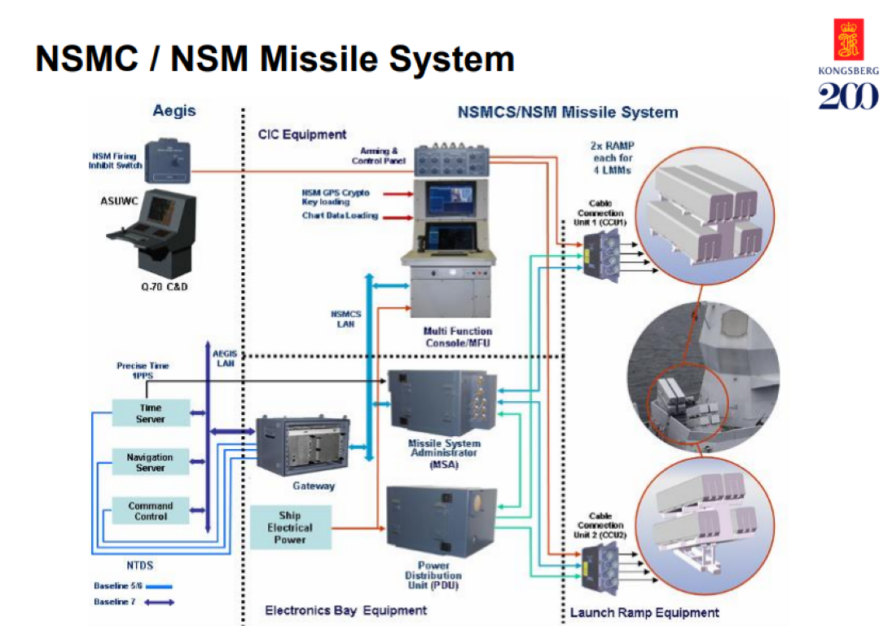
Portland’s crew were trained in onloading and offloading the weapons into the specially designed housing, before a harbour trial ensured the whole NSM system, including the missiles themselves, were properly functioning and working with the ship’s other systems and sensors.
The alignment and sea acceptance trials saw Silverbird, a telemetry variation of NSM, embarked and involved high speed manoeuvres to ensure the system can be operated effectively during operations in difficult seas.
“With the completion of its Harbour Acceptance Test, NSM has been successfully integrated into HMS Portland,” said Øyvind Kolset, Executive Vice President, Missiles & Space at Kongsberg Defence & Aerospace.
“We are impressed by the professionalism of the Royal Navy, and the close cooperation that played a key role in making this such a successful event.”
Portland will now head for a planned maintenance period before onloading NSM again for operations in 2025.
The NSM plugs the gap between Harpoon and the advent of its permanent successor, the ‘future offensive surface weapon’, which will become the Fleet’s premier long-range, heavy duty anti-ship missile, carried by the Royal Navy’s next-generation Type 26 frigates, currently under construction on the Clyde.
HMS Portland images
A status update was provided to the House of Lords by Lord Coaker in June 2025.
The Royal Navy is in the process of outfitting Naval Strike Missile (NSM) to eleven of its Type 23 frigates and Type 45 destroyers in collaboration with the Norwegian Government. These missiles will provide a potent new surface-to-surface maritime and land strike capability for the Surface Fleet.
HMS SOMERSET, PORTLAND and RICHMOND are now fitted with NSM. HMS RICHMOND is part of Operation HIGHMAST, accompanying HMS PRINCE OF WALES as part of the Carrier Strike Group deployment to the Indo-Pacific region.
In September 2025, the Royal Navy Frigate HMS Somerset conducted the first RN live firing of NSM during Exercise AEGIR 25
Naval Strike Missile (NSM) Capabilities #
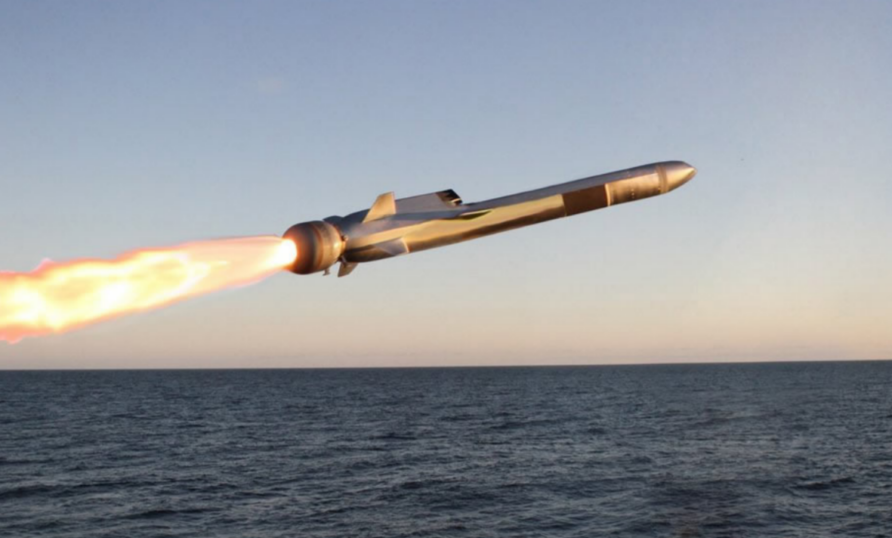
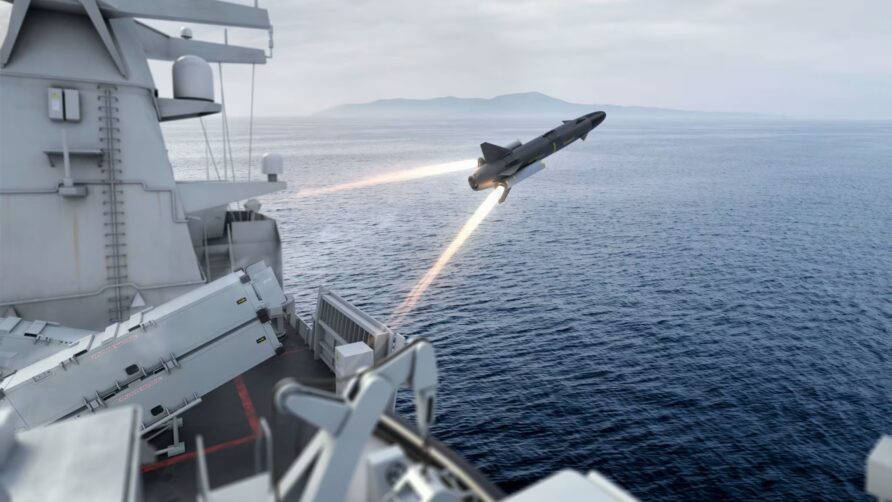
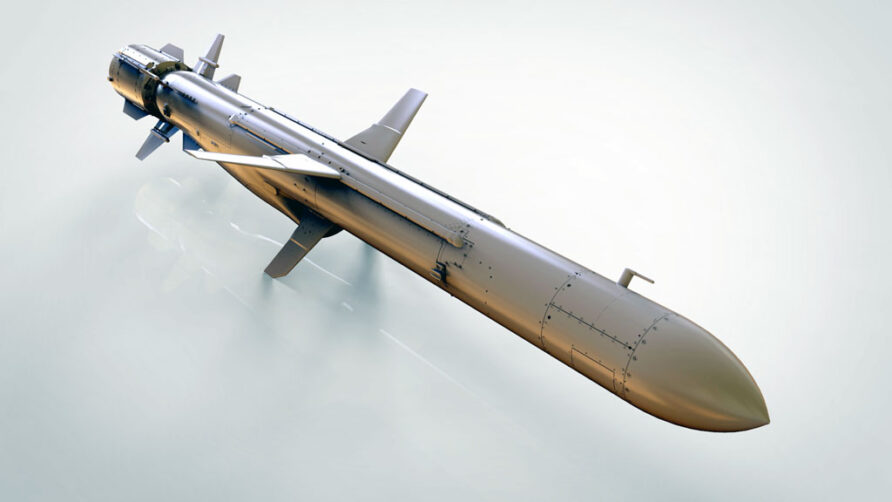
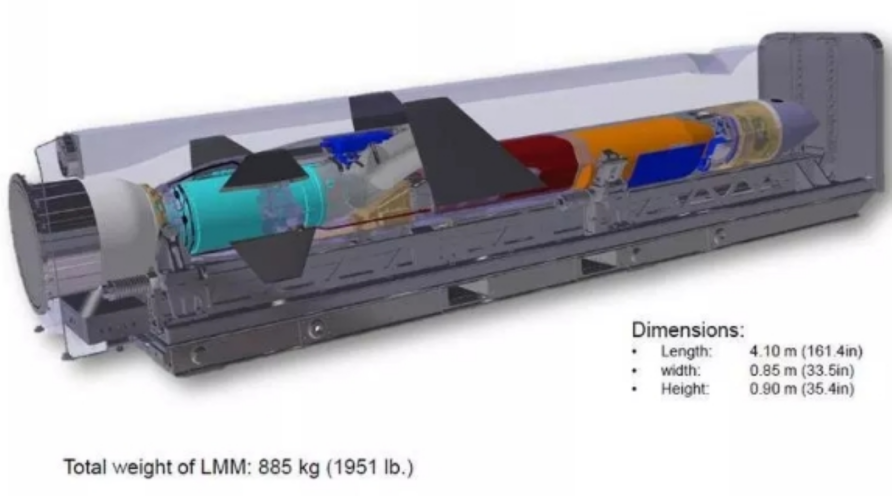
The NSM measures approximately 4 metres in length, weighs around 407 kg (including booster), and is propelled by a Microturbo TRI-40 turbojet engine, achieving high subsonic speeds.
Its operational range exceeds 200 km for the baseline variant, with the Block IA upgrade—introduced progressively from the mid-2020s, extending this to over 300 km through enhanced propulsion and software optimisations.
The missile features a 120 kg titanium blast-fragmentation warhead optimised for penetration. Guidance incorporates GPS-aided inertial navigation, terrain reference, and an advanced IIR seeker with autonomous target recognition, enabling discrimination between combatants and non-threats.
Low-altitude sea-skimming flight profiles, combined with reduced radar cross-section and terminal-phase evasive manoeuvres, enhance penetration of defended targets.
The system supports networked operations for coordinated multi-axis attacks.
Recent advancements include integration with uncrewed surface vessels (explored in 2025 Australian trials) and multiple rocket launch systems, such as the EuroPULS tested in May 2025.
Help me keep Think Defence going.
Think Defence is a hobby, a serious hobby, but a hobby nonetheless. I have removed those annoying adverts, but hosting fees, software subscriptions and other services add up.
To help me keep the show on the road, I ask that you support the site in any way you can. It is hugely appreciated.
You can click on an affiliate link, Buy Me a Coffee at https://ko-fi.com/thinkdefence, download an e-book at https://payhip.com/thinkdefence or even get some TD merch at https://www.redbubble.com/people/source360/
Youtubers, if you are going to lift content from here, the decent thing to do would credit me


