
 Doc Summary

Javelin was a British man-portable air defence system developed by Shorts as an improved successor to the problematic Blowpipe
It featured semi-automatic command-to-line-of-sight (SACLOS) guidance for greater ease and accuracy, entering service with the British Army in 1984, and provided effective low-level air defence until its phased replacement by the Starburst (Javelin S-15) from 1993 and fully by the Starstreak around 1997.
The development of Blowpipe Mk2, later renamed to Javelin, was actually contracted by the MoD in 1979, before the Falklands Conflict, but it was certainly given fresh impetus by Blowpipe’s performance in the South Atlantic.
The most significant improvement was a replacement for the guidance system, instead of a Manual Command Line of Sight (MANLOS) the new weapon was to use a Semi-Automatic Command Line of Sight (SACLOS).
Instead of guiding the missile onto the target, the operator would use a statimetric 6x magnification visor to keep a set of ‘crosshairs’ on the target, the missile would, in effect, guide itself onto the crosshairs.
This allowed the system to attack oncoming targets and reduced the training overhead significantly. Although Javelin looked superficially similar to Blowpipe, it was a new system
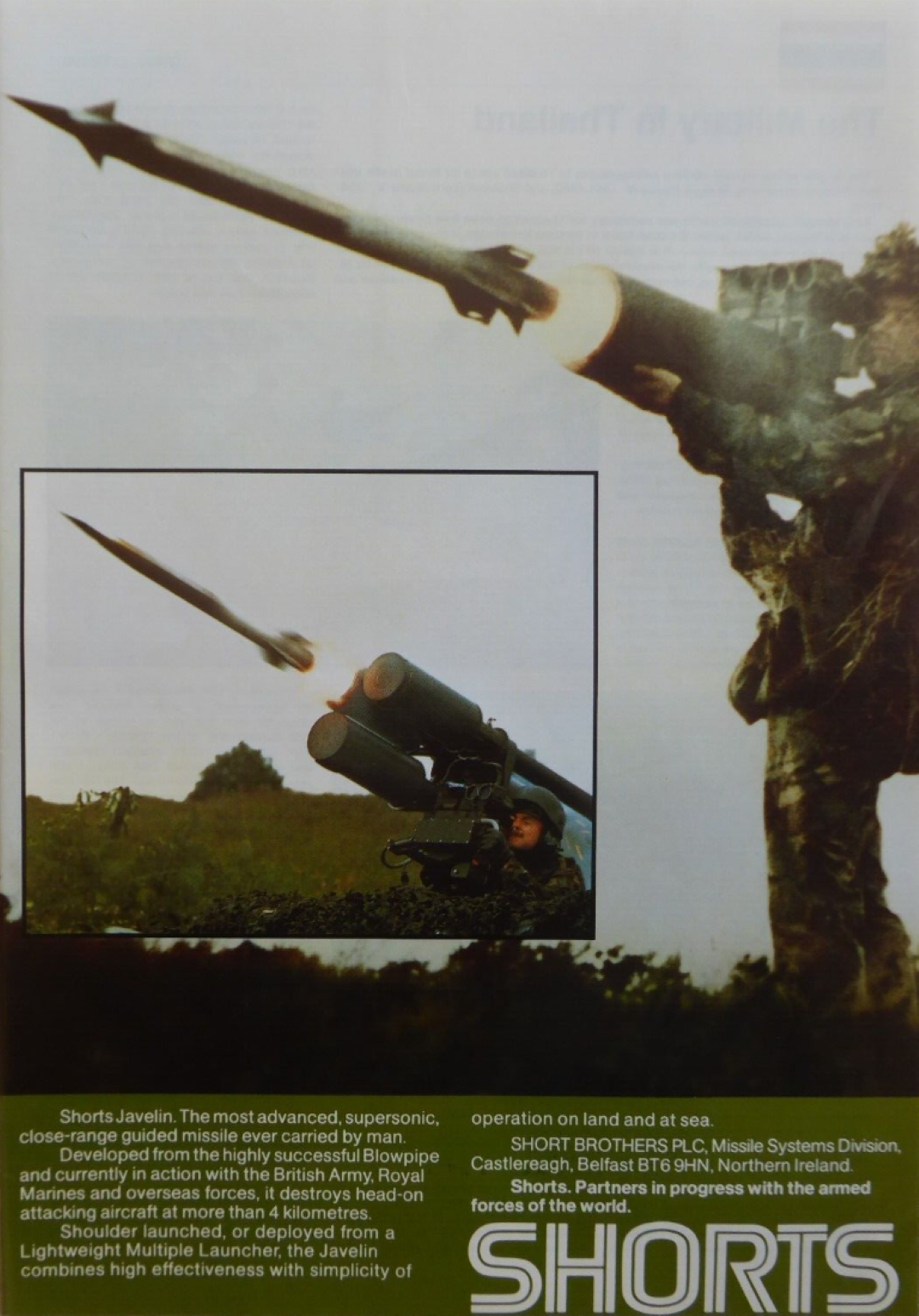
The initial production of the Javelin system started in 1984, under a multi-tranche £160m contract
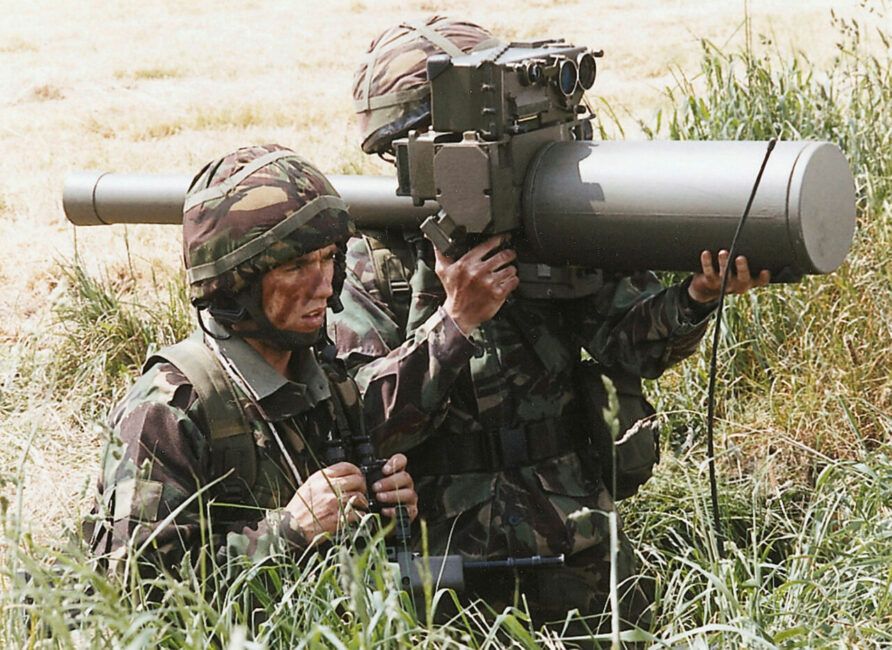
6 Air Defence Battery, 2 Field Regiment, Royal Artillery was the first unit to be equipped with Javelin in 1984. It was reported in 1985 that in training, hit ratios had increased significantly.
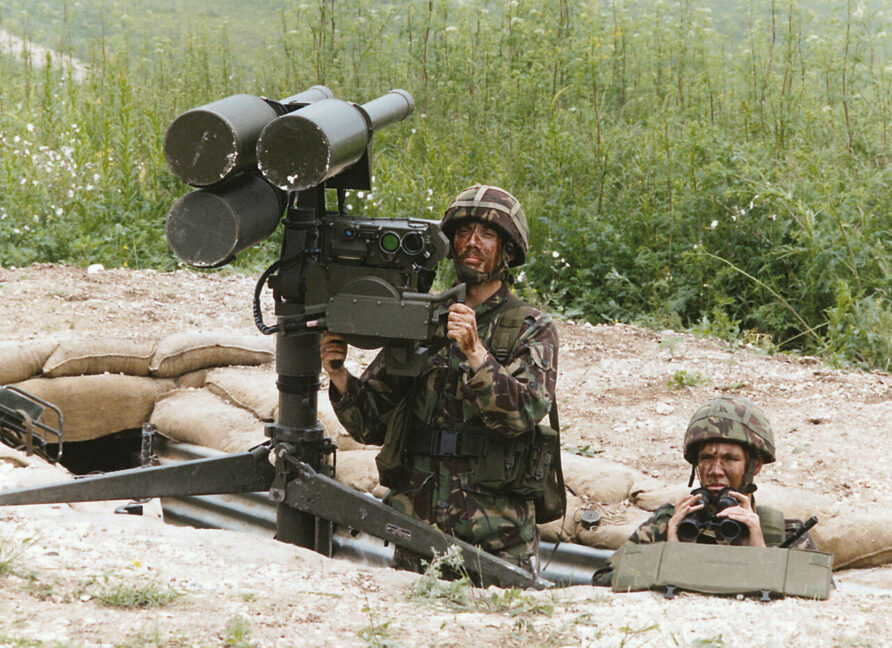
Blowpipe was withdrawn from service in 1985.
Other improvements over Blowpipe included a longer range and higher altitude of 5,500m and 3,000m respectively.
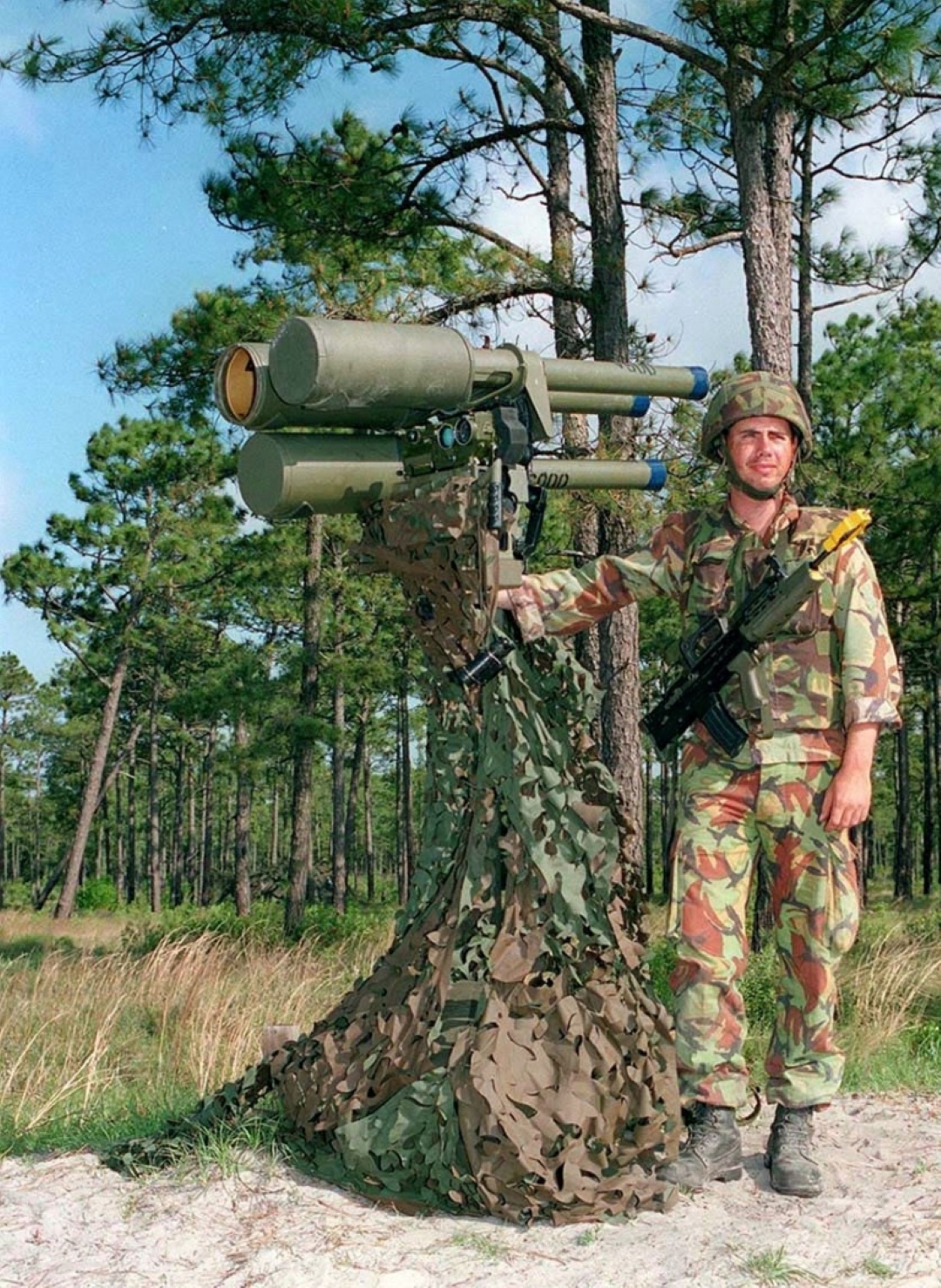
A new triple launcher was also developed.
The reason the UK selected SACLOS instead of IR homing was that it wanted to attack aircraft and helicopters before they had released its weapons, head-on. IR homing (at the time) was assessed to be less capable of these head-on engagements.
It also entered service with Canada


