
 Doc Summary

The SAS raid on Pebble Island (also known as Operation Prelim) stands out as one of the most audacious and successful special forces operations of the 1982 Falklands War.
Pebble Island #
Pebble Island lies to the north of West Falkland and in 1982, its 25 inhabitants were mainly involved with tending 25,000 sheep. Its small airstrip was subject to a daring raid by the SAS.
It did have an airstrip, though, or more accurately, four, three of grass, and the other on the beach.
Argentine Forces #
On the 24th of April, Base Aérea Naval Calderón (as it was called) was established there by Argentine Forces.
The sheep shearing sheds and other buildings were taken over and a Skyvan from Stanley Airport was used to bring in personnel and stores.
In what was typical of the period, the naval and air force elements of the Argentine armed forces disagreed with each other, so the Fuerza Aérea Argentina (FAA) went to Goose Green and the naval force, stayed at Pebble Island.
Interestingly, they also considered San Carlos as a secondary airstrip location. The airstrip had one runway at 600m long and two at 400m.
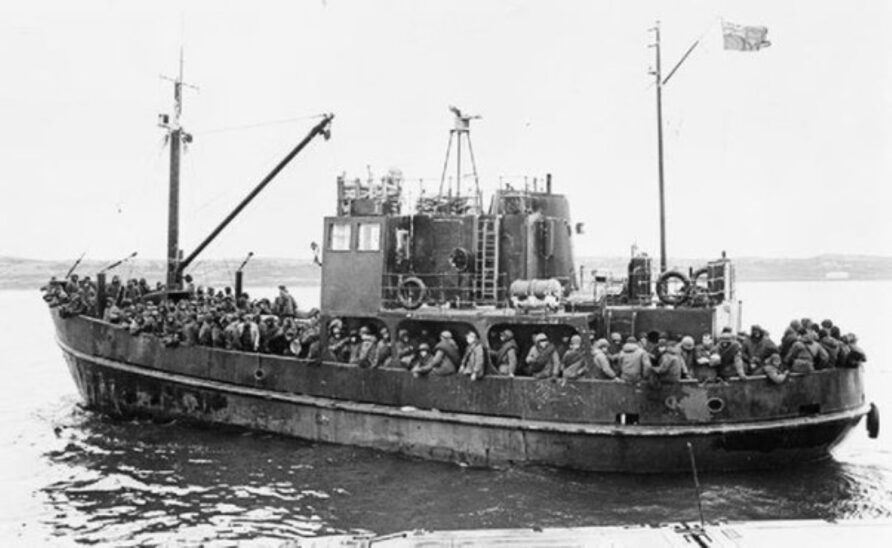
To protect the airstrip, 1 Platoon (H Company, 3rd Marine Infantry Battalion), arrived a few days later and the small Falklands Islands Government ship MV Forrest was used to bring in fuel, ammunition, four 75 mm recoilless rifles and other supplies.
Over the following days, a squadron of T-34C Mentor’s arrived.
In total, there were approximately 150 Argentine personnel at the airstrip.
After the attacks on Goose Green on May 1st, the Air Force Pucara’s were transferred to Pebble Island, although a few days later the runway was waterlogged by heavy rain.
After a heavy frost on the 7th, the T-34’s conducted an armed recce patrol.
More followed, although poor weather and the conditions of the runway would hamper operations.
The SAS Raid on Pebble Island #
This activity and the establishment of Base Aérea Naval Calderón were not unnoticed by the British forces, and so plans were made to deal with it.
D Squadron 22 SAS were to be the means of ‘dealing with it’
After rejecting insertion by Gemini because of low confidence in their engine reliability, a combination of Klepper canoes and helicopter were used.
An 8-man troop was dropped off at Purvis Bay and paddled to Deep Ferny Valley to lay up and observe the airstrip.
If the sea was too rough to paddle safely, we had an alternative dropoff point. The sea was very rough, so we used this one. We dismantled the canoes and man packed them over to Deep Ferny Valley. The original plan was to establish the observation post on the same night we arrived. However, by the time we had dismantled the canoes, humped them over to Deep Ferny Valley, with our own personal kit needed two journeys.
We were quickly running out of the darkness. So, we all lay up in Deep Fern Valley during the daylight of the 12th, and have not established observation onto Pebble Island, we were a day behind. But, as it worked out, it didn’t matter. On the night of 12/13 May, we all moved to an OP position from which we could observe the east end of Pebble Island, in particular, we watched the area around Phillips Cove, which was our intended point.
(Ramsey, SAS: The Soldier’s Story)
The personnel at the observation point crawled forward and noted that there were eleven aircraft present. After some communication problems, the good news was relayed to the waiting force on HMS Hermes.
HMS Hermes was detached, along with HMS Glamorgan and HMS Broadsword.
The SAS and personnel from 148 (Meiktila) Commando Forward Observation Battery made for a raiding force totalling 45 and were loaded aboard two 846 NAS Sea Kings for the flight into the assembly point at Phillips Cove.
The plan called for three troops, the first would destroy any aircraft, the second would clear the settlement of Argentine forces, and a third would be held in reserve.
45 men in total took part.
HMS Glamorgan fired on the western edge of the runway to provide a diversion and draw in Argentine forces.
At 11.45pm, the two Sea King helicopters landed at Phillips Cove and disembarked their passengers.
Shortly after, the main attack commenced;
Then our own mortar opened up, lighting the whole place up like it was a bright daylight. The mortar man was having a lot of trouble. Every time he fired the bloody thing, the whack kicking the base plate further into the ground. There was virtually no enemy fire on us, so the boys got stuck into the planes. They split into seven two-man teams.
It was a bloody big trip and they had a lot of ground to cover. It’s not as if the planes were all parked in a neat row. They were all over the strip. And all the time the boys were running against the clock. Five planes were destroyed using the explosive charges that they had with them.
The Pucara was the tallest of the aircraft. As they approached each plane, one bloke would give the other a leg up on to the wing. Once up, he then leaned down and hauled the other one up to join him. The Skyvan was not a problem. The Mentors were very small, and with one great leap, the guys got themselves on the wings.
(Ramsey, SAS: The Soldier’s Story)
Aircraft had cables ripped out and fuel tanks were punctured with small arms fire and grenades. The SAS teams then withdrew to their waiting helicopters, the job well done.
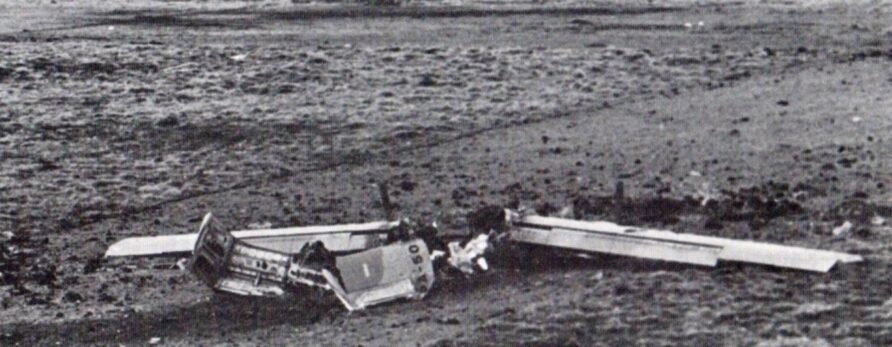
The next day, a Sea Harrier reconnaissance mission surveyed the damage.
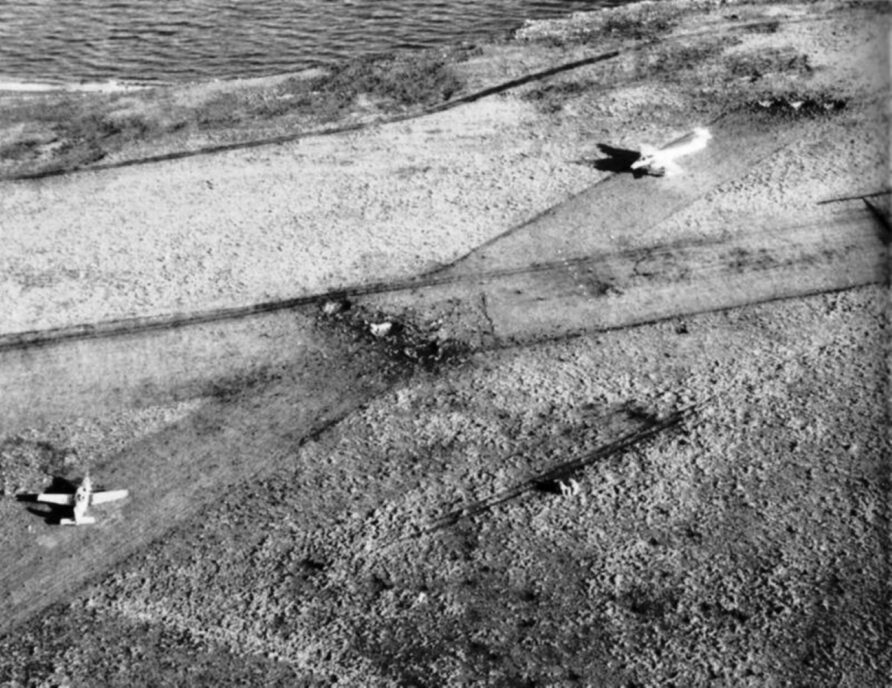
Six Pucara, four T-34C, and one Skyvan were damaged or destroyed.
On May 19th, the airstrip was attacked by Harrier and again by three Harrier GR.3’s on the 23rd of May.
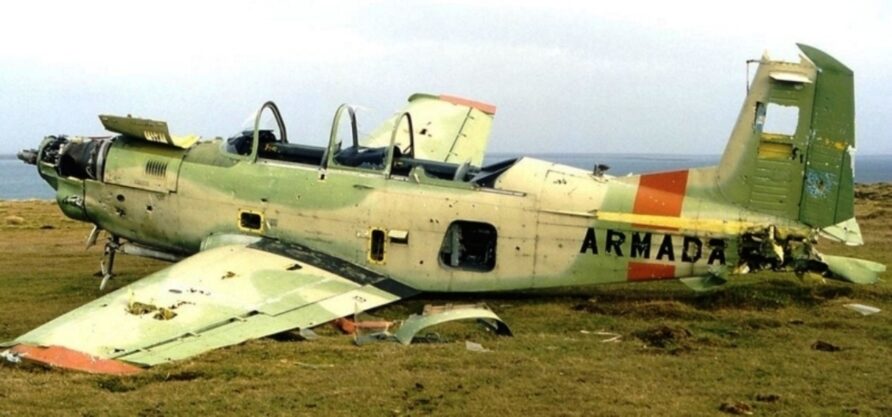
On the 5th of June, an armed recce sortie discovered what was thought to be two new Pucaras at Pebble Island, an attack followed.
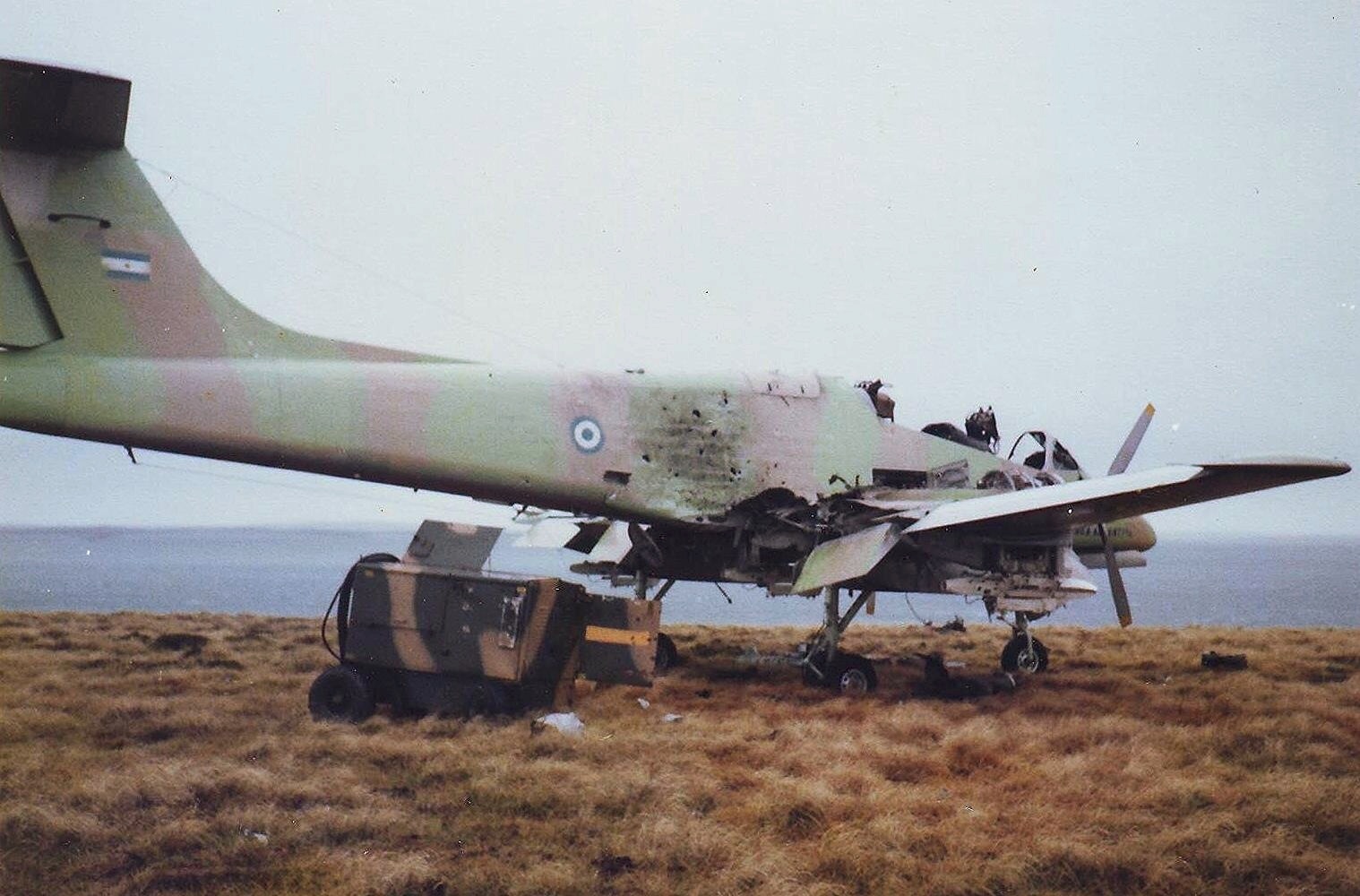
These aircraft were not new and were not serviceable.
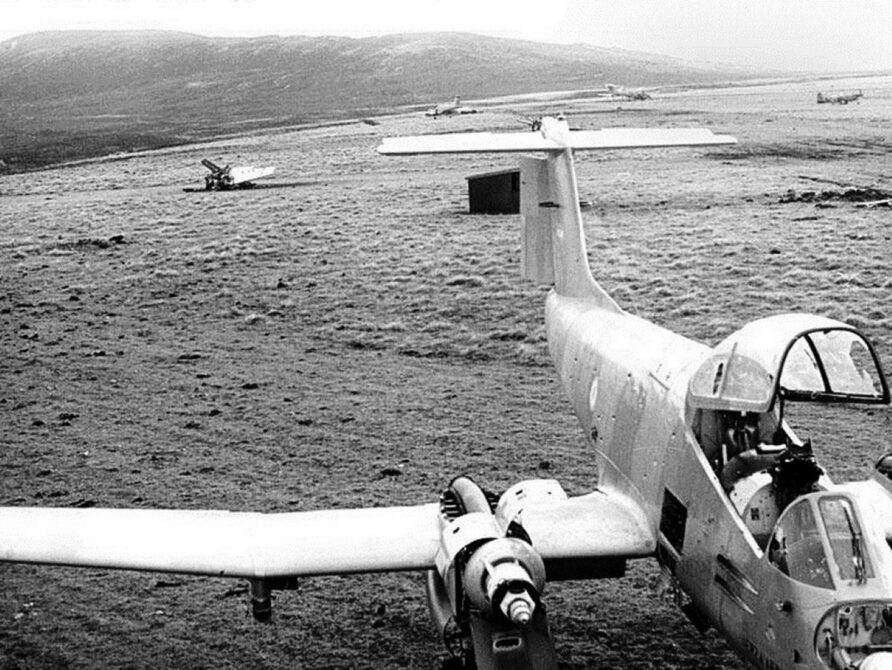
By the 23rd, 300m of the repaired runway was available.
On the 28th of May, a Twin Otter evacuated wounded personnel.
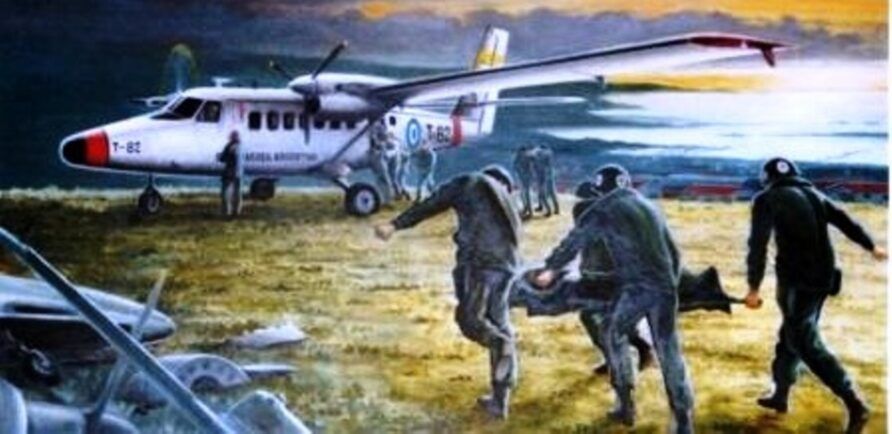
On the 1st of June, two Sea Kings (2-H-233 and 2-H-234) evacuated other naval personnel back to the mainland.
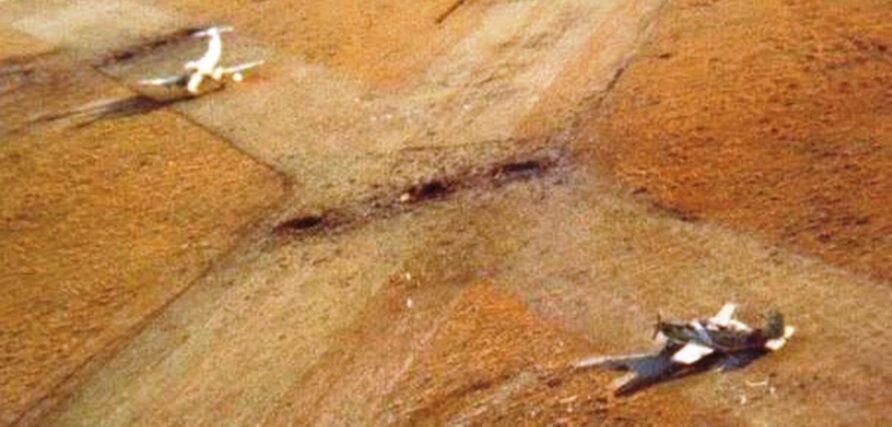
Pebble Island Today #
Pebble Island is still used.
Debris remains

If you found value in this article, help me keep Think Defence going
Think Defence is a hobby, a serious hobby, but a hobby nonetheless. I have removed those annoying adverts, but hosting fees, software subscriptions and other services add up.
To help me keep the show on the road, I ask that you support the site in any way you can. It is hugely appreciated.
You can click on an affiliate link, Buy Me a Coffee at https://ko-fi.com/thinkdefence, download an e-book at https://payhip.com/thinkdefence or even get some TD merch at https://www.redbubble.com/people/source360/
Youtubers, if you are going to lift content from here, the decent thing to do would credit me
Read more (Affiliate Link)


